


Anglo Indian Carved Casket
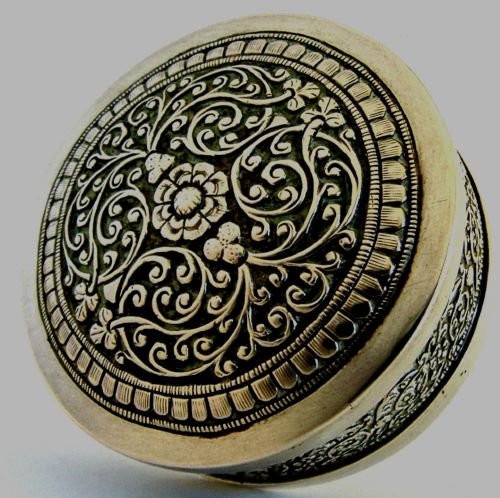
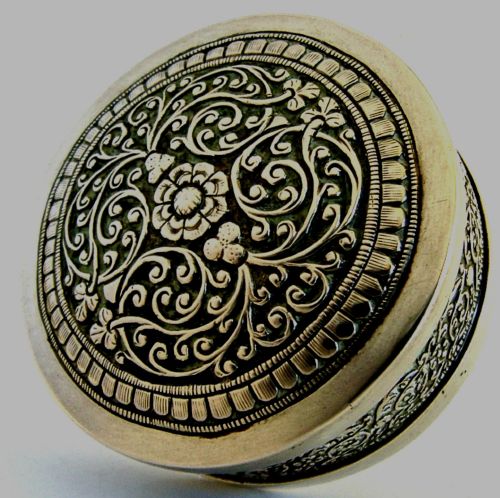
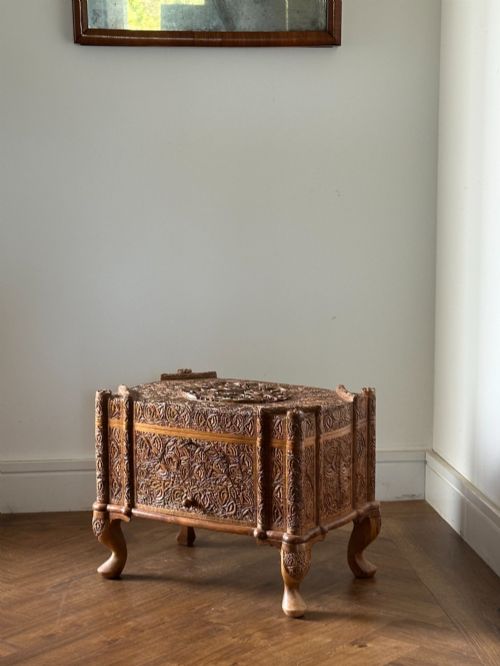
An anglo indian carved casket brings intricate regional craftsmanship and fragrant timbers into a home, offering a storied place to store keepsakes.
Anglo Indian Carved Casket
An anglo indian carved casket covers a diverse group of lidded containers made for domestic use, from small trinket boxes to larger stationery and writing boxes. These pieces emerge primarily from the nineteenth century and the early decades of the twentieth century, reflecting colonial trade and exchange.
The most common examples encountered on this page are carved sandalwood and ebony boxes, often configured as jewellery caskets or stationery boxes. Makers shaped these objects into rectangular forms, sarcophagus shapes, and specialised containers like cellarettes and sewing boxes.
Originating across regions including South India, Mysore, Canara, and Ceylon, these boxes blend local decorative traditions with British utility. They serve as tangible records of nineteenth century and early twentieth century craftsmanship.
How they were made
Artisans utilised dense timbers such as sandalwood, teak, coromandel, and solid ebony as the structural base for these caskets. These woods lent themselves to deep relief carving and smooth finishes.
Decoration relied on contrasting materials applied to the wooden carcase, including bone, horn, silver, brass, and porcupine quill work. Sadeli mosaic work and pierced ivory techniques also appear, demonstrating complex geometric and floral assembly.
Listings feature items spanning the nineteenth century up to the 1930s, constructed from sandalwood, ebony, teak, bone, silver, and brass.
What varies in quality
Quality rests in the depth and crispness of the carving, where sharply defined foliage and figures distinguish superior work from softer, shallower execution. The precision of inlaid materials, such as bone and quill, further separates standard production from finer output.
The choice of primary wood and secondary mountings, such as solid silver fittings or substantial brass hardware, dictates the status of the piece. Preservation of delicate elements like sadeli mosaic and quill work also defines the standing of an individual box.
The Anglo Indian Carved Casket Glossary
- Sandalwood
- A fragrant tropical timber valued for its fine grain and suitability for intricate relief carving. It forms the primary body of many nineteenth century boxes.
- Sadeli
- A technique of micro-mosaic work utilising geometric patterns built from materials like horn, bone, and metal. Artisans applied this mosaic to small compartments and exterior bands on boxes.
- Porcupine Quill Work
- A decorative method using natural quills arranged in geometric or linear patterns, often associated with Ceylonese boxes. These quills contrast with dark ebony frames.
- Sarcophagus
- A box shape featuring a domed or sloping lid atop a rectangular base, reminiscent of classical monumental forms. This silhouette appears frequently in nineteenth century sandalwood jewellery caskets.
- Cellarette
- A fitted container originally designed for holding bottles or decanters safely during travel or domestic service. Examples from this tradition reflect colonial campaign furniture forms.
Anglo Indian Carved Casket: Frequently Asked Questions
What were anglo indian carved caskets used for?
These boxes served multiple domestic and administrative functions in colonial households, holding letters, writing instruments, and personal valuables. Jewellery caskets and sewing boxes kept small personal items organised and secure.
Larger stationery and writing boxes provided portable desks for correspondence. Cellarettes accommodated bottles, while specialised boxes held trinkets and daily accessories.
How do I care for a sandalwood box?
Keep wooden and carved boxes away from direct sunlight and rapid humidity fluctuations to prevent timber movement or splitting. Dust gently with a dry, soft brush rather than liquid polishes.
Allowing the wood to breathe preserves its natural scent and surface patina. Handle inlaid components carefully to avoid displacing fragile bone or quill elements.
How do I tell nineteenth century pieces apart?
Examine the timber selection, construction joints, and interior fittings to gauge the period of manufacture. Nineteenth century pieces often rely on dense tropical hardwoods and traditional hand-cut joinery.
Stylistic shifts across the decades appear in the complexity of the carved motifs and the application of silver or brass hardware. Regional origins, from Ceylon to South India, also dictate specific decorative vocabularies.
Are these boxes fragile?
The structural carcase is typically robust, but applied decorative elements require thoughtful handling. Materials like bone, quill, and silver wire can be vulnerable to impact.
Lids and internal fitted trays should be opened without force to protect historical hinges and delicate compartments. Normal domestic placement away from heavy traffic keeps these items secure.