

Antique Indian Painting
When you search for an antique Indian painting, you uncover delicate miniatures on paper, vibrant temple cloths and historic watercolours that capture centuries of courtly and regional life.
Antique Indian Painting
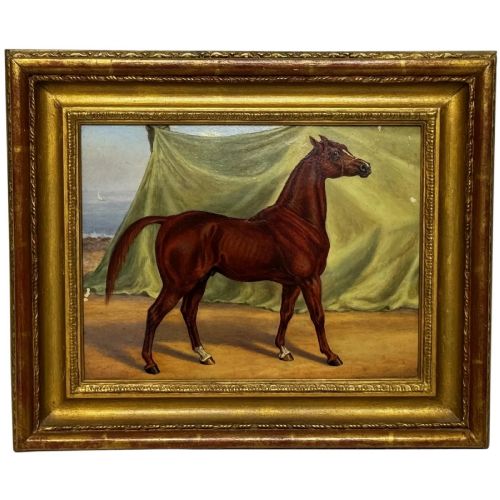
An antique Indian painting brings together historic court portraits, religious narratives and delicate studies executed across the subcontinent and associated regions like Kashmir. Buyers looking for an antique Indian painting encounter works ranging from finely detailed gouache miniatures on paper and silk to large-scale textile temple art.
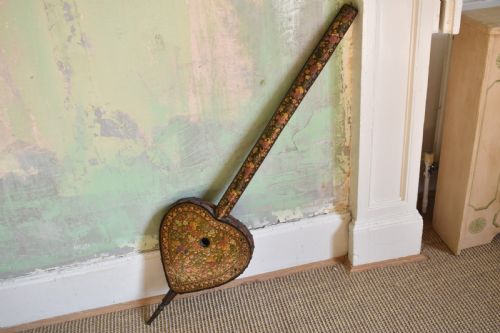
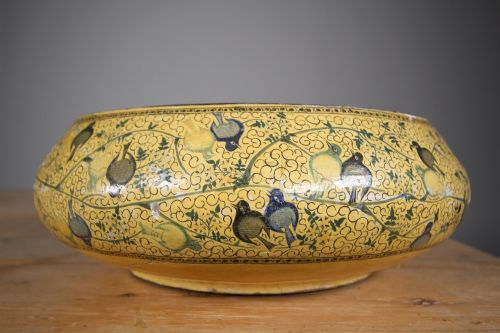
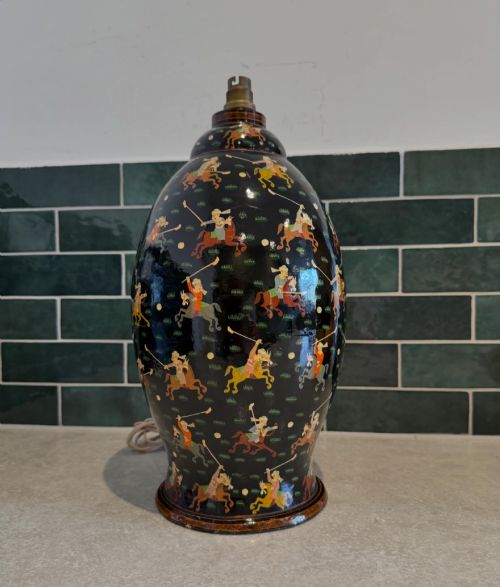
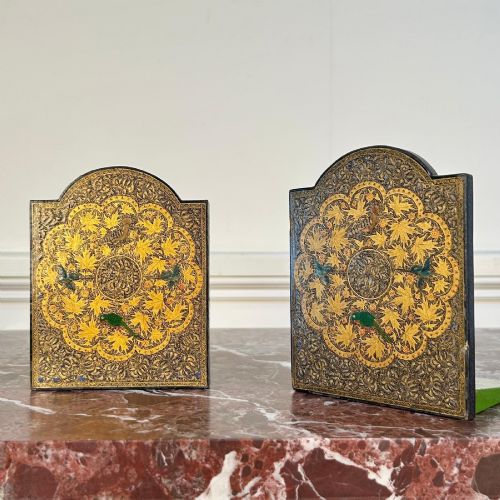
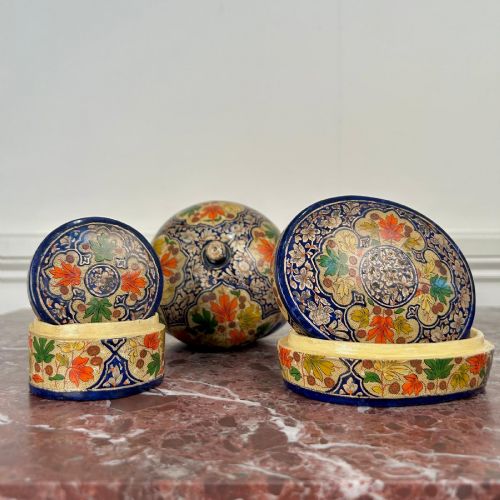
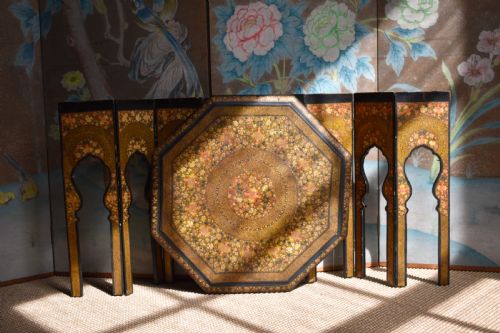
The pieces on this page span the nineteenth and early twentieth centuries, reflecting both traditional ateliers and colonial-era documentation. Alongside framed works on paper and silk, the selection includes related painted surfaces such as lacquer bowls, trays and decorative boxes.
Works attributed to regional schools such as Mughal, Kangra and Rajasthan reveal distinct local palettes and subject matters, from royal processions to intimate garden scenes. These pieces offer a direct window into historical narrative, spiritual iconography and portraiture.
Judging quality and execution
Compositional complexity and the intact survival of original frames, pigments or associated mounts heavily influence the standing of a piece. Finer works maintain their original vibrancy of colour and crispness of line, whereas lesser examples suffer from pigment flaking or heavy overpainting.
The authenticity of the regional school and the clarity of the provenance further elevate a piece within its category. Master painters working within established traditions achieved a depth of expression and narrative clarity that distinguishes museum-grade works from commercial souvenirs.
The selection includes traditional temple cloths, portrait miniatures, gouache court scenes, and Kashmiri lacquerware.
Gopal Ghose·John Hassall·G Villiers Stuart·Thomas Ditmas
The Antique Indian Painting Glossary
- Gouache
- An opaque water-based paint often used in miniature paintings to achieve rich, saturated colour and fine detail. It allows artists to build up layered compositions with a matte finish.
- Kalamkari
- A traditional style of hand-painted or block-printed cotton textile, frequently used for large temple hangings and narrative wall art. These pieces illustrate Hindu stories and mythological epics.
- Miniature
- A small, highly detailed painting executed on paper, ivory or cloth, characteristic of traditional court art. These works demand extreme precision from the artist.
- Mughal School
- An artistic style patronised by the Mughal Empire, blending Persian and Indian elements to depict court life, portraits and nature. Paintings from this school are celebrated for their naturalism and fine borders.
- Talc
- A soft mineral substance sometimes sliced into thin sheets to serve as a painting ground in nineteenth-century studies. Mica paintings on talc offer a translucent surface for portraits.
Antique Indian Painting: Frequently Asked Questions
How do I identify a Mughal school painting?
Mughal school paintings are characterised by refined portraiture, naturalistic renderings of flora and fauna, and intricate borders framing the central scene. They often depict courtly processions, emperors or romantic encounters in lush landscapes.
Look closely at the use of fine lines and gold illumination, which reflect the atelier standards of imperial workshops. The subjects generally wear period court attire and are set against detailed architectural or garden backdrops.
What is the difference between gouache and watercolour here?
Gouache utilises opaque pigments bound in water-soluble glue, resulting in a dense, matte surface that holds bright colours well. Watercolour is more translucent, allowing the white of the paper to shine through the wash.
In Indian painting, gouache is favored for miniatures and manuscript illustrations because it permits crisp layering and the application of gold leaf. Watercolour appears more frequently in nineteenth-century British colonial records and landscape sketches.
Are textile paintings displayed differently from paper?
Textile paintings such as Kalamkari temple hangings are often mounted on supportive backings or framed to relieve tension on the fabric. Because cotton and silk textiles respond to humidity shifts, proper mounting ensures the weave remains stable.
Paper works are typically framed behind glass with window mounts that prevent the surface from touching the glazing. Both forms require careful positioning away from heat sources and direct sunlight.