
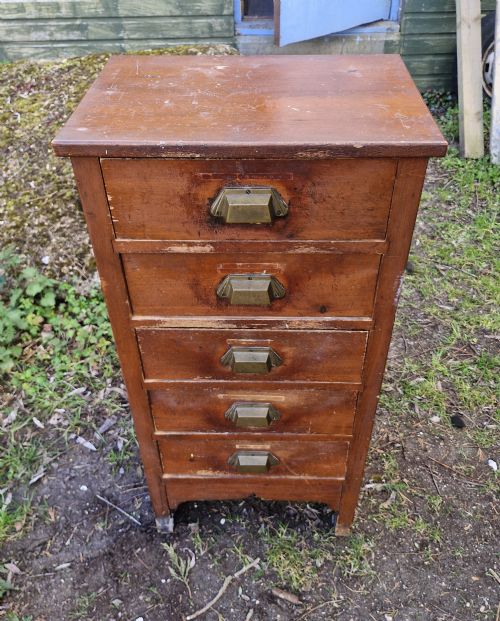

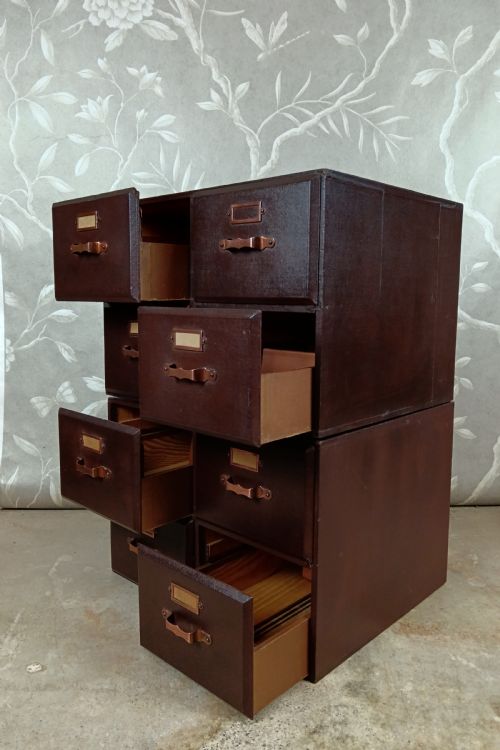


Antique Indexing Cabinet
An antique indexing cabinet organises papers, cards and small items with the solid craftsmanship of the Victorian, Edwardian and industrial eras.
Antique Indexing Cabinet
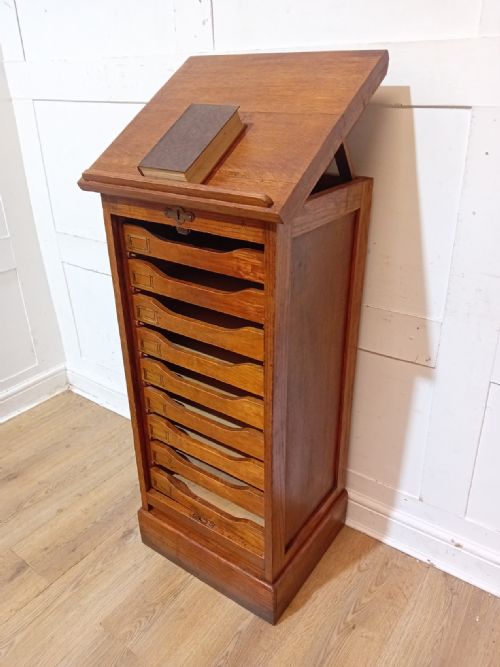
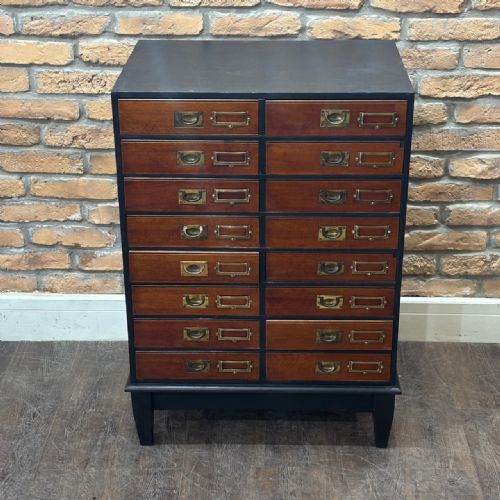
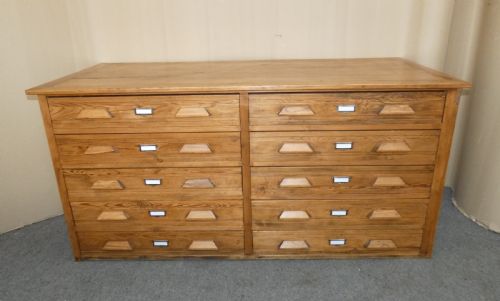
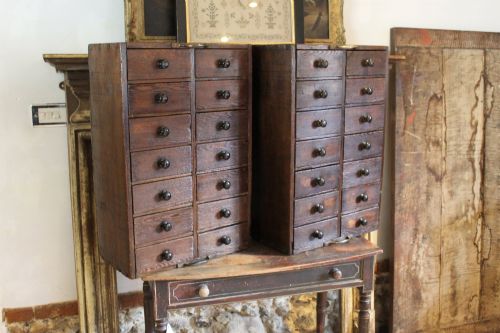
An antique indexing cabinet serves as a dedicated piece of utilitarian office or workshop furniture designed to keep correspondence, cards and small objects orderly. Buyers searching for an antique indexing cabinet encounter multi-drawer banks, filing chests, and specialist card index sets spanning the late nineteenth century through to the 1930s.
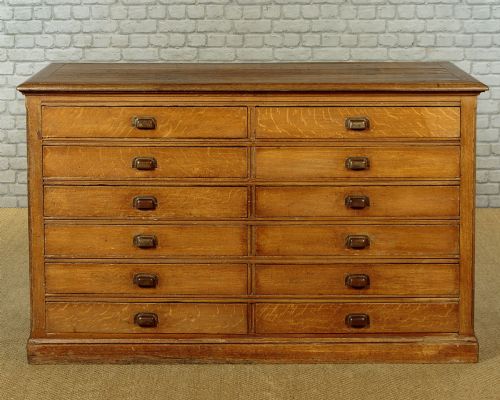
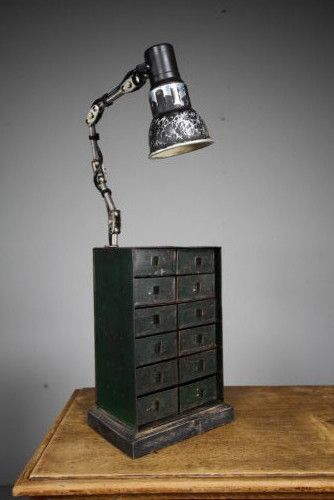
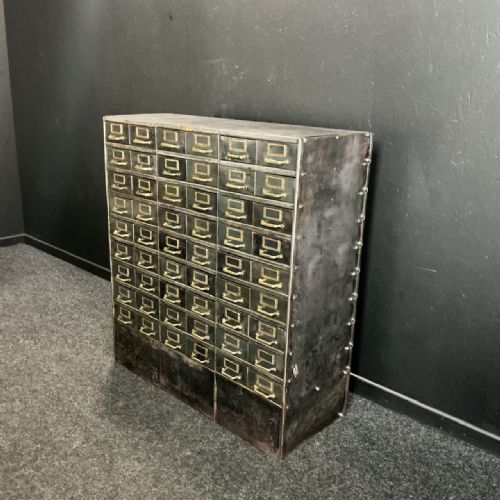
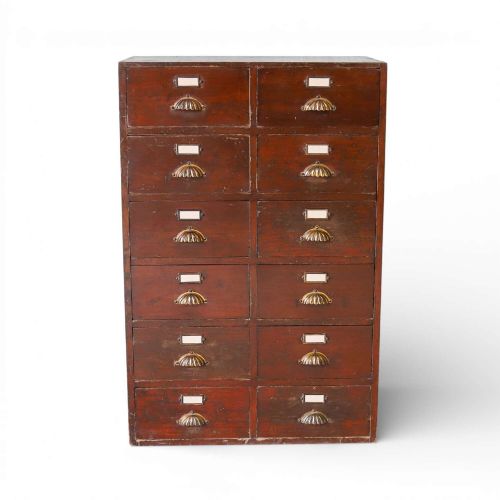
The pieces appearing here include oak, mahogany and pine multi-drawer configurations originating from Victorian and Edwardian offices, alongside industrial workshop banks. Most examples take the form of banks of shallow drawers or desktop filing units equipped with original brass pulls and label holders.
Makers such as Shannon and Amberg appear alongside utilitarian French and English workshop pieces, reflecting the international demand for efficient filing systems during the early twentieth century. These functional items translate readily into modern interiors as storage for stationery, collections or small studio supplies.
Materials and Construction
Makers constructed these storage pieces primarily using durable hardwoods and softwoods including oak, mahogany, walnut, and pine, often joined with sturdy dovetail joints to withstand daily commercial use. Metal and steel elements appear in industrial variants, whilst brass and iron supply the original shell pulls, card holders, and patent locking mechanisms.
Surface finishes rely on traditional polishing or plain painted treatments that highlight the natural grain of the timber or the industrial patina accumulated in workshops and offices. Tambour fronts, leather panels, and specialised patent letter file mechanisms demonstrate the mechanical ingenuity applied to early office furniture.
Card index sets occasionally still retain forgotten handwritten tabs naming nineteenth-century correspondents.
Distinctions in Quality
Quality rests upon the integrity of the timber selection, the presence of original hardware such as brass shell pulls and label holders, and the complexity of the internal mechanisms. Cabinets retaining patent filing systems or maker stamps command greater interest than plain utilitarian units.
The grade of secondary woods, the precision of the dovetailing on every drawer interior, and the survival of the original finish separate standard commercial office furniture from superior workshop or retail pieces.
D Napier and Sons·Brady·Amberg·Shannon
The Antique Indexing Cabinet Glossary
- Bank of drawers
- A multi-drawer storage unit designed for commercial, office or workshop use. These pieces feature numerous shallow compartments arranged vertically or horizontally.
- Label holder
- A small metal frame fixed to the front of a drawer to insert a paper marker. These components are frequently made of brass.
- Shell pull
- A stamped or cast metal drawer handle shaped like a half-shell or cup. They allow fingers to hook underneath for opening.
- Tambour
- A flexible shutter door formed of narrow strips of wood glued to canvas backing. This mechanism slides along tracks to conceal the cabinet interior.
- Cartonniere
- A decorative desktop filing cabinet or paper rack. Originating in France, these pieces often combine wood and leather.
Antique Indexing Cabinet: Frequently Asked Questions
What is an antique indexing cabinet used for?
These cabinets served offices, libraries and workshops for sorting letters, reference cards, invoices and small commercial items.
Today, buyers utilise them in homes and studios to store stationery, craft materials, jewellery or small collections while maintaining period character.
How do I identify an Edwardian indexing cabinet?
Edwardian examples typically date from around 1900 to 1910, often utilising oak or mahogany with clean lines reflecting the transition away from heavy Victorian ornamentation.
They frequently feature standardised card index dimensions, brass label holders, and patent mechanisms designed for expanding office filing systems.
Are these cabinets suitable for modern paper sizes?
Many early indexing units were built for specific historical card sizes, library catalogues, or folded letters rather than modern A4 paper.
Drawers intended for cards or jewellery are generally shallow and narrow, whereas larger multi-drawer banks accommodate broader documents depending on the specific workshop or office design.
What maintenance do these wooden cabinets require?
Solid wood furniture benefits from stable indoor humidity away from direct heat sources to prevent the timber from warping or splitting.
Applying a traditional beeswax periodically helps nourish the vintage finish and protects the original surface patina.