

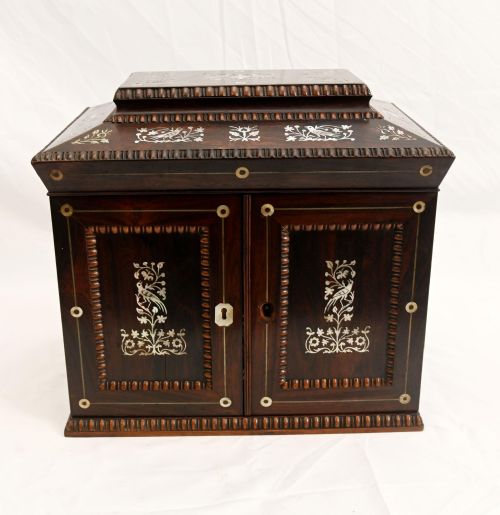


Lockable Collectors Cabinet
These lockable collectors cabinet pieces are secure timber chests and tabletop pieces designed to keep precious small items safe.
Lockable Collectors Cabinet
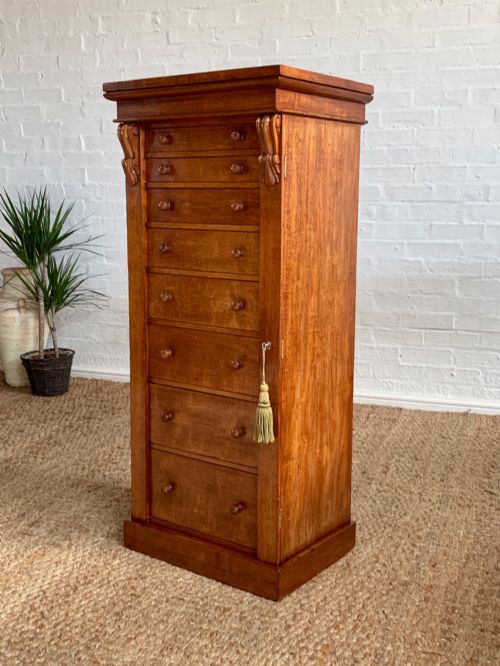
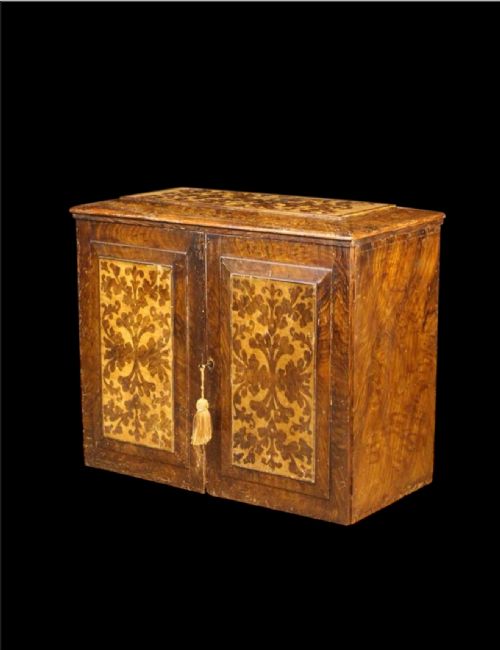
A lockable collectors cabinet brings together secure storage and display forms from the Victorian and Edwardian periods. Buyers searching this phrase examine specialised tabletop cabinets, jewellery chests, and tall Wellington chests.
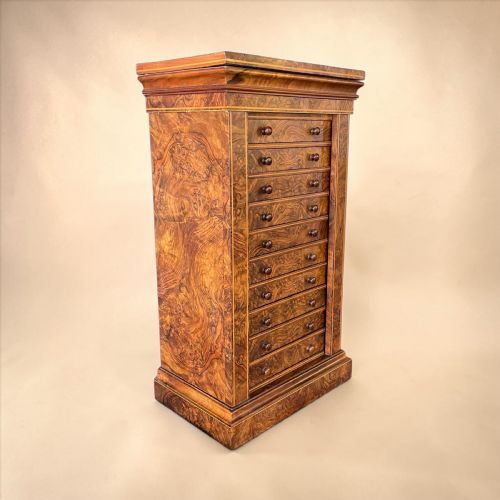
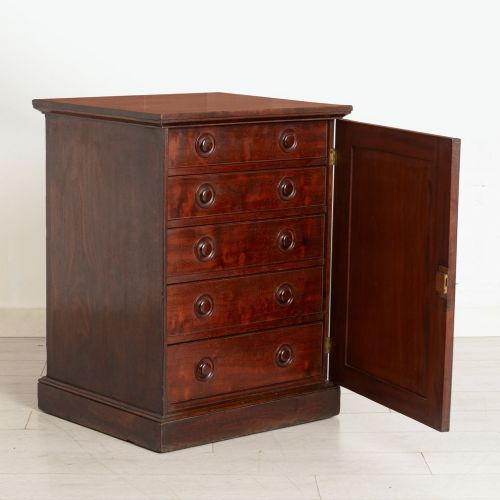
The versions most commonly met on this page are mahogany and walnut pieces featuring multiple small drawers, often fitted with functional locks and keys. Makers during the nineteenth century designed these compact chests for natural specimens and personal valuables.
Object types vary from small tabletop storage to substantial forty-drawer cabinets constructed to house extensive specimens. Each variation reflects the domestic and scientific collecting habits of the nineteenth and early twentieth centuries.
How they were made
Cabinet makers utilised dense timbers such as mahogany, rosewood, and burr walnut veneer over solid timber carcases. Figured veneers provide rich grain patterns across drawer fronts and doors.
Brass hardware, including escutcheons, drop handles, and locking mechanisms, secures the contents while complementing the dark polished wood surfaces. Mother-of-pearl inlay occasionally adds contrasting detail to jewellery chests.
Lockable Collectors Cabinet Retail Price Guide 2026
Typical asking prices for lockable collectors cabinet among the pieces listed under this phrase on Sellingantiques today, from the lower quarter to the upper quarter. They describe what is for sale here now, not the wider market.
A forty-drawer cabinet provides enough tiny compartments to test the patience of any dedicated beetle collector.
What varies in quality
Quality appears in the selection of figured timber veneers and the precision of the drawer construction. Superior cabinets show careful matching of wood grain across multiple drawers and doors.
The presence of original turned knobs, working brass locks with keys, and intact interior drawer arrangements distinguishes better examples from altered pieces.
Brady
The Lockable Collectors Cabinet Glossary
- Wellington chest
- A tall, narrow chest of drawers secured by a hinged locking stile on one side that fastens over the drawer edges. This form originates from the nineteenth century.
- Veneer
- A thin slice of figured wood, such as burr walnut or mahogany, applied over a stable timber carcase to create decorative surfaces. This technique enhances the visual appeal of cabinet fronts.
- Escutcheon
- A flat plate of brass surrounding a keyhole that protects the surrounding wood from wear. These fittings are often decorative as well as functional.
- Stile
- A vertical framing member in a cabinet door or the locking bar on a Wellington chest. It provides structural rigidity and housing for locks.
Lockable Collectors Cabinet: Frequently Asked Questions
What were lockable collectors cabinets used for?
These cabinets stored delicate natural history specimens, coins, medals, and precious personal jewellery safely away from dust and handling.
The multiple small drawers allowed owners to organise and classify extensive private collections within a compact footprint.
How do I secure the drawers?
Many pieces utilise a side locking bar or a hinged front door that covers the drawer stack when locked in place.
A single key turns the primary lock to secure all internal drawers simultaneously.
Are these cabinets Victorian or Edwardian?
The listings span the nineteenth and early twentieth centuries, covering both Victorian and Edwardian manufacturing periods.
Stylistic details and timber choices help indicate whether a piece dates to the mid-nineteenth century or the Edwardian era.
Can I place these on a table?
Tabletop cabinets and jewellery chests are specifically scaled for placement on desks, sideboards, or tabletops.
Larger Wellington chests and multi-drawer specimen cabinets stand directly on the floor due to their height and weight.