



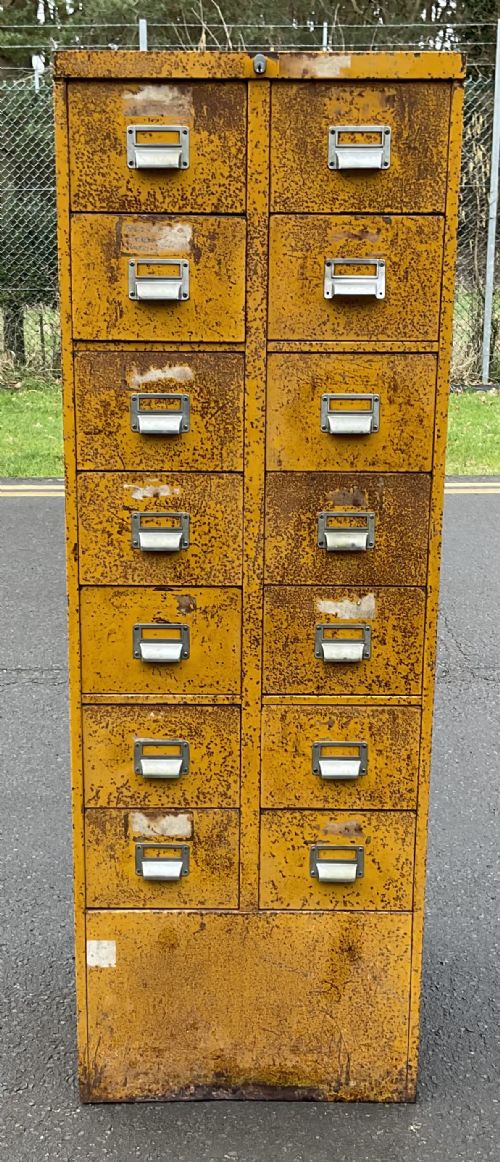
Antique Index Card Drawers
These antique index card drawers are practical filing units designed for organised storage, offering sturdy construction and period character for any workspace.
Antique Index Card Drawers
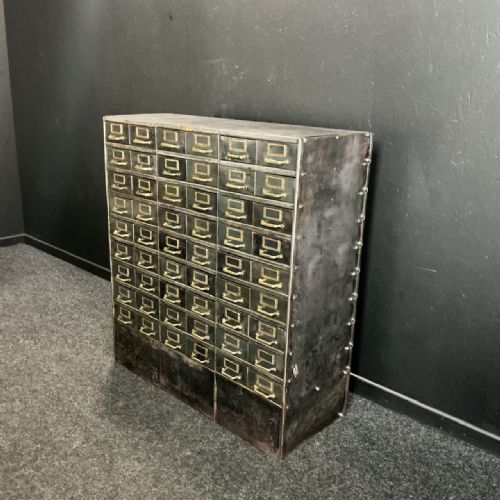
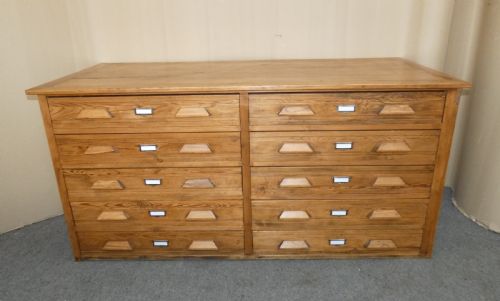
When you search for antique index card drawers, you are looking at functional storage units built for offices, libraries, and shops. The examples found here range from desktop filing drawers and banks of drawers to multi-drawer filing cabinets and shop fittings.
You are most likely to meet pieces originating from the Victorian period up through the 1960s, with a strong representation of Edwardian and 1920s designs. These items served commercial and institutional purposes, housing everything from library cards to business correspondence and small inventory.
The forms vary from modest desktop sets to large multi-drawer banks containing dozens of small compartments. Their enduring appeal lies in the combination of honest utility and traditional cabinet-making materials.
How they were made
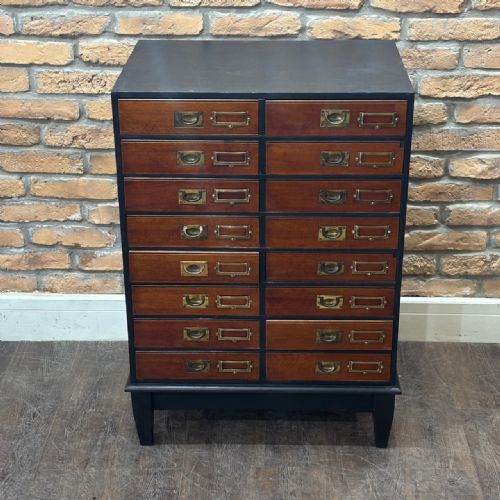
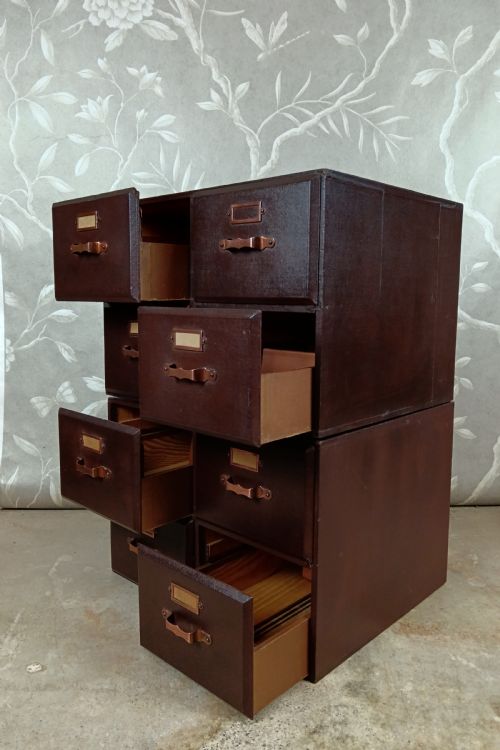
The construction of these pieces relies heavily on timbers such as oak, mahogany, pine, walnut, and beech, chosen for their durability in daily commercial use. Makers often combined these traditional woods with metal and brass hardware, including pulls and label holders essential for filing systems.
Many cabinets utilise straightforward joinery suited to heavy office environments, while others incorporate specialised mechanisms like patent letter files. Surfaces are finished to withstand frequent handling, sometimes appearing in painted wood or with satin walnut fronts.
Listings span the Victorian era through the 1960s, featuring woods like oak, mahogany, and pine alongside industrial metal and brass elements.
What varies in quality
The quality of these storage pieces is defined by the selection of timber and the integrity of the hardware. Finer examples display superior grain matching in woods like mahogany and oak, alongside original brass label holders and pull handles that function smoothly.
Construction details also separate standard office furniture from higher-grade shop fittings, such as the precision of the drawer fit and the complexity of multi-drawer configurations like fifty-drawer shop units.
Amberg·Shannon
The Antique Index Card Drawers Glossary
- Bank of Drawers
- A multi-drawer storage unit, usually arranged in vertical and horizontal rows for systematic organisation.
- Haberdashery Cabinet
- A piece of storage furniture originally used in shops to display and organise small goods, featuring numerous shallow drawers.
- Patent Letter File
- An indexed filing system protected by a patent, designed for sorting correspondence securely within a cabinet.
- Shop Fitting
- Fixtures and furniture built specifically for commercial retail spaces, often constructed on a large scale to hold inventory.
Antique Index Card Drawers: Frequently Asked Questions
What were index card drawers used for?
These drawers were essential office and library equipment used to organise index cards, correspondence, and small documents before digital databases existed.
Businesses, institutions, and shops relied on them to keep extensive filing systems accessible and orderly throughout the working day.
How do I style them at home?
Their compact multi-drawer formats make them ideal for tabletops, desks, or as standalone statement storage in a study or living space.
You can use the numerous small compartments to sort modern stationery, craft supplies, or small collections while adding period industrial or Edwardian character to a room.
Are these cabinets suitable for modern paper?
Many older filing configurations were built for specific historical card sizes or letters rather than modern A4 dimensions.
It is helpful to check the internal dimensions of the drawers if you plan to store contemporary office paper or standard filing folders.
How do I identify the period?
Dating relies on observing the predominant timber choices, hardware styles, and overall construction methods typical of specific decades.
Victorian and Edwardian versions often feature rich walnut or mahogany with ornate brass pulls, whereas 1920s and later industrial examples tend to use simpler oak, pine, or exposed metal.