

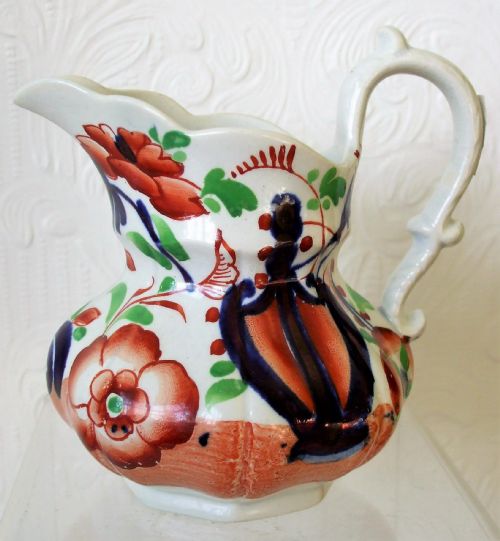


Antique Imari Ceramic Jugs
Antique imari ceramic jugs bring together robust British ironstones and delicate Japanese imports, offering bold hand-painted palettes to domestic tables and display cabinets alike.
Antique Imari Ceramic Jugs
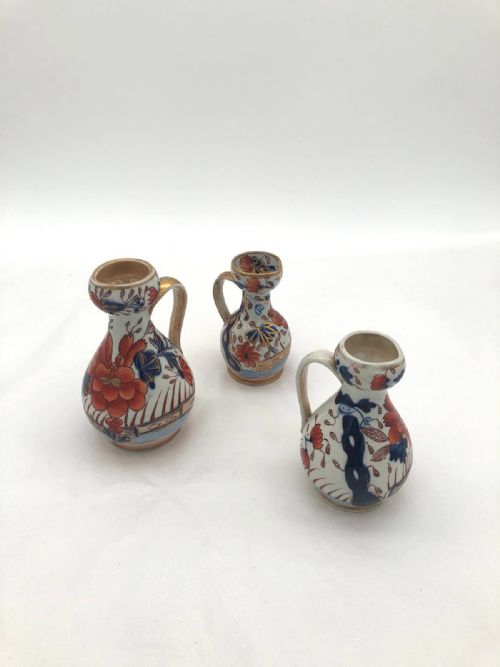
When searching for antique imari ceramic jugs, collectors encounter a fascinating crossover between traditional Japanese export wares and robust British interpretations inspired by Eastern palettes. The pieces gathered here span Georgian, Victorian, and earlier periods, showcasing domestic utility alongside striking decorative presence.
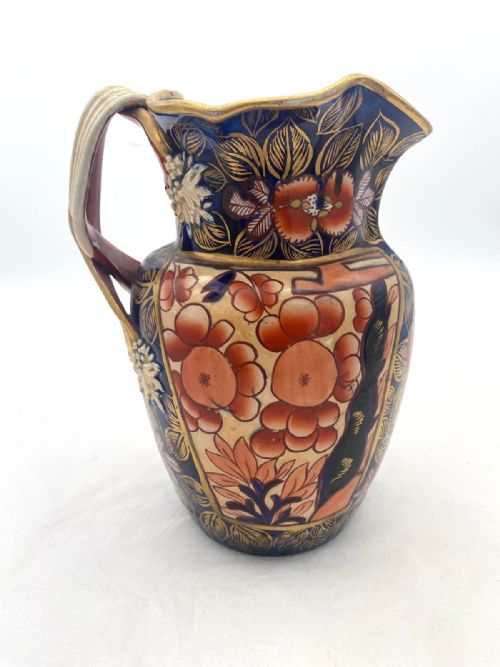
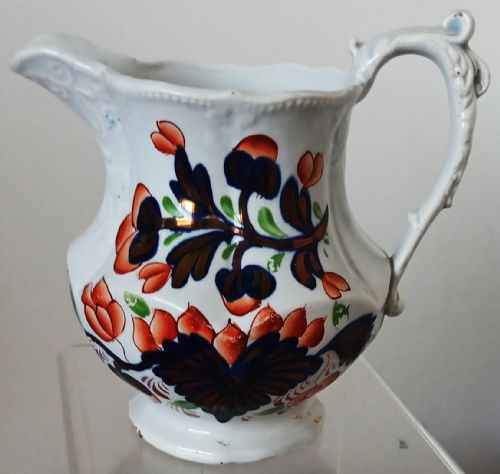
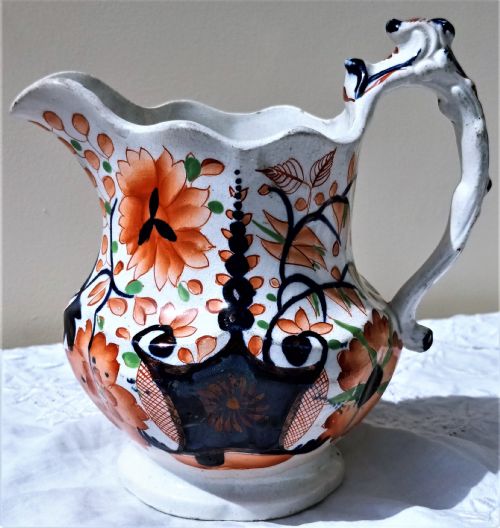
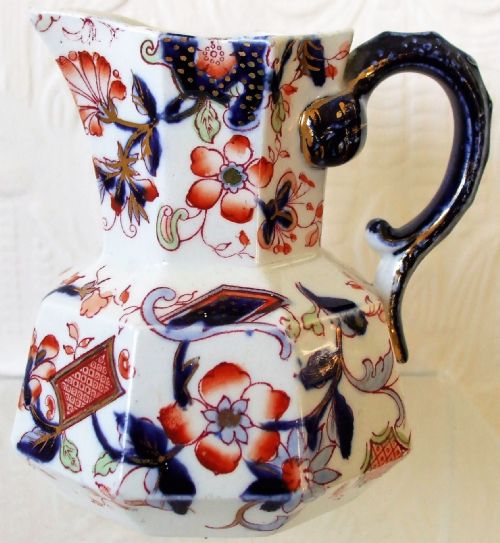
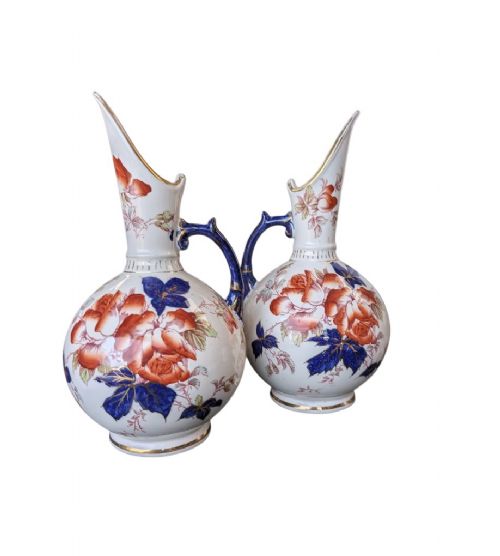
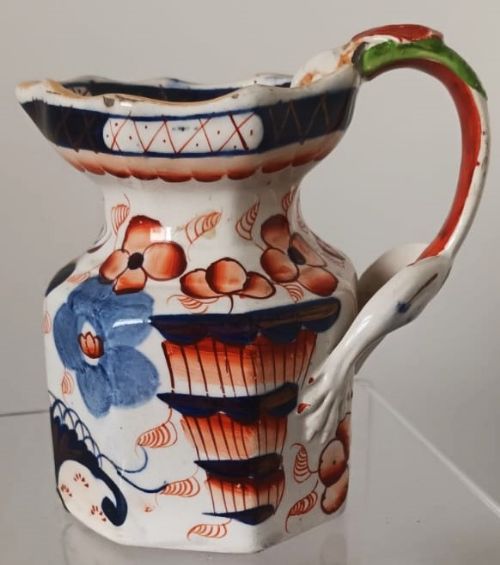
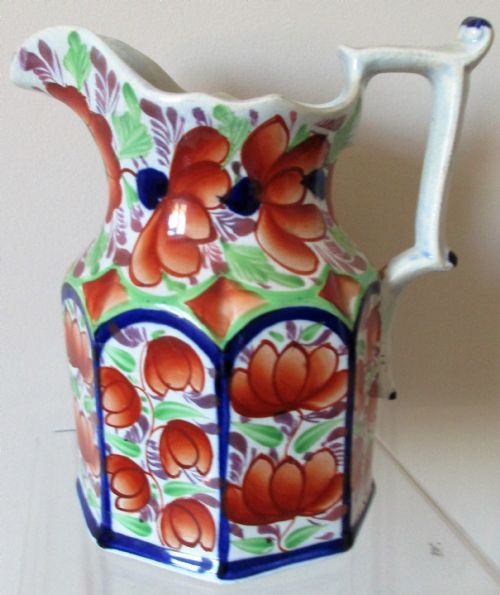
The most common form met on this page is the sturdy ironstone pitcher, often featuring the distinctive hydra-handle design or geometric patterns produced by major English potteries.Alongside these, Japanese export vessels and Gaudy Welsh earthenwares appear, demonstrating how diverse kilns adopted the characteristic blue, iron-red, and gilt colour schemes.
Objects range from single decorative jugs to grand sets complete with basins and matching tea service components. Whether designed for the washstand or the dining table, each vessel reflects the persistent Victorian and Georgian fascination with oriental ornamentation.
Materials and production methods
Makers utilised dense ironstone and fine porcelain bodies to form durable vessels capable of daily household use. These ceramic foundations provided a stable canvas for rich underglaze cobalt blue and vibrant enamel pigments.
Surface decoration frequently incorporated applied gold leaf and heavy gilding to highlight intricate floral and architectural motifs. Potters fired the pieces at high temperatures to fuse the metallic accents and colourful glazes permanently with the underlying clay.
Elephant feet proved surprisingly popular as a decorative moulding choice for nineteenth-century water jugs.
Factors of distinction
Quality rests primarily on the crispness of the hand-painted detailing and the precision of the gilding applied across the body and handle. Finer examples display tightly controlled brushwork where the iron-red and cobalt hues remain sharp and distinct within their borders.
The physical weight and integrity of the ceramic body also determine grade, with superior ironstone maintaining clean casting lines and well-defined relief moulding on shapes like the hydra handle. Completeness of matching sets and the preservation of original gold leaf elevate particular pieces significantly.
Mason's Ironstone·Keeling and Co·Royal Davenport
The Antique Imari Ceramic Jugs Glossary
- Ironstone
- A heavy, durable type of earthenware patented in the nineteenth century to imitate Chinese porcelain. It resists chipping and forms the sturdy body of many large pitchers.
- Hydra handle
- A distinct serpentine handle shape terminating in a scrolled grip, frequently seen on nineteenth-century ceramic jugs. This form draws direct inspiration from classical antiquity.
- Gaudy Welsh
- A style of brightly coloured pottery produced in Wales and England featuring Imari-inspired palettes of cobalt blue, copper red, and gilt. It was made primarily for domestic use.
- Arita
- A Japanese town and production centre renowned for early porcelain wares exported to Europe. Pieces from this tradition heavily influenced Western imari designs.
Antique Imari Ceramic Jugs: Frequently Asked Questions
Can these pitchers still hold liquids?
Most ironstone and porcelain vessels remain structurally sound enough to hold water for display flowers or occasional serving use.
Inspect the interior for hairline cracks or crazing before filling, as older earthenware bodies can sometimes weep moisture through age-weakened glazes.
What defines the imari colour palette?
The traditional palette relies on a striking combination of underglaze cobalt blue, iron-red enamel, and abundant gilt highlights.
Additional colours like green or soft yellow occasionally appear, creating the rich visual contrast that made these export and revival wares popular.
How do I date an ironstone jug?
Examine the maker marks stamped or printed on the base, alongside the specific pattern name and stylistic clues like handle form.
Victorian and Georgian pieces often display specific registry diamonds or transfer-printed factory ciphers that narrow down the exact production decade.