



Antique Horse Racing Picture
An antique horse racing picture brings the drama of the turf into your home through framed prints, oils, and needlework.
Antique Horse Racing Picture
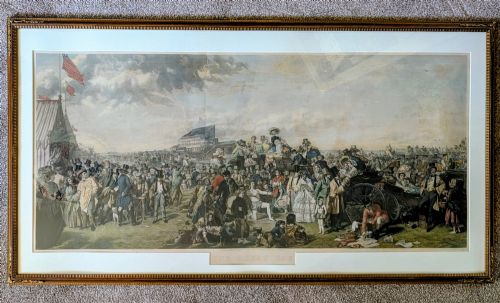
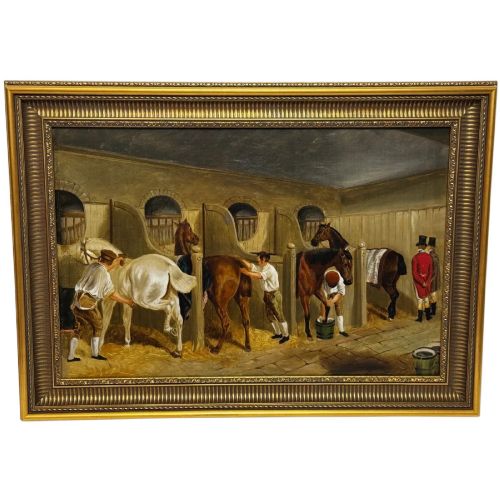
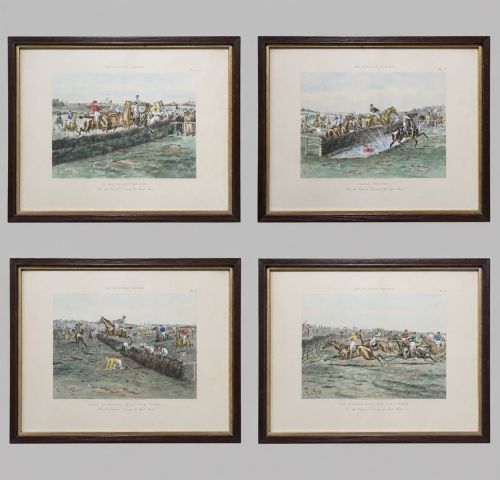
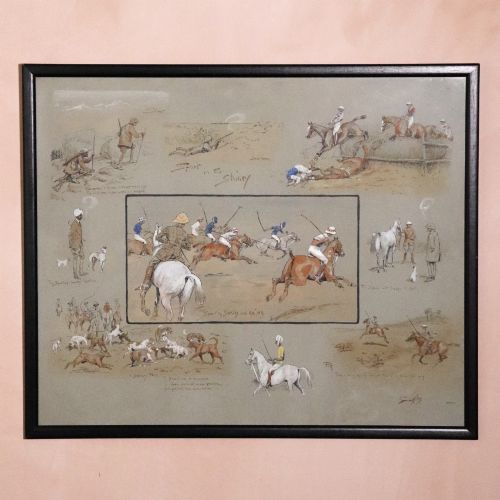
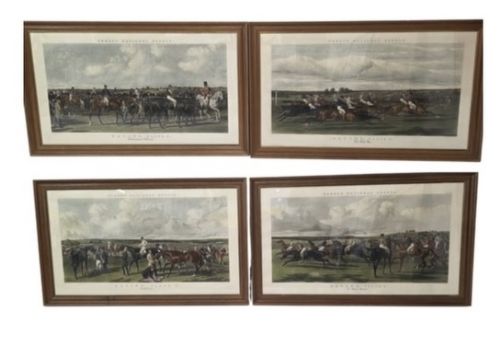
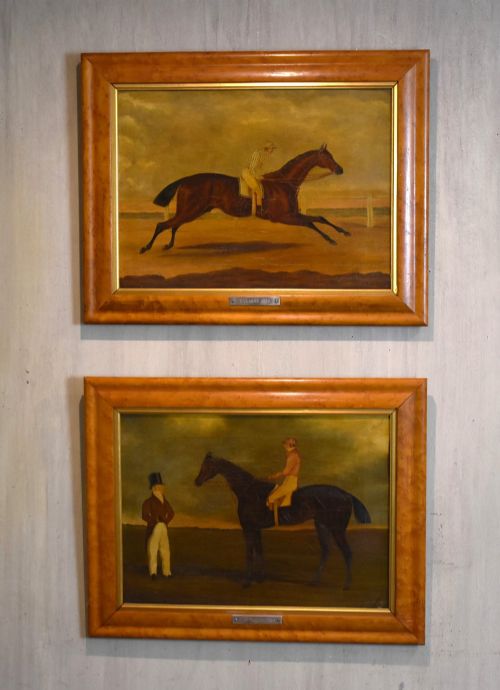
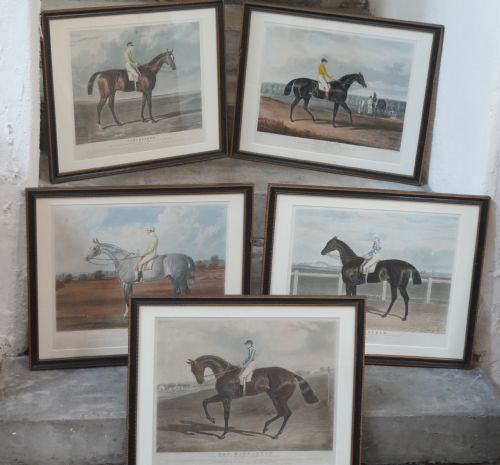
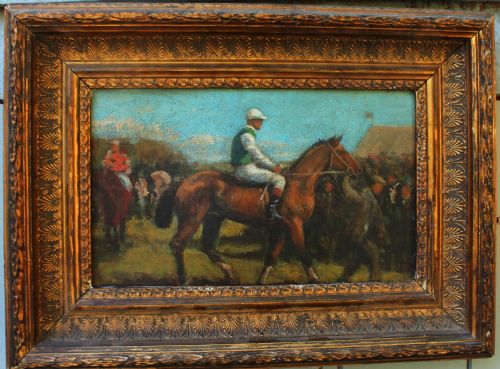
When you search for an antique horse racing picture, you encounter works spanning the nineteenth and early twentieth centuries, capturing the energy of the track, famous runners, and steeplechase events. The most frequent pieces on this page are original prints, including hand-coloured aquatints and chromolithographs, alongside oil paintings on canvas and panel.
Originating largely from British sporting art traditions, these pictures record famous courses such as Epsom and Newmarket through the eyes of period artists and publishers. They range from multi-plate sets documenting races to single character studies of legendary horses and riders.
How they were made
Makers employed traditional printmaking methods, including engraving and aquatint, often applying hand-colouring in watercolour or ink to bring vibrancy to the jockey silks and turf. These works were then mounted behind glass within timber frames, frequently accented with gilt wood or gilded mouldings.
Painters utilised oil on canvas or board, building up race paddock studies and horse portraits with careful brushwork to render muscle definition and atmospheric light. Textile artists achieved similar detail through fine silk needlework, stitching complex trackside scenes by hand.
Framing materials combined paper, wood, and glass to protect delicate works from environmental wear while offering a formal presentation suitable for country houses and libraries.
Listings feature paper, glass, and wood alongside oil on canvas and silk needlework.
What varies in quality
Quality rests primarily on the fidelity of the draughtsmanship and the authority of the hand behind the brush or engraving plate, distinguishing competent commercial output from works by skilled practitioners. Master painters and renowned print publishers captured the genuine anatomy and movement of the thoroughbred far more convincingly than anonymous jobbing copyists.
The survival of original surface details, such as crisp ink impressions, vibrant hand-colouring, and unblemished silk threads, separates well-preserved examples from faded or heavily restored specimens. Original framing, whether in period gilt wood or simple moulding, also preserves the historical integrity of the piece.
William Powell Frith·George Finch Mason·John Frederick Herring Snr·Alfred Munnings·Alfred Wheeler·Charles Clifford Turner·John Atkinson·Isaac Cullin·Charles Johnson Payne Snaffles
The Antique Horse Racing Picture Glossary
- Aquatint
- A variant of etching that produces broad tonal areas resembling watercolour washes. It was widely utilised in nineteenth-century sporting prints to render atmospheric turf and skies.
- Chromolithograph
- A multicoloured planographic print produced without hand-colouring through the use of multiple lithographic stones. This technique allowed publishers to issue vivid periodical supplements in large runs.
- Jockey Up
- A phrase denoting a racehorse depicted with its rider mounted in the saddle. It frequently appears in titles describing specific nineteenth-century turf victories.
- Needlework Picture
- A decorative textile panel worked in silk or wool threads to depict a pictorial scene. Examples here capture famous racing tracks using counted stitches.
- Reverse Painting on Glass
- An artwork executed directly onto the rear side of a glass panel so that the final image is viewed through the transparent front. This technique protects the pigments from atmospheric tarnishing.
Antique Horse Racing Picture: Frequently Asked Questions
What subjects do these pictures show?
These works depict racehorses, famous jockeys, and major English courses like Epsom and Newmarket. You see everything from crowded paddock scenes to dramatic steeplechase jumps.
Many pieces record historical race winners by name, alongside broader sporting sequences and humorous interpretations of turf life.
How were antique horse racing prints produced?
Printmakers used techniques such as engraving, aquatint, and chromolithography to transfer detailed drawings onto paper. Artisans frequently applied hand-colouring with ink or watercolour to enhance the jockeys' silks.
Parks and publishers issued these individually or in sets, framing them behind glass in wood or gilded surrounds.
Are needlework racing pictures genuine period items?
Selected textile pieces feature fine silk needlework depicting tracks like Epsom Park from the Victorian and Edwardian eras. These domestic works required immense skill to capture perspective and movement with thread.
They offer a tactile alternative to standard paper prints while remaining firmly rooted in British sporting art traditions.
How should I hang an antique racing picture?
Protect delicate paper prints, watercolours, and silk needlework from direct sunlight to prevent the ink and pigments from fading. Display them away from damp walls to safeguard the original wood and gilt frames.
Secure them using appropriate fixings given the weight of the glass and timber construction.