

Antique Home Desk
An antique home desk brings timeless timber and traditional writing surfaces into a modern study, offering practical workspace steeped in character.
Antique Home Desk
An antique home desk encompasses a diverse range of writing furniture designed for domestic studies, libraries, and private offices. The pieces appearing in this selection span multiple centuries and stylistic revivals, capturing the shifting domestic habits of writers, clerks, and households over time.
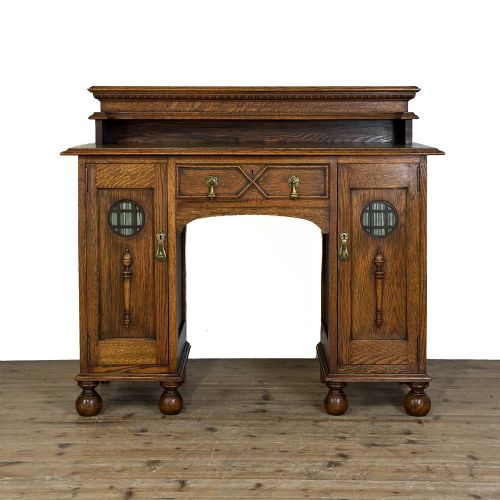
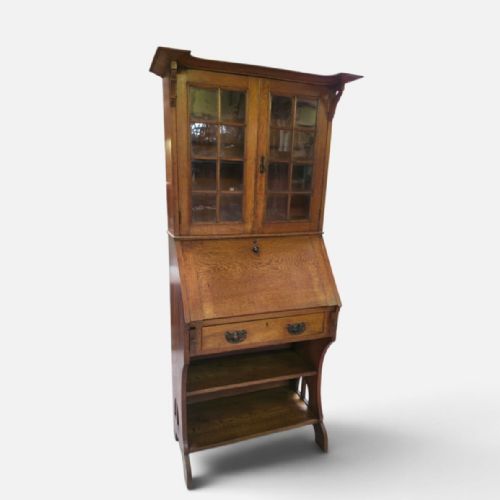
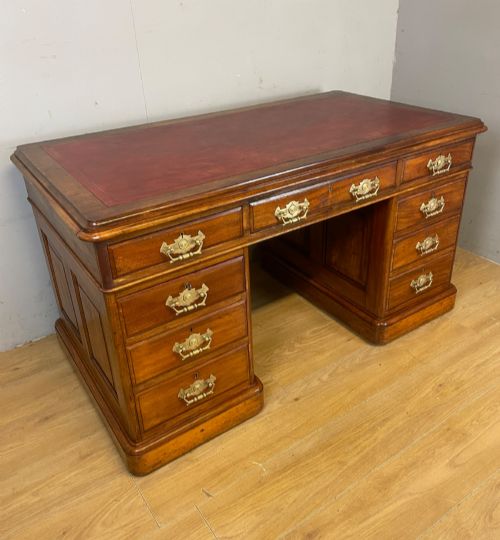
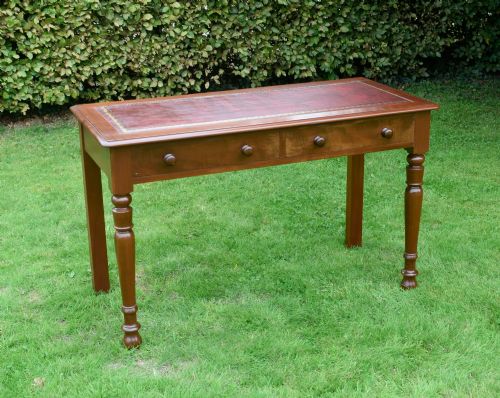
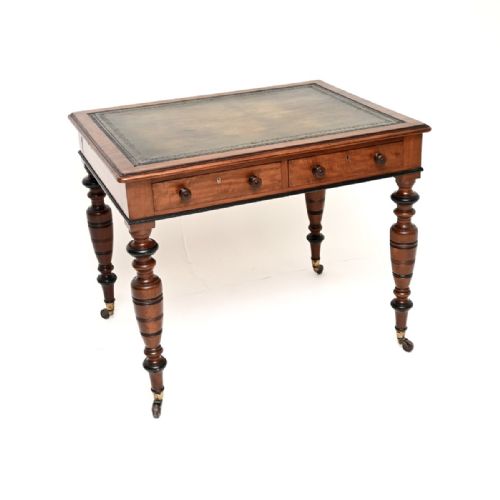
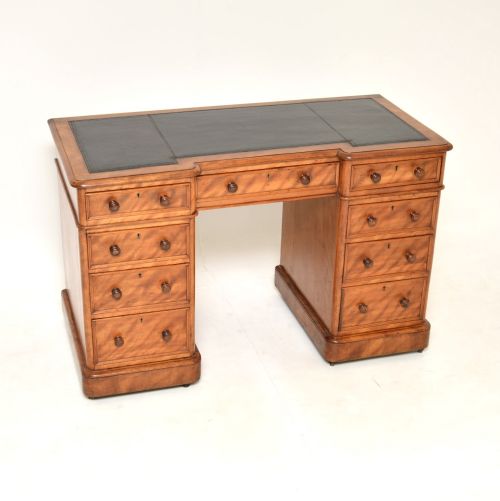
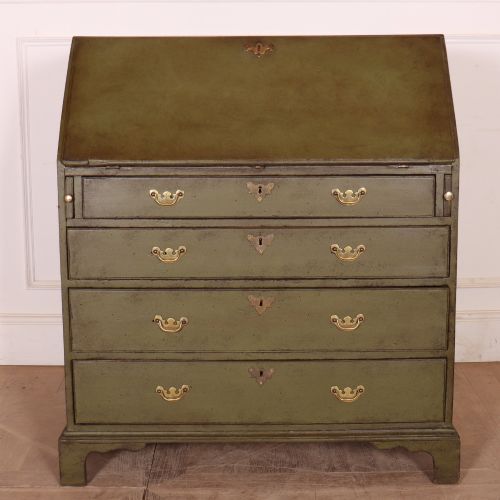
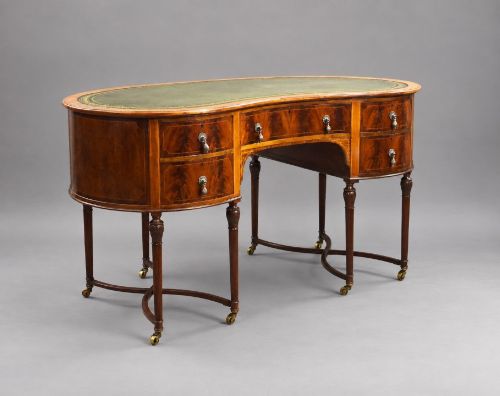
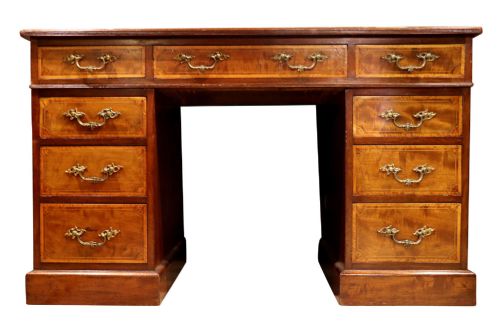
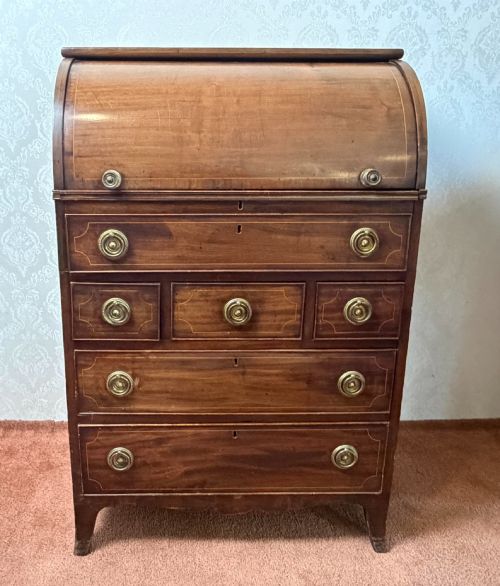
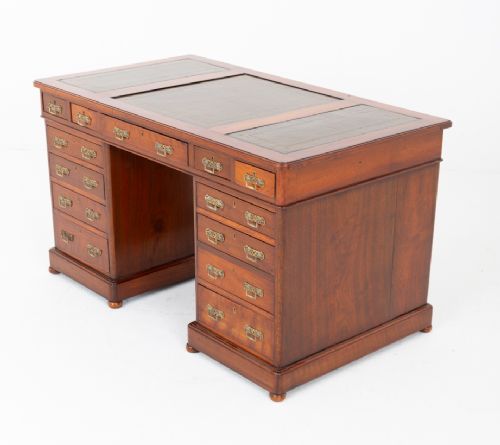
Pedestal desks and kneehole tables form a significant portion of what is available, frequently surfaced with fitted leather writing panels. Buyers will also encounter compact writing tables, fall-front bureaux, and partner desks intended for use from both sides.
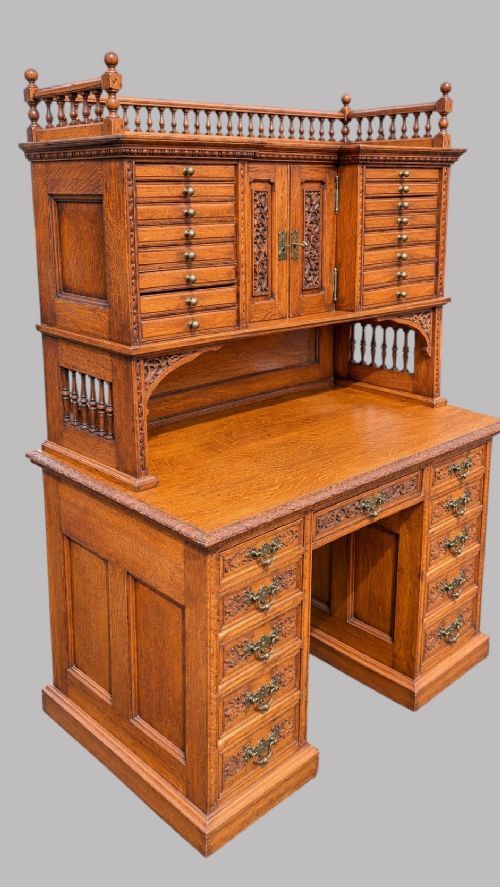
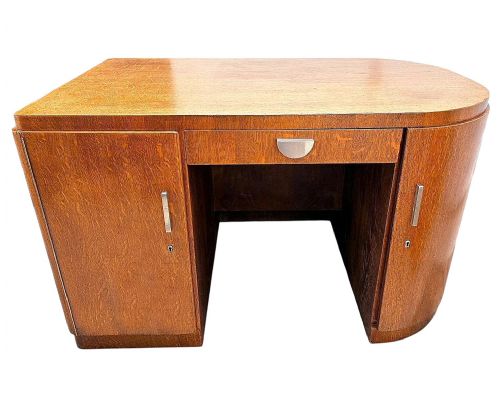
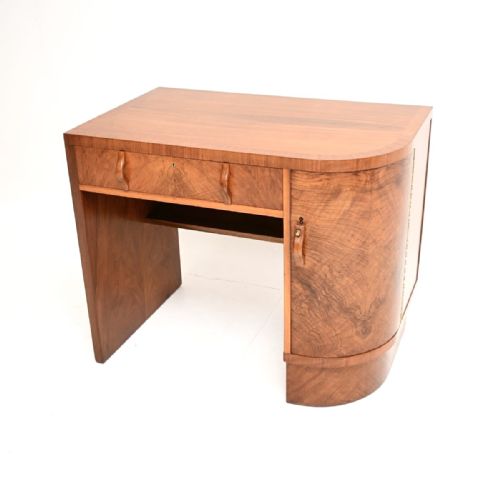
Origins stretch from nineteenth-century Victorian workshops through Edwardian iterations to twentieth-century Art Deco interpretations. Walnut, mahogany, and oak dominate the forms, reflecting the enduring preference for robust British hardwoods in domestic office environments.
Materials and Construction
Cabinetmakers constructed these desks primarily using solid and veneered hardwoods, notably mahogany, walnut, and oak, often accented with burr walnut or satinwood figure work. Timber selection dictated both the visual weight and the structural stability of the writing surface.
Leather inserts, frequently tooled with gold leaf borders, were inset into the primary writing surfaces of pedestal desks and writing tables. Brass handles, escutcheons, and locks completed the functional hardware, securing drawers and pedestals.
Secret compartments tucked inside nineteenth-century bureau pigeonholes remain ready to guard modern house keys and postage stamps.
Distinctions in Quality
The degree of craftsmanship in cabinetmaking separates standard utilitarian pieces from exceptional examples produced by prominent cabinetmakers. Superior construction reveals itself in tight dovetail joints, carefully selected timber veneers, and intact original hardware.
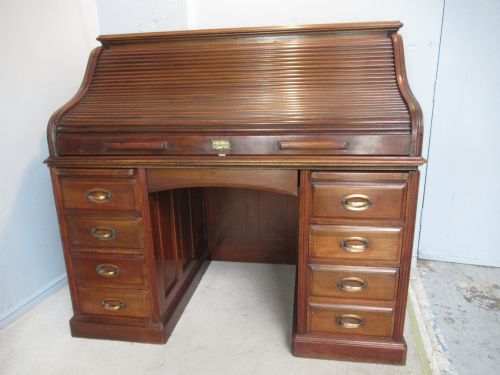
Design sophistication also elevates certain desks above others, such as those featuring complex tambour mechanisms, satinwood inlay, or fully finished two-sided partners configurations. The presence of documented maker signatures adds a layer of distinction to the craftsmanship.
Edwards and Roberts·Johnstone and Jeanes·Hobbs and Co·Wylie and Lochhead Glasgow·Maple and Co
The Antique Home Desk Glossary
- Pedestal desk
- A freestanding desk comprising two supporting columns of drawers with a central writing surface spanning the gap.
- Partners desk
- A large double-sided desk designed so two people can sit opposite one another and work simultaneously.
- Bureaux
- A sloping fall-front desk that conceals an interior arrangement of small drawers and pigeonholes when opened.
- Tambour
- A sliding flexible shutter made of narrow strips of wood glued to canvas, used to enclose the upper section of a desk.
- Kneehole desk
- A compact desk featuring a central recessed space for the legs beneath a set of drawers.
Antique Home Desk: Frequently Asked Questions
How do I choose the right size desk for a modern home office?
Consider the available floor space and whether the desk needs to float in the middle of a room or sit flush against a wall. Pedestal and partners desks require ample clearance around them, whereas compact writing tables and kneehole desks suit smaller studies.
Measure the room carefully to ensure drawer pedestals can pull out fully without obstructing chairs or walkways. Take into account the height of the writing surface relative to modern seating requirements.
What is the difference between a writing table and a pedestal desk?
A writing table typically consists of a flat top supported by four legs, sometimes featuring a small row of drawers beneath the surface. It offers a lighter visual profile suitable for drawing rooms or multi-purpose spaces.
In contrast, a pedestal desk relies on two heavy banks of drawers to support the top, providing substantial internal storage and a commanding presence in a dedicated study.
How should I care for the leather top on my antique desk?
Leather writing surfaces require gentle cleaning using a slightly damp cloth, avoiding harsh chemical cleaners or excessive moisture that can warp the underlying wood. Periodic treatment with appropriate leather dressings helps prevent cracking.
Keep the desk away from direct sunlight and strong heat sources, which can dry out both the leather insert and the surrounding timber framework over time.
Are these desks suitable for daily computer work?
Many antique desks accommodate laptops and desktop monitors comfortably, provided the dimensions match your equipment. However, older drawer heights may occasionally limit knee clearance for modern office chairs with adjustable armrests.
Check the internal kneehole measurements before purchase if you require specific height clearances for seating and legs during long working hours.
How can I identify the period of an antique desk?
Dating relies on examining the timber species, construction techniques, hardware style, and overall decorative motifs. For instance, satinwood inlay often points to the Edwardian era, while robust carved paw feet frequently indicate mid-Victorian production.
Look for maker stamps inside drawer boxes or original locks bearing manufacturer names, which can provide precise clues to the date and origin of the piece.