


Antique Hanging Clock
An antique hanging clock brings timekeeping off the mantelpiece and onto the wall, offering both architectural presence and mechanical charm.
Antique Hanging Clock
When you search for an antique hanging clock, you encounter a diverse group of timepieces designed to be mounted directly onto a wall rather than resting on a surface. These pieces span the nineteenth and early twentieth centuries, encompassing Victorian, Edwardian, and Art Deco aesthetics.
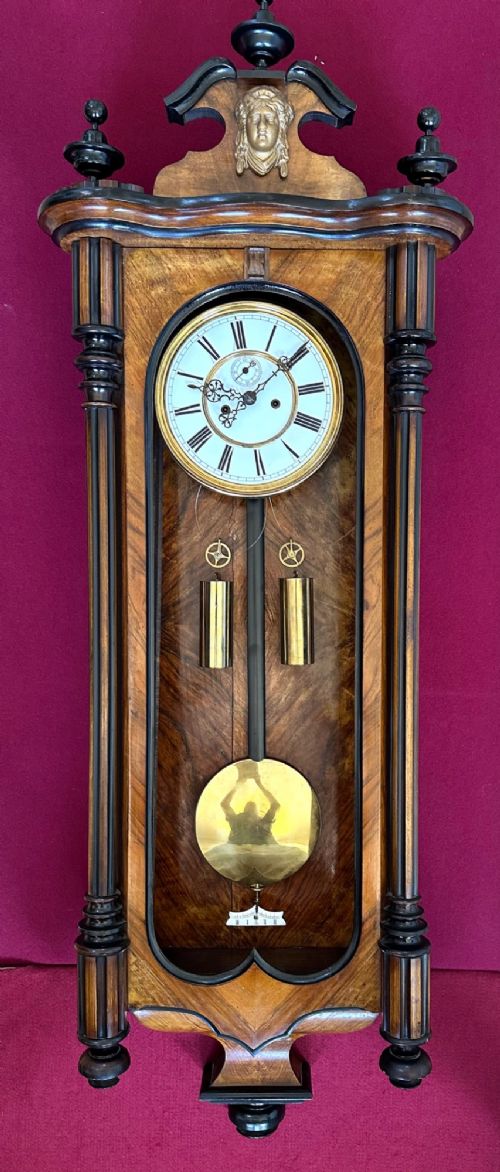
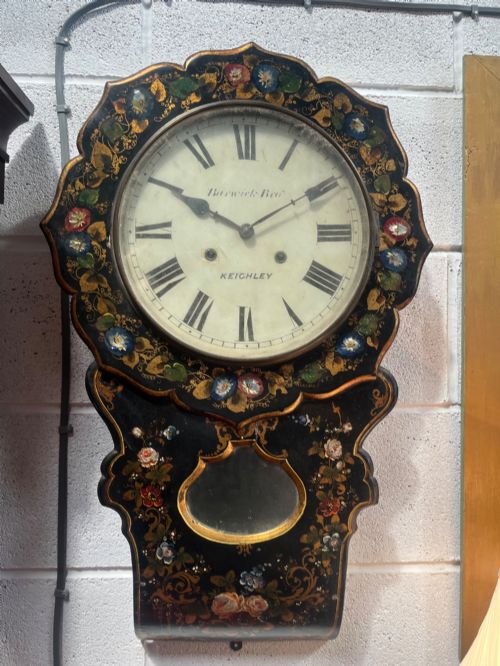
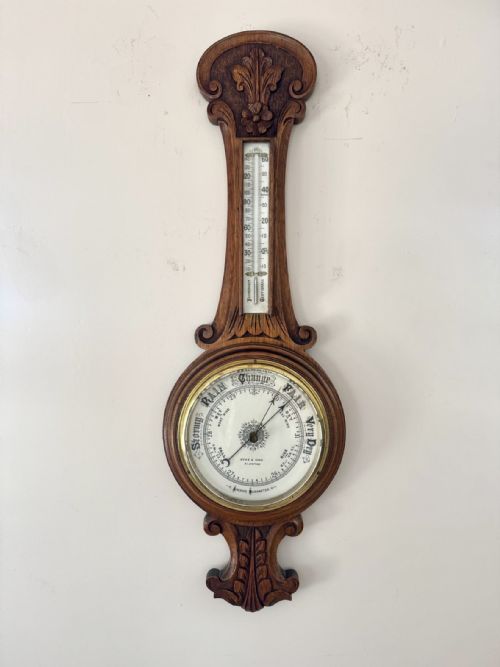
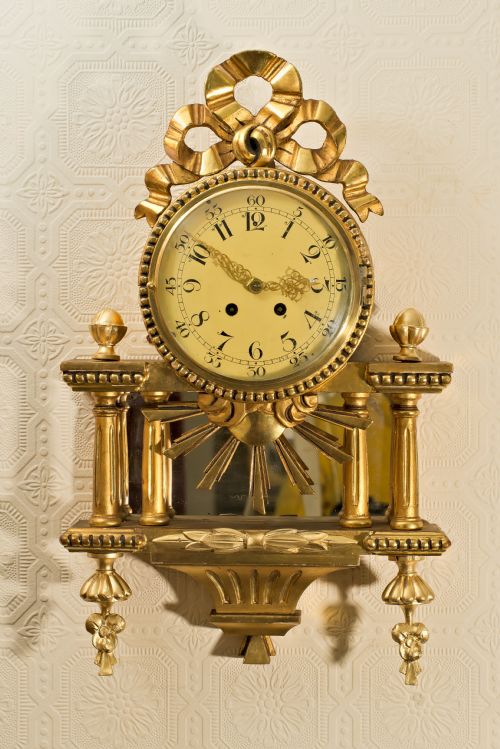
The selection ranges from simple school clocks and drop-dial mahogany pieces to ornate giltwood cartel clocks and substantial Vienna regulators. Alongside traditional wall clocks, you also find related items such as aneroid barometers and trade signs sharing the same wall-mounting format.
Originating largely from British, French, and German workshops, these clocks served functional roles in public spaces, commercial shops, and domestic halls. Their forms vary from restrained geometric timber cases to lavishly carved or gilded decorative statements.
Factors determining quality
Quality rests in the precision of the movement, the integrity of the case construction, and the harmony of the original components. Finer examples feature sophisticated fusee or striking mechanisms housed within robust, well-proportioned timber or gilded frames.
The refinement of the dial work, the crispness of the wood carving, and the preservation of original glass and hands distinguish superior pieces. Lesser examples may exhibit mismatched parts or compromised timber integrity through over-restoration.
Listings feature traditional timber cases in walnut, mahogany, and oak alongside gilded metal cartel forms spanning the nineteenth and twentieth centuries.
Hyde & Sons Sleaford·Wetterstrands·Josef Herzog·Johann Baptist Beha·Perivale of England
The Antique Hanging Clock Glossary
- Cartel clock
- A wall clock housed in an ornamental frame made of giltwood, gilt metal, or bronze. These pieces often feature asymmetrical Rococo or Neoclassical scrollwork.
- Fusee mechanism
- A conical pulley device used in mechanical clocks to maintain an even pull on the gear train as the mainspring unwinds. This system improves timekeeping accuracy.
- Drop-dial clock
- A wall clock featuring an extended case below the dial to accommodate a longer pendulum. This form was widely utilised in offices, railway stations, and schools.
- Vienna regulator
- A precision wall clock developed in Austria, typically featuring a long glazed door to display the pendulum and weights. They are prized for their accurate movements and elegant walnut cases.
- Aneroid barometer
- An instrument that measures atmospheric pressure without using liquid mercury, often paired alongside thermometers and clocks in shared wall cases.
Antique Hanging Clock: Frequently Asked Questions
What is a fusee mechanism?
A fusee mechanism is a specialised cone-shaped pulley connected to the mainspring via a cord or chain. As the spring loses tension, the chain moves to a wider part of the cone to maintain consistent power delivery.
This clever engineering prevents the clock from running slower as it winds down, resulting in much more reliable timekeeping throughout the running period.
How do I set up a pendulum clock?
Mount the clock firmly to the wall before attempting to attach or release the pendulum inside the case. Gently hook the pendulum onto its suspension spring, taking care not to bend the delicate metal.
Give the pendulum a gentle push to start the swing; you should hear an even tick-tock rhythm. If the beats sound uneven, adjust the case or the escapement until the rhythm balances.
Where should I place a wall clock?
Choose a prominent wall away from direct sunlight, excessive moisture, and major temperature fluctuations that could warp the timber case or affect the metal movement. Hallways, living rooms, and studies provide stable environments.
Ensure the height allows easy access for weekly winding and routine maintenance without requiring precarious stretching or climbing.