


Antique Hallway Chandelier
An antique hallway chandelier brings immediate character to an entryway, combining period metalwork and glass to cast a warm, welcoming light from above.
Antique Hallway Chandelier
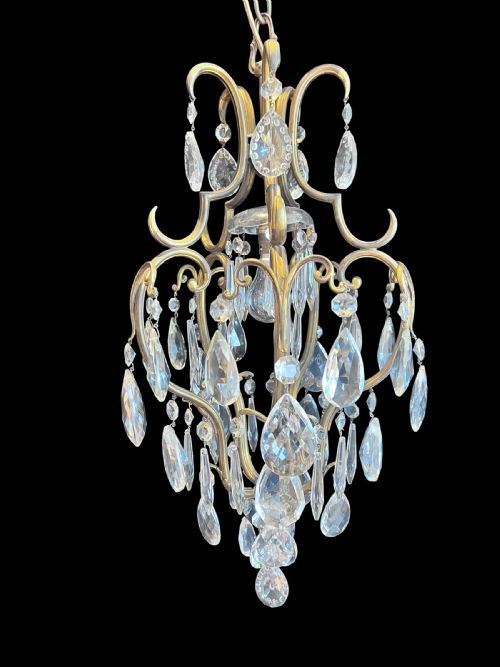
When searching for an antique hallway chandelier, buyers encounter a diverse selection of hanging ceiling lights designed specifically to illuminate entrance spaces and corridors. These fixtures span from the late nineteenth century through the nineteen-thirties, reflecting stylistic shifts from Victorian austerity to Edwardian elegance and interwar design.
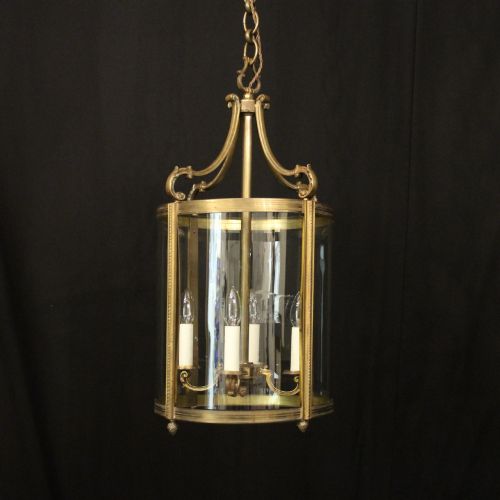
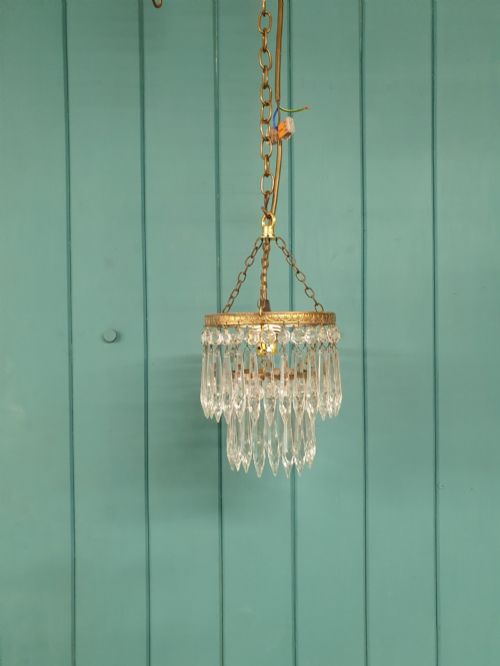
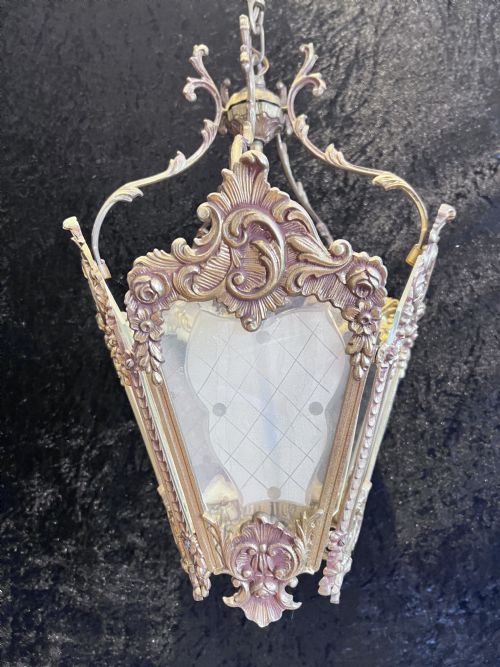
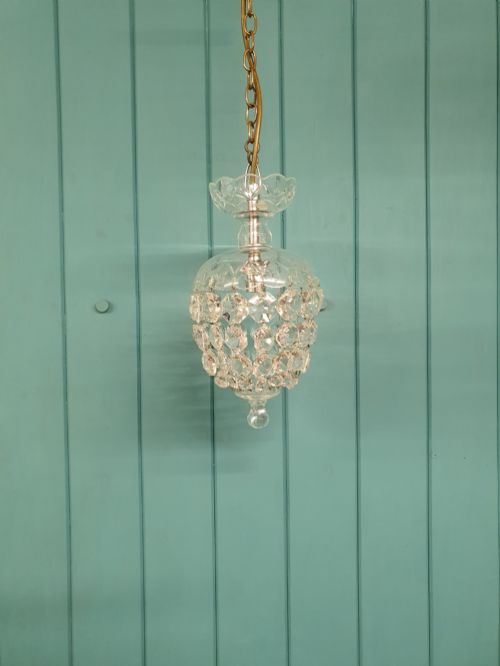
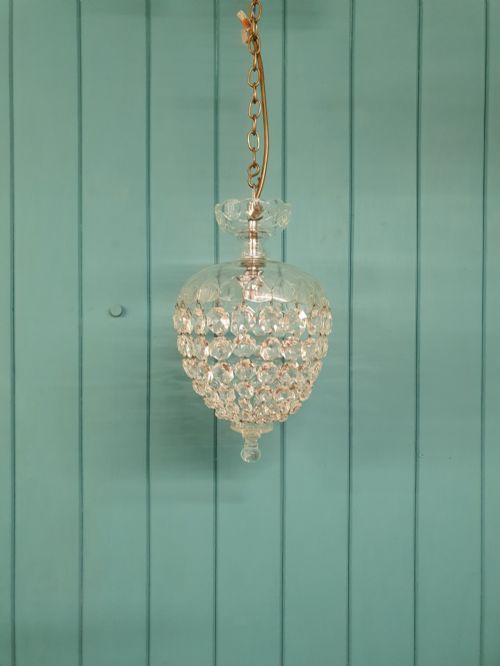
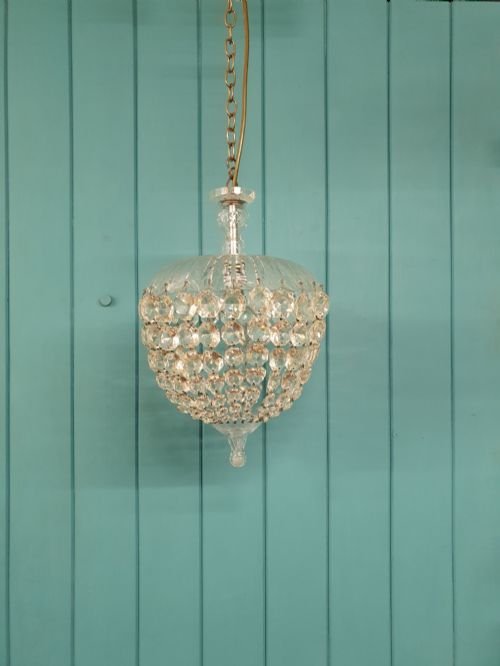
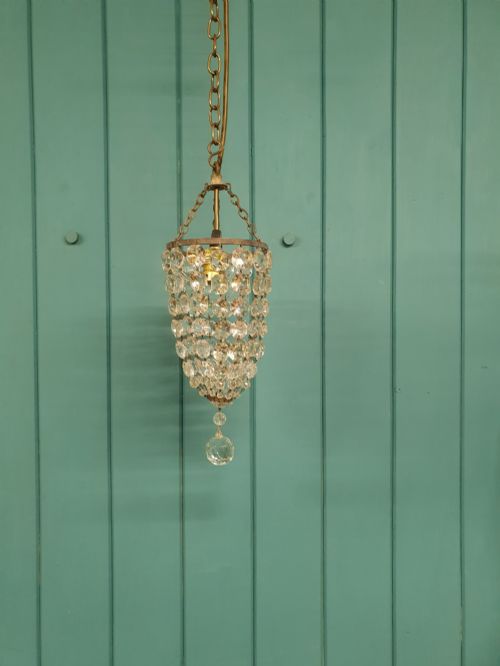
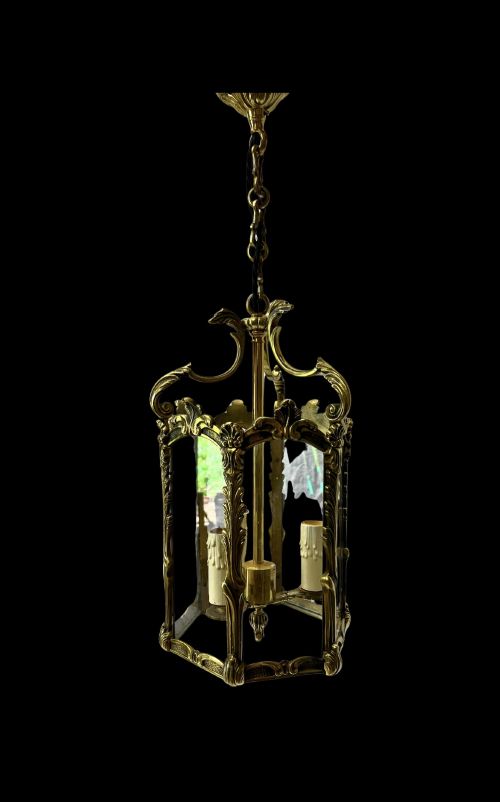
The most common forms on this page are brass and bronze lanterns alongside small cut glass crystal bag chandeliers. Many pieces originate from French workshops or English makers, offering distinct national interpretations of period styles such as Louis XVI, Rococo, and Arts and Crafts.
Scale varies significantly, with compact six-inch fixtures sitting alongside large multi-light lanterns and double-tiered chandeliers. Buyers select these pieces to anchor a hallway scheme with authentic period materials rather than modern reproductions.
Materials and construction
Construction relies heavily on cast and spun metals such as brass, gilt bronze, copper, and steel to form the structural frames and decorative mounts. These metal elements hold together various configurations of glass, including moulded panels, etched shades, cut crystal drops, and beaded curtains.
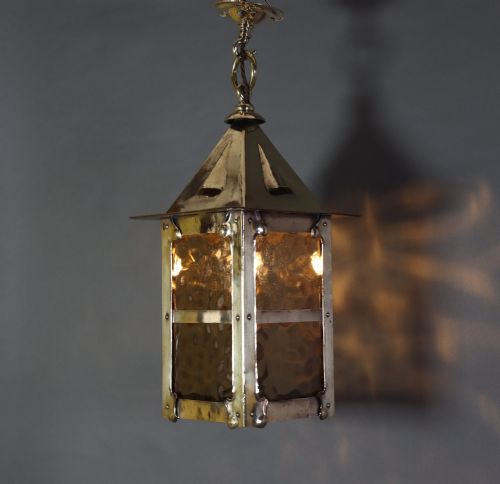
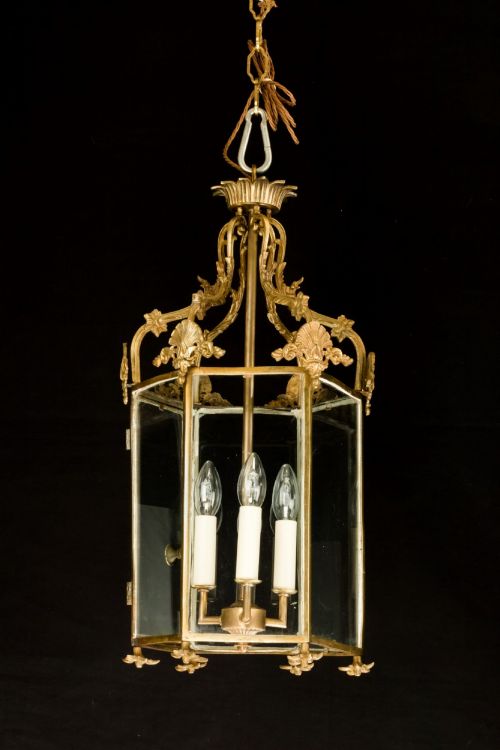
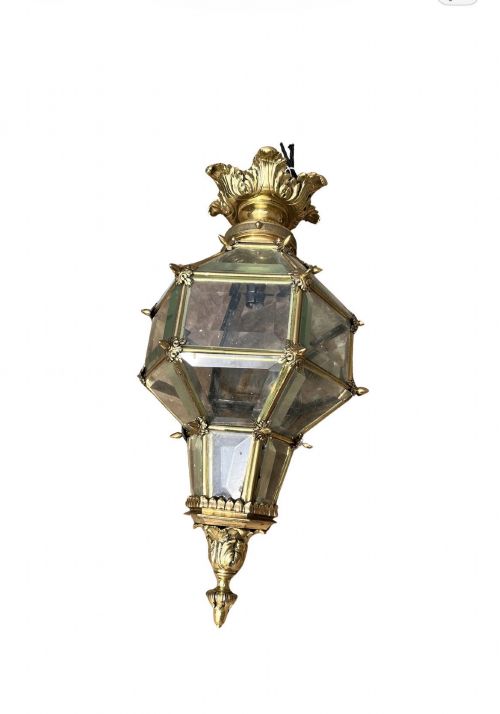
Craftsmen utilised traditional metalworking techniques to create hexagonal lanterns, dome tops, and basket frames designed to house candles or early electrical fittings. The integration of leaded glass, prism drops, and gilt finishes required specialist assembly by period artisans.
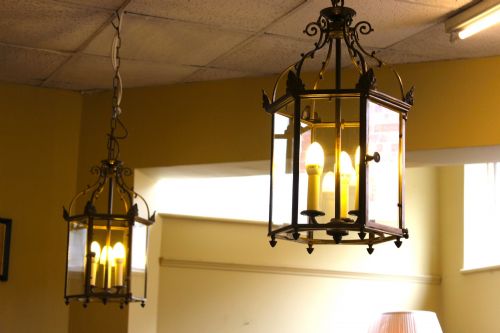
One surviving nineteenth-century hall lantern bears witness to a time when domestic illumination relied on flickering tallow candles.
Assessing quality and finish
Quality in these hanging lights is defined by the weight and casting crispness of the metal frame, whether heavy gilded bronze or simpler brass. Finer examples display meticulous chasing, robust structural fixings, and high-grade glass components free of generic modern replacement parts.
The sophistication of the glasswork distinguishes superior pieces, from precision-cut crystal spikes and beads to thick moulded glass panels with clean bevelling. Original patination on the metalwork and intact period hanging chains further separate standard production items from workshop pieces.
The Antique Hallway Chandelier Glossary
- Plafonnier
- A ceiling-mounted light fixture that sits flush or very close to the ceiling surface rather than hanging on a long chain. These often feature glass bowls or dome-shaped shades held by metal mounts.
- Bag chandelier
- A light fixture featuring a flattened basket or bag shape formed of fine wire strung with countless small glass beads. They terminate in hanging crystal drops at the base.
- Gilt bronze
- Metalwork finished with a thin layer of gold applied via mercury gilding or electroplating, commonly found on French period frames. It provides a warm, durable metallic sheen.
- Cut glass
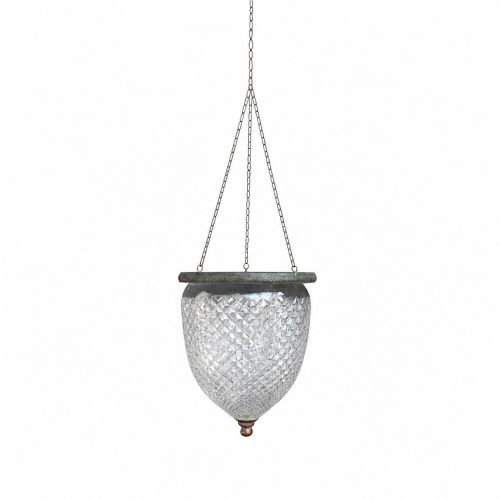
- Glass decorated by grinding facets into the surface by hand on a rotating wheel, creating sharp edges that refract light brilliantly. It appears on drops, bowls, and central shafts.
- Hall lantern
- An enclosed hanging light designed for corridors and entrance halls, typically featuring glass panes held within a metal framework. They direct light outward while protecting the light source from drafts.
Antique Hallway Chandelier: Frequently Asked Questions
How do I choose the right size?
Measure the height and width of your hallway carefully before selecting a hanging fixture. Compact spaces suit small bag chandeliers or single-light lanterns, while taller entryways accommodate multi-tiered designs.
Ensure adequate clearance beneath the lowest point of the chandelier for foot traffic and door openings. Proportion remains key to balancing the light fitting within the volume of the room.
Were these lights originally wired for electricity?
Many surviving examples from the nineteenth and early twentieth centuries originally burned candles or gas before being converted later. Some pieces retain signs of early electrical retrofitting from the Edwardian era or nineteen-thirties.
Modern buyers often find fixtures that have been carefully rewired for contemporary domestic safety standards while preserving the historic frame.
How do I distinguish French styles from English ones?
French lanterns and chandeliers frequently draw on classical motifs like Louis XVI gilt bronze, Rococo curves, and elaborate cast ornamentation. They often favour gilded finishes and sculptural bronze casting.
English pieces from the same period tend toward simpler brass construction, Arts and Crafts restraint, or functional hall lanterns with straightforward hexagonal frames.
What is a bag chandelier?
A bag chandelier is a distinct lighting form featuring a wire basket frame entirely covered in dense beadwork. The structure resembles a small pouch or basket suspended from a central coronet.
Light filters through the beaded mesh and catches the crystal drops hanging underneath, creating a distinctive shimmering effect in narrow spaces.