

Gilt Bronze Light Fixture
A gilt bronze light fixture brings warmth and formal weight to a room through cast metal and glass.
Gilt Bronze Light Fixture
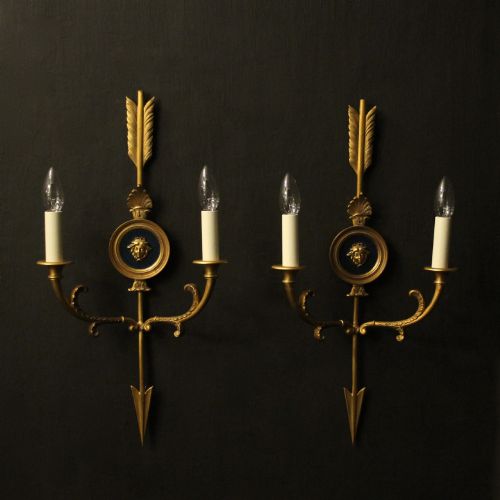
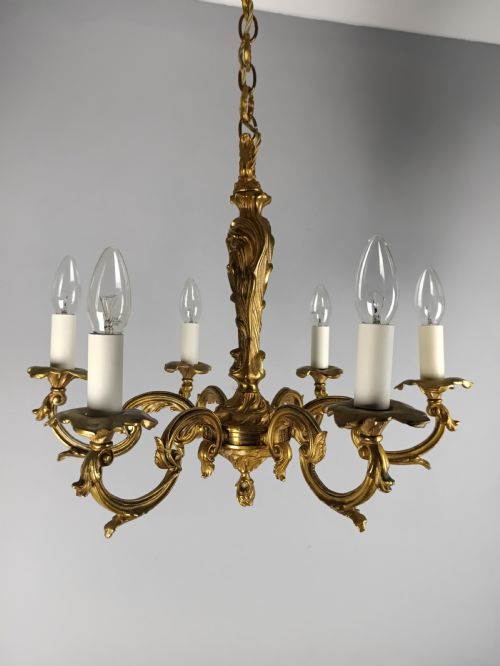
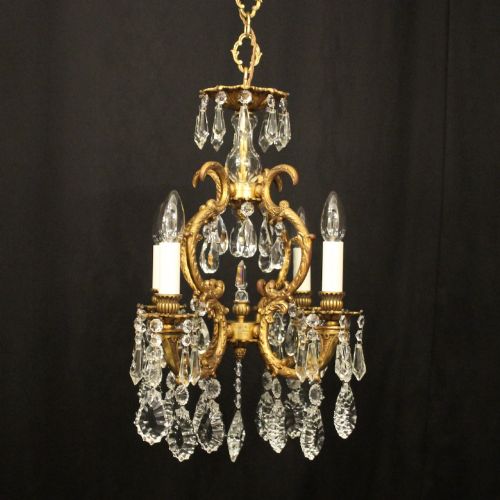
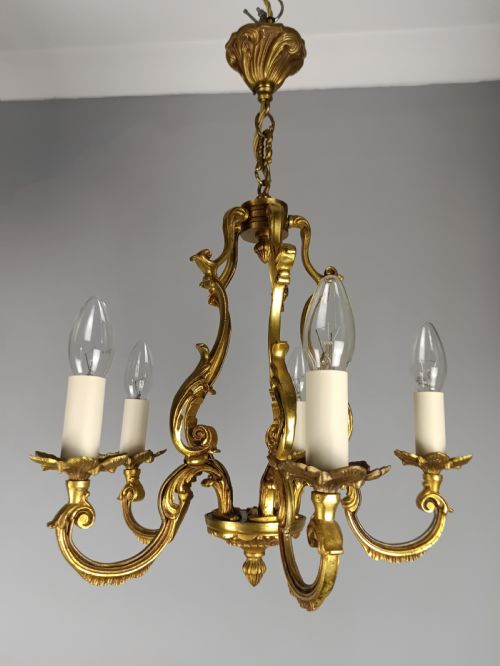
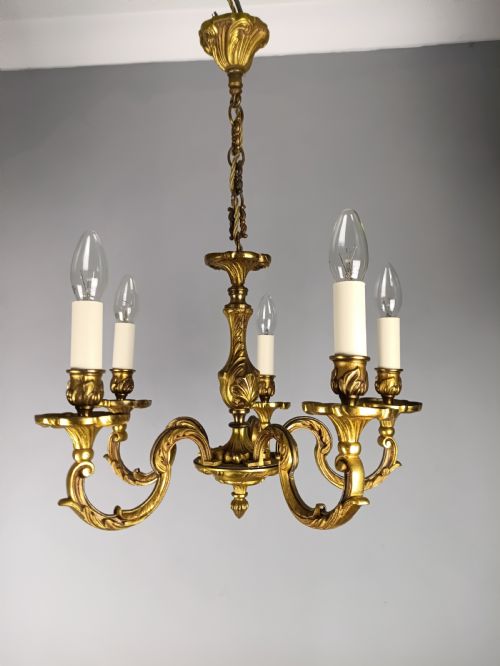
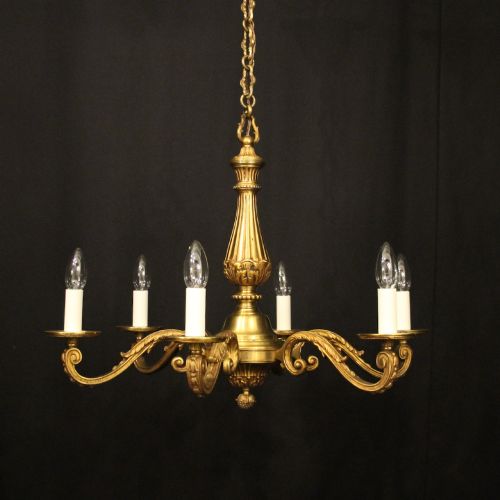
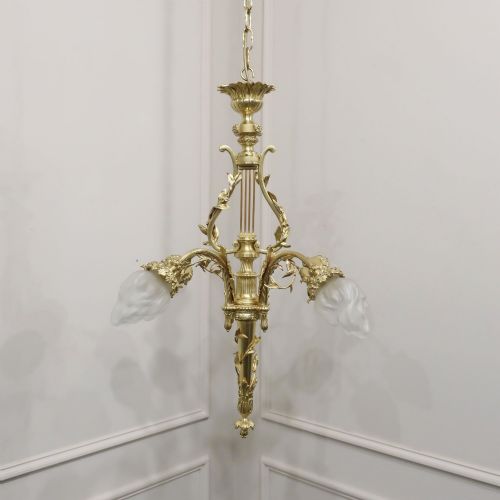
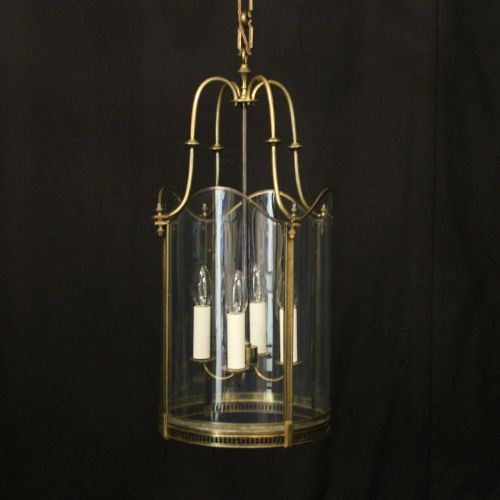
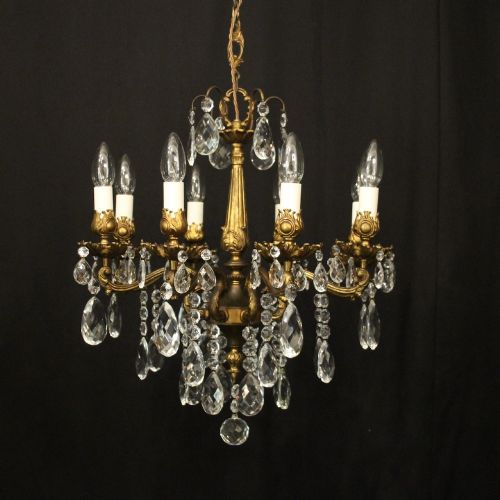
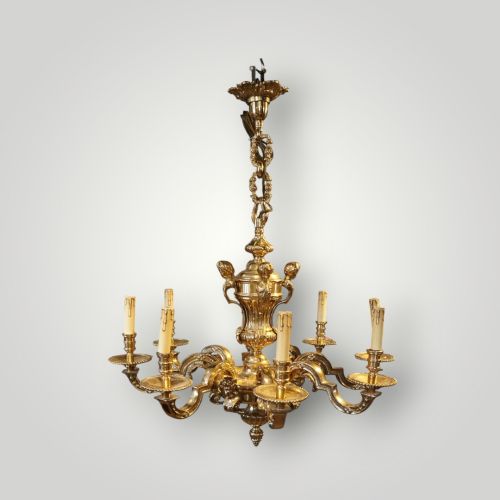
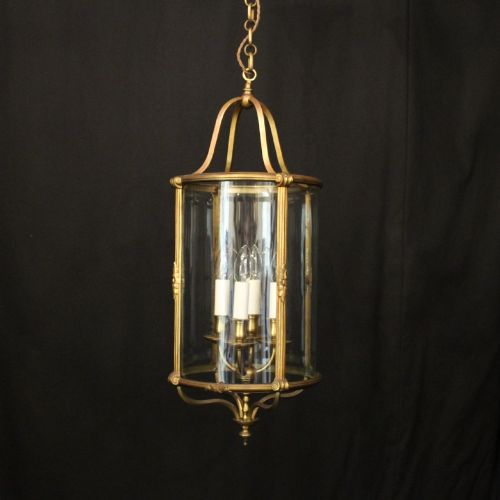
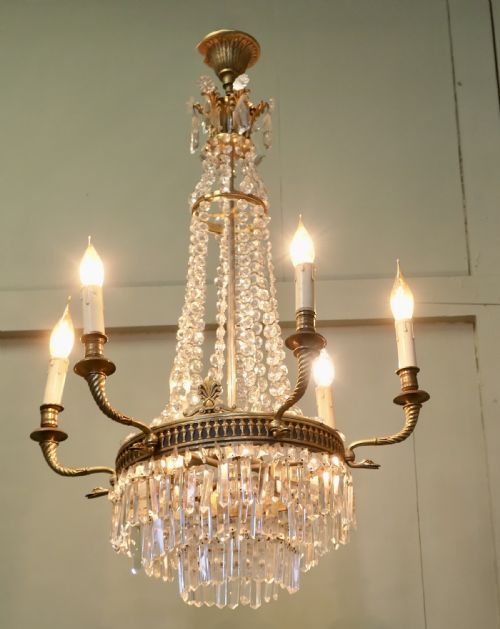
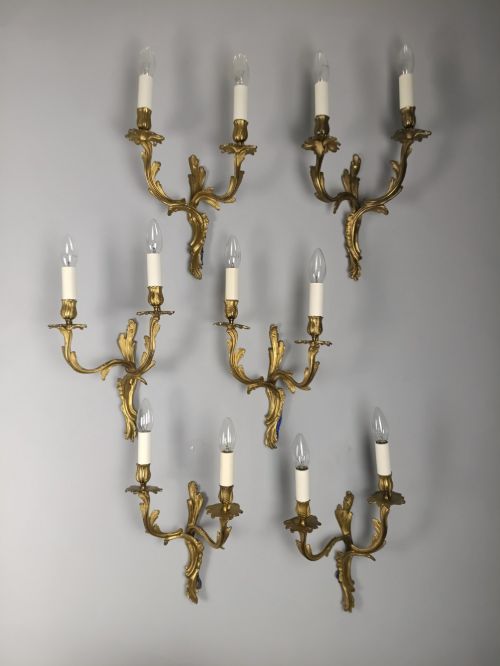
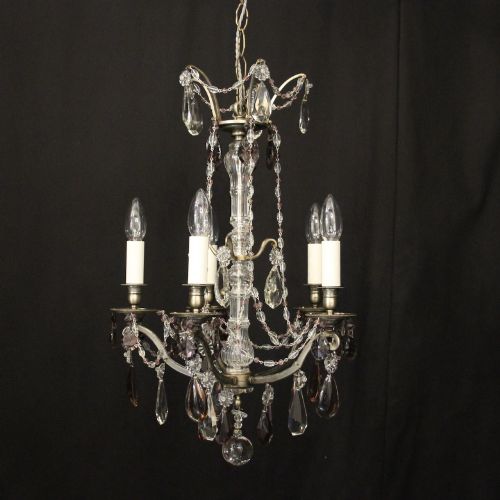
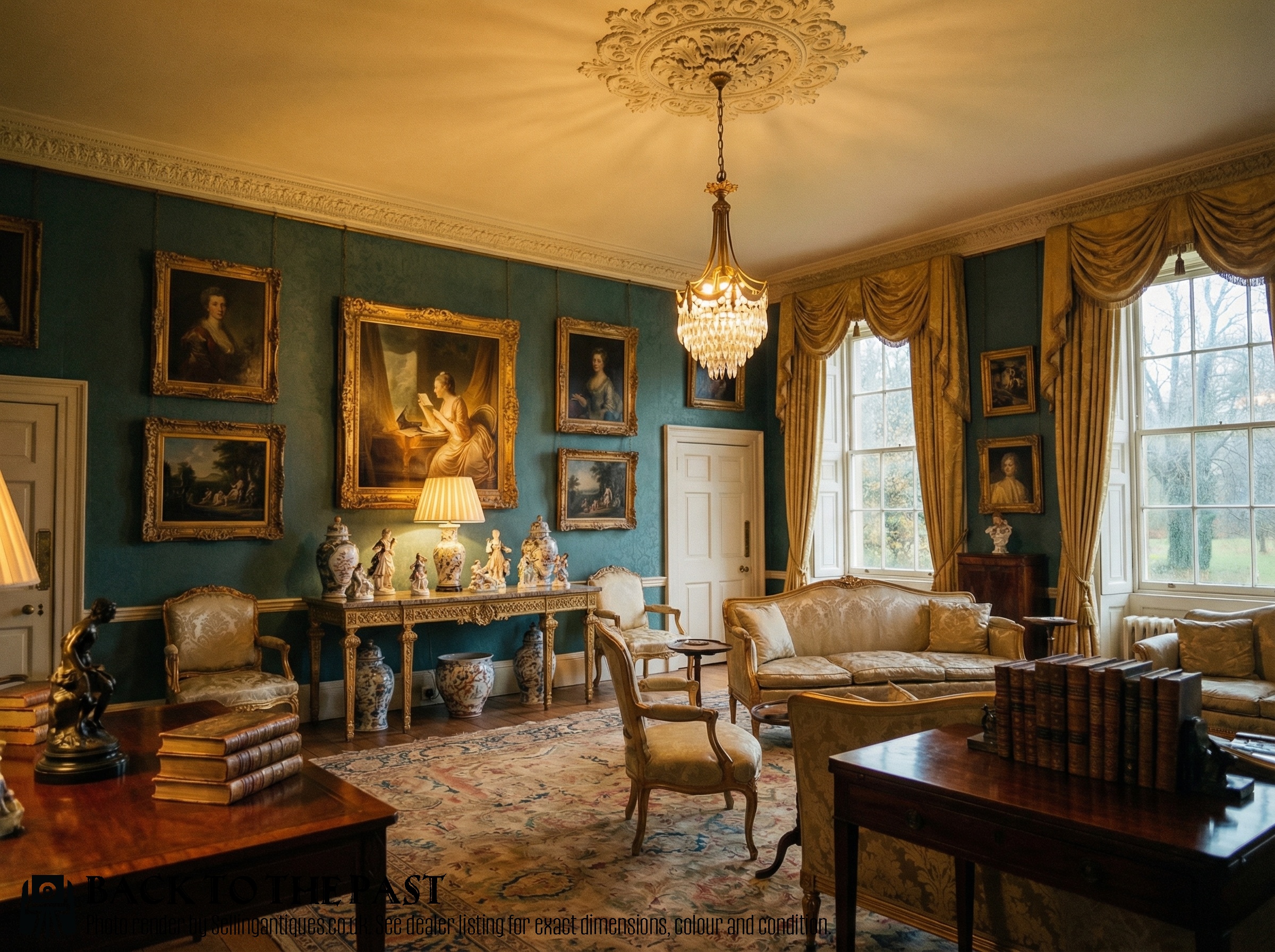
A gilt bronze light fixture covers a range of decorative illumination designed for ceilings and walls, spanning the nineteenth century and the early decades of the twentieth century. These pieces originate predominantly from French workshops and include multi-arm chandeliers, hanging lanterns, and twin-arm or triple-arm wall sconces.
The most common examples met on this page are French multi-light chandeliers and wall lights produced in the 1920s and 1930s, often drawing on earlier decorative movements like French Rococo, Neoclassical, and Empire styles. Buyers encounter forms ranging from birdcage frames and tent-and-waterfall configurations to convex hall lanterns.
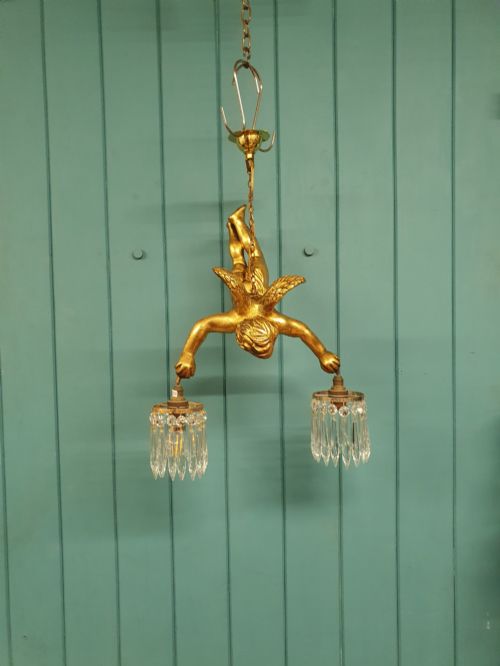
Objects vary from modest three-light ceiling pieces to large twenty-five-light chandeliers, alongside pairs and sets of matching wall lights. The designs incorporate motifs such as leaf decoration, flying cherubs, and lyre shapes executed in gilded metal.
How they were made
Makers formed these fixtures by casting bronze, brass, or spelter into ornate structural arms, backplates, and decorative mounts. The metal components received a layer of gold gilding or silver gilding to create a rich surface finish.
Makers combined the cast metal frames with cut glass and crystal elements, including hanging prisms, spikes, and drops that caught and refracted the light. Wiring and candle-style sockets were integrated into the design to accommodate electricity alongside traditional candle forms.
Materials recorded across the inventory include gilt bronze, brass, gilded brass, silver gilded bronze, glass, and crystal.
What varies in quality
Quality depends on the crispness of the metal casting and the depth of the chased detail across the bronze or brass surface. Finer examples show sharp relief in leaf decoration and figural elements, whereas simpler pieces rely on smoother, cast finishes.
The integration of glass components alters the character of the fixture, with heavy cut crystal prisms providing greater light refraction than plain glass drops. The weight and gauge of the metal framework itself distinguish substantial architectural pieces from lighter domestic lighting.
The Gilt Bronze Light Fixture Glossary
- Gilt bronze
- Metal cast and coated with a layer of gold or gold-coloured alloy. It provides a durable and decorative surface for classical and revival lighting.
- Chandelier
- A branched ceiling-mounted lighting fixture designed to hold multiple bulbs or candles. These pieces often incorporate crystal drops and elaborate metal frames.
- Wall sconce
- A lighting fixture fixed directly to a wall, typically featuring multiple arms. Pairs and sets of these fixtures provide balanced illumination in formal interiors.
- Hall lantern
- An enclosed hanging light designed for corridors and entranceways. These pieces frequently utilise convex glass panels within a gilded metal frame.
- Tent and waterfall
- A chandelier configuration where strings of crystal beads form an upper tent shape above a cascading waterfall of further crystal drops.
Gilt Bronze Light Fixture: Frequently Asked Questions
How do I choose the right size chandelier?
Consider the proportions of your room and the height of your ceiling when selecting a multi-arm fixture. Larger spaces accommodate multi-light chandeliers with extensive branch spreads.
Smaller rooms or hallways suit compact ceiling lights or wall-mounted lanterns that do not overwhelm the floor area.
Are these antique fixtures wired for modern use?
Many surviving pieces arrive with updated wiring or standard fittings suitable for contemporary electrical installation. It remains advisable to have a qualified electrician check the internal connections.
Certain examples retain historical candle tubes or sockets that blend period appearance with current safety standards.
How do I tell French Rococo style apart from Empire style?
French Rococo pieces display asymmetrical curves, flowing leaf decoration, and ornate scrollwork derived from natural forms. They favor elaborate, whimsical detailing across the metal arms.
Empire style pieces present a more formal, symmetrical geometry influenced by classical antiquity, featuring clean structural lines and restrained architectural motifs.
How should I clean a gilded bronze and crystal fixture?
Dust the metal frame gently with a soft dry cloth to protect the delicate gilt surface from abrasion. Avoid harsh chemical cleaners that can strip the gold finish.
Crystal drops and glass panels can be wiped with a mild solution and dried thoroughly to maintain their refractive sparkle.