


Antique Hall Tree Bench
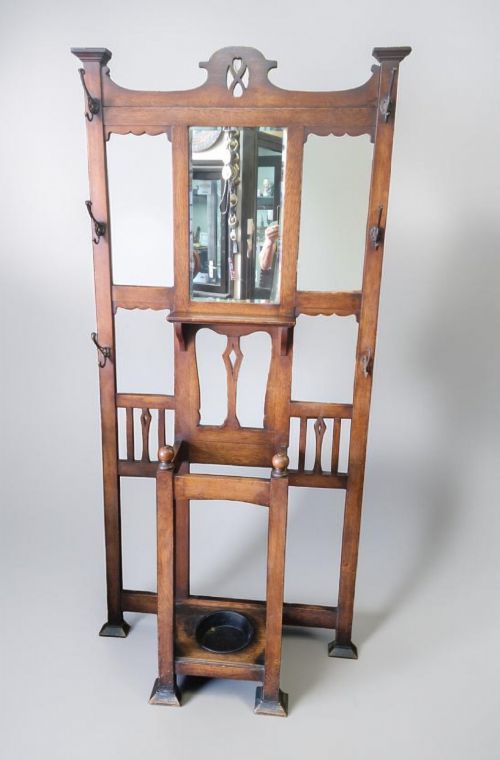
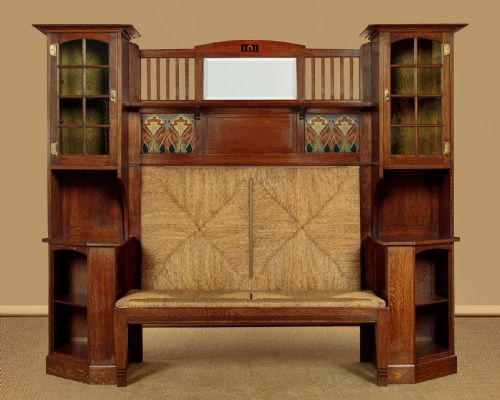
An antique hall tree bench combines a seat, mirrors, and coat hooks to anchor an entranceway with period character and practical storage.
Antique Hall Tree Bench
An antique hall tree bench serves as a combined furniture piece for hallways, offering a seat alongside fixtures for coats, hats, and umbrellas. The selections here encompass forms identified as hall stands, hall seats, and hall stands and benches dating from the nineteenth century onward.
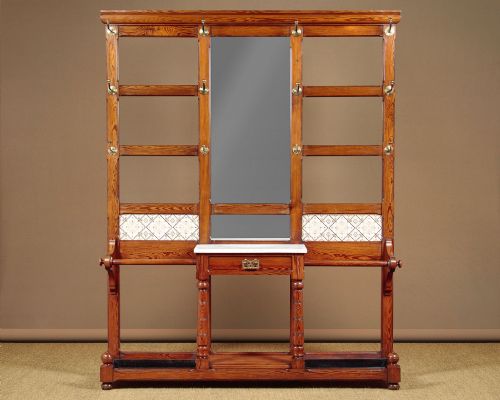
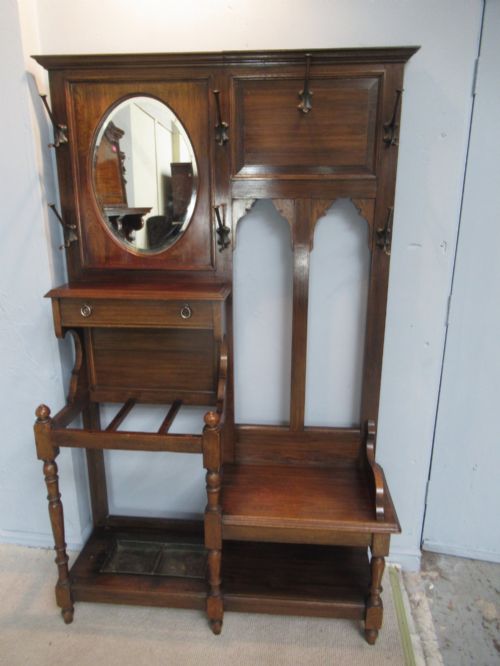
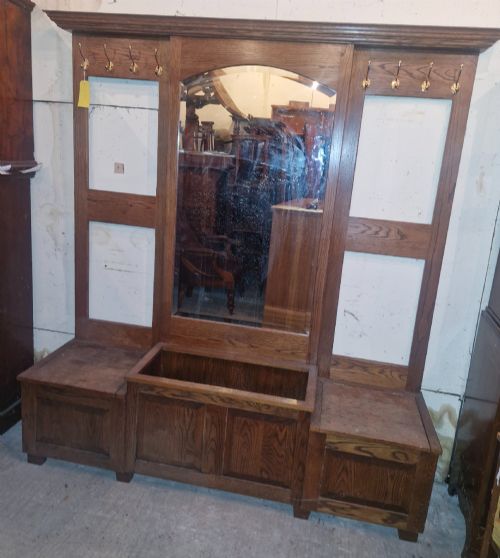
The variants most frequently encountered on this page date to the Victorian and Edwardian eras, executed predominantly in oak with integrated mirror glass and metal hooks. Examples range from simple pine iterations to elaborate carved forms with tiled panels and marble surfaces.
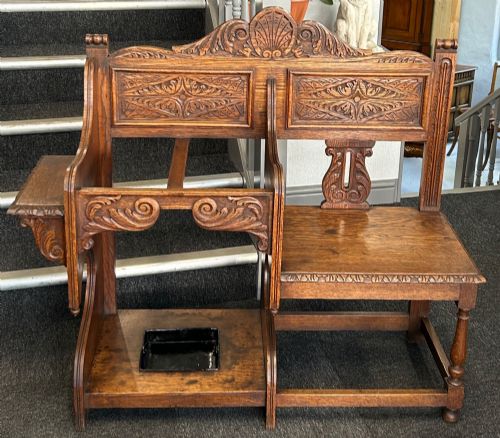
Makers and designers of the period incorporated diverse aesthetic influences, including Arts and Crafts simplicity, Art Nouveau curves, and heavier Renaissance Revival or Victorian Gothic carving. These pieces reflect the functional demands of historical entranceways, providing a designated spot for outerwear upon entering the home.
Materials and construction methods
Makers relied heavily on solid oak and pine for the main structural framework, utilising robust joinery to support the weight of heavy coats and daily use. Mahogany also appears, lending a finer grain to more decorative iterations.
Functional elements such as brass or metal coat hooks and umbrella wells were integrated directly into the timber frame, alongside inset mirror glass and occasionally marble shelf surfaces. Ceramic tiles, notably from makers like Minton, were sometimes flush-mounted into the woodwork for decorative effect.
Listings span periods from the nineteenth century through the 1960s, showing how entryway furniture evolved from heavy Victorian Gothic forms to mid-century multi-functional designs.
Distinguishing quality in hall stands
The degree and depth of hand carving set exceptional examples apart from utilitarian versions, transforming a functional entryway piece into a display of craftsmanship. Executed details in the timber, balanced proportions, and the inclusion of specialised decorative elements elevate certain pieces.
Material selection marks another tier of distinction, moving from plain pine to figured oak or mahogany, often enhanced by the presence of original bevelled mirror glass, polished marble inserts, or artist-designed ceramic tiles.
Ellen E Houghton of Minton
The Antique Hall Tree Bench Glossary
- Hall stand
- A tall entryway furniture piece combining hat hooks, coat pegs, a bench or seat, and often an umbrella stand. It organises outerwear in the hallway.
- Stick stand
- The section of a hall stand designed specifically to hold walking sticks, canes, and umbrellas, typically featuring metal drip trays at the base. These trays protect the wooden floor from moisture.
- Arts and Crafts
- A design movement emphasising simple forms, visible construction, and honest use of materials without excessive ornamentation. This style appears frequently in oak hall seating from the early twentieth century.
- Art Nouveau
- A style characterised by organic, flowing lines and plant-inspired motifs applied to decorative arts. It surfaces in the curved woodwork and hardware of specific hall stands from around nineteen hundred.
Antique Hall Tree Bench: Frequently Asked Questions
What is an antique hall tree bench?
An antique hall tree bench is a multi-functional hallway furnishing that integrates a bench seat with vertical panels holding coat hooks, hat pegs, and mirror glass. It was designed for historical homes to keep outerwear organised near the front door.
These pieces often include lower compartments or metal pans for walking sticks and umbrellas. They range from modest pine structures to heavily carved oak statements.
How do I date an oak hall stand?
Dating relies on stylistic clues, construction methods, and materials recorded across different periods. Pieces showing ornate Gothic or Renaissance Revival carving typically point to the nineteenth century, while simpler structural lines often align with Arts and Crafts influences.
The presence of specific decorative elements, such as Art Nouveau motifs or Minton ceramic tiles, helps narrow the timeframe to around nineteen hundred or the Edwardian decade.
Where were these pieces used?
They stood in the entrance hall or vestibule of a home, serving as the primary drop-zone for visitors and family members arriving from outside. The seat offered a place to sit while removing boots.
The hooks and mirrors allowed people to check their appearance and hang hats, scarves, and heavy coats immediately upon entry.
What materials are common in hall stands?
Oak and pine form the vast majority of surviving frames, providing the structural strength needed to support heavy winter garments. Mahogany appears in finer examples alongside decorative marble inserts.
Additional materials include brass or metal for the coat hooks, glass for the mirrors, ceramic for decorative tiles, and metal pans at the base to catch water from wet umbrellas.