
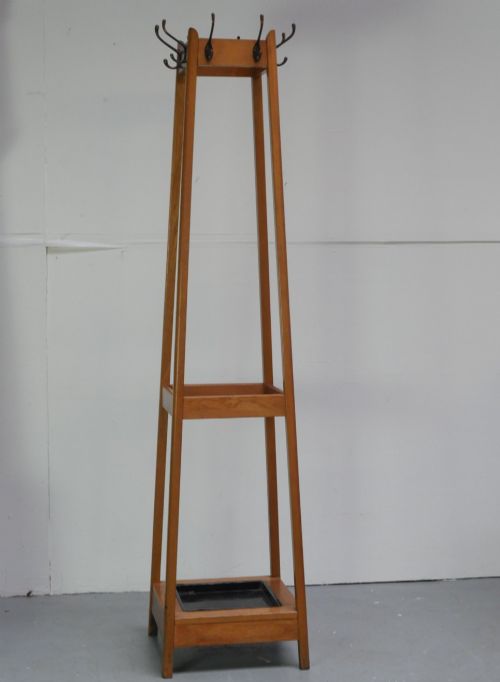
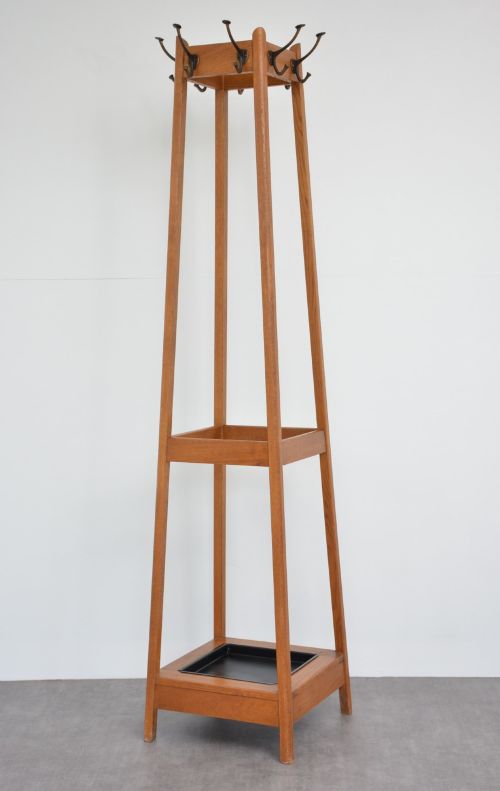
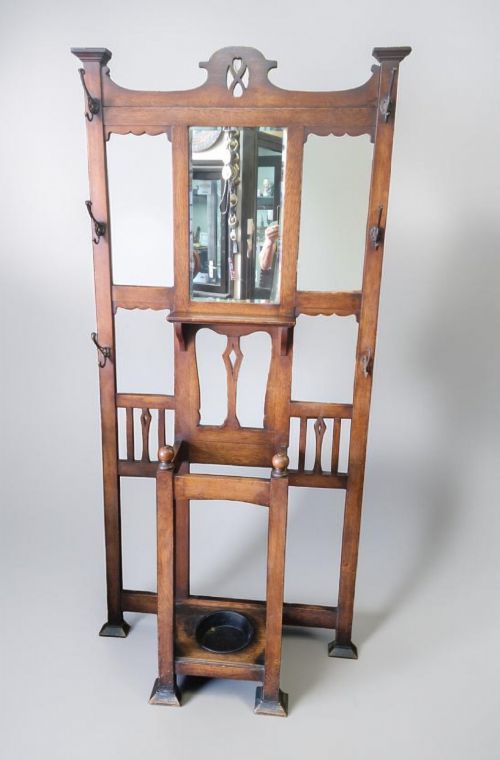
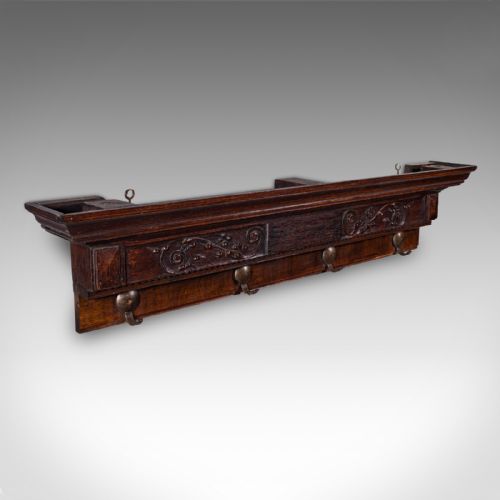

Brown Oak Coat Rack
A brown oak coat rack brings utilitarian function into the hallway through sturdy timber and metal work.
Brown Oak Coat Rack
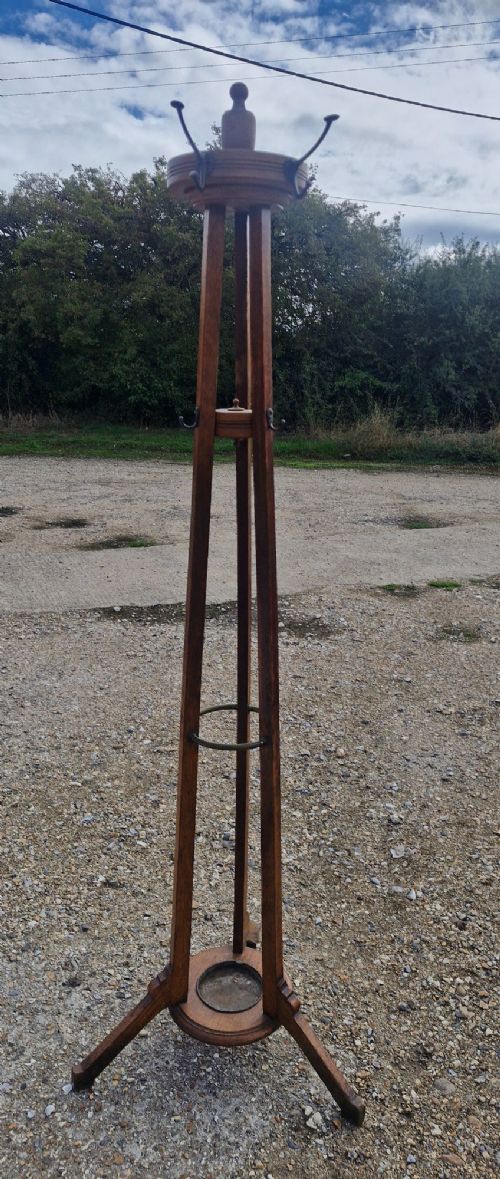
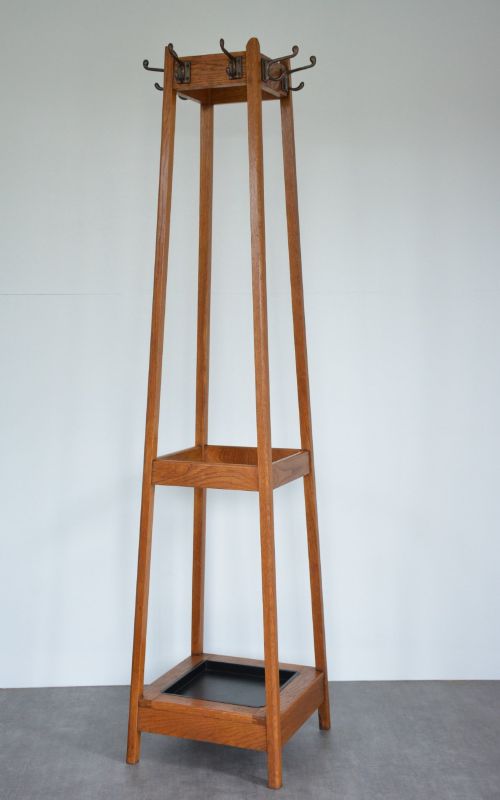
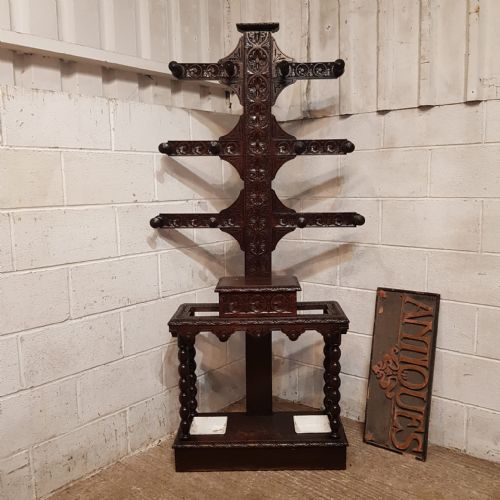
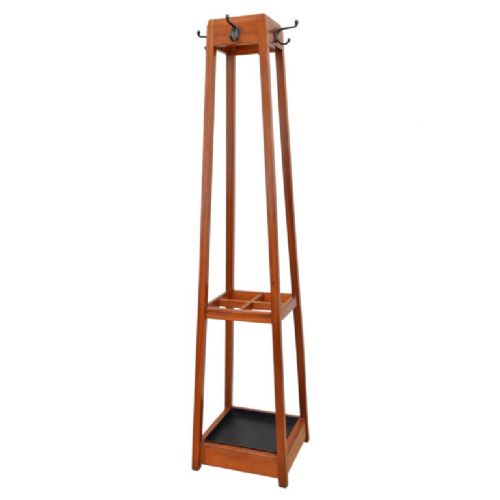
A brown oak coat rack gathers outdoor wear in hallways through forms spanning simple wall racks and large freestanding hall stands. These pieces originate across the nineteenth and twentieth centuries, taking influence from Victorian, Edwardian, Arts and Crafts, and industrial designs.
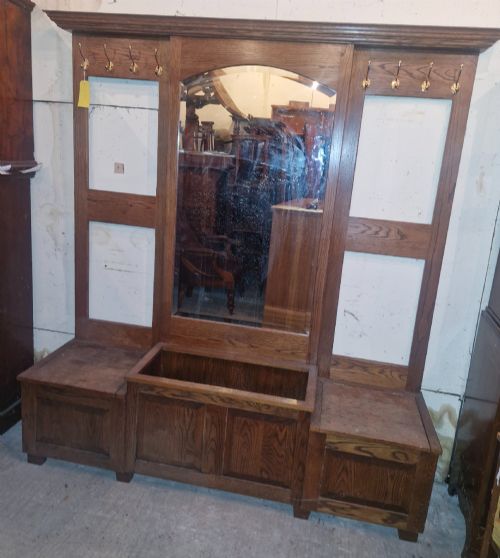
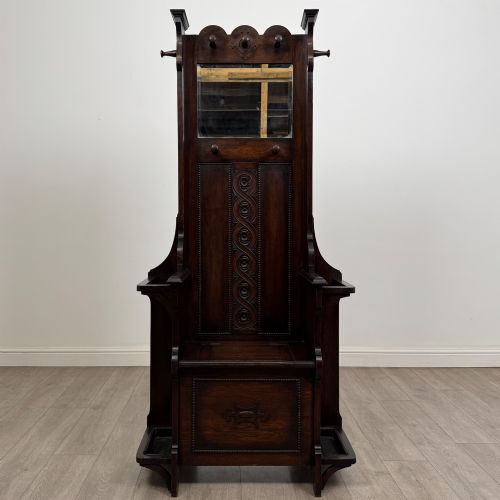
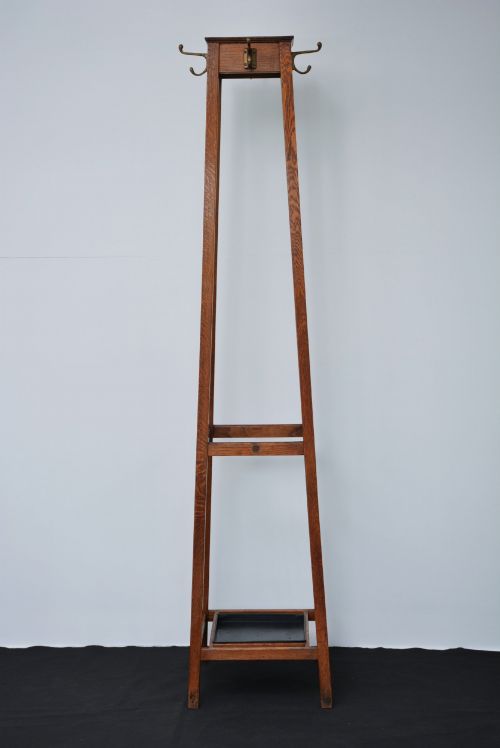
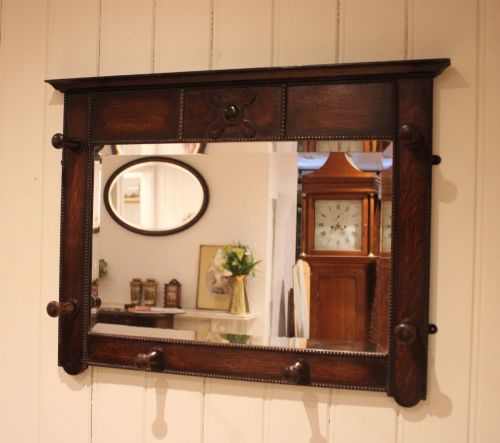
The selections here range from compact wall-mounted cloakroom rails to substantial multi-functional hall seats incorporating umbrella holders and drip trays. Many examples integrate mirrors or carved details such as Greenman motifs and animal horns.
Most entries belong to the Victorian and Edwardian periods, utilising solid oak alongside brass, iron, and glass elements. Buyers encounter everything from domestic English country house items to Continental taxidermy pieces.
Materials and construction
Construction relies primarily on solid oak, shaped through carving, turning, and panel joining. Metal components like brass and cast iron form the structural hooks and utility trays.
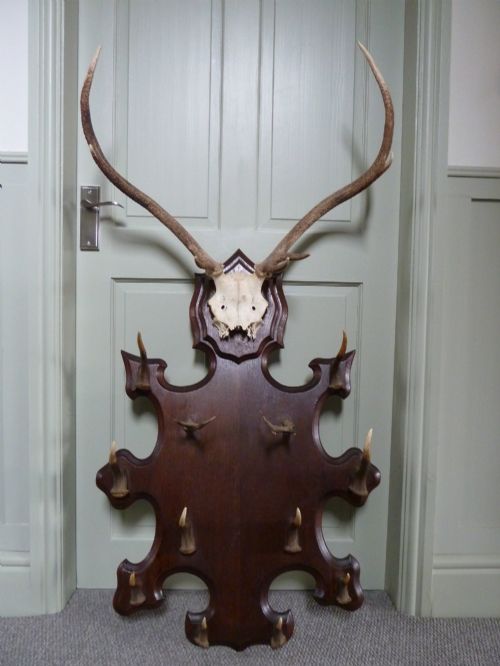
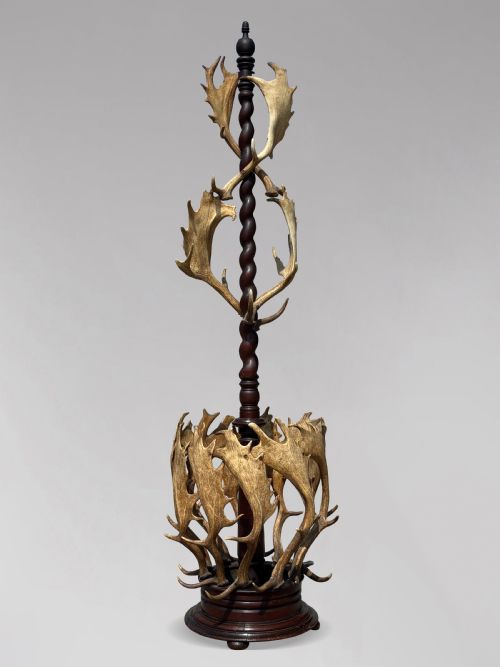
Makers integrated natural elements directly into the woodwork, attaching stag horn, cow horns, and taxidermy mounts to hold garments. Carved wooden details define regional styles from Black Forest bear trees to Flemish panels.
A carved bear holds court among the timber, watching over the hallway with glass eyes.
Distinctions in quality
Quality shows in the depth and precision of carved ornamentation, distinguishing standard domestic items from exhibition pieces featuring detailed figural work. The integration of complex elements like revolving sections or multi-functional seating elevates a piece.
J Parker of Woodstock·GW Evans
The Brown Oak Coat Rack Glossary
- Hall stand
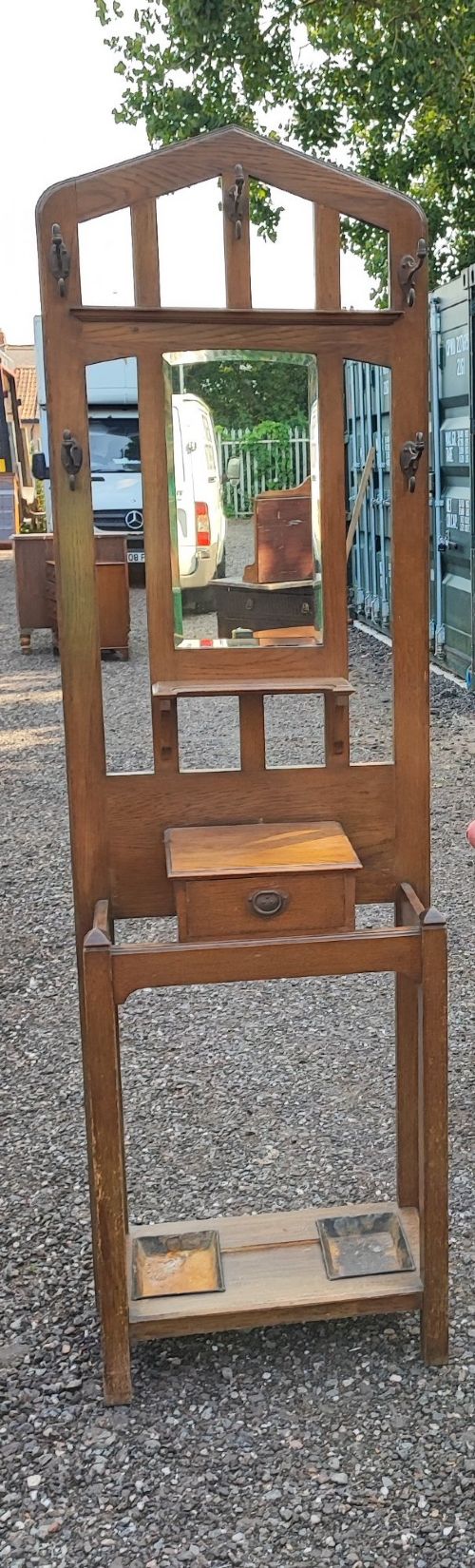
- A large freestanding piece of furniture designed for an entrance hall, combining coat hooks, a mirror, umbrella holders, and often a seat or glove box. These serve as central organisational units for outerwear.
- Greenman
- A sculptural motif depicting a human face emerging from or entwined with leaves and vines. This decorative carving appears frequently on Victorian oak furniture.
- Drip tray
- A metal base situated beneath umbrella holders to catch moisture from wet brollies. These are commonly formed from cast iron or brass.
- Black Forest
- A style of ornate, highly detailed wood carving originating from the mountainous region of Germany, often featuring bears, foliage, and naturalistic trees.
- Cloakroom rack
- A smaller wall-mounted rail fitted with hooks for hanging hats and coats in reception spaces.
Brown Oak Coat Rack: Frequently Asked Questions
How do I install a wall-mounted rack?
Wall-mounted racks require secure fixing into wall studs or masonry to support the weight of heavy coats and bags. Position the rail at a height that allows family members and guests to reach the hooks comfortably.
Check that the mounting brackets align with the timber backing board to ensure structural stability over years of daily use.
What maintenance does oak furniture need?
Keep oak furniture away from direct heat sources and sudden temperature shifts to prevent the timber from splitting. Regular dusting with a dry cloth maintains the surface finish without building up residues.
Applying a traditional beeswax occasionally nourishes the wood and enhances the natural grain and colour of the oak.
How were hall stands used historically?
Hall stands greeted visitors in entranceways, providing a designated spot for hats, coats, canes, and umbrellas upon entering a home. The integrated mirror allowed people to check their appearance before stepping back outside.
Many designs included a small seat for putting on boots or a compartment for gloves and calling cards.
How do I date an Edwardian piece?
Edwardian pieces date from the early twentieth century, showing lighter proportions and simpler lines than their heavy Victorian predecessors. Look for restrained Arts and Crafts influences or softer floral carvings characteristic of the era.
Construction methods also shift toward factory-standardised joinery alongside traditional hand finishing.