

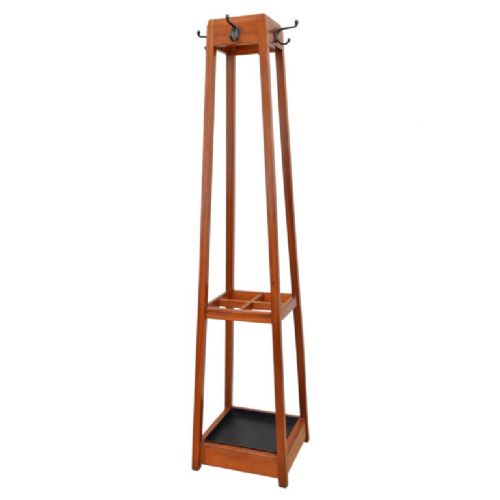
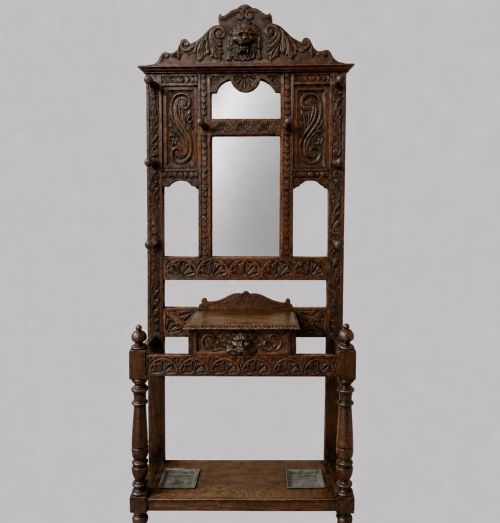

Oak Umbrella Stand Coat Rack
An oak umbrella stand coat rack combines everyday hallway utility with architectural presence, offering a structured place for hats, coats and walking sticks.
Oak Umbrella Stand Coat Rack
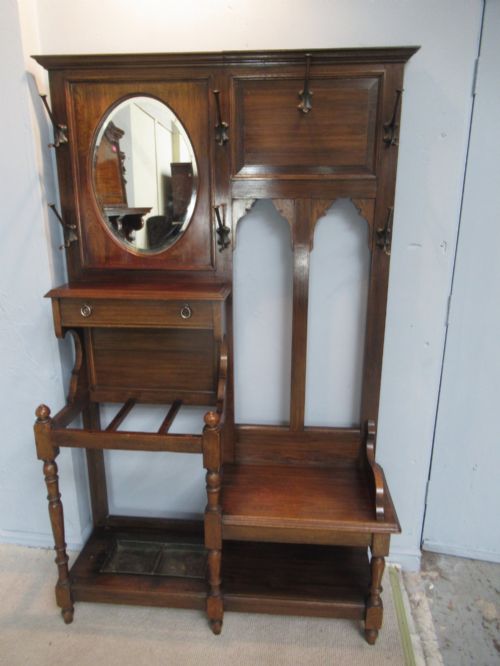
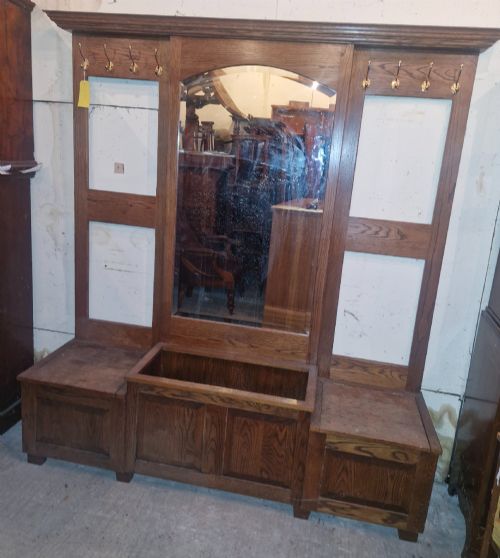
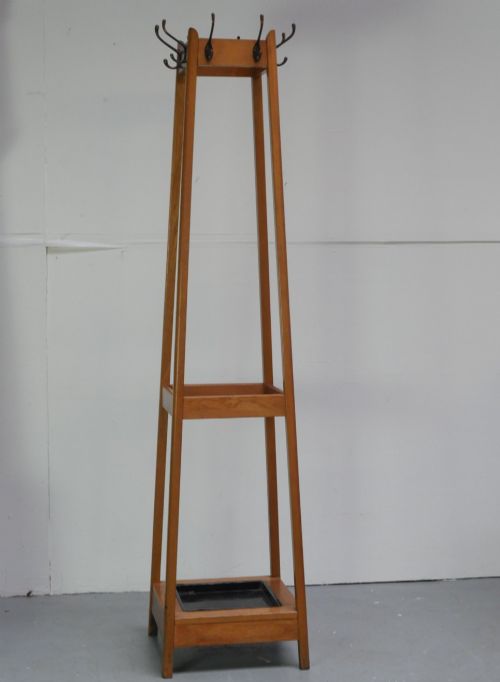
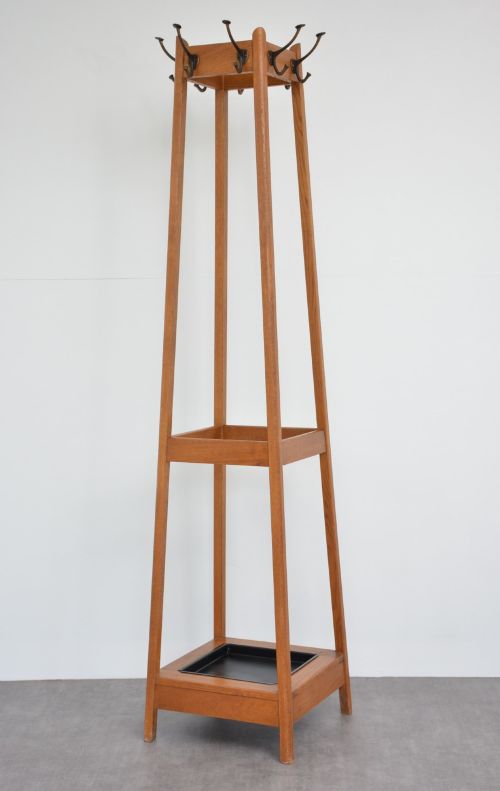
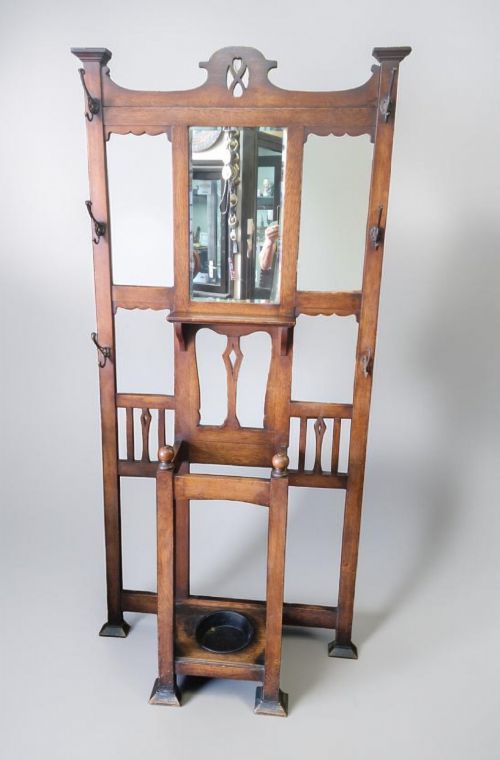
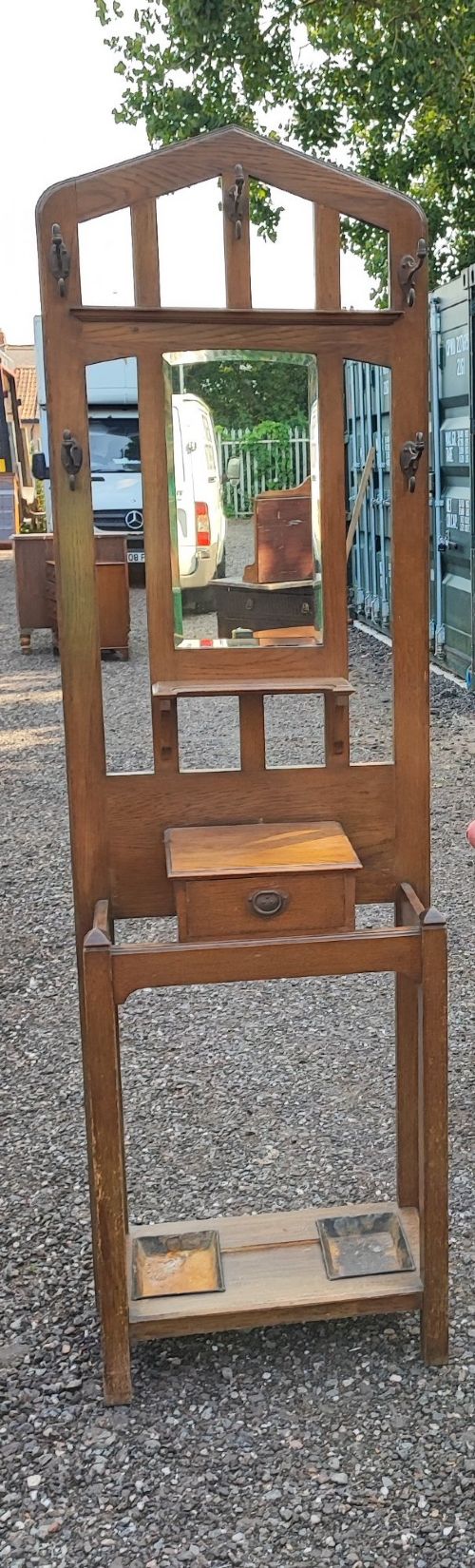
When searching for an oak umbrella stand coat rack, buyers examine substantial pieces designed to anchor an entrance hall. The evidence shows these functional items span Victorian, Edwardian and Arts and Crafts periods, integrating hooks, mirror panels and stick wells into a single unit.
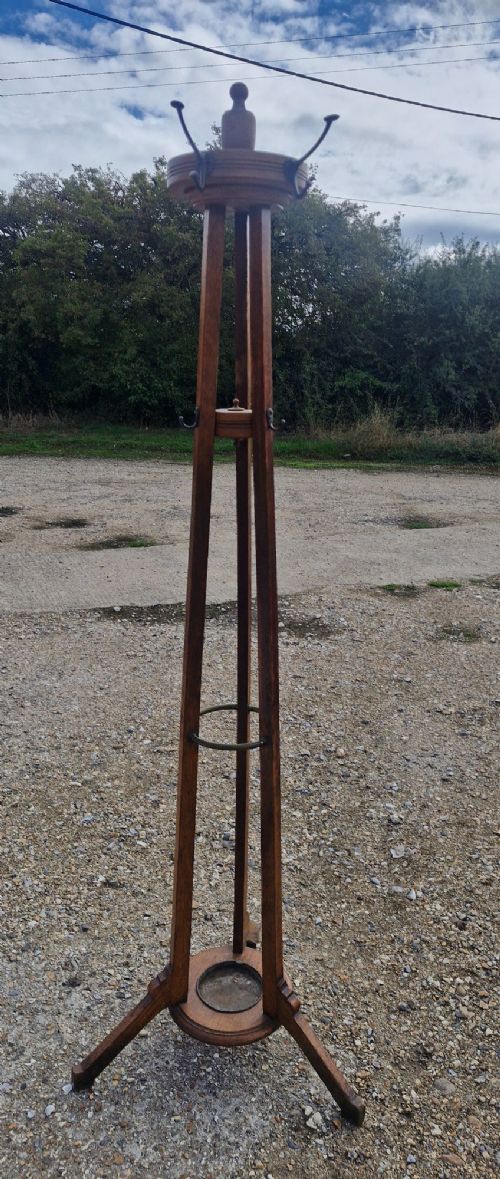
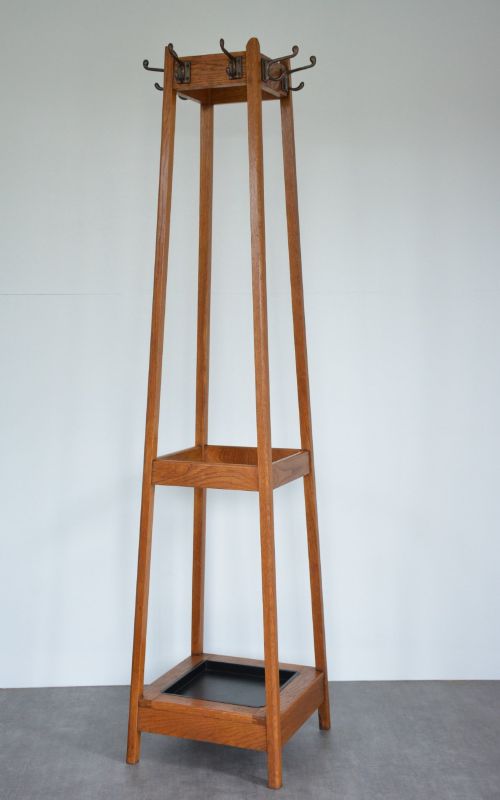
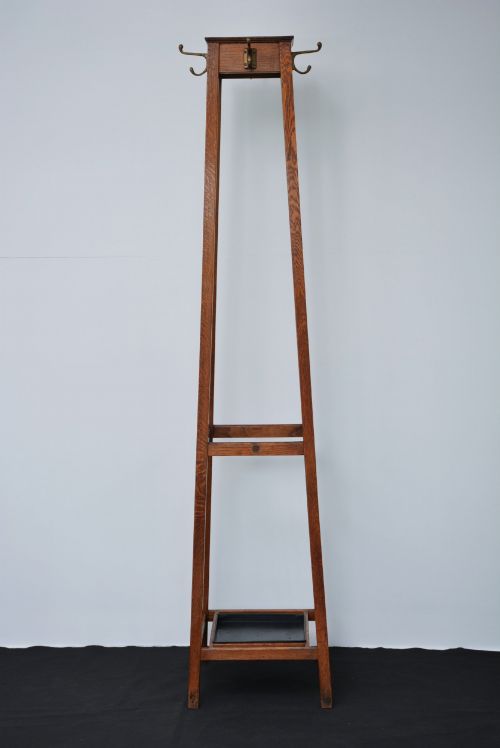
Most examples met on this page date from the late nineteenth century to the early twentieth century, appearing as tall hallstands or revolving hat and coat stands. They typically feature designated upright compartments with metal or brass drip trays to catch rainwater from umbrellas.
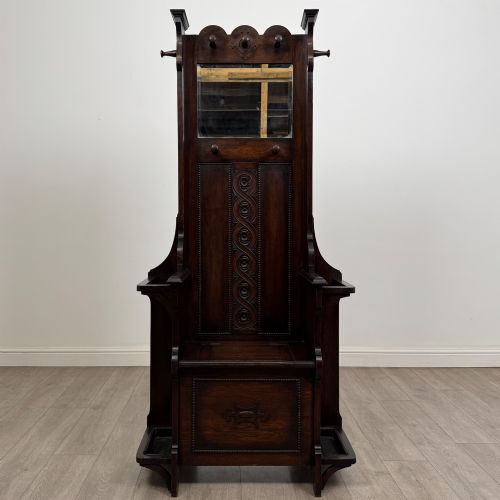
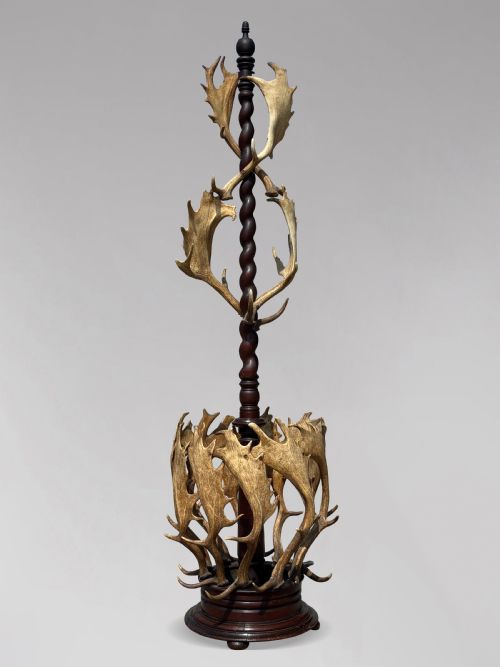
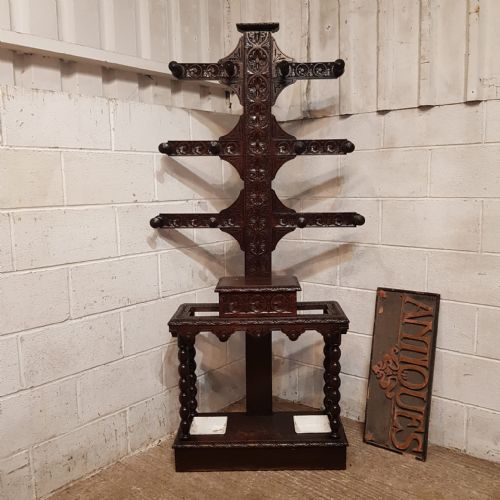
Makers utilised solid oak alongside contrasting materials like cast iron, brass and glass to construct robust furniture that handled heavy daily use. Surviving pieces range from simple industrial designs to elaborately carved Black Forest and Flemish architectural forms.
How they were made
Cabinetmakers built these hall furnishings primarily from solid oak, sometimes utilising golden oak or light oak variations, shaped with mortise and tenon joinery. Carved panels frequently display motifs such as Greenman faces or stylized foliage associated with the Arts and Crafts and Art Nouveau movements.
Functional hardware formed an integral part of the construction, incorporating brass coat hooks, iron umbrella rings and removable metal drip trays at the base. Integrated mirrors, secured with wooden backing frames, were bevelled and set into the upper central sections of larger stands.
What varies in quality
Quality reveals itself in the depth and crispness of the woodwork, particularly where cartouches, mouldings and figural carvings meet the structural frame. Superior examples demonstrate careful selection of timber grain and robust jointing that withstands the heavy leverage of damp coats and walking sticks.
The integrity of the original metal components - such as heavy brass drip trays, forged iron brackets and sturdy coat hooks - separates standard utility items from exhibition pieces. Finer stands retain intact bevelled mirrors and secure backboards that maintain structural rigidity over decades of use.
J Parker of Woodstock·Astrola·Fischel·GW Evans
The Oak Umbrella Stand Coat Rack Glossary
- Hallstand
- A multi-functional piece of hallway furniture combining coat hooks, a hat shelf, a mirror and umbrella stands with a drip tray. These items organise entranceways by gathering outerwear and walking accessories into one footprint.
- Drip tray
- A removable metal basin located at the base of the umbrella section to catch water from wet sticks and parasols. They protect the timber base from water damage and corrosion.
- Greenman
- A sculptural architectural motif depicting a human face disgorged from foliage, commonly found on Victorian and Edwardian carved oak furniture. This decorative element symbolizes rebirth and connection to nature.
- Arts and Crafts
- A design movement emphasising handcraftsmanship, simple structural forms and traditional joinery rather than mass production. Pieces from this style often display honest construction and minimal, organic ornamentation.
Oak Umbrella Stand Coat Rack: Frequently Asked Questions
How do I care for an antique oak hallstand?
Keep the wood nourished with appropriate wax polishes and avoid placing the stand directly against damp walls or near intense heat sources that could split the oak.
Periodically check the stability of the coat hooks and empty the metal drip trays to prevent moisture accumulation near the base.
Were these stands made for small hallways?
While many surviving pieces are substantial and designed for grand Victorian or Edwardian entrance halls, narrow wall-mounted racks and compact variants also exist for restricted spaces.
Buyers should verify the depth and width dimensions carefully to ensure the piece accommodates both the furniture footprint and the hanging garments without blocking doorways.
What is the difference between a hallstand and a coat stand?
A hallstand typically incorporates a vertical backboard with a mirror, glove box, coat hooks and umbrella wells, forming an architectural unit against a wall.
In contrast, a coat stand or revolving hat and coat tree is freestanding and accessible from all sides, designed primarily for vertical garment storage.
How do I distinguish Edwardian oak from Victorian oak?
Victorian oak pieces often feature heavier, darker finishes and elaborate carvings, including Gothic Revival or Flemish motifs and deep relief work.
Edwardian oak items generally display lighter tones, simpler Arts and Crafts lines, or cleaner geometric styling that reflects changing interior design preferences.