

Antique Hall Table with Castors
These antique hall table with castors selections bring versatile timber forms and rolling mobility together for practical entryways.
Antique Hall Table with Castors
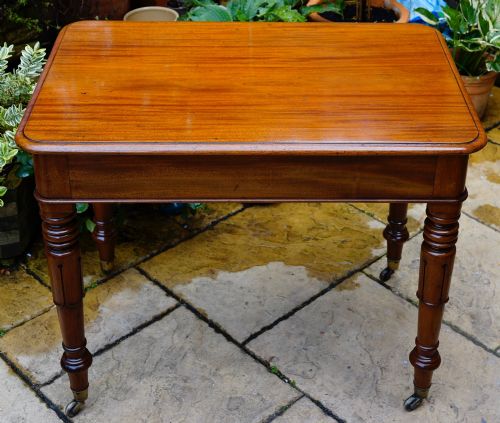
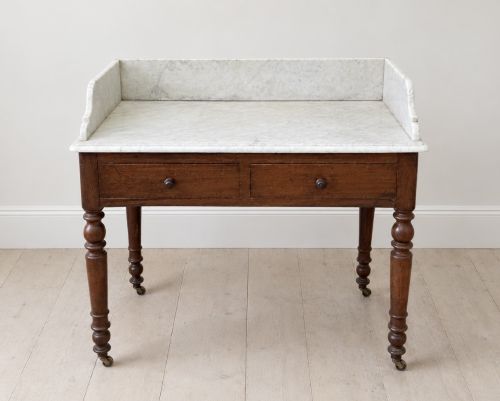
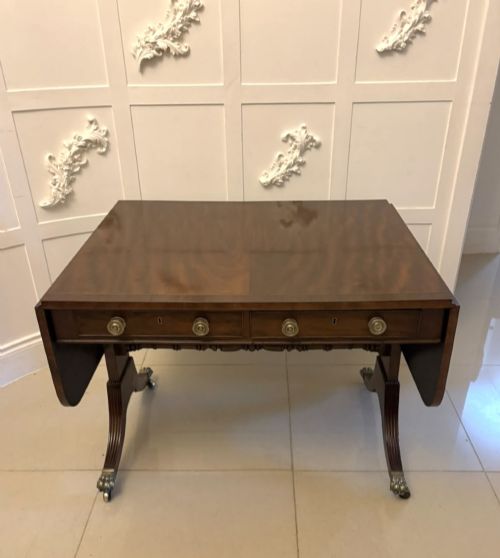
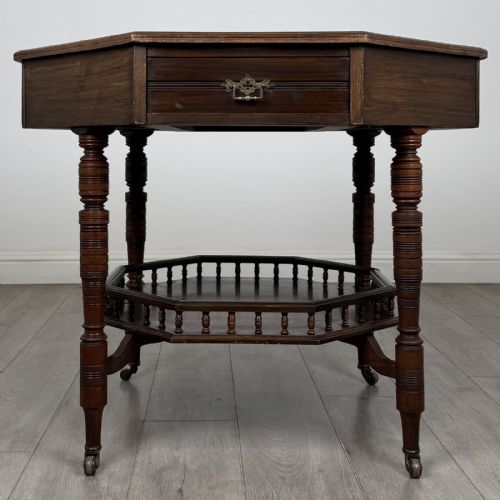
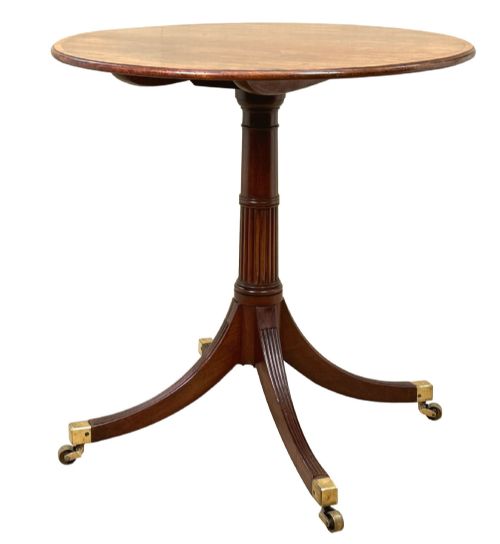
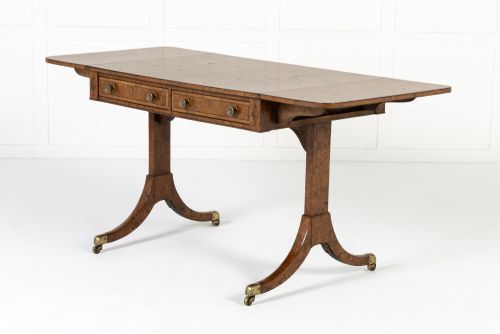
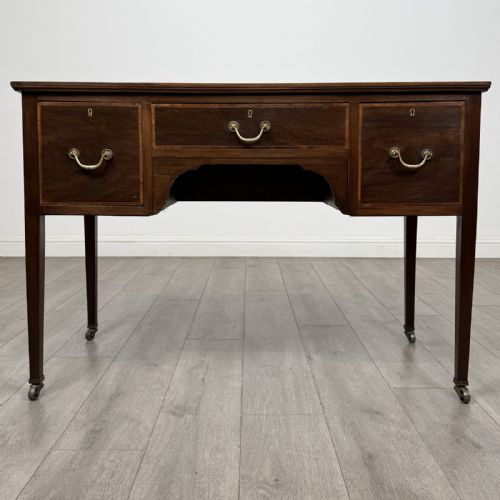
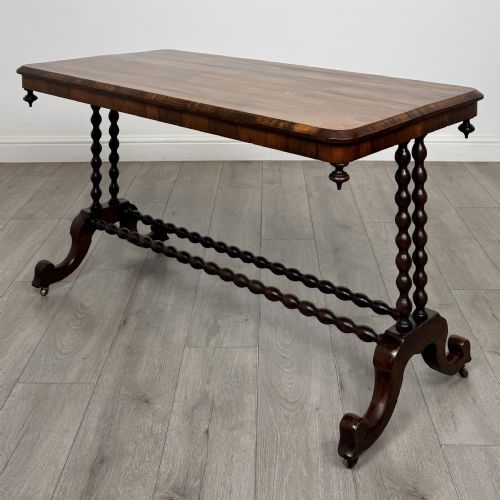
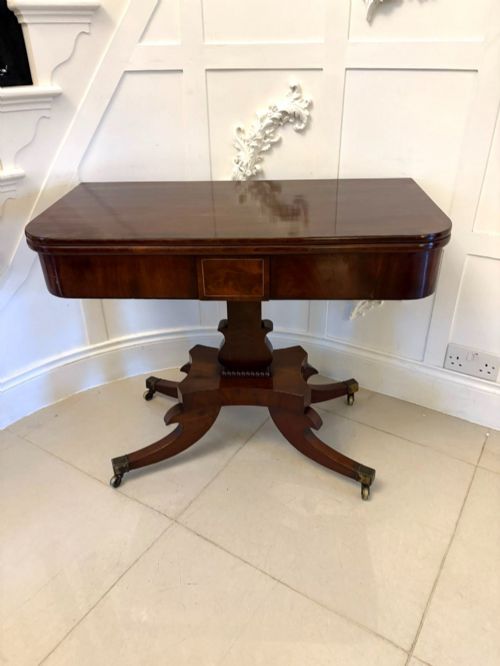
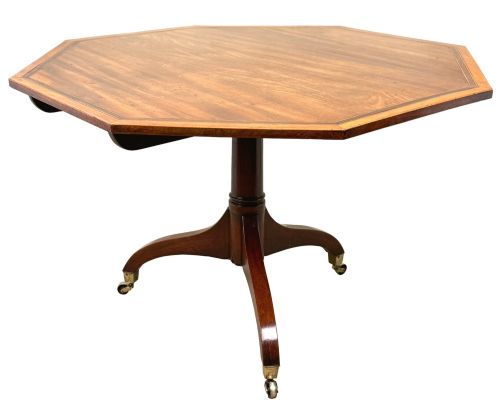
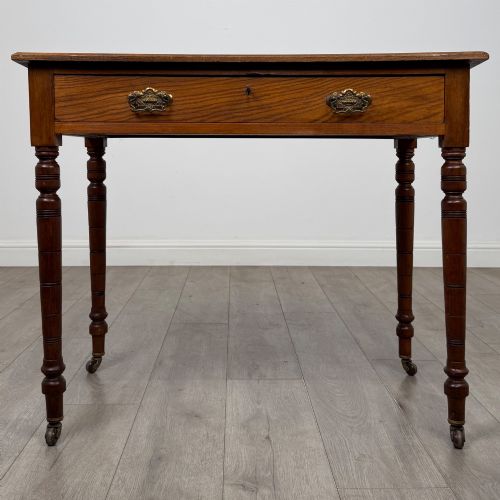
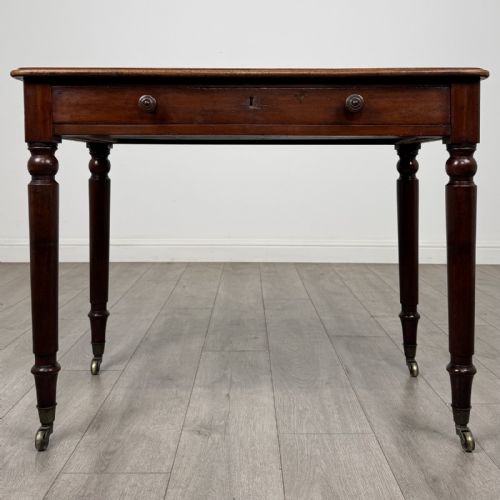
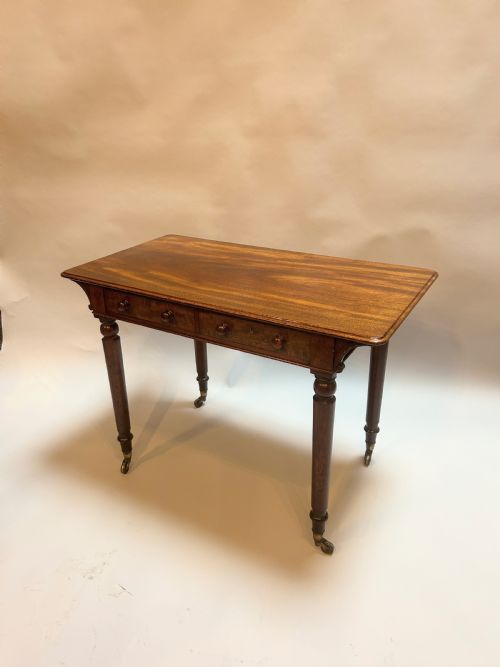
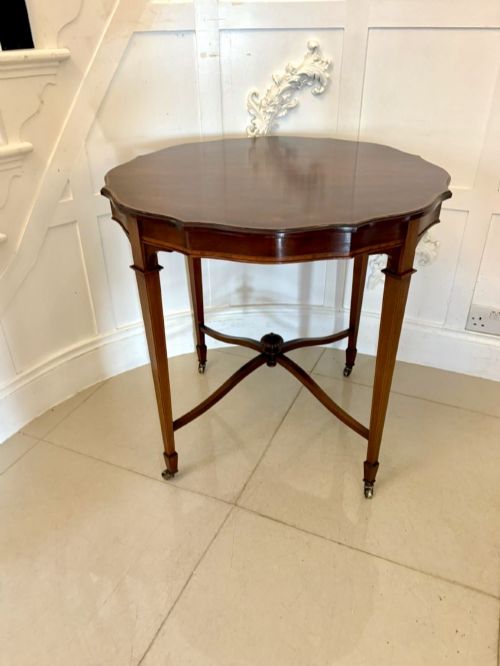
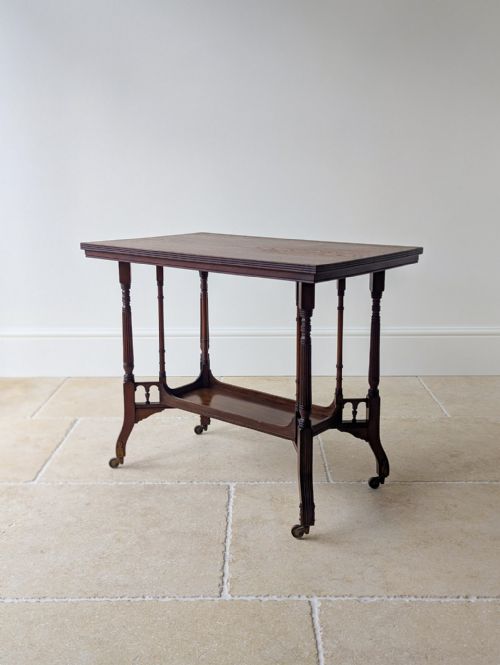
An antique hall table with castors serves as a functional surface in passageways, drawing upon forms like side tables, writing tables, and sofa tables to furnish narrow spaces. The pieces appearing here span from the Georgian and Regency eras through the Victorian and Edwardian periods, demonstrating how cabinet makers adapted domestic furniture for transitional areas.
Most examples rely on robust timbers such as mahogany, oak, walnut, and pine, often finished with brass wheel mechanisms to allow easy movement across floorboards. Makers built these items to handle everyday correspondence and display, combining practical drawer storage with sturdy leg structures.
Materials and construction
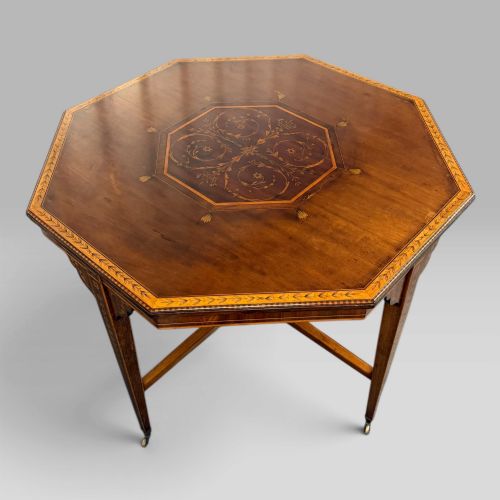
Craftsmen shaped these tables using solid hardwoods and occasional pine carcases, frequently applying finely figured mahogany or walnut veneers alongside boxwood or satinwood inlay. Timber selection dictated both the visual weight and the durability of the frame, ensuring the piece could withstand the rigours of a busy hallway.
Makers integrated brass castors directly into the base of each leg, utilising metal wheels and ceramic or brass sockets that allowed smooth repositioning. Joinery techniques such as dovetailed drawers and secure tenon joints kept the structure rigid despite the mobility provided by the castors.
Antique Hall Table with Castors Retail Price Guide 2026
Typical asking prices for hall table with castors among the pieces listed under this phrase on Sellingantiques today, from the lower quarter to the upper quarter. They describe what is for sale here now, not the wider market.
Some Victorian housemaids likely cursed these heavy mahogany tables when stubborn castors refused to roll straight across thick wool carpets.
Judging quality and craftsmanship
The distinction between standard utility pieces and finer examples rests on the crispness of the timber selection and the refinement of the decorative details. Superior items exhibit carefully matched veneers, delicate inlay work, and robust structural joinery that remains firm despite centuries of rolling movement.
Hardware quality also dictates value, with heavy brass castors and original drawer pulls indicating higher workshop standards. The integrity of the secondary woods used in drawer linings and the preservation of the original polished surface further separate basic workshop output from master cabinet work.
Gregory & Co·J A Mein Edinburgh·Gillows·Lamb of Manchester·Holland & Sons
The Antique Hall Table with Castors Glossary
- Castor
- A small wheel mounted on a swivel assembly at the foot of a table leg to allow smooth rolling. These devices typically combine brass housings with metal or ceramic wheels.
- Side table
- A domestic surface designed to stand against a wall rather than occupy the centre of a room. These forms frequently feature single or twin drawers beneath the top.
- Sofa table
- A rectangular freestanding table traditionally placed in front of a sofa, characterised by drop leaves on either side and dual pedestals. They often include drawers fitted for writing materials.
- Satinwood inlay
- Decorative woodwork where contrasting pale timber is inserted into recesses of a darker primary wood. This technique creates geometric or floral patterns across table tops and drawer fronts.
- Campaign furniture
- Portable items designed for easy dismantling and transport, often fitted with robust brass corners and recessed handles. They share the utilitarian mobility found in wheeled hall tables.
Antique Hall Table with Castors: Frequently Asked Questions
Where did people place these tables?
These tables stood in hallways, corridors, and reception rooms where a narrow surface was needed for incoming mail or lighting. Their mobility allowed staff to reposition them easily when sweeping or rearranging a room.
Today, they serve similar purposes in modern entrance halls, providing a convenient drop-off point for keys and post without obstructing narrow pathways.
How do I identify a Regency table?
Regency pieces often feature classical proportions, dark mahogany timbers, and restrained brass mounts inspired by ancient Greek and Roman designs. Look for clean architectural lines and sabre legs fitted with small brass wheel castors.
Cabinet makers of this period also utilised ebony banding and fine brass stringing to accentuate the crisp edges of the table top.
Are the castors on these tables original?
Many surviving tables retain their period brass or ceramic castors, though wear and tear over the centuries meant wheels and sockets were frequently replaced. Inspecting the fixing screws and the timber around the foot reveals whether the fittings belong to the original period of manufacture.
Matching patination between the leg timber and the metal hardware generally indicates that the castors have remained with the piece long-term.
How should I care for a timber table top?
Maintain the polished wooden surface by dusting regularly with a soft, dry cloth and avoiding placement near direct heat sources or strong sunlight. Excessive warmth causes timber to dry out and split, while moisture can permanently mark French polished finishes.
Applying a traditional beeswax polish occasionally helps nourish the grain and preserve the deep lustre of mahogany and walnut.