


Antique Hall Pier Table
An antique hall pier table anchors a grand hallway or reception room with architectural presence and a useful surface.
Antique Hall Pier Table
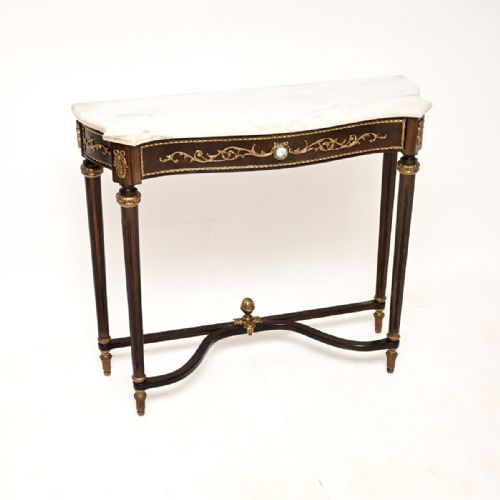
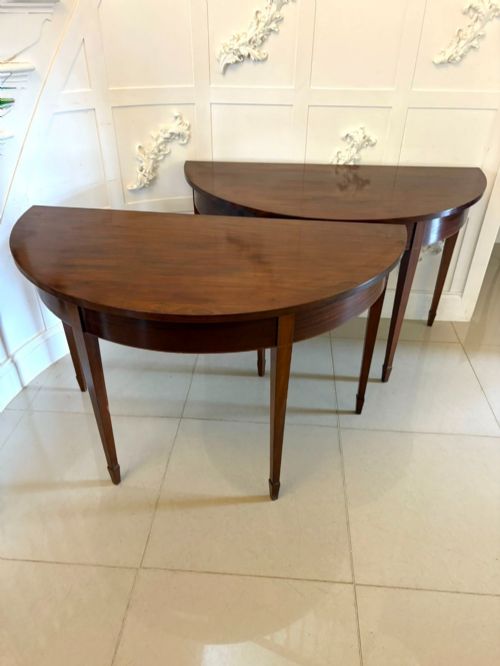
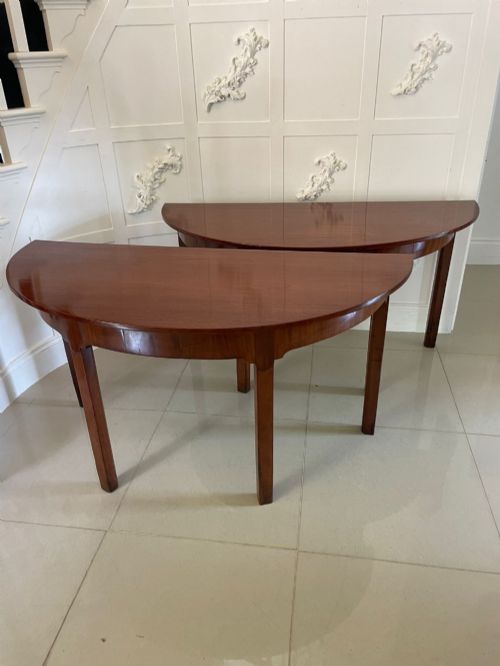
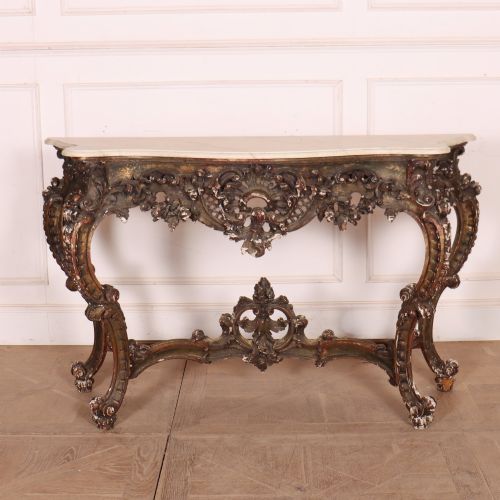
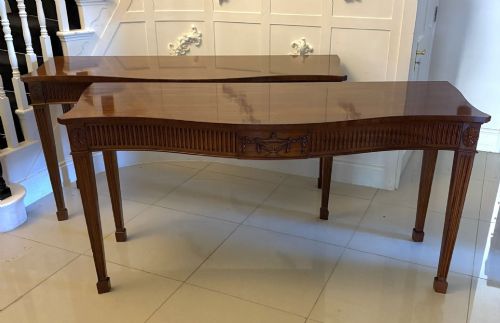
Buyers meet pieces spanning from the 18th century through to the 1930s, reflecting styles such as Regency, George III, William IV, Neoclassical, and French Rococo. Demilune shapes, serpentine fronts, and break-front outlines dominate the domestic and continental examples available.
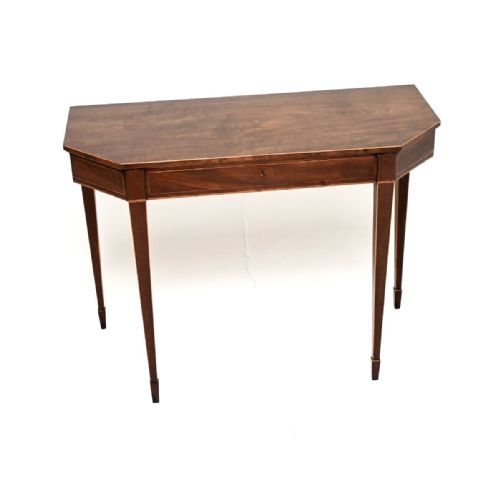
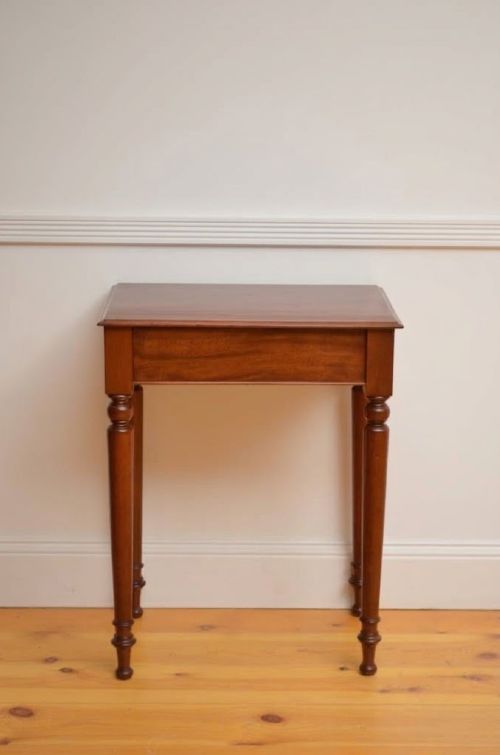
Origin points range across English, French, Italian, Spanish, and Dutch workshops, offering everything from heavy gilded statement pieces to restrained mahogany side tables suitable for domestic entryways.
How they were made
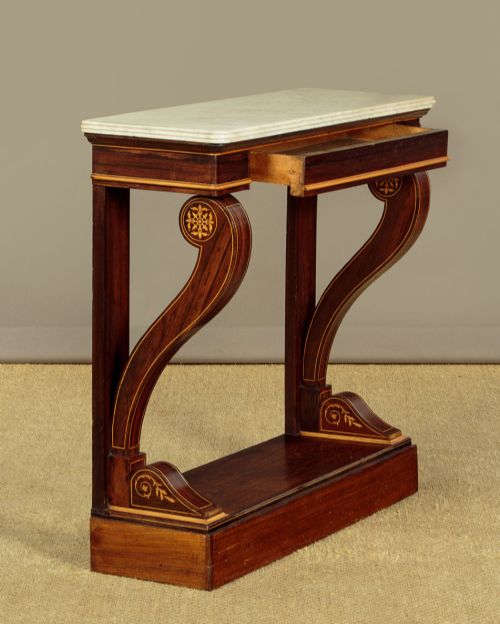
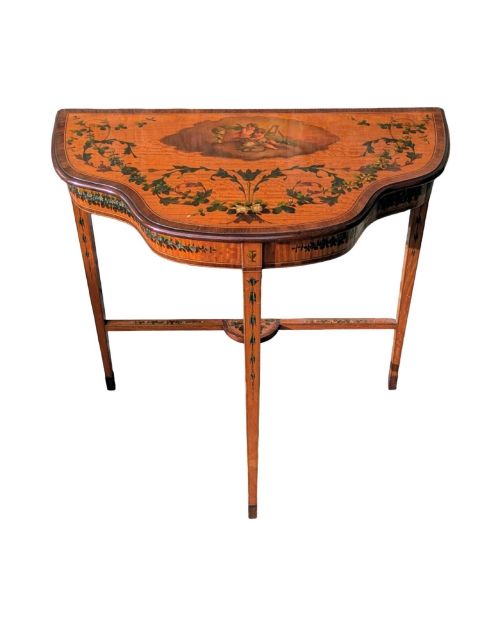
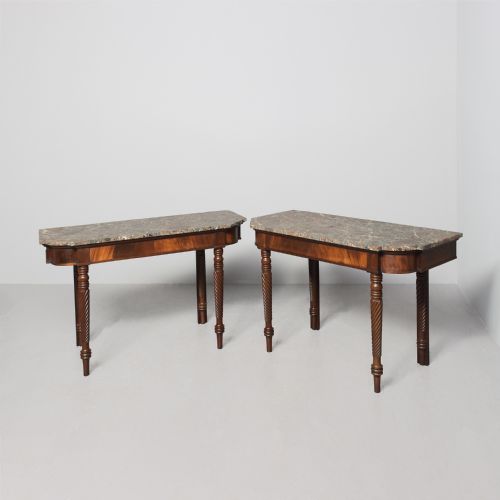
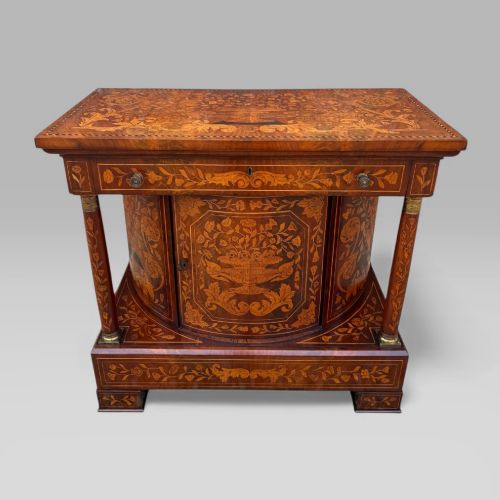
Cabinet makers utilised dense hardwoods like figured mahogany, walnut, and rosewood, often pairing timber frames with heavy inset marble tops for durability and formal visual weight. Marquetry inlay and parcel gilding added intricate surface detail to plain wooden carcases.
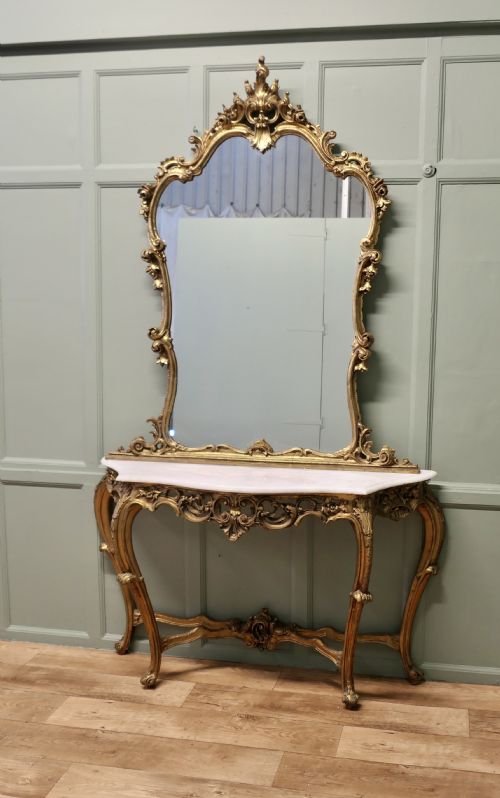
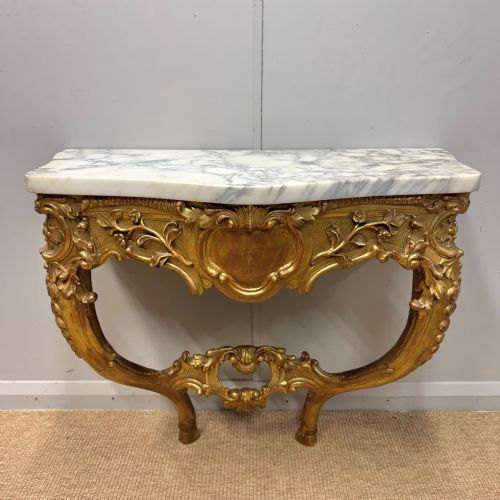
Giltwood and gesso techniques defined continental and neoclassical output, where plaster layers were applied over carved wood before receiving gold leaf or silver gilt finishes. Wrought iron provided structural support for alternative industrial or rustic French variants.
Glass and brass elements appeared as supplementary materials, reinforcing pier mirrors or providing subtle trim to drawer mounts and framing.
Listings feature 18th-century, 19th-century, and early 20th-century periods, dominated by mahogany, marble, and giltwood materials.
What varies in quality
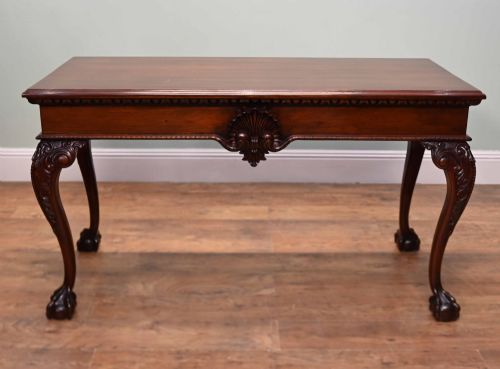
The sophistication of the carved ornamentation separates standard joinery from exceptional craftsmanship, particularly in the depth and crispness of acanthus leaves, scrollwork, and neoclassical motifs on giltwood or mahogany frames. Hand-carved details display intentional movement and relief that mechanical or hasty work lacks.
The selection of raw materials dictates the upper tier of execution, seen in heavily figured mahogany, book-matched walnut veneers, and thick, richly veined marble slabs rather than thin or plain stone substitutes. Original parcel gilding and intact gesso retain a depth of tone that heavy restoration or repainting obscures.
Felix-Alfred Ternisien·Gillows Lancaster·Gillingtons of Dublin
The Antique Hall Pier Table Glossary
- Demi-lune
- A half-moon shape used for table tops and frames. This curved profile allows the piece to project minimally into narrow hallways.
- Gesso
- A plaster-like mixture applied to wood surfaces as a base for gilding. It provides a smooth ground for intricate carved details.
- Pier table
- A table designed to stand against a wall between two architectural openings such as windows. They frequently accompanied matching pier mirrors.
- Serpentine
- A furniture front curving inward centrally and outward at the sides. This flowing line characterises many 18th and 19th-century console designs.
- Parcel gilt
- Partially covered with gold leaf or gold paint. This technique highlights specific carved elements against a painted or wood ground.
Antique Hall Pier Table: Frequently Asked Questions
What is a pier table?
A pier table is a console table built specifically to stand flat against a wall, traditionally placed in the architectural space between two windows.
Because they anchored formal reception rooms, they were often paired with large matching wall mirrors and finished with decorative marble tops.
How were these tables used?
These tables served as focal points in entrance halls, drawing rooms, and formal galleries to display decorative objects or provide a surface for lighting.
In dining settings, certain larger variations functioned as serving tables alongside other case furniture.
Are marble tops original?
Many period console and pier tables incorporated heavy marble tops from construction to handle damp items or provide a stable, cool landing surface.
Examining the underside and the fit against the wooden rebate helps determine if the stone belongs to the original carcase.
How do I style a hall table?
A hall table requires careful balancing of height and weight against the wall space above it, frequently complemented by a hanging mirror or artwork.
Keeping the surface uncluttered allows the grain of the mahogany or the detail of the giltwood frame to remain the visual focal point.