

Antique Haberdashery Unit
An antique haberdashery unit offers unmatched compartment storage for modern homes, bringing commercial provenance and practical compartmentalisation into everyday interiors.
Antique Haberdashery Unit
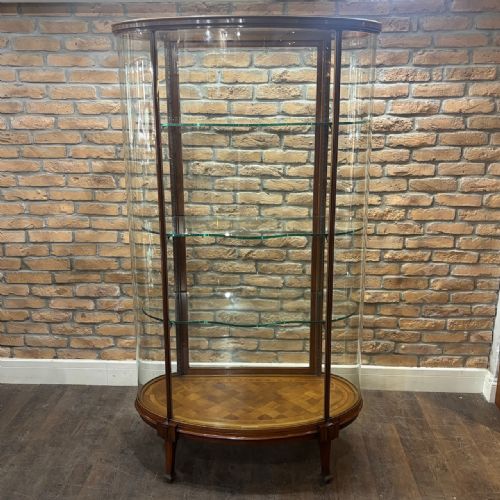
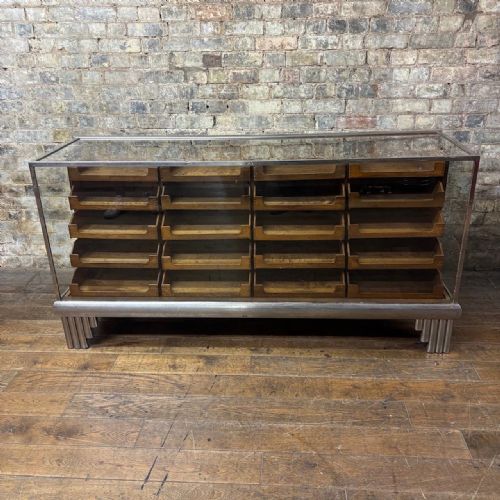
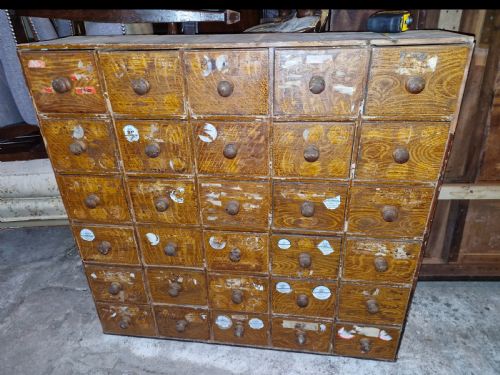
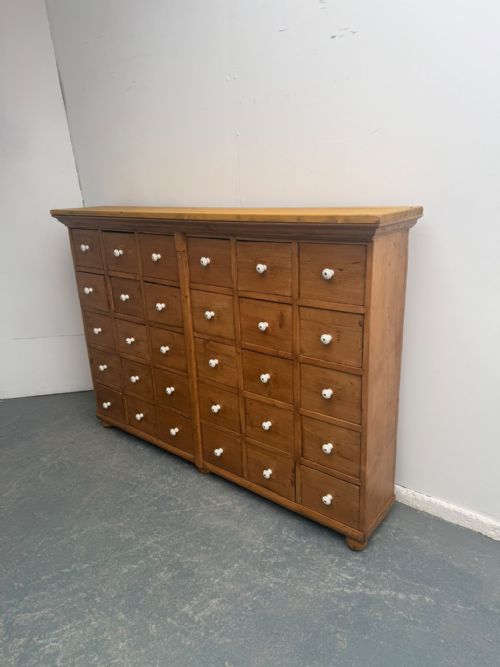
An antique haberdashery unit serves as a multi-drawer storage piece originally utilised in retail drapery and mercantile shops to organise small stock like ribbons, buttons, and threads. These pieces emerge predominantly as banks of drawers, shop counters, and display cabinets originating from the Victorian, Edwardian, and interwar commercial periods.
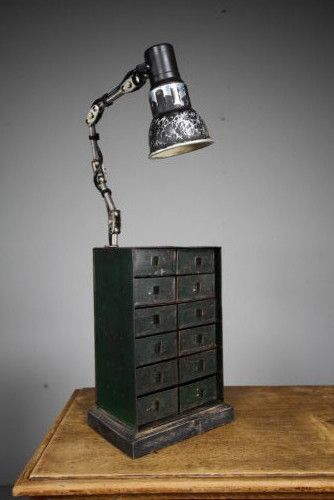
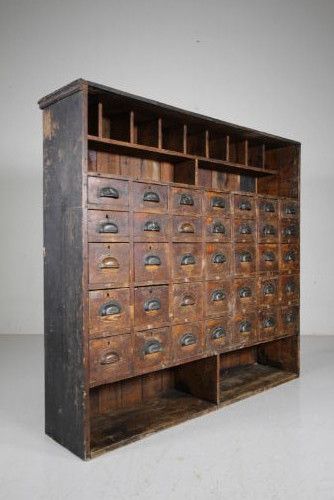
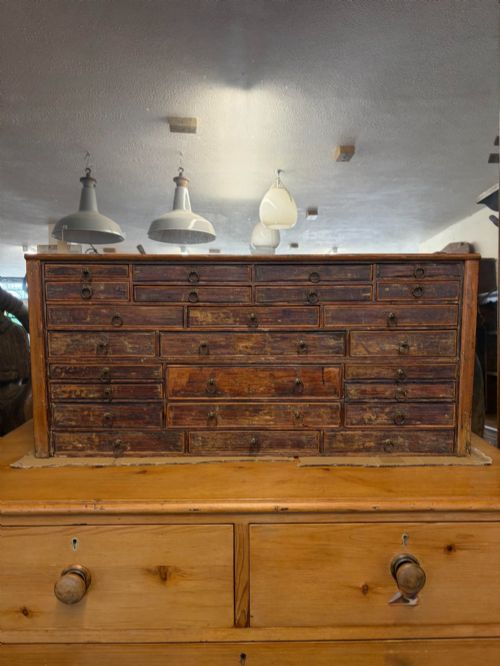
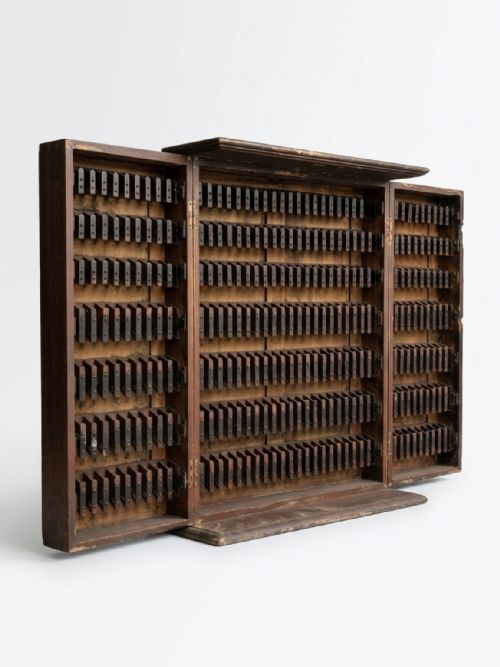
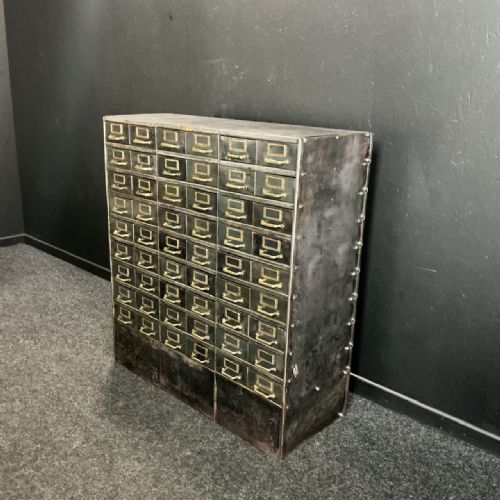
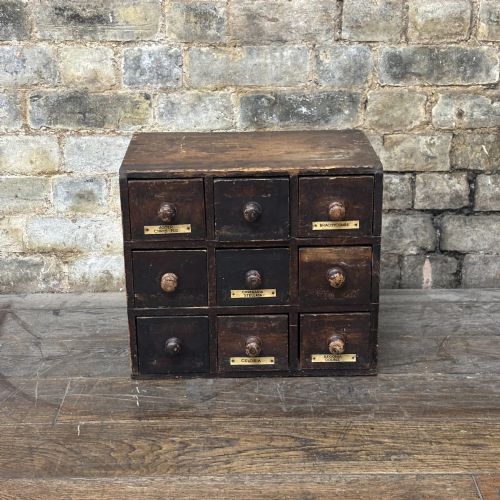
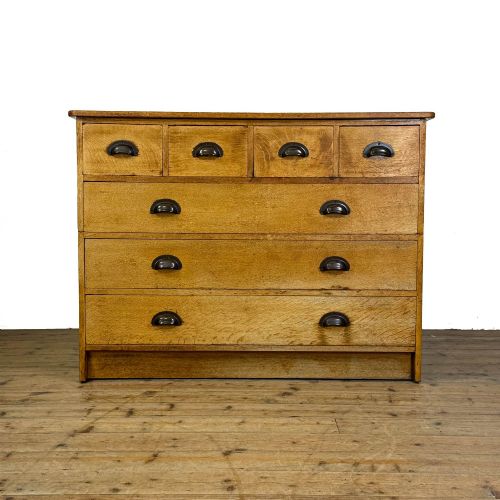
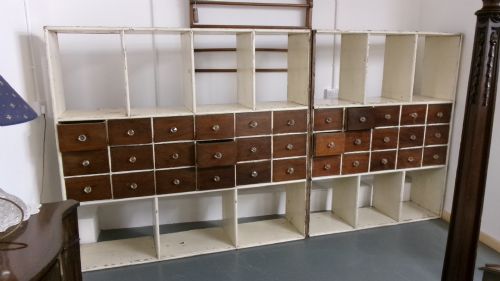
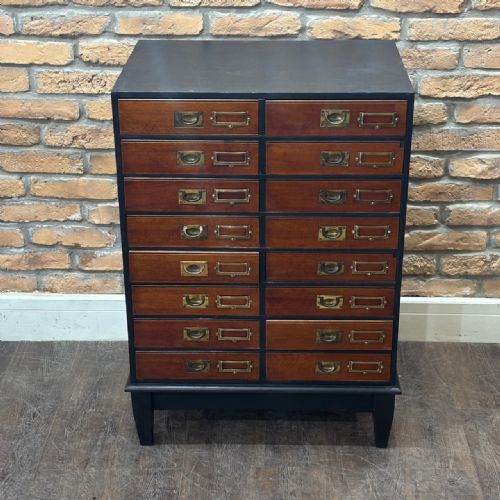
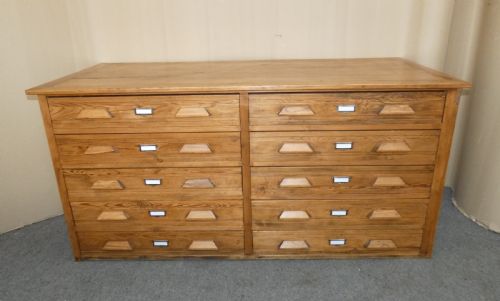
Buyers encountering this phrase find large banks of drawers, tall chests, and countertop cabinets configured in pine, mahogany, oak, and walnut. The forms range from multi-drawer filing banks and chemist shop fittings to seed chests and drapers counters, carrying the practical architecture of early retail spaces into domestic settings.
How these units were constructed
Makers built these commercial units using sturdy timbers such as pine, mahogany, oak, and fruitwood to withstand heavy daily use in retail environments. Carcasses often feature robust dovetail joinery on the numerous drawers, paired with durable backboards and solid framing.
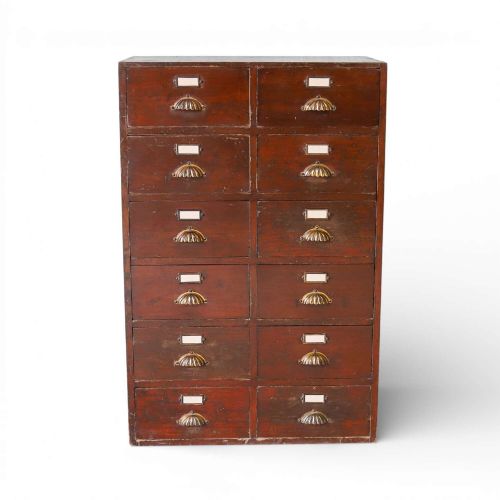
Hardware played a functional role in daily shop work, incorporating brass or iron handles, original shell pulls, and metal label holders to identify contents quickly. Glazed panels appear on display counters and cabinets, utilising glass to showcase goods while protecting stock from dust.
Some multi-drawer units still contain faint traces of powdered flower seeds and stray haberdashery pins lodged in their deepest corners.
What separates the standard of pieces
Quality rests in the intact survival of original hardware, such as brass shell pulls, label holders, and maker plaques, which anchor the piece in its commercial history. Units retaining their factory paint finishes or unblemished polished timber surfaces show a higher grade of original preservation.
The complexity of the internal configuration, from simple banks of drawers to multi-tier counters with integrated display glass and patent filing mechanisms, marks the distinction between standard utilitarian items and superior retail shop fittings.
F. Sage & Co·Dudley & Co·Saml. Elliott & Sons·Luxmore's of Ilfracombe
The Antique Haberdashery Unit Glossary
- Bank of drawers
- A large cabinetry structure housing numerous small drawers stacked vertically and horizontally. This format provided optimal organisation for retail stock in drapers and ironmongers.
- Shell pull
- A stamped metal or brass handle shaped like a semi-circular shell. These handles frequently incorporate integrated slots to hold paper inventory labels.
- Shop fitting
- Fixtures and furniture built specifically for commercial retail interiors rather than domestic use. These pieces were designed to withstand heavy patronage and daily operation.
- Draper's counter
- A long shop table often fitted with shallow drawers or display glass on top. They served as the primary service surface in textile and clothing merchants.
- Patent cabinet
- A specialised storage unit manufactured under a specific industrial patent, such as letter filing systems. These incorporate proprietary mechanical sorting mechanisms.
Antique Haberdashery Unit: Frequently Asked Questions
How do I clean an old wooden cabinet?
Dust the timber regularly with a dry cloth and occasionally feed polished surfaces with a traditional beeswax. Avoid using modern chemical sprays that can strip historic finishes.
Keep the unit away from direct sunlight and radiators to prevent the wood from drying out and splitting over time.
Can I use these drawers for clothes?
These shallow compartments suit the storage of folded garments, accessories, documents, or craft materials. The original layout makes sorting small items straightforward.
Line the bases of the drawers with acid-free tissue paper if storing delicate textiles to protect fabrics from older interior timber.
How do I identify the period of a unit?
Examine the construction methods, timber choices, and hardware styles to determine the era of manufacture. Victorian pieces often use heavy pine or walnut, while 1930s examples introduce chrome and oak.
Look for maker stamps, patent numbers, or original retail labels attached to the drawers or carcass interior for precise dating.
Are original label holders common?
Many shop units retain their metal label frames attached to the drawer fronts. These small brass or iron fixtures show where shopkeepers categorised their stock.
Units lacking these elements often show empty screw holes where the original hardware was once secured.