


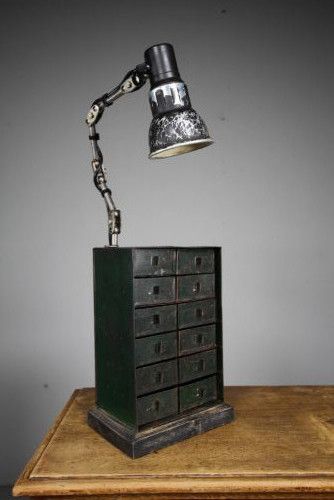
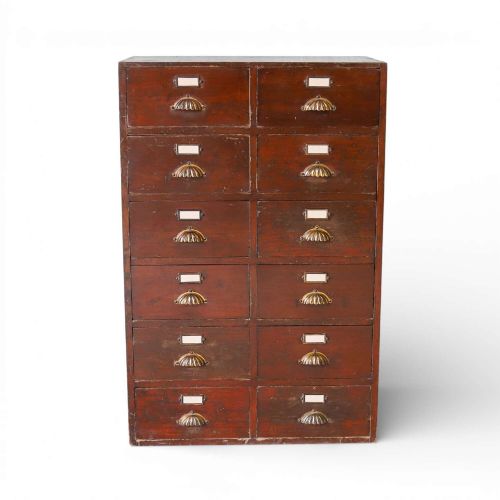
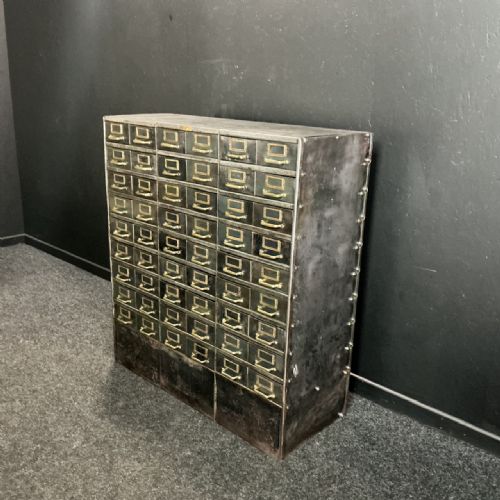
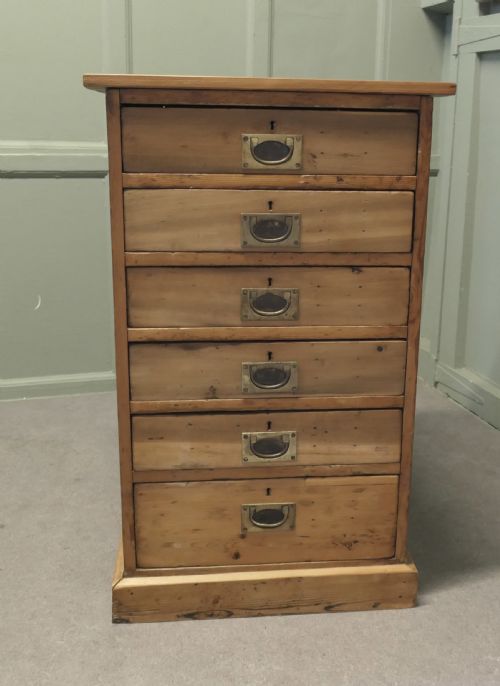
Antique Haberdashery Drawers
Antique haberdashery drawers are hardworking shop fittings and storage cabinets that bring honest utility and character to modern rooms.
Antique Haberdashery Drawers
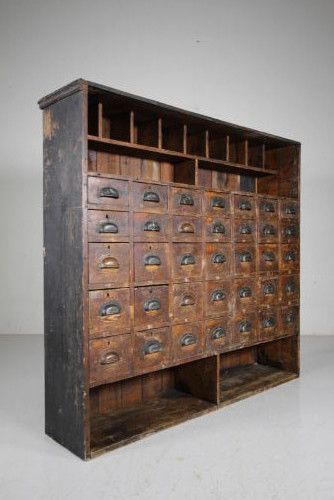
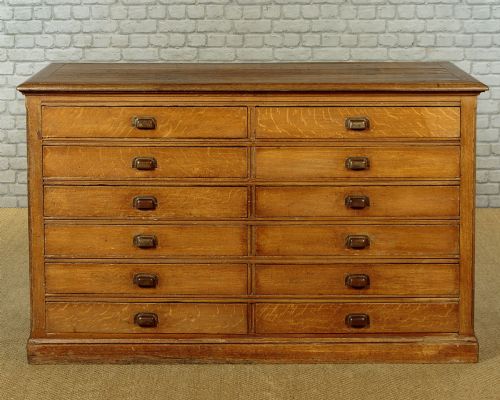
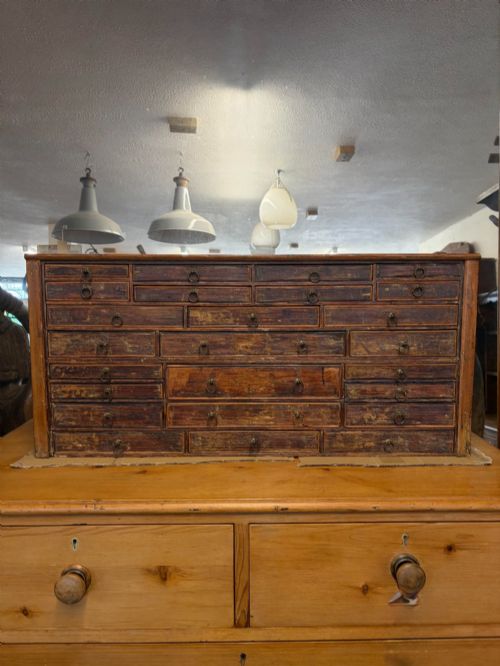
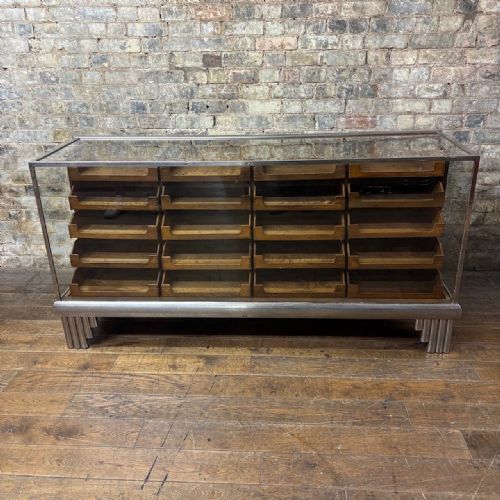
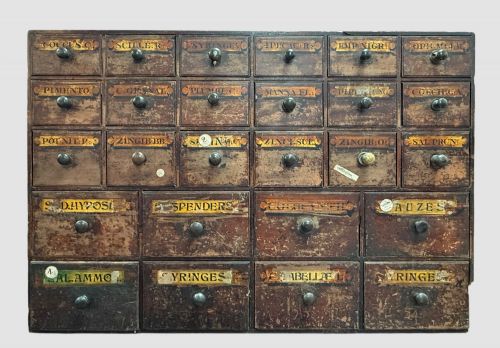
Antique haberdashery drawers comprise multi-drawer storage cabinets, banks of drawers, and countertop needle drawer cabinets originating from commercial settings. When people search for antique haberdashery drawers, they seek functional multi-drawer units that served shops and apothecaries.
The pieces listed on this page span the 19th century, the Victorian era, and 1920s commercial design. You will encounter shop fittings and chemist chests designed for heavy daily use.
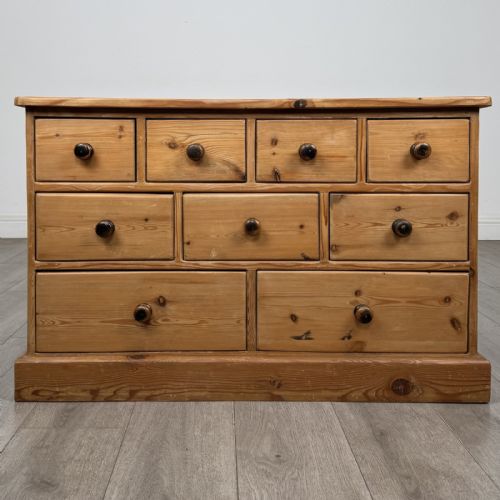
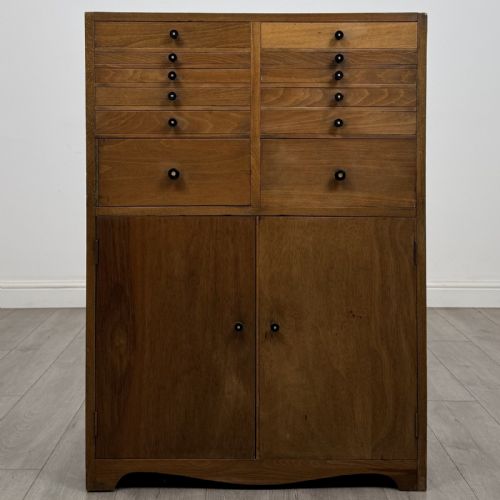
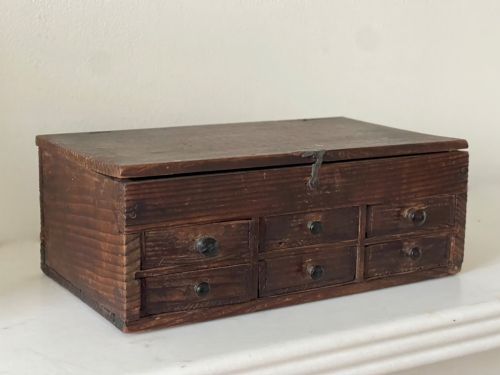
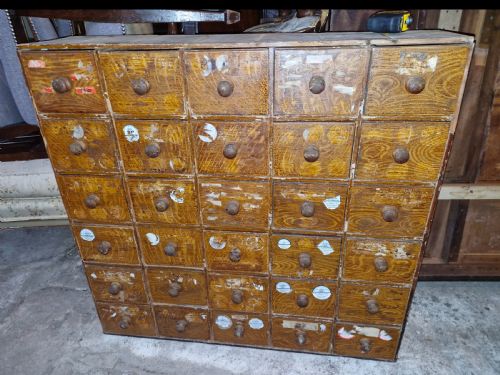
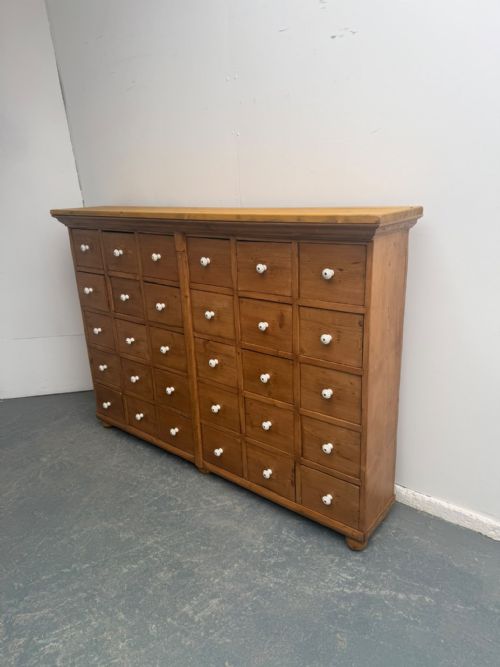
Forms include banks of twenty-five drawers, sixteen-drawer painted shop fittings, and countertop cabinets. These items originate from utilitarian trade environments rather than domestic parlours.
How they were made
Makers utilised sturdy timbers such as pine, oak, and mahogany to build these storage units. Paint finishes appear on several pieces, notably light green surfaces.
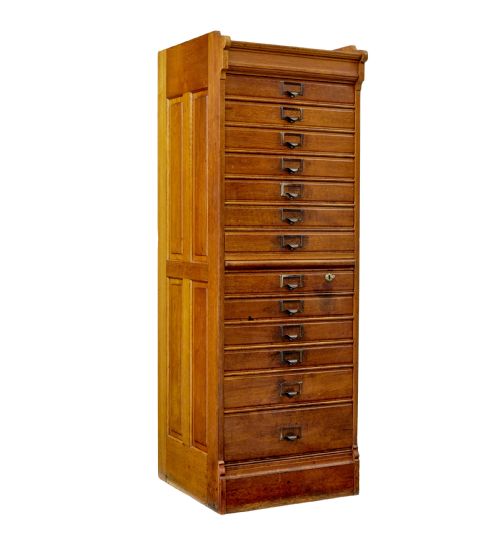
Hardware such as metal and brass handles, pulls, and card frames facilitate daily access to the numerous small compartments. Construction prioritised durability for commercial trade.
Antique Haberdashery Drawers Retail Price Guide 2026
Typical asking prices for haberdashery drawers among the pieces listed under this phrase on Sellingantiques today, from the lower quarter to the upper quarter. They describe what is for sale here now, not the wider market.
Listings feature pieces from the 19th century, Victorian period, and 1920s, constructed in pine, oak, mahogany, and metal.
What varies in quality
Quality rests in the integrity of the timber framing and the uniform operation of numerous drawers. Units retaining original paint surfaces and authentic brass or iron hardware command greater interest.
The scale of the bank and the complexity of the drawer configuration dictate the character of the piece. Untouched commercial provenance elevates an ordinary set of drawers into a notable survivor of retail history.
Luxmore's of Ilfracombe
The Antique Haberdashery Drawers Glossary
- Haberdashery cabinet
- A multi-drawer storage unit originally utilised in a draper's or clothier's shop for sorting small sewing goods. These pieces feature numerous shallow compartments.
- Bank of drawers
- A large chest comprising many individual compartments arranged in a grid. Such units provided dense storage for retail stock.
- Shop fitting
- Fixtures and furniture built specifically for commercial retail premises. These items were designed to display or store merchandise.
- Apothecary chest
- A cabinet with multiple small drawers used by chemists to store ingredients and medicines. They share a similar multi-drawer format with haberdashery units.
Antique Haberdashery Drawers: Frequently Asked Questions
What were antique haberdashery drawers used for?
Merchants used these multi-drawer cabinets to organise small sewing items, ribbons, buttons, and threads in retail shops. The numerous shallow compartments kept varied stock sorted and accessible for customers.
Over time, these commercial fittings transitioned into domestic settings for storing craft supplies, stationery, or small collections.
How do I date an antique haberdashery unit?
Dating relies on timber selection, construction methods, and the style of the hardware attached to the drawers. Pieces from the nineteenth century often feature hand-cut joints and heavy pine or mahogany carcases.
Interwar and 1920s examples show shifts in retail design, sometimes incorporating simpler internal framing and standardised metal pulls.
Are these drawers suitable for a modern kitchen?
Many buyers repurpose these narrow banks of drawers as kitchen islands, sideboards, or storage for utensils and spices. Their sturdy construction handles contemporary domestic use with ease.
Measuring the height and depth carefully ensures the cabinet fits comfortably within modern room dimensions.
What woods were used in these cabinets?
Carpenters built these functional trade cabinets using durable timbers such as pine, oak, and mahogany. Exterior surfaces sometimes received coats of paint, such as light green.
Internal dividers and drawer runners typically utilised secondary softwoods capable of withstanding constant friction.