


Antique Greyhound Figurines
Antique greyhound figurines capture the sleek lines and swift grace of the breed in bronze, earthenware and porcelain.
Antique Greyhound Figurines
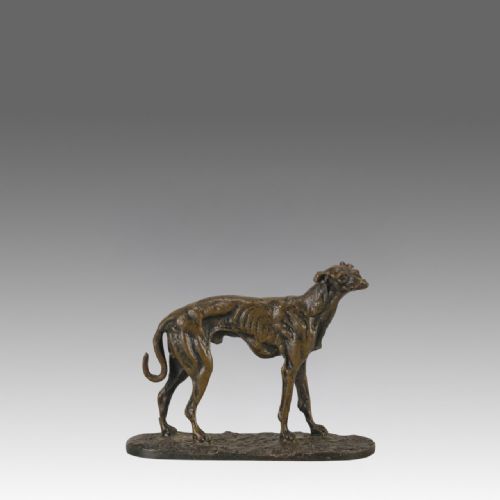
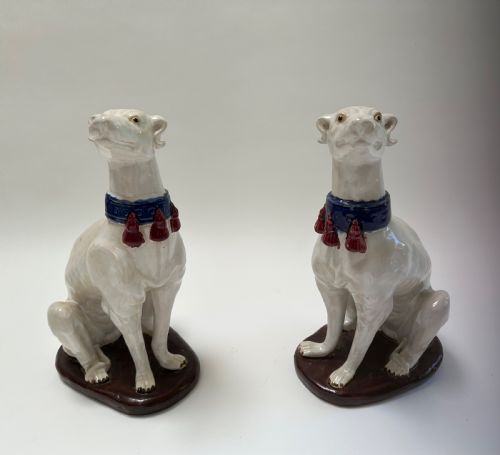
Antique greyhound figurines take several distinct forms, ranging from earthenware mantel ornaments and quill holders to detailed bronze sculptures.
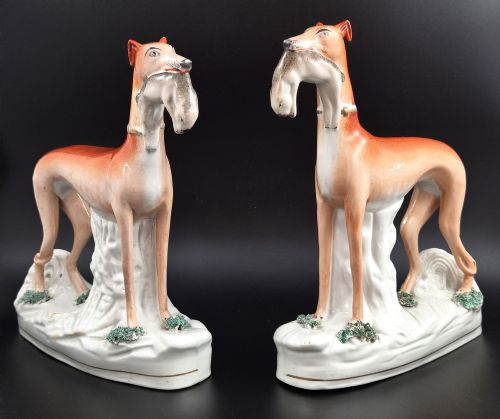
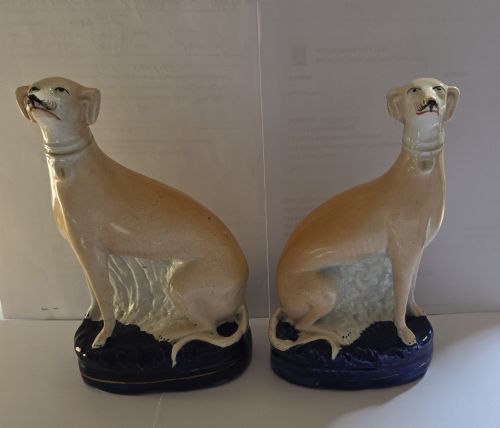
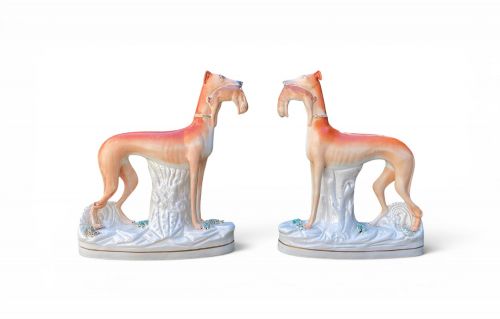
The most common version you will meet on this page is the Victorian Staffordshire pair, often modelled as seated hounds accompanied by hares.
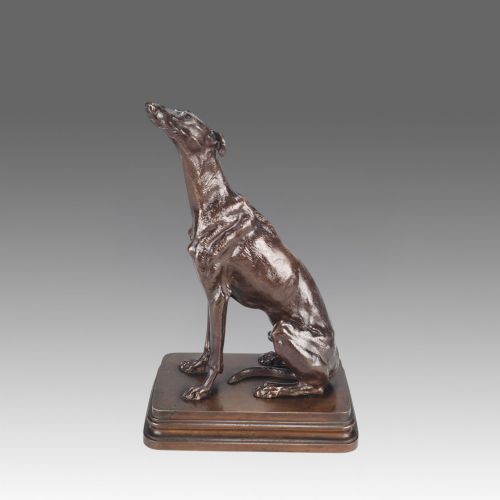
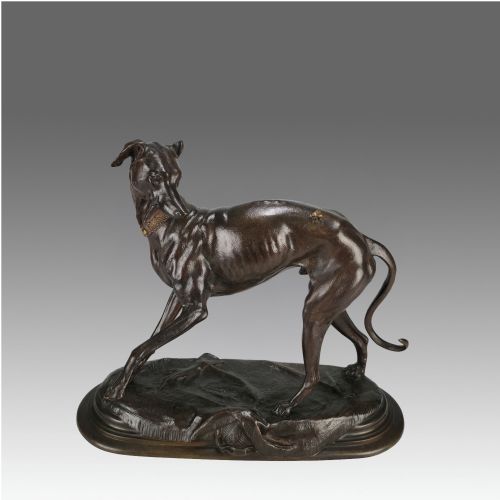
These ceramic pieces sit alongside French animalier bronzes and later Art Deco interpretations depicting the running hound.
Materials and methods
Pottery examples utilise earthenware bodies finished with glaze, lead glaze and enamel paint to colour the coat and base.
Bronze sculptures employ the casting technique, sometimes enhanced with cold painted surfaces, silvering or gold leaf details.
Object forms include decorative sculptures, inkwells, quill holders, paperweights and mantel ornaments.
Judging quality
Quality rests upon the fidelity of the modelling and the crispness of the casting or the hand-painting on the earthenware surface.
In bronze works, the precision of the musculature and the depth of the original patination define the finer examples.
Alfred Dubucand·Alfred Barye·P J Mêne·Thomas Parr·Karl Hagenaur·Geo Maxim·Joseph Francois Victor Chemin·Christophe Fratin
The Antique Greyhound Figurines Glossary
- Animalier
- A nineteenth-century movement dedicated to the realistic sculpture of animals. Artists in this tradition focused on capturing accurate anatomy and movement, particularly in bronze.
- Staffordshire pottery
- Earthenware produced in the potteries of Staffordshire during the Victorian period. These utilitarian and decorative figures were moulded in pairs for mantelpiece display.
- Vienna bronze
- Small, highly detailed bronze figures produced in Austrian workshops. They are known for their distinctive cold-painted enamel surfaces.
- Quill holder
- A desk accessory featuring a modelled figure with an integrated channel for writing pens. These ceramic pieces combined domestic display with practical desk use.
Antique Greyhound Figurines: Frequently Asked Questions
How do I display a pair of Staffordshire greyhounds?
These ceramic figures traditionally sit at either end of a mantelpiece, facing inwards toward the centre of the room.
They also look striking on a sideboard or bookshelf where their paired symmetry can be fully appreciated.
What is the difference between Staffordshire and bronze greyhounds?
Staffordshire figures are moulded earthenware pottery from the nineteenth century, finished with glazes and hand-painted enamel details.
Bronze sculptures are cast metal works, often originating from French animalier artists who focused on anatomical precision.
Are all these figurines actual greyhounds?
The category includes related sighthounds such as whippets and hunting dogs modelled in similar Victorian and Art Deco styles.
Victorian makers often grouped these slender hounds alongside hares and rabbits to denote their sporting heritage.
How do I care for antique ceramic dog figures?
Dust these glazed earthenware pieces gently with a dry cloth and keep them away from direct sunlight to preserve the enamel paint.
Avoid using water or cleaning solutions on the painted surfaces, as nineteenth-century pigments can be fragile.