




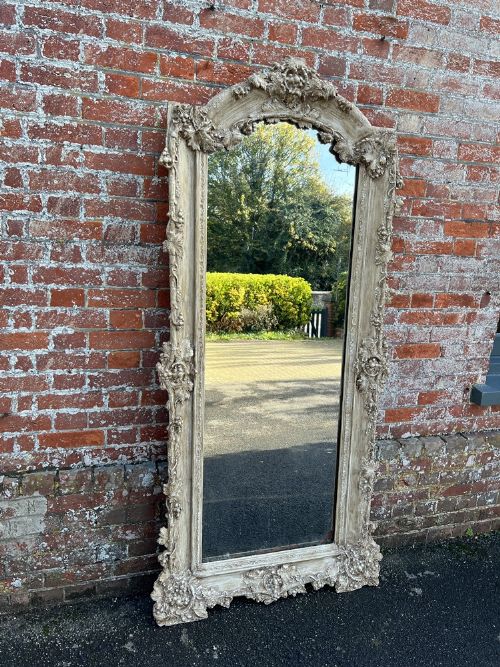
Antique Grey Arched Mirror
An antique grey arched mirror brings architectural line and aged reflective depth to a room, drawn mostly from nineteenth-century English and French workshops.
Antique Grey Arched Mirror
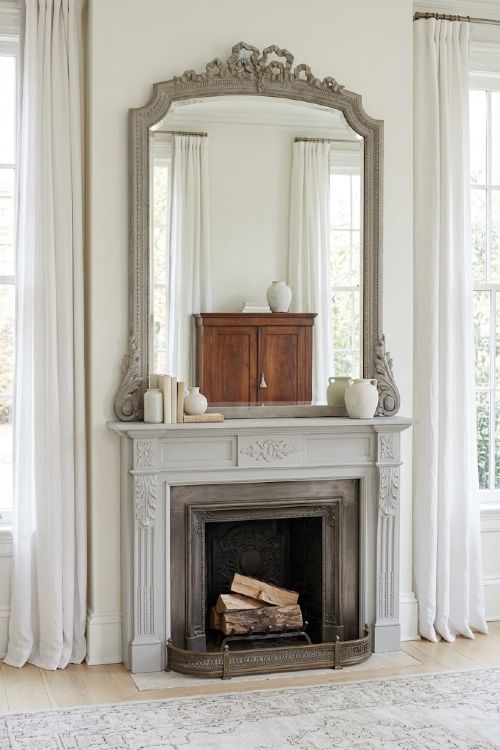
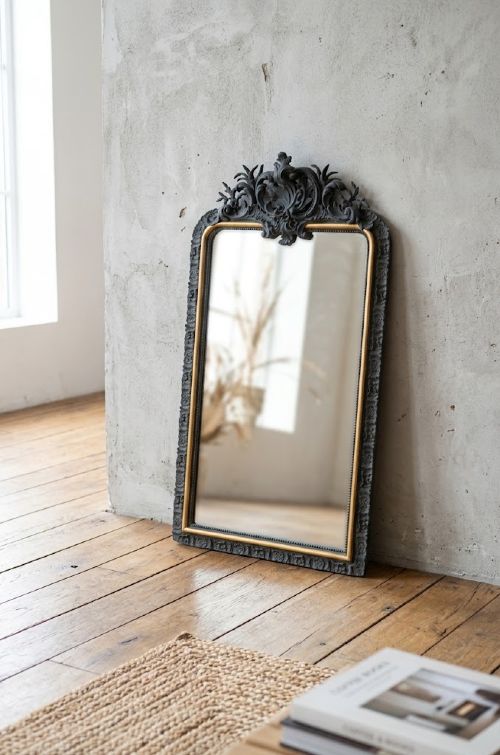
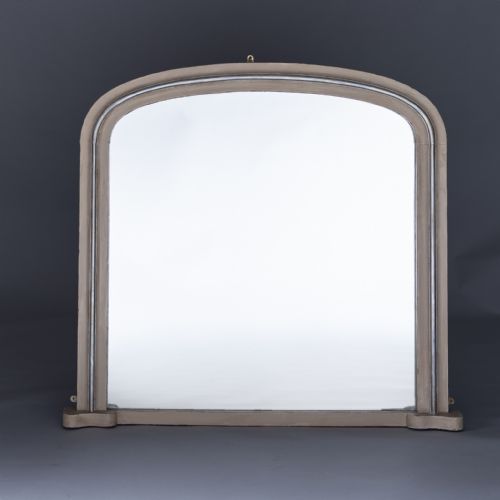
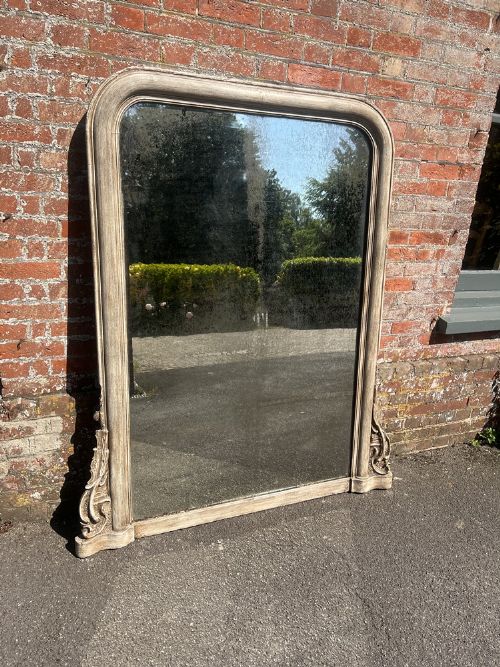
When you search for an antique grey arched mirror, you encounter pieces spanning from the mid-nineteenth century into the early twentieth century, taking the form of overmantels, pier mirrors, wall mirrors, and dressing table pieces. These rectangular plates feature curved tops, framed in painted wooden structures that often follow French Louis Philippe, Rococo, or Victorian traditions.
The dominant examples on this page are substantial nineteenth-century overmantel and wall mirrors originating from French and English makers. They combine painted surfaces with arched profiles designed to draw the eye upward and reflect natural light across a wall space.
How they were made
Makers built the foundational frames of these mirrors using carved wood, applying layers of gesso to smooth the surface before adding paint and occasional parcel-gilt or parcel-silvered detailing. This combination of wood and gesso allowed craftsmen to mould crisp decorative curves and shaped tops that held their finish across generations.
The glass itself sits within these hand-finished wooden carcasses, accompanied in many instances by giltwood highlights or layered grey paint treatments that show subtle signs of age and wear through the pigment.
Some nineteenth-century mirrors spent their lives watching generations of families gather by the hearth.
What varies in quality
The distinction between ordinary and exceptional pieces lies in the crispness of the carved wood underneath the paint and the depth of the gesso mouldings around the arched top. Superior examples display confident hand-carving and harmonious proportions where the curve of the arch integrates naturally with the rectangular body of the frame.
Another measure of quality rests in the handling of the painted surface, where layered tones and original finishes create an authentic aged character rather than a flat, uniform modern coating.
The Antique Grey Arched Mirror Glossary
- Gesso
- A plaster-like mixture applied to carved wood to create a smooth surface for gilding or painting. It allows intricate decorative details to be sculpted sharply along the frame.
- Overmantel mirror
- A large wall glass specifically designed to hang above a fireplace mantelpiece. These pieces frequently feature arched tops to echo architectural chimney breasts.
- Pier mirror
- A tall, narrow mirror traditionally hung on the stretch of wall between two windows. They reflect additional light into darker recesses of a Victorian or French interior.
- Louis Philippe
- A mid-nineteenth-century French style characterised by understated elegance, simple arched crowns, and minimal ornamentation. It avoids the heavy extravagance of earlier empires.
- Parcel-gilt
- A decorative technique where only specific raised portions of a frame receive a thin application of gold leaf. This highlights particular carved motifs against a painted background.
Antique Grey Arched Mirror: Frequently Asked Questions
Where should I hang an arched mirror?
These mirrors suit placement above a mantelpiece, sideboard, or console table where the arched top can frame vertical space effectively. They also function well on plain walls to draw light from adjacent windows.
Ensure the wall fixings match the substantial weight of carved wood and gesso frames before hanging.
How do I identify a French nineteenth-century mirror?
French pieces from this era often display Louis Philippe proportions with clean arched crowns and subtle gesso enrichment. The construction frequently utilises native timbers beneath the grey paint layers.
English variants from the same period tend to follow Victorian overmantel traditions with slightly heavier mouldings.
What is an overmantel mirror used for?
Historically, overmantels sat above fireplace openings to bounce candlelight and hearth illumination around the room. Today they serve a similar decorative purpose, visually expanding compact spaces.
Their wide proportions anchor furniture arrangements placed directly beneath them.
How do I care for painted mirror frames?
Dust the carved wood and gesso frame gently with a dry, soft cloth to protect the painted finish. Avoid liquid cleaners that might seep into aged gesso or hairline cracks in the paint.
Clean the mirror glass using a minimal amount of glass cleaner applied to a cloth rather than sprayed directly onto the surface.