


Antique Gold Cuff
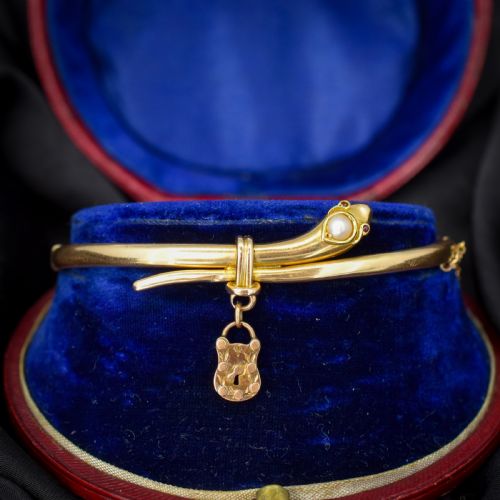
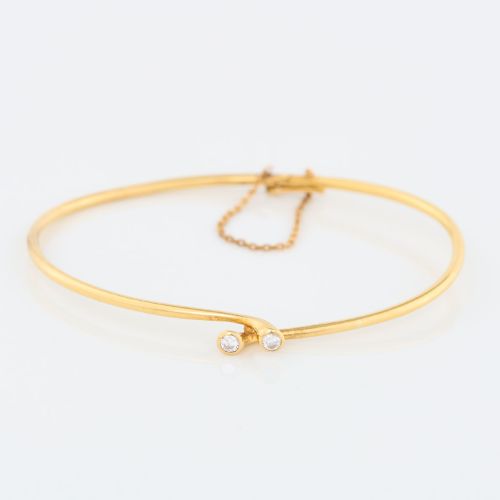
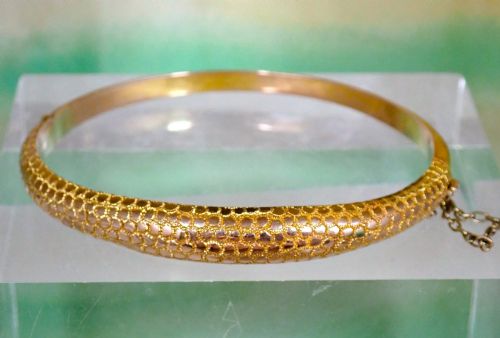
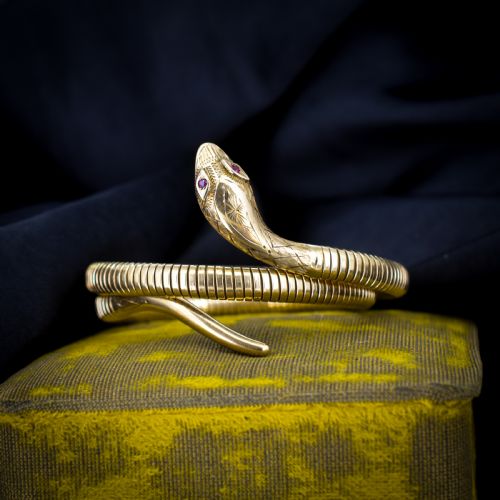
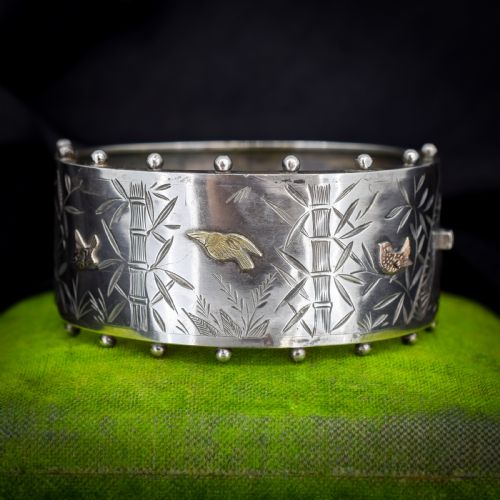
An antique gold cuff offers a substantial wrist ornament shaped from yellow or rose gold, carrying the hand-wrought detail of past eras.
Identifying an antique gold cuff
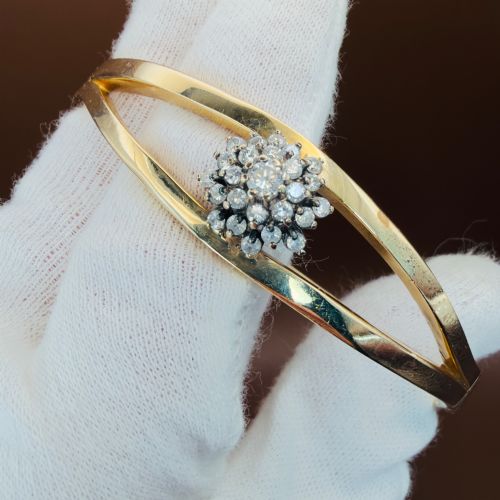
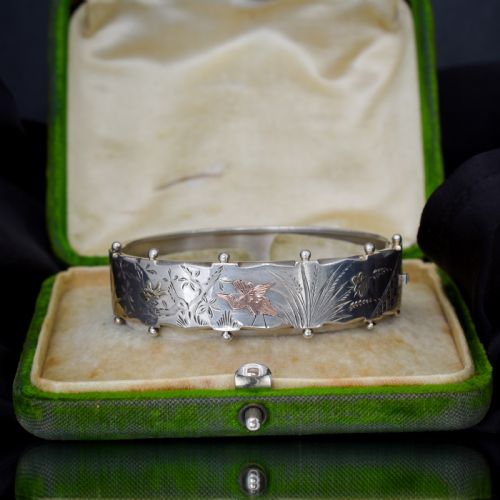
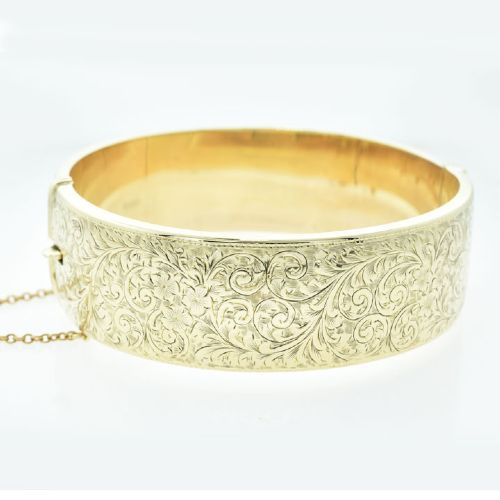
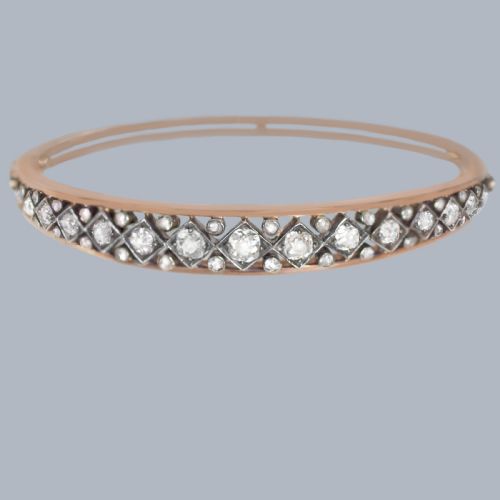
An antique gold cuff brings together rigid bangles and wider wrist adornments spanning the Victorian, Edwardian, and nineteen-hundred periods. Buyers searching for an antique gold cuff will frequently encounter hinged bangles and wide floral engraved band styles, alongside related items like gold link bracelets.
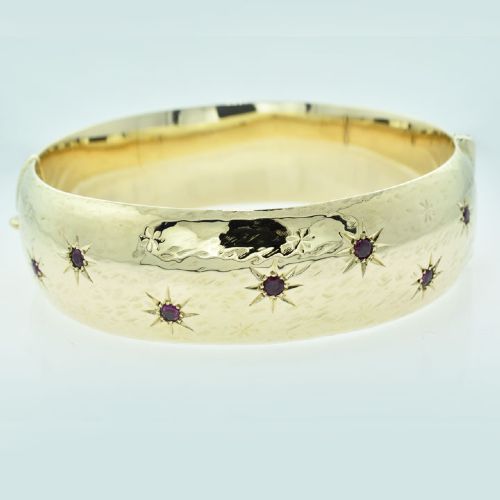
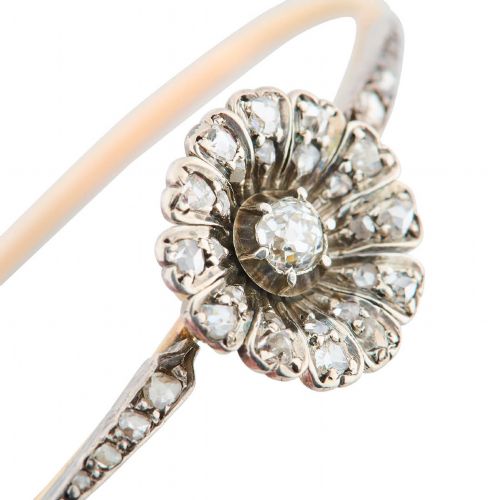
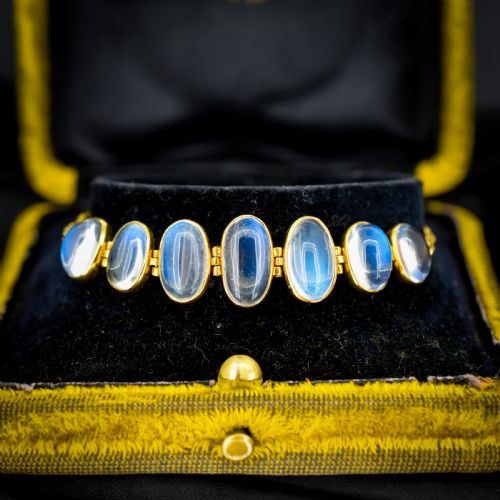
The material palette draws heavily on nine-carat and eighteen-carat yellow and rose gold, often accented with seed pearls, sapphires, diamonds, amethysts, and enamel. These pieces serve as wristwear that reflects the distinct decorative shifts of the nineteenth and early twentieth centuries.
Materials and construction methods
Metals were worked in nine-carat and eighteen-carat yellow and rose gold, sometimes paired with silver, platinum, or base metals for structural strength. Artisans employed casting, hammering, and hollow-tubing techniques to form rigid bangles and decorative links without excessive weight.
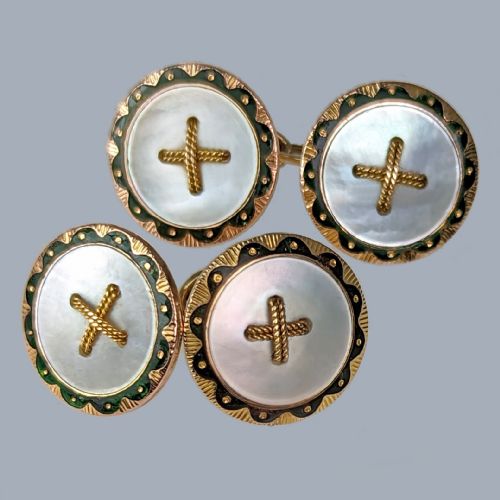
Surface ornamentation relied on hand engraving, chasing, and enamel work to create floral, foliate, and geometric patterns. Gemstones including diamonds, sapphires, amethysts, and seed pearls were then flush-set, star-set, or bezel-set directly into the gold framework.
Listings in this category span the Victorian, Edwardian, and nineteen-hundred periods, utilising rose gold, yellow gold, seed pearls, sapphires, diamonds, and amethysts.
Distinctions in craftsmanship
The standard of a piece rests heavily on the crispness and depth of hand engraving, where sharper floral or foliate motifs denote superior handwork. Solid construction without undue thinning of the gold tubing also separates robust examples from lighter, more fragile variants.
Gemstone selection dictates the upper tier of pieces, with well-matched natural stones like sapphires and old-cut diamonds marking finer output. Furthermore, intact original hinges, secure clasps, and legible hallmarks provide structural and historical integrity.
J Aitkin And Son·Wilson And Gill·Alexander Clark·Abraham Meyer Blanckensee
The Antique Gold Cuff Glossary
- Bangle
- A rigid circular or oval bracelet that slips over the hand or opens via a hinged mechanism. These items form a core component of wrist jewellery from the Victorian period onward.
- Rose gold
- A gold alloy containing copper that imparts a distinct reddish or pinkish hue. This material gained widespread popularity in nineteenth-century British jewellery.
- Seed pearl
- A very small natural or saltwater pearl, often pierced and threaded or glued in clusters. They frequently accent floral and heart motifs on Edwardian and Victorian pieces.
- Hallmark
- An official stamp or series of marks applied to precious metals indicating purity and origin. British items often carry assay office marks and date letters for precise dating.
Frequently Asked Questions
How do I wear an antique gold cuff safely?
These rigid bracelets slip directly onto the wrist or open via a side hinge and secure clasp. Care should be taken with older hinges and safety chains to prevent accidental drops.
Store them separately in a lined box to avoid surface scratching against other items. Regular gentle cleaning with a soft cloth maintains the polished finish of the gold.
What periods do these gold cuffs date from?
The available evidence spans the Victorian era, the Edwardian period, and around nineteen hundred. Each period brings distinct stylistic preferences, from heavy chased floral bands to lighter pearl and gemstone settings.
Examining hallmarks, construction techniques, and accompanying stones helps pinpoint the exact era of manufacture. Consulting assay office records often yields the specific year a piece was tested and marked.
Are these cuffs made from solid gold?
Pieces in this category utilise various purities, predominantly nine-carat and eighteen-carat yellow and rose gold. Some older bangles employ hollow construction methods to achieve a substantial look without excessive weight.
Hallmarks stamped on the inner band or tongue typically confirm the metal standard used by the workshop. Precious stones and enamel accents are integrated directly into the metal framework.
How can I tell Victorian pieces from Edwardian ones?
Victorian designs tend to feature heavier rose and yellow gold with deep foliate engraving or aesthetic floral motifs. They often incorporate dark stones, mother of pearl, or wide band profiles.
Edwardian pieces generally shift towards lighter settings, frequently pairing eighteen-carat gold and platinum with seed pearls, diamonds, and sapphires. The overall aesthetic becomes more airy and lace-like during the early twentieth century.