
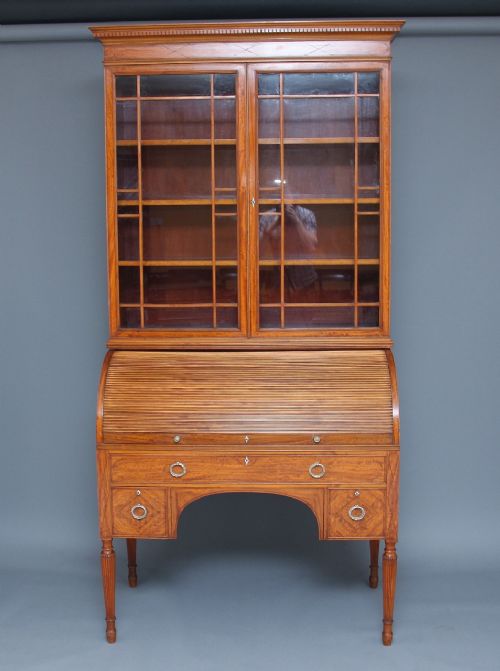
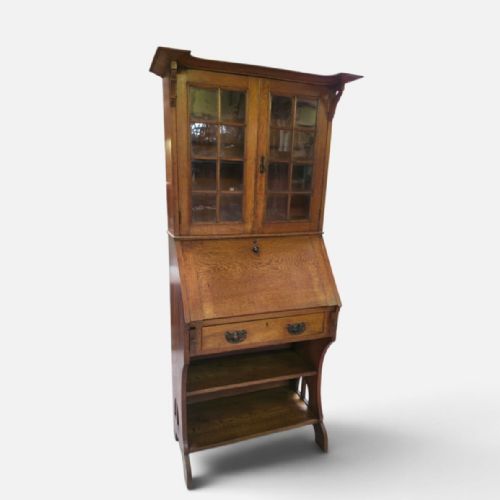
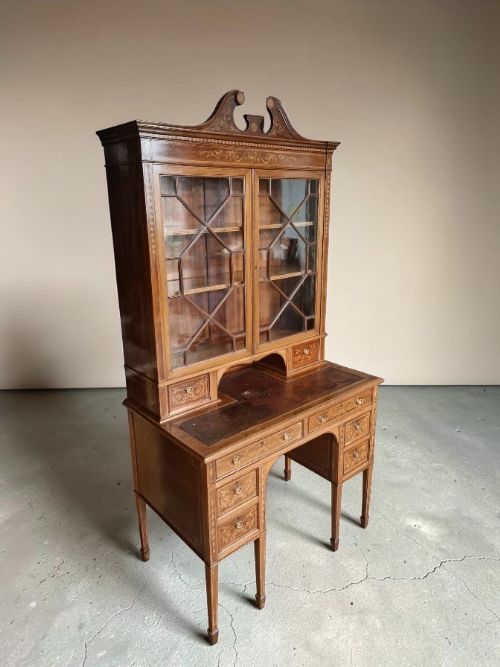
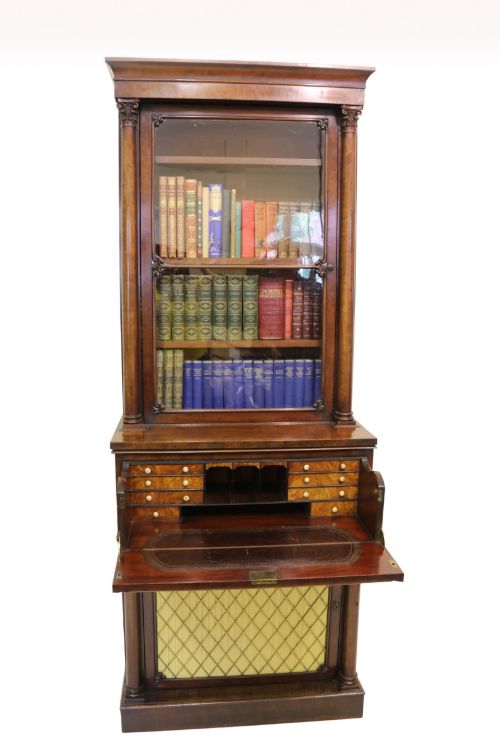
Antique Glazed Secretary
An antique glazed secretary brings together a functional writing desk and a display cabinet behind glass doors, offering both storage and workspace.
Antique Glazed Secretary
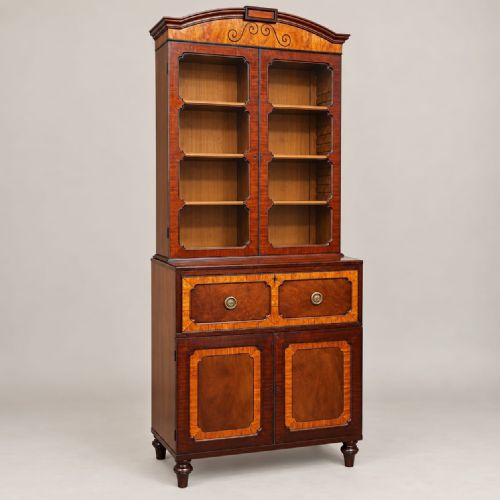
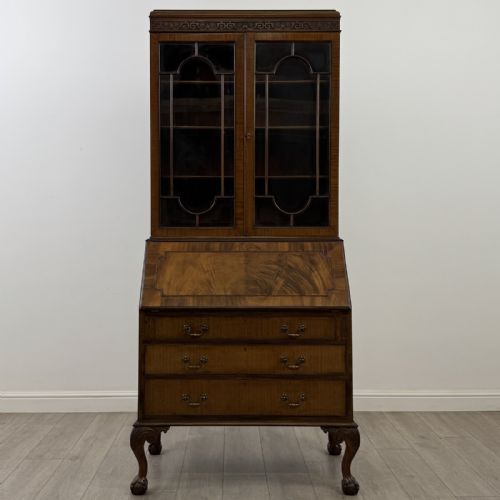
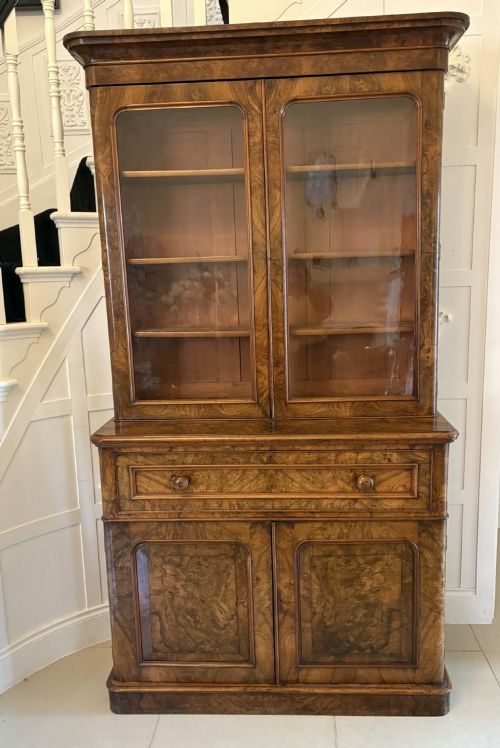
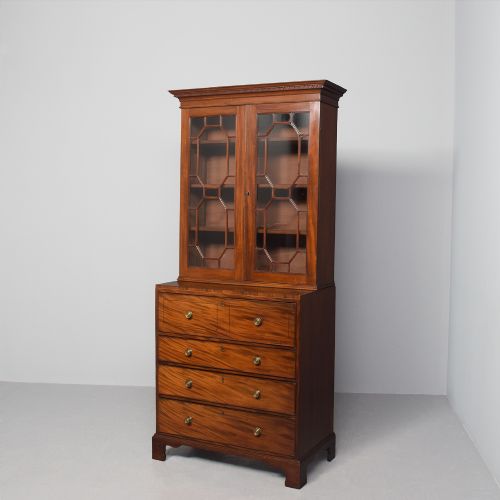
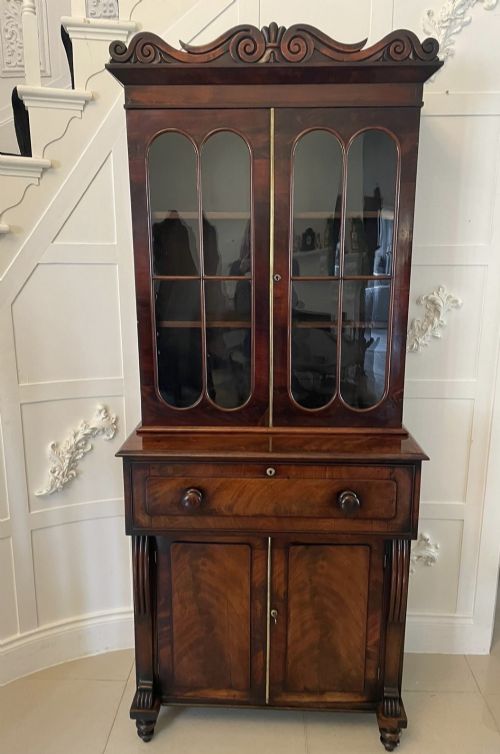
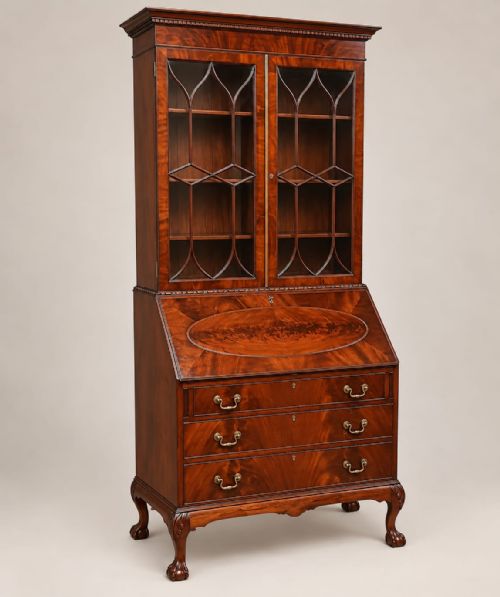
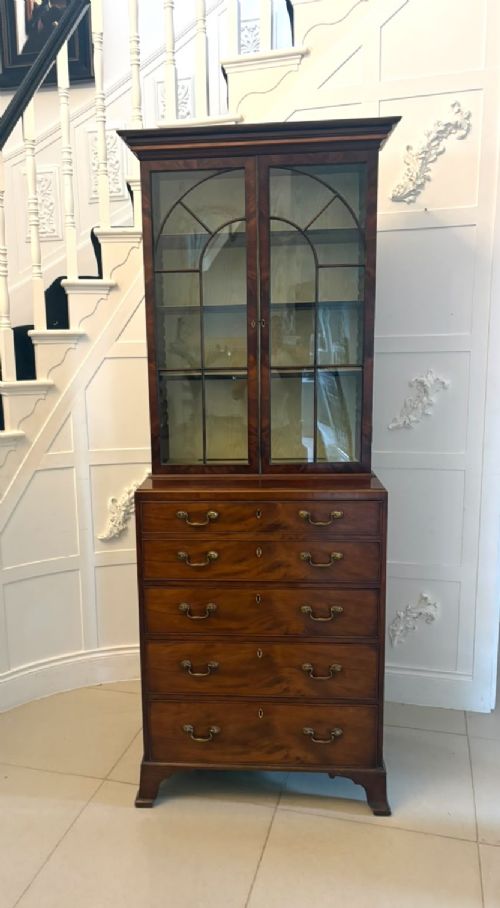
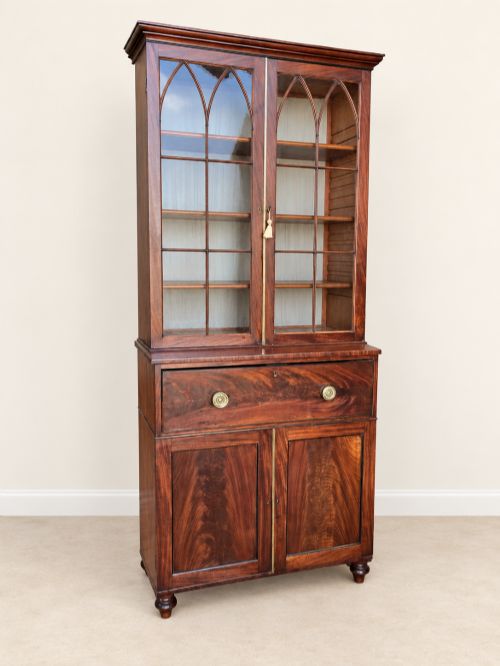
An antique glazed secretary combines a bureau or secretaire with an upper cabinet enclosed by glass doors, creating a dual-purpose piece for books and writing. These items appear across Georgian, Regency, Victorian, and Edwardian periods.
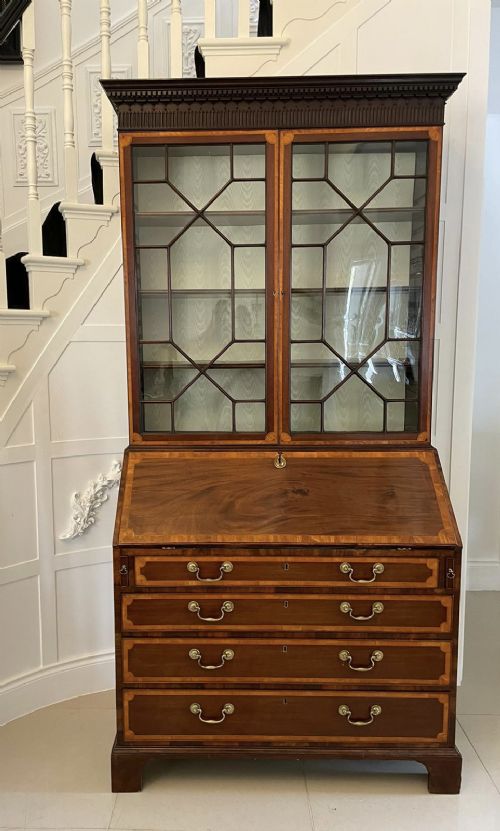
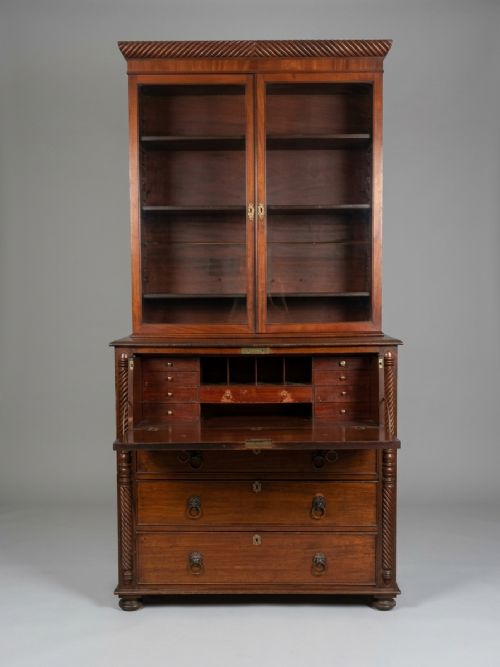
The lower section usually houses a drop-front writing surface or fitted drawer that pulls out to reveal pigeonholes and small drawers. Above this, the glazed upper doors protect volumes and papers while displaying them clearly in a room.
Makers produced these forms in mahogany, oak, walnut, and satinwood, often integrating fine wood veneers and inlay work. Surviving examples reflect styles ranging from strict classical proportions to Arts and Crafts simplicity and revival designs.
Materials and Construction
Cabinet makers built the structural carcases using dense timbers like mahogany and oak, applying finely figured veneers such as flame mahogany, burr walnut, and satinwood to primary surfaces. Brass hardware, including drop handles and escutcheons, secures the drawers and doors.
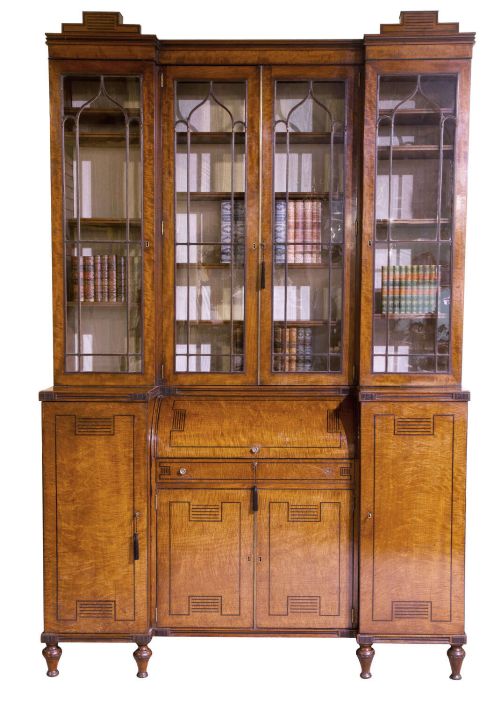
Upper doors utilise timber glazing bars to divide the glass panes into geometric patterns, such as astragal or Gothic arches. Interior compartments feature small secret drawers, pigeonholes, and leather-lined writing surfaces designed for daily correspondence.
Many secretaries include hidden compartments behind the pigeonholes for storing secret documents.
Evaluating Quality
Quality depends heavily on the choice of timber figure, the crispness of the cabinet work, and the original condition of the glass panes and interior fittings. Pieces with finely matched veneers and delicate inlay work demonstrate superior workshop standards.
The structural integrity of the fall-front mechanism and the smoothness of the internal pigeonhole drawers indicate the skill invested in the original construction. Surviving original brasses and undisturbed timber patination elevate an example above standard production.
Edwards & Roberts·Gillows of Lancaster·Thomas Chippendale·George Oakley
The Antique Glazed Secretary Glossary
- Secretaire
- A piece of furniture incorporating a writing drawer with a drop front or fitted interior. It allows a user to write comfortably without disturbing the upper display section.
- Astragal glazed
- Glass doors divided by thin wooden bars into smaller panes. These delicate frames define the visual character of Georgian and Regency bookcases.
- Flame mahogany
- A veneer cut from the fork of a mahogany tree where the grain twists. This creates a distinctive fiery pattern highly prized on cabinet doors.
- Pigeonhole
- A small open compartment inside the desk interior used for sorting letters and papers. They often feature behind the fall-front writing surface.
- Breakfront
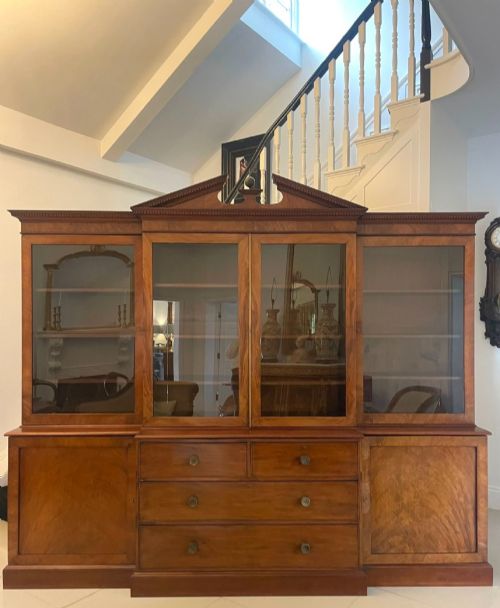
- A cabinet design where the central section projects forward from the flanking wings. This architectural arrangement adds depth and presence to large library pieces.
Antique Glazed Secretary: Frequently Asked Questions
What is an antique glazed secretary?
An antique glazed secretary is a combination furniture piece featuring a lower writing desk with a drop front or pull-out drawer, paired with an upper bookcase enclosed by glass doors.
These pieces served as functional home offices and libraries in period houses, keeping valuable volumes dust-free while offering a private workspace.
How do I identify the period?
Period identification relies on timber selection, structural proportions, and decorative details such as brass hardware, leg styles, and glazing bar patterns.
Georgian and Regency examples tend to feature strict classical lines and mahogany veneers, whereas Edwardian pieces often show revival styling, lighter satinwood, or oak construction.
How do I care for the wood?
Protect the timber surfaces by placing the piece away from direct sunlight and heat sources, which can dry out old polishes and crack veneers.
Apply traditional wax sparingly and buff gently with a soft cloth to maintain the natural lustre without building up heavy chemical layers.
What was the writing compartment used for?
The drop-front or pull-out writing surface provided a stable desk for writing letters, managing household accounts, and reading correspondence.
Internal pigeonholes and small drawers kept stationery, inkwells, and important documents organised and hidden away when the desk lid was closed.