



Antique Glassware Water Jug
An antique glassware water jug brings everyday Victorian and Edwardian service to the table in clear, cranberry, or cut glass.
Antique Glassware Water Jug
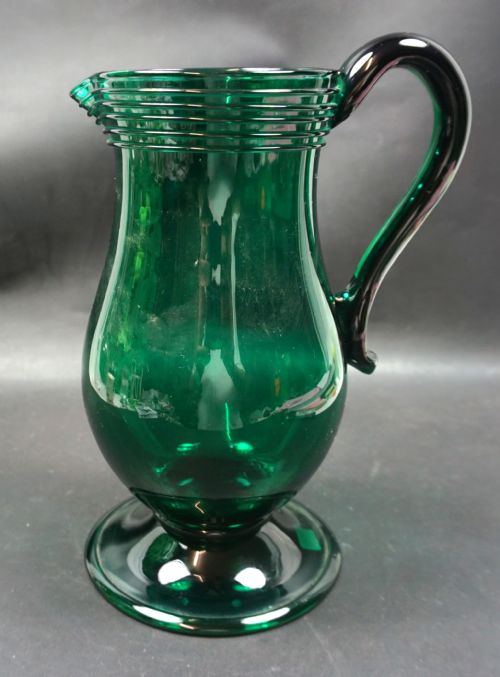
An antique glassware water jug satisfies the search for period jugs, pitchers, and matching drinkware sets spanning the Victorian, Edwardian, and Art Deco eras. Buyers inspecting this selection encounter forms ranging from tall overshot pitchers to green glass ewers and complete drinking services.
The pieces originating from English workshops and continental makers demonstrate how table service evolved across the nineteenth and twentieth centuries. Clear glass, coloured cranberry glass, and heavy lead crystal dominate the examples found on this page.
Forms vary from small engraved vessels to large service pitchers accompanied by glasses. Each piece reflects the specific dining habits and interior aesthetics of its decade, from Regency cut glass to 1930s Czech design.
Materials and production methods
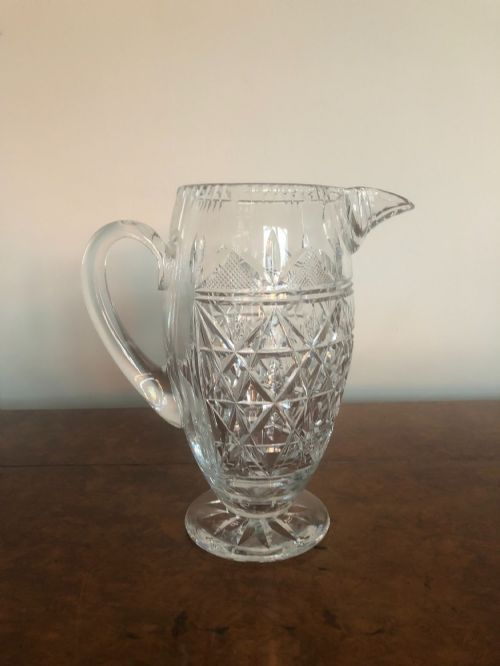
Makers utilised lead crystal and standard glass, shaping them through blowing, moulding, and wheel-cutting. Clear and coloured metal formed the body, whilst skilled hands applied trails, folded feet, and gilded rims.
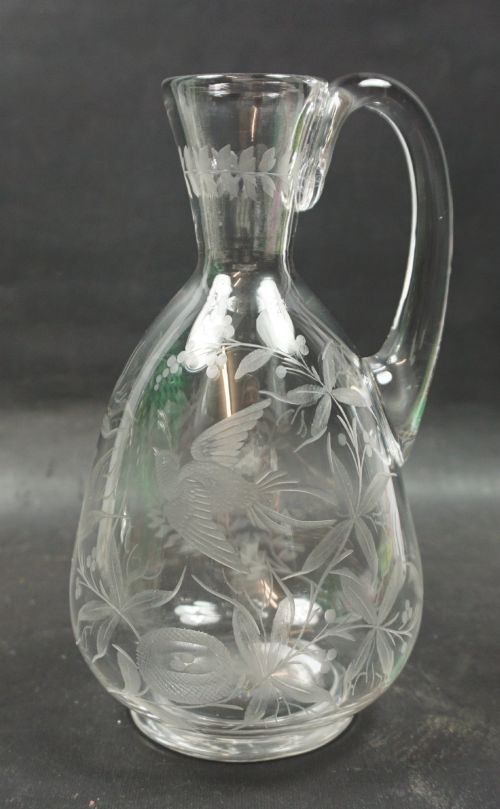
Decoration involved intaglio engraving, enamel painting, and gold leaf application. Artisans etched intricate motifs such as birds and nests directly into the glass surface or painted delicate scenes onto green and cranberry grounds.
Antique Glassware Water Jug Retail Price Guide 2026
Typical asking prices for glassware water jug among the pieces listed under this phrase on Sellingantiques today, from the lower quarter to the upper quarter. They describe what is for sale here now, not the wider market.
Listings feature items from the Victorian, Edwardian, and Art Deco periods, created in clear glass, cranberry glass, and lead crystal.
Distinctions in quality
Quality rests in the clarity of the metal, the precision of the cut facets, and the crispness of any engraved or enamelled detail. Heavier lead crystal and deeply wheel-cut patterns denote superior manufacture.
The finesse of applied elements, such as trailing rims and hand-gilded borders, separates standard utilitarian vessels from pieces produced by notable makers. Condition and completeness within a set also shape the standing of an individual jug.
Stevens and Williams·Webb Corbett
The Antique Glassware Water Jug Glossary
- Cranberry glass
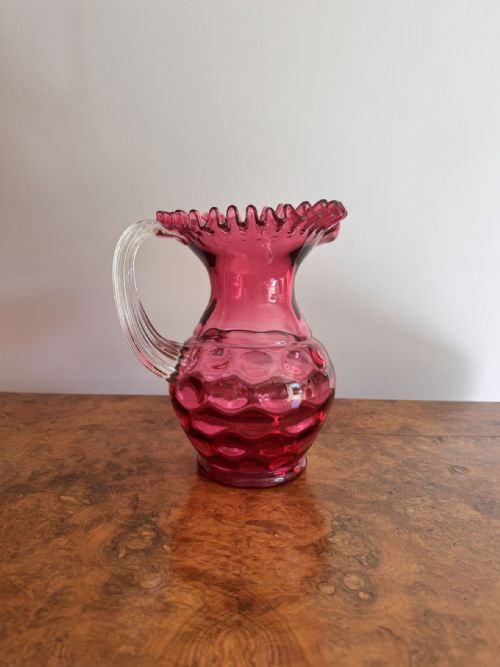
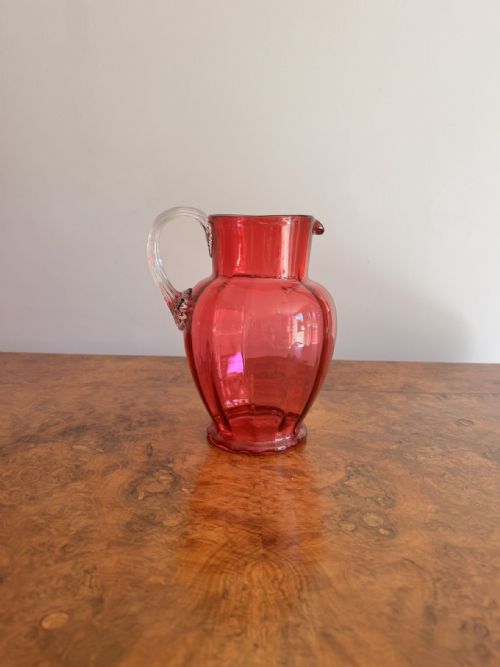
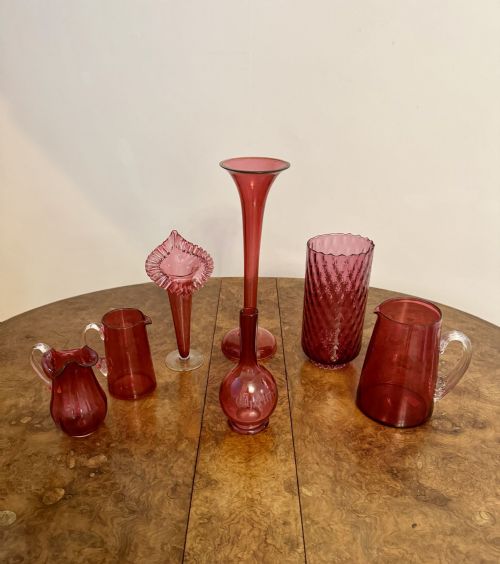
- A rich red-pink transparent glass created by adding gold chloride to the molten batch. It became particularly popular during the Victorian period for decorative tableware.
- Lead crystal
- Glass containing a high proportion of lead oxide, which increases weight, brilliance, and softness for deep cutting. This material is standard in high-end nineteenth-century decanters and jugs.
- Overshot glass
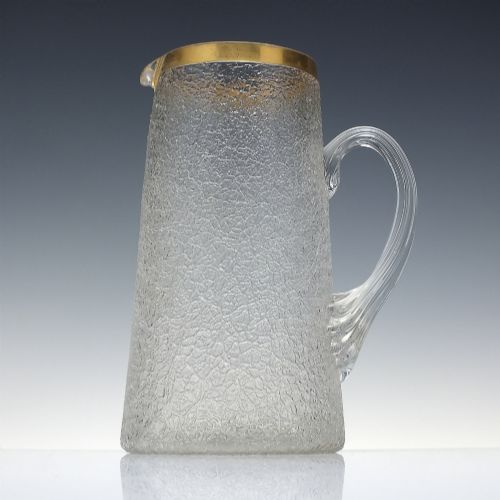
- A technique where fine glass threads are applied haphazardly over a blown body to create a textured, icy surface. It provides a tactile grip and a distinctive appearance.
- Intaglio
- A method of glass carving where the design is ground into the surface rather than raised. This technique produces detailed frosted motifs popular in Edwardian crystal.
- Mary Gregory
- A style of decorative glassware featuring white and tinted enamel silhouettes of children amidst foliage. The technique gained widespread popularity in the late nineteenth century.
Antique Glassware Water Jug: Frequently Asked Questions
What periods do these glass jugs cover?
The pieces span from the late Regency era through the Victorian and Edwardian decades into Art Deco production of the 1930s. Most examples date from the latter half of the nineteenth century.
Specific stylistic traits help date each item, such as heavy cut glass from the Victorian period or geometric lines found in later Czech pieces.
Are glasses usually included with the jug?
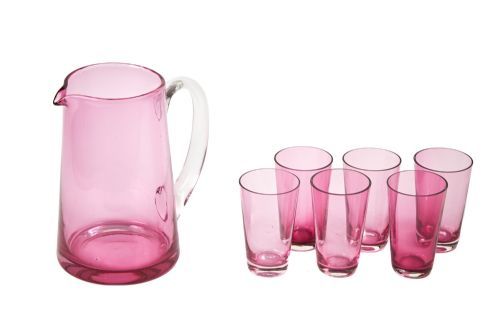
Some listings offer complete drinkware sets containing matching glasses alongside the central pitcher. Other entries present the water jug as a standalone item.
Review the specific listing details to confirm whether tumblers or stemware accompany the main vessel.
How do I care for antique glass jugs?
Wash antique glassware gently by hand in lukewarm water using mild detergent. Avoid sudden temperature changes to protect the material from thermal shock.
Keep gilded rims and enamel decorations safe by avoiding abrasive sponges and dishwashers entirely.
What is cranberry glass?
Cranberry glass is a pinkish-red transparent material made by mixing gold into the molten glass batch. It defines many Victorian tableware collections.
This distinct colouring appears frequently in both single jugs and larger matching bowl sets.