


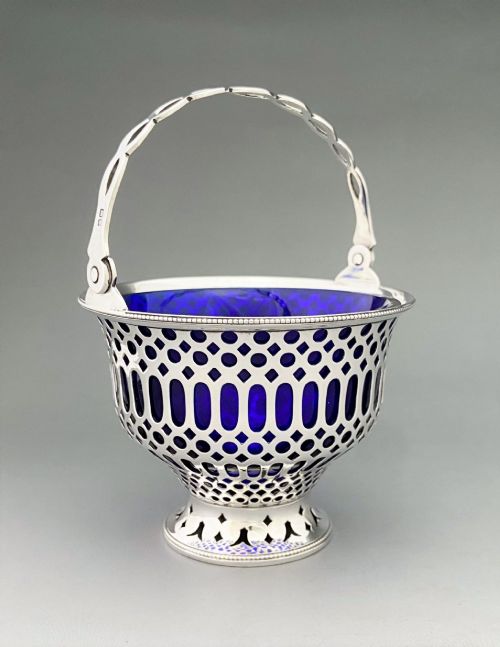


Antique Glass Sugar Basket
An antique glass sugar basket brings colour and pierced metalwork to the table, combining a vibrant glass liner with a secure metal frame.
Antique Glass Sugar Basket
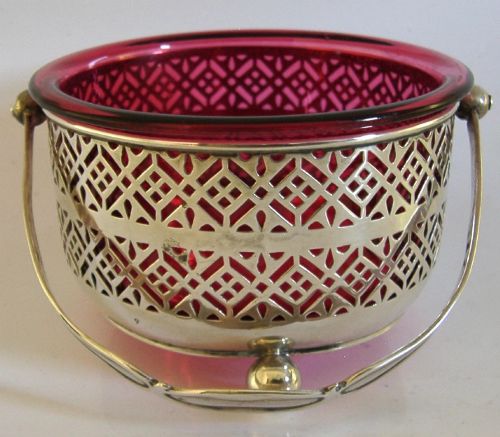
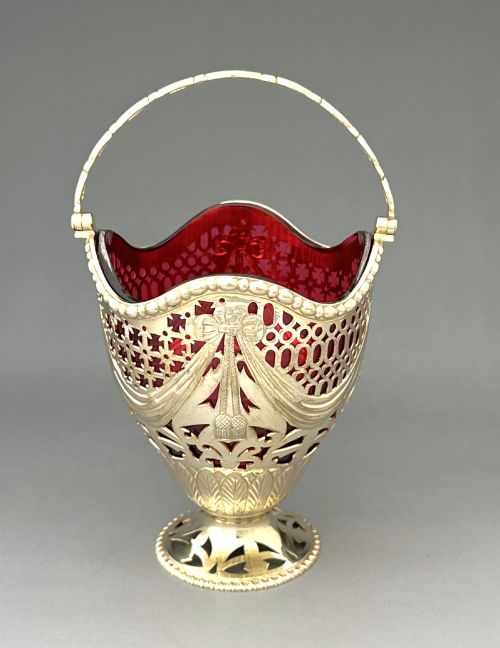
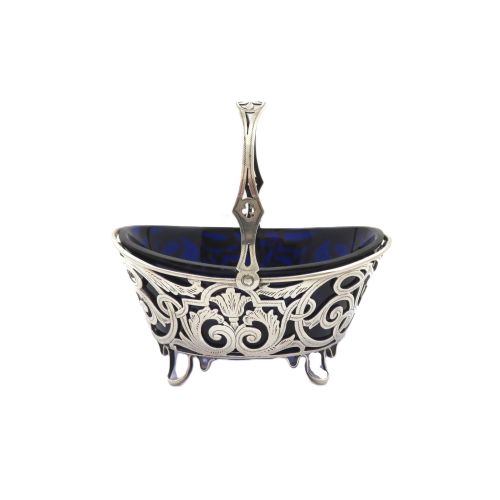
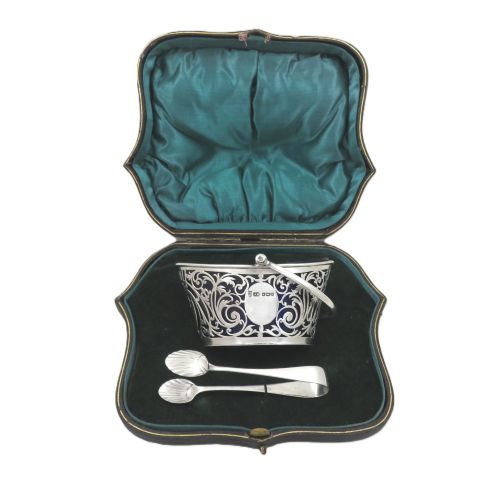
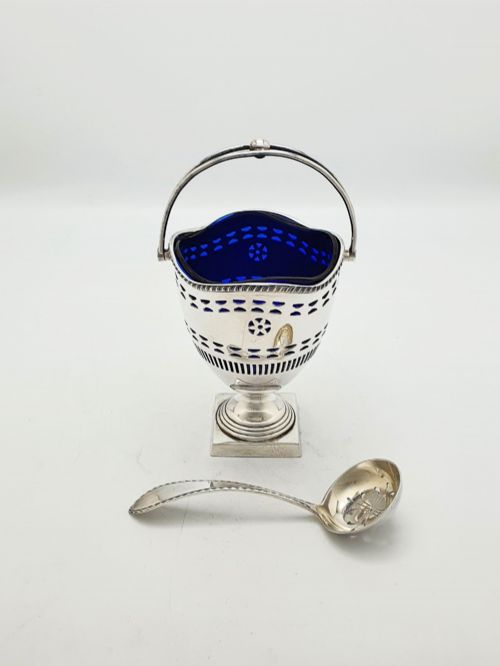
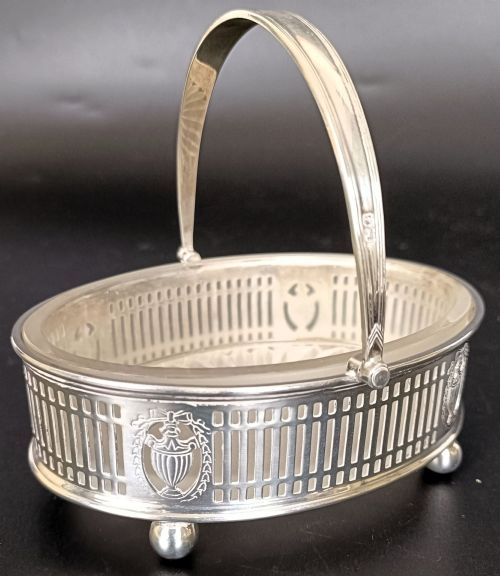
When you search for an antique glass sugar basket, you encounter table vessels designed to hold loose sugar cubes or crystals during formal tea service. The most common versions on this page pair a colourful glass insert with a silver or silver-plated pierced metal frame, often fitted with a swing handle.
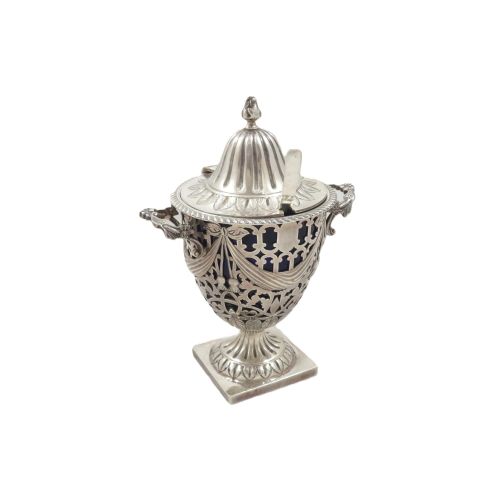
The materials span from the 18th Century through the Georgian, Victorian, and Edwardian eras up to the 1930s. Alongside standard sugar baskets, the evidence includes related forms such as cream pails, preserve dishes, urns with lids, and bonbon dishes.
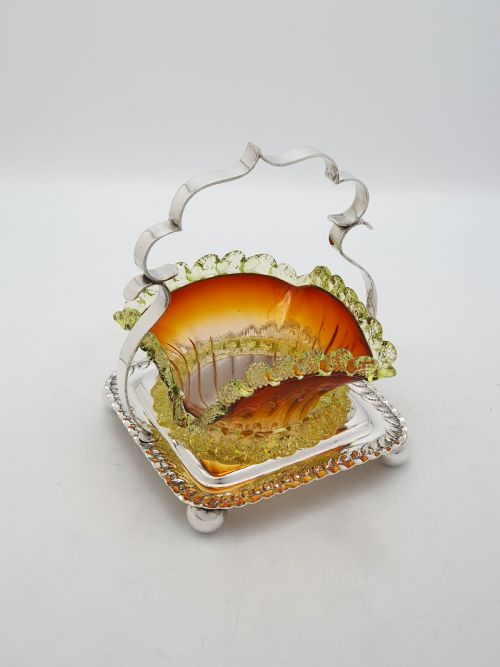
Makers and silversmiths utilised various coloured glass inserts, including cranberry, cobalt, ruby, vaseline, amber, and Bristol blue. Metalwork frames display styles ranging from Neoclassical Revival and Georgian Neoclassical to flowing Art Nouveau designs.
How they were made
Silversmiths constructed the metal frames using sterling silver, silver plate, or silver gilt, frequently employing piercing and wirework techniques to create openwork patterns. Cast floral motifs and swing handles added structural detail and tactile interest to the vessels.
Glassmakers produced removable liners by blowing or pressing molten glass into moulds, incorporating vibrant mineral oxides to achieve distinctive hues like cranberry and cobalt. These liners fitted snugly into the metal frames to protect the silver from moisture and sugar acids.
Vaseline glass liners glow a bright radioactive green under ultraviolet light, proving that tea tables once harboured secret superpowers.
What varies in quality
Quality rests in the crispness of the metal piercing and the weight of the silver or silver plate used for the frame. Heavier gauge metalwork and finer hand-pierced detailing distinguish superior examples from simpler mass-produced pieces.
The integrity and depth of colour in the glass liner influence the overall standing of the piece. Hand-blown liners with rich, saturated tones and smooth rims command greater attention than lighter, flatly coloured glass.
Aldridge and Green·W M F·George Fox·Elkington and Co
The Antique Glass Sugar Basket Glossary
- Sterling silver
- An alloy containing 92.5 percent silver and 7.5 percent other metals, typically copper. This standard composition provides the necessary rigidity for delicate pierced baskets.
- Silver plate
- A base metal coated with a thin layer of pure silver. This technique allowed makers to offer decorative tableware at a more accessible cost.
- Cranberry glass
- A transparent pinkish-red glass coloured with gold chloride during the melting process. It appears frequently in Victorian and Edwardian tablewares.
- Vaseline glass
- A transparent yellow-green glass containing small amounts of uranium dioxide. It glows under ultraviolet light and gained popularity in the late 19th Century.
- Swing handle
- A movable metal arch attached to the rim of the basket by pivots. It allows the handle to drop to the side for easy access to the contents.
Antique Glass Sugar Basket: Frequently Asked Questions
What was a sugar basket used for?
These vessels held sugar for tea service on the dining table or sideboard. Guests used small tongs to lift sugar lumps from the basket into their cups.
They sat as decorative centrepieces when not in active use during a meal.
How do I clean the glass liner?
Remove the glass insert carefully from the metal frame before washing it in warm, soapy water. Avoid harsh abrasives that might scratch the surface.
Dry the liner thoroughly with a soft cloth before placing it back into the silver basket.
How do I date an Edwardian basket?
Look for hallmarks stamped on the metal frame that indicate the assay office, standard of silver, and date letter. Edwardian pieces date from the reign of King Edward VII between 1901 and 1910.
Stylistic cues such as Neoclassical Revival motifs also help narrow down the period of manufacture.
Are liners interchangeable?
Glass liners were individually fitted to their specific metal frames during production. Variations in hand-blown dimensions mean a liner from one basket rarely fits another securely.
Matching the original liner to its frame preserves the integrity of the piece.