


Antique Glass Side Table
An antique glass side table brings reflective depth and functional surface space to a room, drawing on periods from the Victorian era to Art Deco.
Antique Glass Side Table
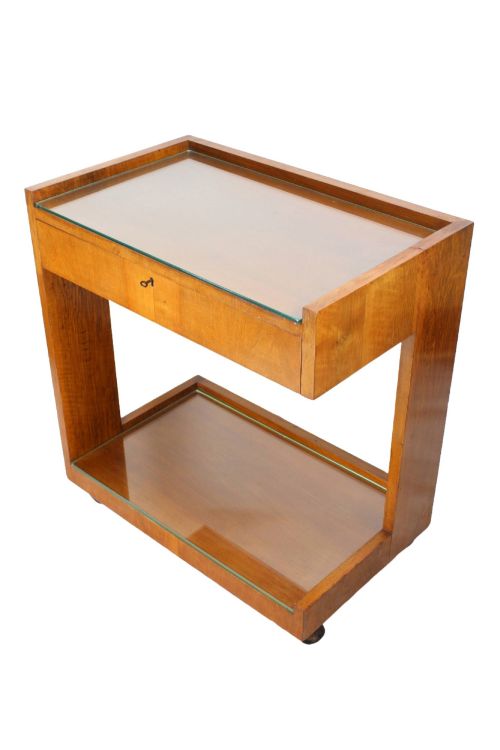
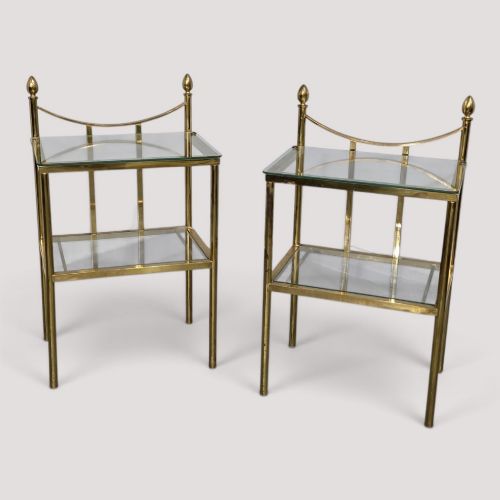
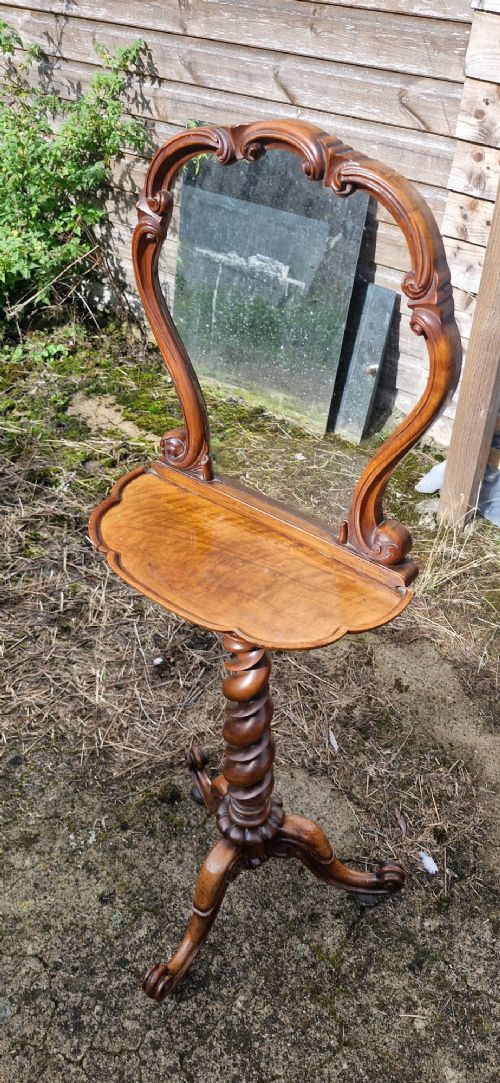
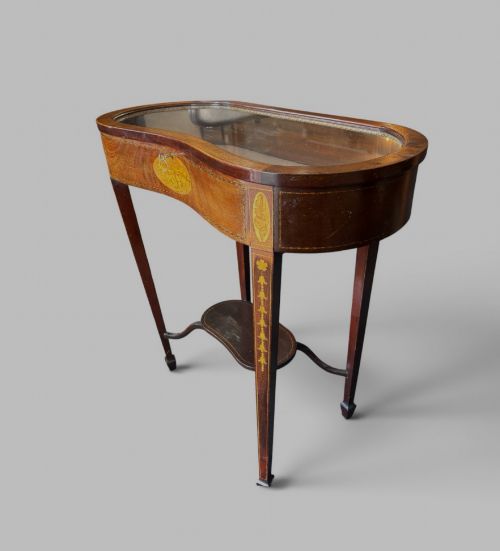
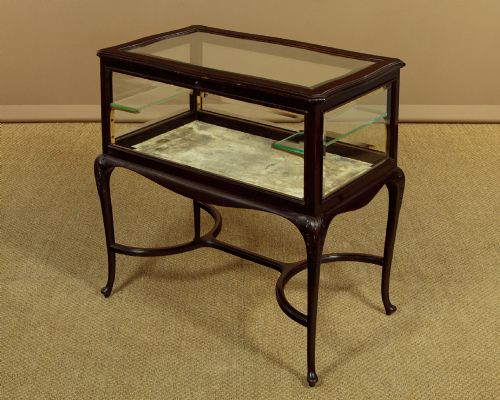
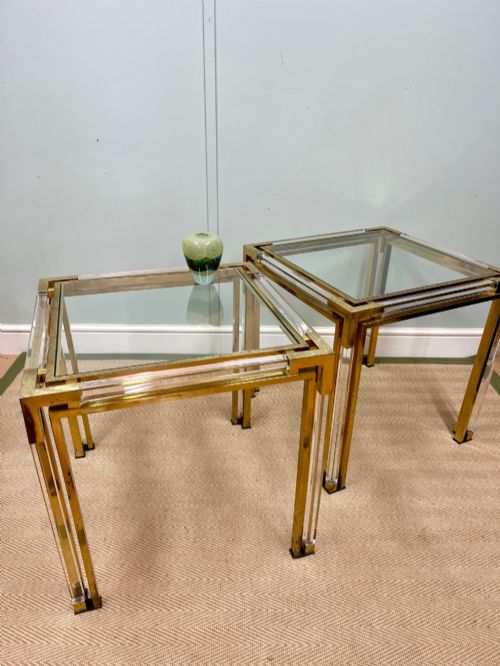
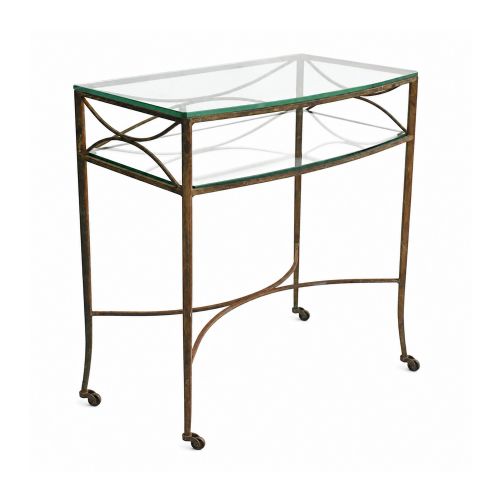
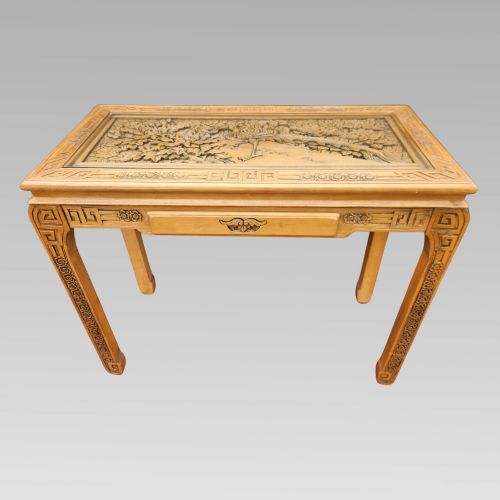
When searching for an antique glass side table, buyers encounter a variety of forms including display tables, bijouterie tables, occasional tables, and tiered trolleys. These pieces function as small surface furniture or glass-topped display cases designed to hold objects, lamps, or serving items.
The selections available range from Edwardian inlaid mahogany display tables to Art Deco mirrored side tables and French ormolu-mounted bijouterie cabinets. Walnut, mahogany, and brass frame the glass surfaces across Victorian, Edwardian, and twentieth-century designs.
Materials and construction
Wood frameworks utilise mahogany, walnut, satinwood, and golden oak, often incorporating brass mounts, ormolu, gilt-bronze, or cast-iron elements. Inlaid decoration adds geometric or botanical detail to table tops and borders.
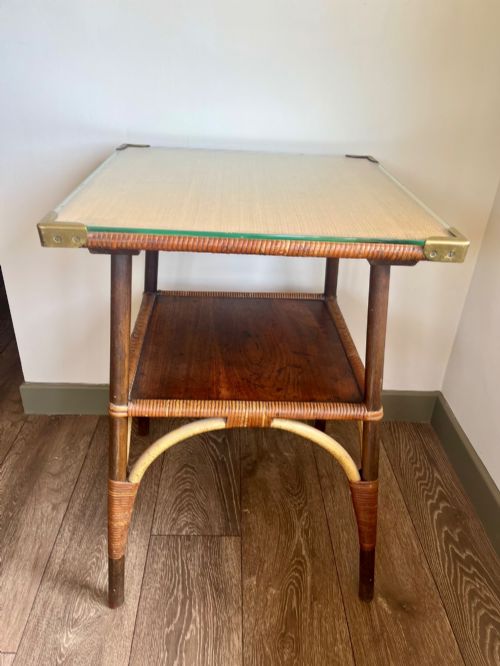
Glass panels are integrated into table tops, display cases, and cabinet sides, paired with bevelled edges, mirrors, cut glass crystal, or enamelled finishes. Wrought iron and Lloyd loom weave provide alternative structural supports for twentieth-century forms.
Brazilian butterfly wings preserved beneath glass tops offer a colourful, nature-inspired decorative surface from the early twentieth century.
Variations in quality
Quality rests in the precision of the cabinetwork, seen in tight joints, the refinement of brass or ormolu mounts, and the crispness of marquetry inlay. Superior examples feature carefully selected wood veneers like burr walnut or satinwood alongside heavy, clear glass or crystal components.
The integration of metalwork and glass defines the standard of execution, where hand-chased mounts, polished bevels, and sturdy tiered structures indicate skilled workshop production rather than mass fabrication.
The Antique Glass Side Table Glossary
- Bijouterie table
- A glass-topped display table with a glazed compartment designed to exhibit small ornaments, jewellery, or collections. These pieces often feature hinged lids lined with velvet or fabric.
- Ormolu
- Gilded bronze ornamentation applied to furniture and decorative objects. This technique is frequently found on nineteenth-century French pieces.
- Marquetry
- Decorative veneer work arranged in geometric or pictorial patterns using various woods such as mahogany and satinwood. It embellishes the surfaces of Edwardian and Victorian tables.
- Two-tier trolley
- A movable serving table featuring multiple levels for carrying tea, drinks, or food. Drop sides and trays frequently accompany these utility items.
- Cast-iron
- A durable metal alloy used to form rigid structural frames and bases for early twentieth-century tables and consoles.
Antique Glass Side Table: Frequently Asked Questions
What is a bijouterie table?
A bijouterie table is a display table featuring glass panels and a glazed compartment intended for showing small valuable items. The interior is often lined with fabric or velvet.
These pieces were used in nineteenth and early twentieth-century drawing rooms to exhibit collections of curiosities, medals, or jewellery under glass protection.
How do I identify an Edwardian glass table?
Edwardian glass tables commonly feature lighter timbers such as mahogany and satinwood, frequently enhanced with delicate inlaid stringing. Their forms often lean towards display and bijouterie tables.
They reflect the refined, classical revival tastes of the early twentieth century, contrasting with heavier Victorian proportions or geometric Art Deco lines.
Where were these tables used?
These tables served primarily in drawing rooms, parlours, and boudoirs as surface furniture for lamps, drinks, or decorative displays. Display and bijouterie variants acted as both furniture and personal exhibition cases.
Trolleys and serving trays additionally functioned in dining rooms or sitting areas for tea and food service.
What materials are typical for Art Deco tables?
Art Deco tables incorporate materials such as walnut, mirrored glass, wrought iron, and enamelled elements. These pieces favour clean geometric forms and reflective surfaces.
They often appear as two-tier trolleys, mirrored side tables, or occasional coffee tables dating from the nineteen-thirties.