


French Glazed Side Table
These french glazed side table examples combine glass tops with rich timbers to display precious keepsakes.
French Glazed Side Table
When searching for a french glazed side table, buyers encounter nineteenth and early twentieth century display furniture often described as bijouterie tables or cabinets. These glazed pieces emerge from Victorian, Edwardian, and continental workshops influenced by Louis XV and Louis XVI revivals.
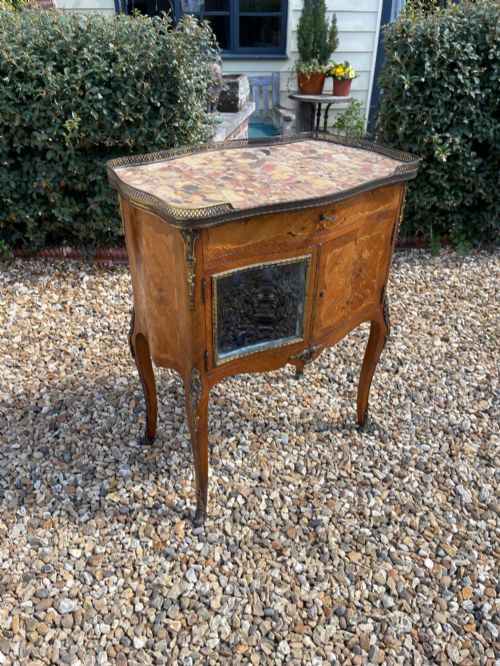
The selections on this page predominantly take the form of glazed display tables, side cabinets, and tea trolleys fitted with glass panels. Walnut, mahogany, and kingwood timbers form the primary structures, frequently enhanced by intricate marquetry inlay and metal mounts.
How they were made
Cabinet makers utilised dense hardwoods such as mahogany and walnut for the foundational frames, often applying kingwood veneers for decorative grain patterns. Brass and ormolu mounts were cast and chased to accentuate the curves and corners of the glazed compartments.
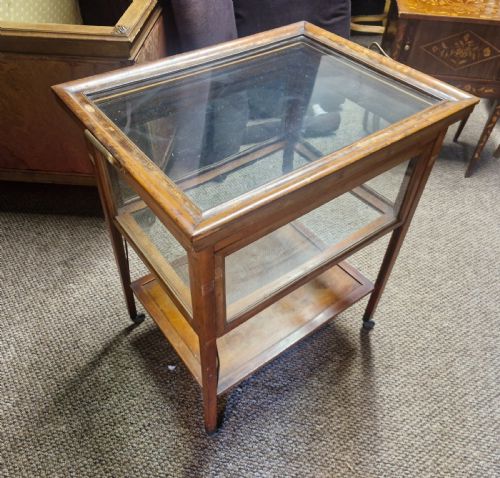
Glass panels were precisely fitted into hinged lids or sides to allow visibility into lined display wells, sometimes upholstered in velvet or fabric. Inlay work incorporated contrasting timbers and brass line techniques across tabletops and friezes.
One twentieth century display table carries later sign writing advertising Breitling watches, hinting at a past life in a commercial shop window.
What varies in quality
Finer examples distinguish themselves through the precision of their timber veneers and the crispness of their ormolu mounts. Heavy, hand-chased bronze or ormolu detailing indicates superior craftsmanship compared to simpler cast brass elements.
The integrity of the structural joinery and the clarity of the glazed panels further separate standard production from exceptional pieces. Attention to interior details, such as original velvet linings and smoothly operating hinges, marks the upper tier of quality.
The French Glazed Side Table Glossary
- Bijouterie table
- A specialist display table featuring a glazed compartment designed for showcasing small valuable objects and jewellery. These pieces gained popularity during the Victorian and Edwardian periods.
- Ormolu
- Gilt bronze ornamentation applied to furniture mounts and decorative hardware. The technique involves coating bronze with a finely ground gold mercury amalgam and heating it.
- Kingwood
- A dense, richly figured timber native to Brazil utilised for high-end veneering. Its distinctive dark violet-brown colouring with golden stripes makes it characteristic of luxury cabinet making.
- Inlay
- A decorative technique where contrasting materials such as wood, brass, or shell are inserted into recessed portions of a timber base. This creates flat ornamental patterns across tabletops and cabinet fronts.
- Louis XV style
- An asymmetrical rococo revival aesthetic characterised by curving lines, cabriole legs, and naturalistic scrollwork. French furniture makers of the nineteenth century frequently drew upon these motifs.
French Glazed Side Table: Frequently Asked Questions
What is a bijouterie table?
A bijouterie table is a specialised display piece featuring a glazed compartment accessed via a hinged lid. Wealthy collectors used them in salons and drawing rooms to exhibit small valuables and curiosities.
Today, these tables serve similar display functions in modern interiors while functioning as occasional tables beside seating.
How do I clean the glass?
Glass panels on these antique tables require gentle maintenance using non-abrasive cleaners applied to a cloth rather than sprayed directly. This prevents moisture from seeping into vulnerable timber frames or fabric linings.
Regular dusting with a soft, dry cloth preserves both the glass clarity and the surrounding wood polish.
Can I use these as side tables?
These glazed tables function effectively as side or lamp tables while offering enclosed display space beneath the glass surface. Their compact footprints make them suitable for placing beside chairs or sofas.
Care should be taken with placement to avoid excessive weight or heat from lamps on the glazed lids.
How do I date these tables?
Dating relies on examining construction methods, timber choices, and stylistic revivals present in the framing and mounts. Victorian and Edwardian pieces often exhibit specific brass casting techniques and veneer applications typical of their decade.
Comparing hardware and interior textile remnants provides additional clues to the era of manufacture.