

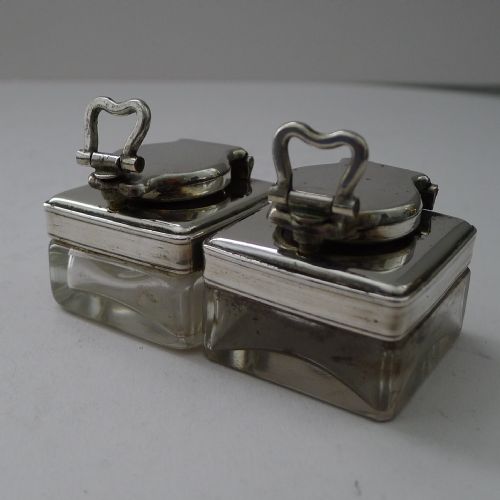


Antique Glass Inkwell
These heavy glass reservoirs sat on wooden or metal desks to hold ink for writing, bringing a tactile practicality to daily correspondence.
What an antique glass inkwell is
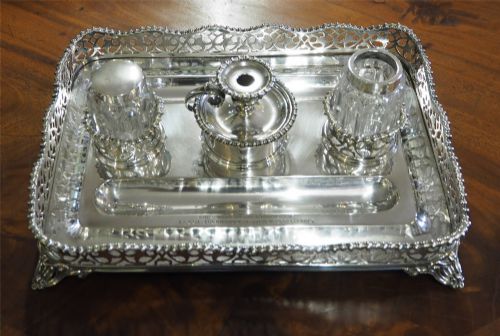
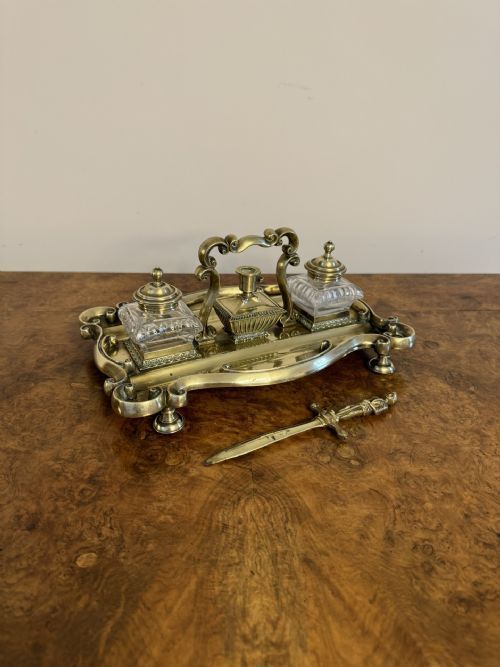
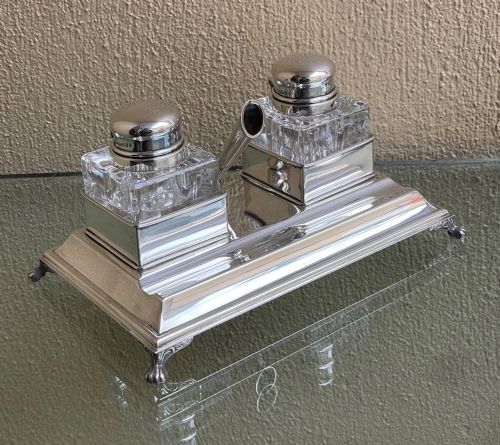
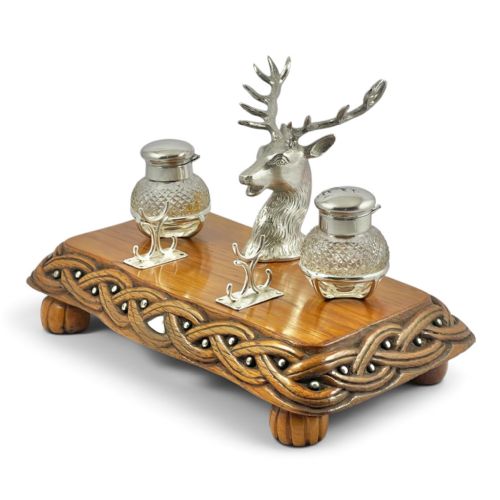
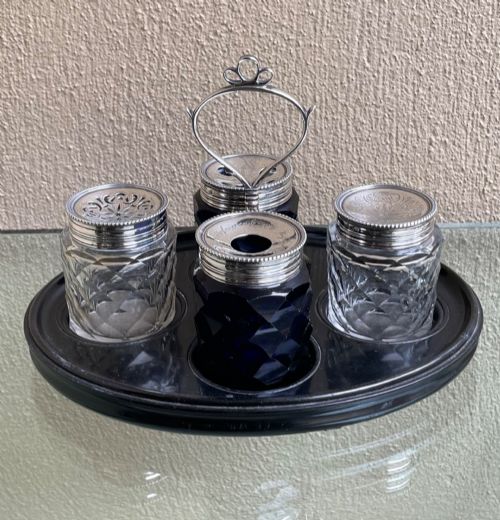
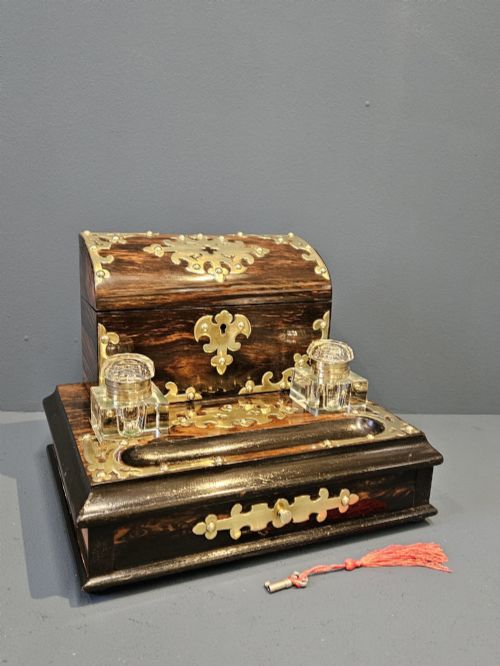
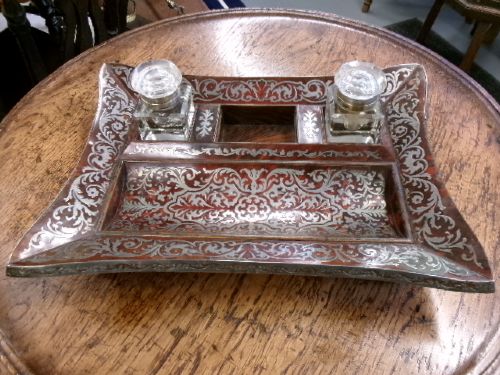
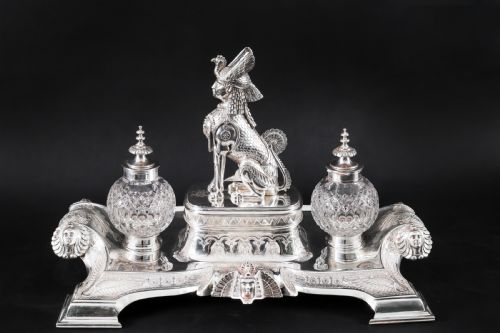
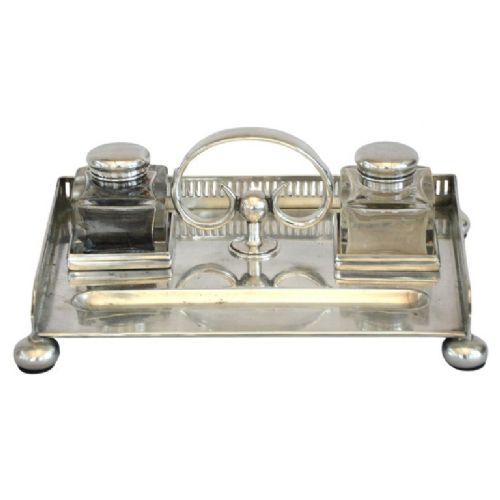
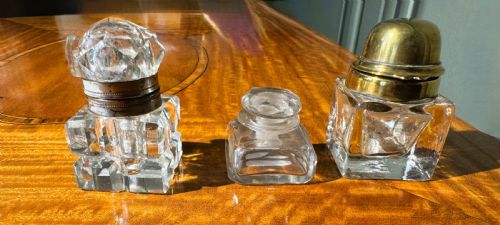
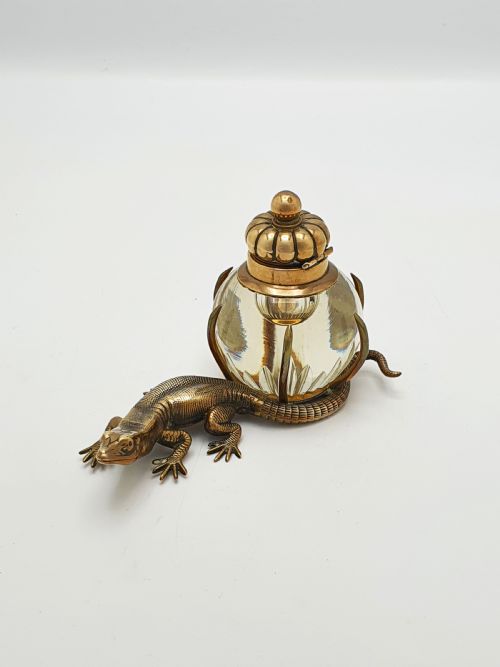
An antique glass inkwell combines a functional glass ink receptacle with mounts, lids, or stands fashioned from brass, silver, oak, or mahogany. These desk accessories appear in forms ranging from simple cut glass blocks to elaborate figural mounts shaped as owls, dogs, and cats with glass eyes.
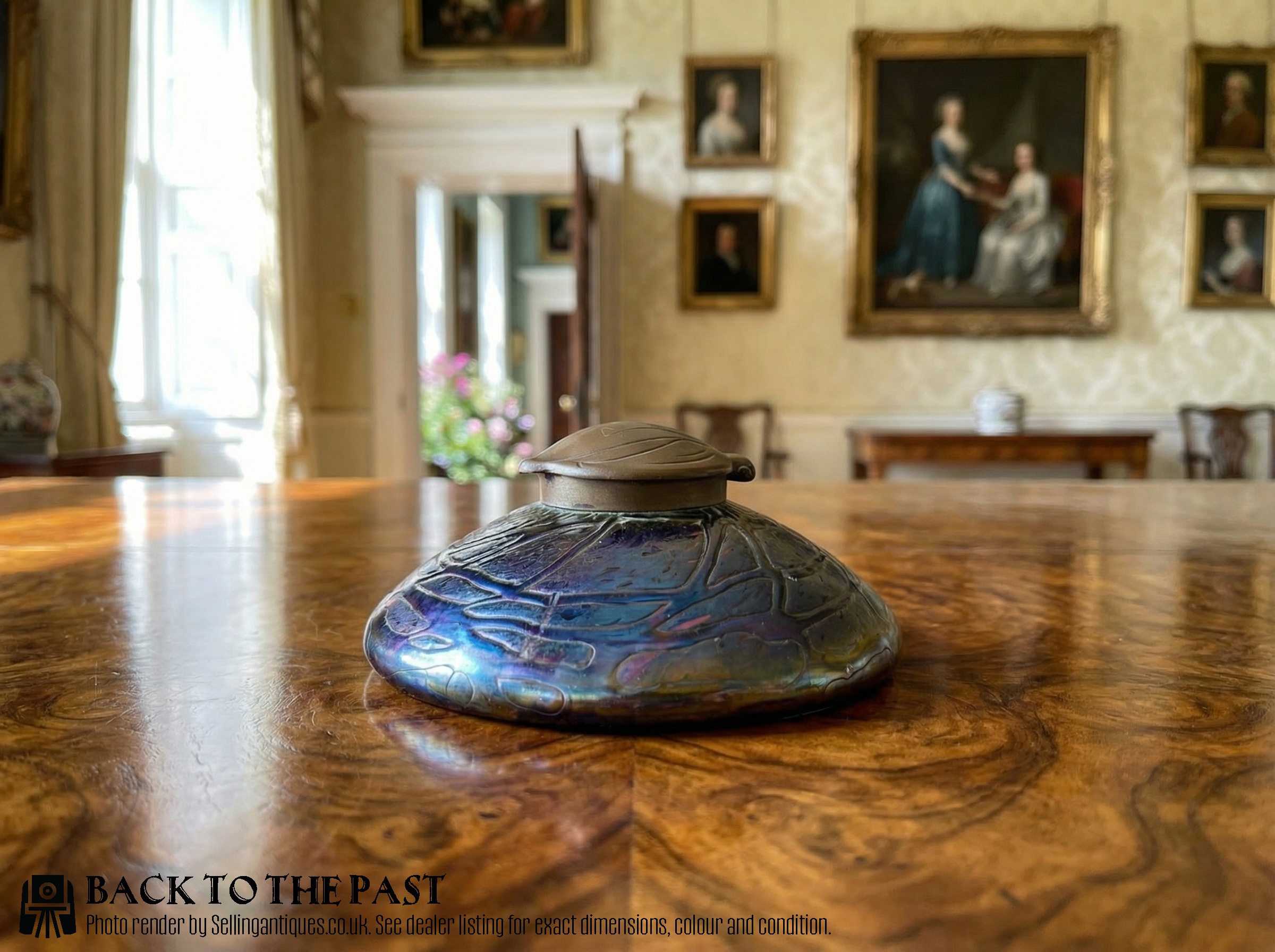
The pieces on this page span the Victorian and Edwardian periods, stretching into the Art Nouveau, Art Deco, and 1930s eras. Buyers frequently encounter vessels paired with sterling silver collars, heavy cut crystal bodies, or iridescent glass set into wooden stands.
Materials and manufacture
Makers shaped the glass elements through heavy cutting, moulding, or blowing to create thick, stable vessels capable of withstanding the daily dip of a metal or quill pen. Iridescent and ruby red finishes derived from specific chemical treatments applied during the hot glassmaking process.
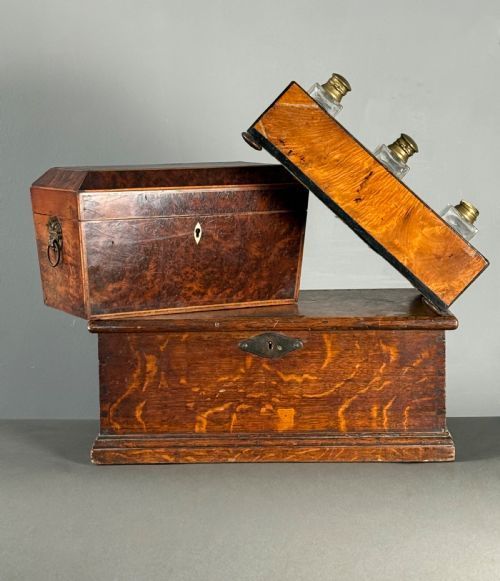
Metal components, including sterling silver, brass, and gilt bronze, were cast and chased, while wooden bases in oak and mahogany were turned or carved, often incorporating hinged metal lids and fitted glass ink pots.
Retail Price Guide 2026
Typical UK retail prices for glass inkwell, calculated from the Sellingantiques database of over a million retail prices indexed since 2003. This retail price guide relies exclusively on Sellingantiques data; no external sources or auction records are used, so the figures do not describe the wider market.
What sets examples apart
Quality rests in the crispness of the casting on metal mounts and the depth of the facet cutting on the glass body. Heavy, clear crystal with sharp edges reflects a higher standard of craftsmanship than thin, machine-moulded alternatives.
The integration of materials dictates distinction, as seen in figural designs where the metal or carved wooden animal housing fits seamlessly with the original glass insert and matching glass eyes.
Kralik·Loetz
The Antique Glass Inkwell Glossary
- Inkwell
- A small jar or container for holding ink, usually fitted with a hinged lid to prevent evaporation. These sat independently on a desk or fitted into a larger desk stand.
- Guilloche enamel
- A decorative technique where a geometric pattern is engraved into metal beneath a translucent enamel layer. This surface treatment appears on silver desk accessories.
- Treen
- Small handmade wooden objects produced before the mass era of plastics. Early examples utilise turned or carved timber.
- Engine turned
- A method of mechanical ornamentation used on metal or wood to produce precise, intricate geometric patterns. This technique decorates the surface of selected desk pieces.
Frequently Asked Questions
How do I date an inkwell?
Dating relies on hallmarks stamped on silver mounts, the style of the glass cutting, and the overall aesthetic movement reflected in the design. Victorian and Edwardian pieces often bear specific assay office marks and date letters.
Changes in materials, such as the shift from heavy brass and bronze in the nineteenth century to the cleaner lines of the 1930s, help narrow down the period of manufacture.
Did these have original glass pots?
Many surviving pieces retain their original glass inserts or pots, which fit snugly inside the metal or wooden outer housing. Finding an example with its matching internal glass pot intact is common.
Replacement liners do occur due to the fragile nature of glass, so checking whether the pot matches the collar and lid adds context to the piece.
What materials were used?
Makers combined glass with sterling silver, brass, gilt bronze, oak, mahogany, and enamel. Cut glass and iridescent glass provided the main body for the ink reservoirs.
Metal mounts provided structural stability and protection for the edges, while wooden stands offered a stable base for multiple desk accessories.
How were figural inkwells made?
Figural examples feature cast brass, bronze, terracotta, or carved wood shaped as animals, including owls, dogs, cats, and horses. These figures often incorporate inset glass eyes that catch the light.
The glass ink pot sits concealed within the body or beneath a hinged portion of the sculpture, combining sculpture with desk utility.