
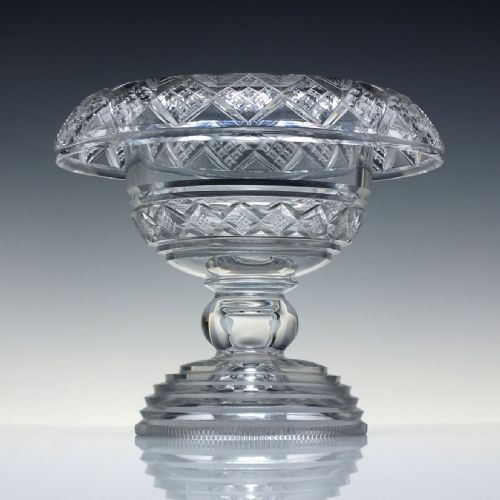


Antique Glass Fruit Stand
An antique glass fruit stand brings height and brilliance to a table, combining moulded or cut bowls with metal mounts.
Antique Glass Fruit Stand
An antique glass fruit stand is a raised vessel designed to display dessert or fruit on a formal dining table. When searching this phrase, a buyer encounters substantial serving pieces intended to sit in the centre of the room or sideboard.
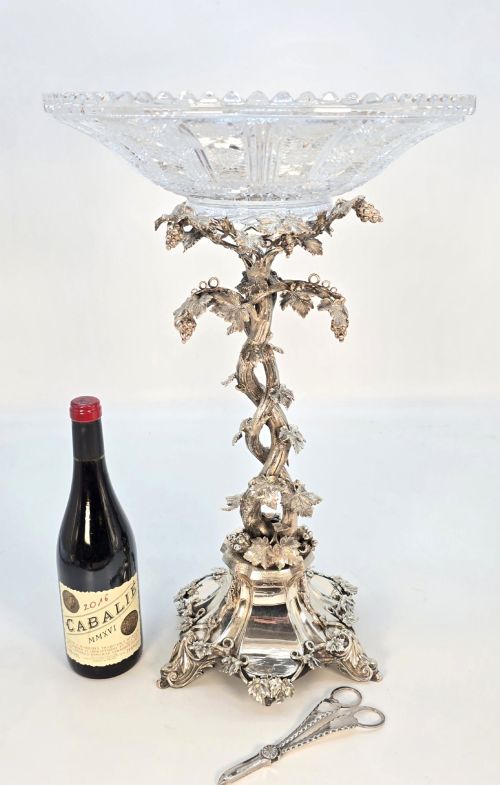
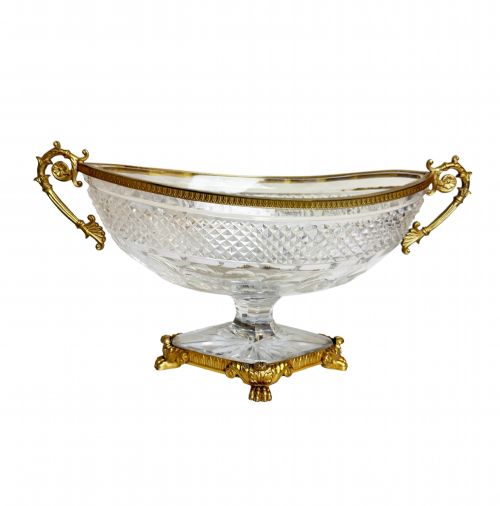
The most common examples on this page take the form of tazzas, épergnes, and pedestal bowls dating from the Georgian period through to the early twentieth century. English and French workshops dominate these listings, spanning styles from Regency restraint to Art Nouveau curves.
Makers paired heavy glass bowls with stands made from silver plate, old Sheffield plate, or gilt bronze. These ranged from simple clear lead crystal dishes to coloured or etched glass supported by elaborate figural mounts.
Materials and construction
Glass production relied on lead crystal and cut glass techniques, producing heavy vessels with deep facets, optical clarity, or etched motifs. Some pieces introduced coloured layers, such as yellow over crystal or opaline glass, shaped by blowing and moulding.
Metal mounts utilised silver plate, old Sheffield plate, or ormolu and gilt bronze, cast into decorative feet, pedestals, or figurative frames. Makers joined metal components to glass bowls using threaded rods, collars, or secure settings.
Listings feature pieces spanning the Georgian period, the Victorian era, and Art Nouveau designs.
Distinguishing quality
The standard of a piece rests on the crispness of the glass cutting and the weight of the metal mount. Superior items display deep, sharp facets and heavy lead crystal that holds a clear ring, whereas lesser examples show softer moulded patterns.
The integration between the glass bowl and its stand marks the distinction between ordinary production and ambitious design. The finest works use detailed cast bronze, ormolu figures, or substantial silver plate that balances the mass of the glass above.
Walker & Hall·WMF·Christofle et Cie·James Dixon
The Antique Glass Fruit Stand Glossary
- Tazza
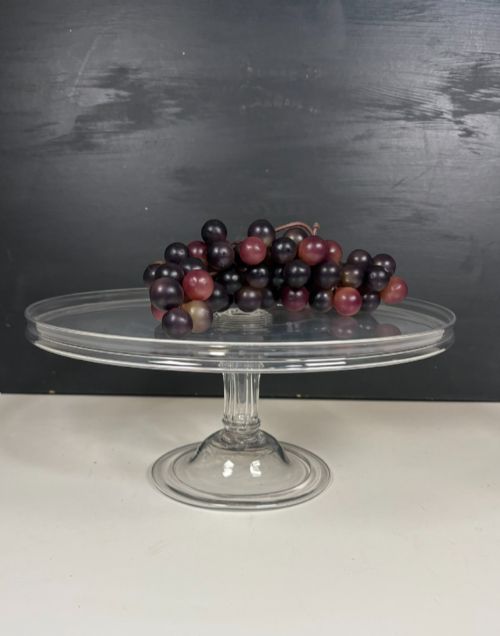
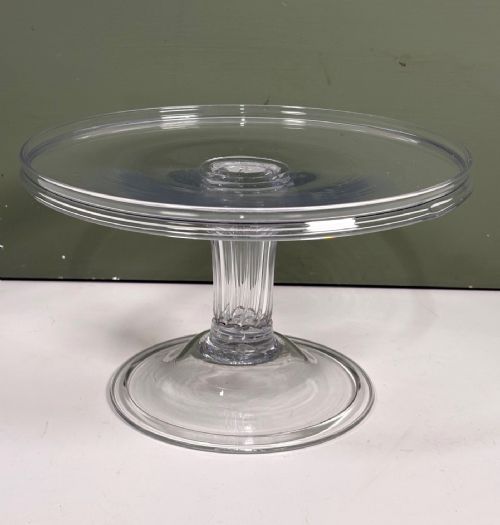
- A shallow bowl or dish raised on a foot or pedestal. This form serves as a primary shape for fruit stands and centrepieces in Georgian and Victorian dining arrangements.
- Épergne
- A large table centrepiece featuring a central dish surrounded by smaller hanging baskets or arms. These multi-tier structures combined cut glass with silver-plated frames.
- Ormolu
- Gilded brass or bronze used for decorative mounts and figures. French makers applied this technique extensively to nineteenth-century centrepieces.
- Lead crystal
- Glass containing lead oxide to increase weight, brilliance, and refractive index. This material allows deep, sharp cutting patterns.
- Old Sheffield plate
- A composite material made by fusing a thin sheet of silver to a thicker copper base. It appears on pieces from the late eighteenth and early nineteenth centuries.
Antique Glass Fruit Stand: Frequently Asked Questions
How were these stands used?
These pieces served as the centrepiece of the dining table, holding fresh fruit, sweetmeats, or confectionery during formal courses. They elevated food above the cloth to create a tiered display.
In domestic settings, they transitioned from the dining room to the sideboard or drawing-room table when not holding a dessert course.
How do I clean an antique glass fruit stand?
Wash the glass component gently in warm water with mild soap, avoiding harsh scrubbing on etched or gilded surfaces. Metal mounts require specific care depending on whether they are silver-plated or bronze.
Keep moisture away from any internal fixings or hidden joints to protect old adhesives or metal pins.
How do I date an antique glass fruit stand?
Dating relies on combining the style of the metal mount with the manufacturing method of the glass. Georgian pieces often feature heavy cut crystal with pontil marks, while Victorian examples introduce silver plate and etched decoration.
Maker marks stamped onto metal bases provide definitive attribution to firms operating in the nineteenth and early twentieth centuries.
Can I use these stands for modern dining?
These stands accommodate fresh fruit, flowers, or small pastries for contemporary gatherings just as they did historically. Their sturdy construction suits practical use on a dining table.
Careful placement away from heavy traffic prevents accidental knocks to extended branches or épergne arms.