
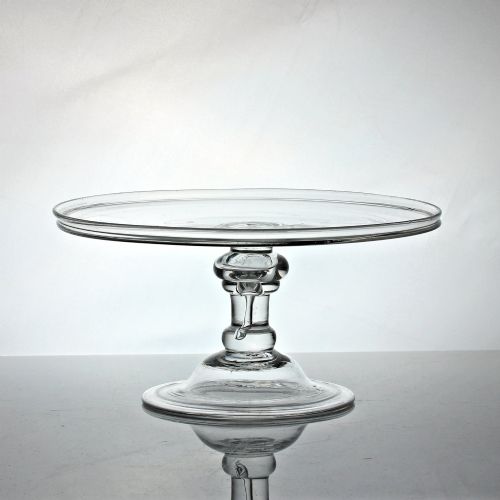
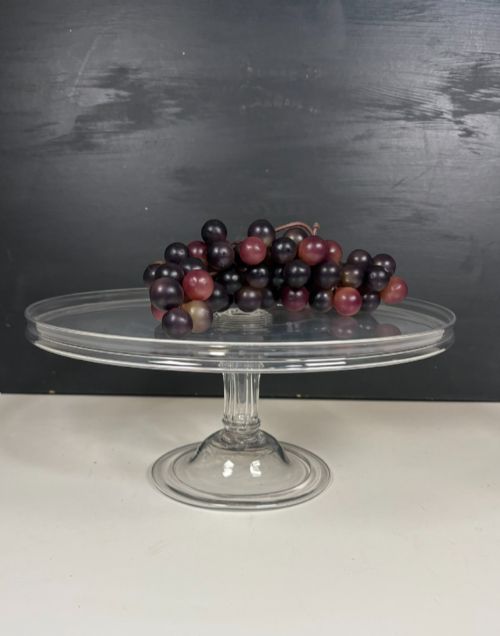
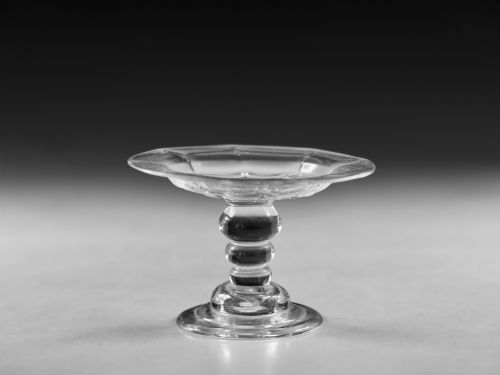
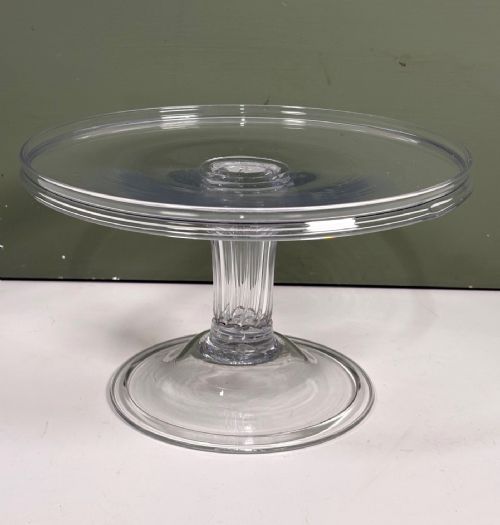


Georgian Glass Pedestalled Dish
Georgian glass pedestalled dish forms sit proudly on the table, offering clear lead crystal and cut glass built to elevate period desserts.
Georgian Glass Pedestalled Dish
A georgian glass pedestalled dish brings eighteenth-century elegance to the table through elevated forms designed for serving fruit, sweetmeats, or small patches.
The selections available here span from compact patch stands and miniature sweetmeat dishes to large George III tazzas and centrepiece bowls.
Originating across the eighteenth century and into 1800, these pieces showcase classic serveware shapes associated with early Georgian, George II, and late Georgian eras.
How they were made
Makers utilised heavy lead glass and lead crystal to achieve brilliant clarity and substantial weight in each pedestalled form.
Techniques such as rib-moulding and honeycomb moulding added tactile surface patterns to miniature patch stands and sweetmeat glasses.
Finishing touches involved hand-cutting clear lead crystal and incorporating striking cobalt glass rims on select sugar bowls.
Listings feature 18th-century, early Georgian, and 1800 periods using clear glass, lead crystal, and cobalt glass.
What varies in quality
The distinction between standard examples and superior specimens rests on the crispness of the moulded or cut decoration, particularly across honeycomb patterns.
Proportion and metal clarity define the upper tier, where heavy lead crystal displays bright refraction and unclouded transparency throughout the pedestal and plate.
The Georgian Glass Pedestalled Dish Glossary
- Tazza
- An elevated flat-topped dish or bowl supported on a central foot or pedestal. These pieces formed the centrepiece of formal dessert services.
- Patch stand
- A small pedestalled dish originally used to hold cosmetic beauty patches. Miniature versions reflect delicate eighteenth-century craftsmanship.
- Sweetmeat glass
- A small pedestalled vessel designed for holding confectioneries and sweet preserves. They often feature rib-moulded bowls.
- Lead crystal
- A type of glass containing lead oxide, providing increased weight, brilliance, and workability for deep cutting. It defines the finest eighteenth-century tablewares.
- Turnover bowl
- A large serving vessel with a distinctive folded or turned rim. These robust bowls suited fruit and centrepiece display.
Georgian Glass Pedestalled Dish: Frequently Asked Questions
What were pedestalled dishes used for?
These elevated vessels served sweetmeats, fruit, sugar, or small cosmetic patches during formal eighteenth-century dining.
Placing dishes on pedestals added height and visual hierarchy to the dessert course table.
How do I date a Georgian glass dish?
Dating relies on observing stylistic markers, manufacturing techniques like rib-moulding, and the specific characteristics of the lead metal.
Early Georgian pieces often exhibit heavier lead crystal and simpler proportions compared to later cut glass examples.
What is the difference between a tazza and a patch stand?
A tazza is a larger pedestalled dish intended for fruit or confectionery service on the dining table.
A patch stand is a miniature version built on a smaller scale to hold facial patches on a dressing table.
How should I clean antique lead glass?
Wash pieces gently by hand in warm water using mild soap, avoiding sudden temperature changes.
Dry them immediately with a soft linen cloth to preserve the clarity of the lead crystal.