
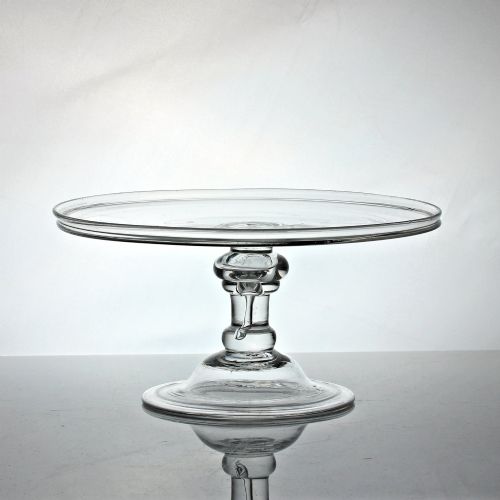
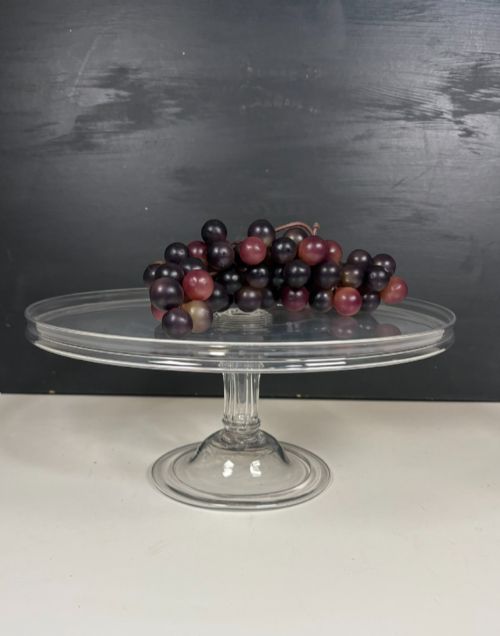
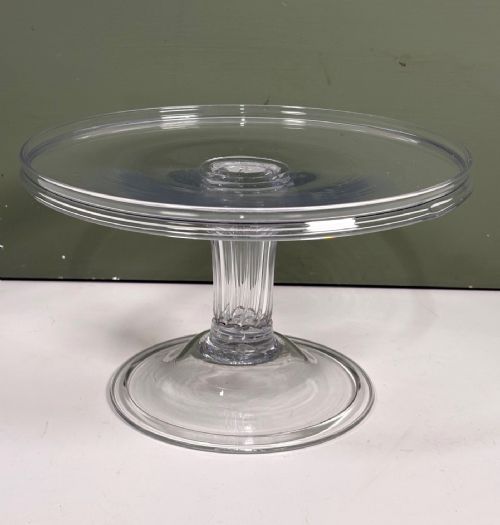


Georgian Footed Glass Dish
These georgian footed glass dish pieces bring clear lead metal and cut crystal to the table with historic weight and footed form.
Georgian Footed Glass Dish
When you search for a georgian footed glass dish, you encounter elevated serveware designed for display and dining across the eighteenth and nineteenth centuries. These items range from large tazzas and centrepiece bowls to diminutive sweetmeat glasses and patch stands.
The most common formats on this page include sturdy glass tazzas, fruit bowls, and sugar containers elevated on distinct feet or stems. Examples stretch from baluster stems of the early seventeen-forties to larger George III productions around eighteen hundred.
Objects span formal table service items and smaller domestic vessels, often incorporating shaped rims or applied feet. The grouping encompasses both clear lead crystal and occasional coloured glass variations.
How they were made
Maker operations utilised heavy lead glass and flint glass compositions to achieve clarity and structural stability for elevated forms. Metal was blown into shapes and hand-finished, sometimes incorporating cut decoration across the surface.
Stemware components relied on knopped structures and terraced feet to support upper bowls securely. Tazzas and larger bowls required balanced thermal management during cooling to prevent stress fractures in thick lead metal.
Several miniature patch stands survive from the seventeen-forties, proving that Georgian small talk required tiny glass stages just as much as grand dining tables.
What varies in quality
Differentiation across the range rests on the crispness of cutting, the weight and brilliance of the lead metal, and the overall proportion of stem to bowl. Early baluster examples demonstrate complexity in knop formation and metal density.
Form integrity and surface condition define the upper tier, where heavy lead crystal retains sharp facet edges and balanced foot geometry. Lesser examples show simpler forms with less substantial metal and minimal manipulation.
The Georgian Footed Glass Dish Glossary
- Tazza
- A raised shallow bowl or plate mounted on a central foot or stem. This form served sweetmeats or fruit upon the dining table.
- Baluster stem
- A thick, swelling stem form reminiscent of architectural balusters, typical of mid-eighteenth-century drinking vessels and sweetmeat glasses. It provides visual weight and tactile grip.
- Lead glass
- Glass containing lead oxide that increases density, refractive index, and working time for cutting. It forms the heavy, clear substance characteristic of this period.
- Sweetmeat glass
- A small, footed vessel designed for serving preserved fruits or confections. These pieces frequently feature knopped stems and flared bowls.
Georgian Footed Glass Dish: Frequently Asked Questions
What were georgian footed glass dish items used for?
These vessels served sweetmeats, fruits, sugar, and jellies during formal dining and dessert courses. Their elevated design brought height and visual focus to the table arrangement.
Larger tazzas held centrepiece fruits or pastries, while smaller patch stands and jelly glasses accommodated individual portions or confectioneries.
How do I date a georgian footed glass dish?
Dating relies on stylistic markers such as baluster stems, terraced feet, and cutting styles. Earlier pieces from the seventeen-forties often display knopped stems and heavier metal.
Later George III examples tend towards larger tazza formats and broader bowls, reflecting shifting dining fashions towards the turn of the nineteenth century.
Are these glass dishes safe for daily use?
While structurally sound, these historic pieces warrant careful handling due to their age and lead glass composition. Hand washing in lukewarm water protects the vulnerable edges and historic surfaces.
Sudden temperature changes should be avoided to prevent thermal shock in the heavy metal.