



Antique Glass Finial
An antique glass finial tops everything from decanters and biscuit barrels to mirrors and chandeliers, providing the crisp terminal accent these vessels and frames require.
Antique Glass Finial
When you search for an antique glass finial, you encounter pieces that range from standalone architectural elements like newel post ornaments to decorative terminal mounts atop silver-plated biscuit barrels, claret jugs, and honey jars. The selection spans the eighteenth and nineteenth centuries, taking the form of ruby glass, cranberry glass, cut glass, and amethyst glass components.
You are most likely to meet these elements integrated into Victorian tableware and nineteenth-century mirrors, or standing alone as folk art bottles and architectural details. Many pieces combine glass components with silver plate, giltwood, brass, or mahogany structures, reflecting the decorative priorities of Georgian, Regency, and Victorian makers.
Materials and technique
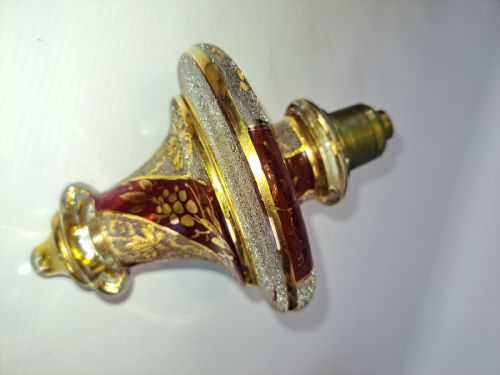
Makers shaped these components using traditional glassblowing and cutting methods, frequently employing ruby, cranberry, and amethyst coloration achieved through specific mineral additions during the melting process. Etching and gilding often decorated the glass surfaces, adding reflective quality and intricate surface pattern to the finished terminal.
Many glass elements paired directly with metalwork mounts, utilising silver plate, brass, or gesso and giltwood frames to secure the finial in place. Artisans carved complementary details into mahogany, gesso, and giltwood when mounting the glass components onto larger mirrors, furniture pieces, or tablewares.
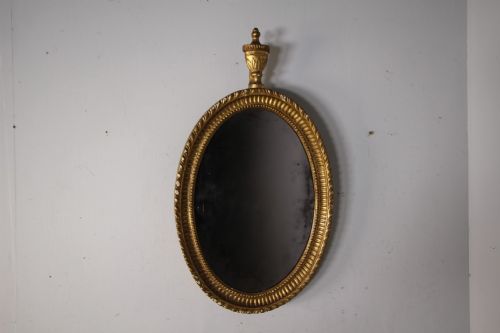
The listings show glass finials integrated into nineteenth-century silver-plated claret jugs, Victorian cranberry glass biscuit barrels, and eighteenth-century giltwood mirrors.
Evaluating quality
Quality depends upon the clarity and depth of the glass itself, alongside the precision of any cut facets or applied gilding and etching. Superior examples demonstrate crisp definition in moulded or etched details and secure integration with their original silver plate, brass, or wooden mounts.
The relationship between the glass finial and its host object dictates overall execution, where finer items maintain matching periods and cohesive material combinations. Intricate figural motifs, such as carved animal or heraldic finials atop glass vessels, separate standard production items from more ambitious workshops.
The Antique Glass Finial Glossary
- Finial
- A decorative terminal ornament that fastens to the top or end of an object, architectural feature, or piece of furniture. It provides a visual closure to the design.
- Cranberry glass
- A rich pinkish-red glass produced by adding gold chloride to the molten batch during the eighteenth and nineteenth centuries. This material appears frequently in Victorian tableware and biscuit barrels.
- Newel post finial
- A large decorative cap or terminal placed at the top of a staircase newel post. These substantial glass pieces served as architectural highlights in domestic interiors.
- Silver plate
- A thin layer of silver fused to a base metal core, commonly used for the mounts and hinges supporting glass jars and jugs. This technique gained widespread use during the Victorian era.
Antique Glass Finial: Frequently Asked Questions
What is an antique glass finial?
An antique glass finial is a decorative terminal element made of glass, designed to cap a vessel, mirror, or architectural post.
These pieces date primarily from the eighteenth and nineteenth centuries, appearing either as standalone decorative objects or as integrated components on tableware and furnishings.
How were these finials used?
Makers utilised these glass terminals to top claret jugs, biscuit barrels, honey jars, and dressing table mirrors.
They also functioned as standalone decorative elements on staircase newel posts, architectural fixtures, and bottled whimsies.
What materials accompany the glass?
These pieces frequently combine glass with silver plate, brass, giltwood, gesso, and mahogany mounts.
Colour variations such as cranberry, ruby, and amethyst glass often appear alongside gilded or etched surface decoration.
How do I date an antique glass finial?
Dating relies upon stylistic markers of the host object, manufacturing techniques, and material combinations seen across Georgian and Victorian periods.
Examining the depth of the glass cutting, the quality of the silver plating, and the framing style helps determine the specific era.