




Etched Ruby Glass
Etched ruby glass brings a rich, deep crimson warmth to a room, catching the light through intricate cut and acid-bitten patterns.
Etched Ruby Glass
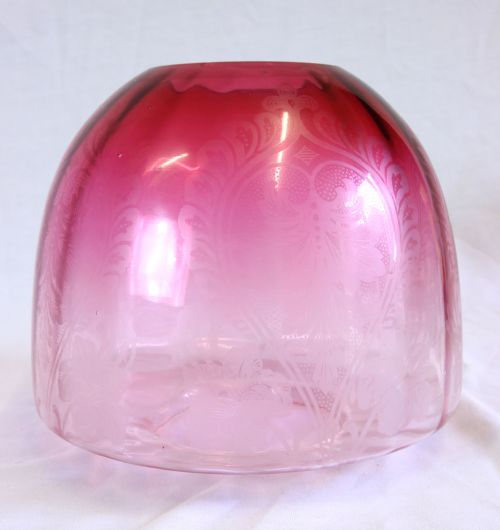
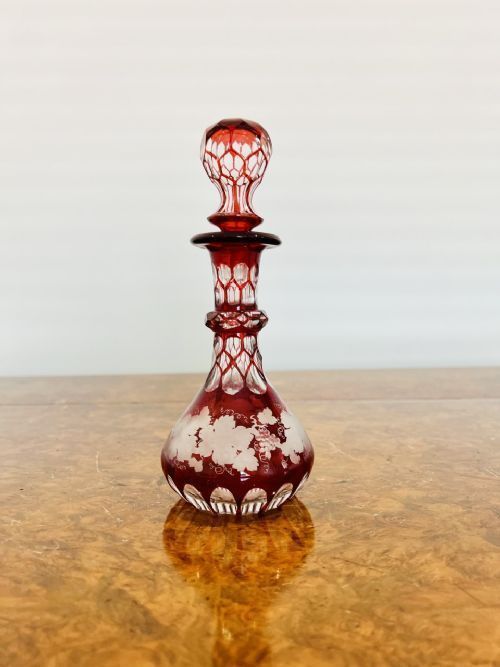
When you search for etched ruby glass, you encounter rich decorative objects shaped from deep red material, spanning decanters, oil lamps, tumblers, and wall mirrors. These items bring a dramatic colour into domestic settings through traditional glassware forms that date from the Victorian era into the early twentieth century.
You are most likely to meet decanters, oil lamps, and table lamps featuring ruby glass components on this page. Pieces often originate from Bohemian or Victorian workshops, showing characteristic flash layers and detailed surface engraving.
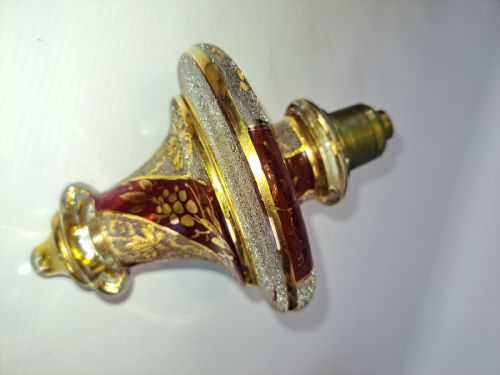
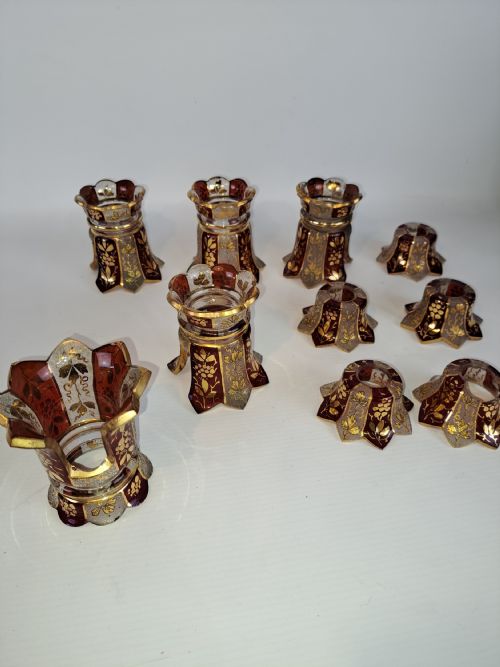
The selection ranges from smaller drinking vessels and scent bottles to larger architectural elements such as capitals and lamp shades. Many items combine the red glass with brass mounts, silver plate, or gilding to enhance their decorative impact.
How etched ruby glass was made
Maker techniques relied on flash glass methods, fusing a thin layer of intense red glass over a clear crystal core before cutting through the surface to expose the colour underneath. This process required skilled manipulation of high temperatures in the glasshouse.
Surface decoration involved wheel engraving or acid etching to cut floral, hunting, or geometric motifs into the red casing. Gilding was frequently applied to highlight the raised details and add contrast to the finished object.
Listings feature items spanning the eighteenth, nineteenth, and early twentieth centuries, incorporating materials like brass, silver plate, and gold leaf alongside ruby glass.
What varies in quality
Quality rests upon the depth of the red colour and the precision of the engraving work on the surface. Sharply defined motifs cut deep into the flash layer indicate superior craftsmanship compared to shallow or blurred etching.
The integration of secondary materials such as brass, silver plate, or gold leaf influences the overall standard of the piece. Finer examples maintain crisp gilding and balanced proportions between the glass body and its mounts.
The Etched Ruby Glass Glossary
- Flash glass
- A thin layer of coloured glass fused over a colourless or clear glass base before being blown and shaped. This technique allowed makers to achieve deep colour saturation while retaining structural clarity.
- Etched glass
- Glass decorated by applying acid to eat away exposed areas, creating frosted or recessed designs. It produces smooth, matte lines distinct from mechanical cutting.
- Lustre
- A decorative table ornament hung with cut glass prisms, often rendered in ruby glass. These pieces caught the ambient candlelight in Victorian parlours.
- Cranberry glass
- A transparent pinkish-red glass coloured with gold chloride during the melting process. It differs from deeper ruby hues through its lighter, more translucent tone.
Etched Ruby Glass: Frequently Asked Questions
How do I clean etched ruby glass?
Wash pieces gently in lukewarm water using a mild, non-abrasive detergent and a soft cloth. Avoid soaking items with gilded highlights or silver-plated mounts to preserve the metal finishes.
Dry them immediately with a lint-free towel to prevent water spots from forming on the glass surface.
Are these pieces made of solid red glass?
Most items utilise flash glass construction, where a thin layer of ruby colour coats a clear crystal body. This method ensured the red tint remained rich without blocking all the transmitted light.
You can observe this layering around the rims or cut edges where the clear glass beneath becomes visible.
How can I tell Bohemian from Victorian pieces?
Bohemian items frequently display heavy wheel engraving, gilt accents, and architectural forms such as capitals or specific decanter profiles. Victorian English pieces often focus on domestic utility like oil lamps, scent bottles, and table glassware.
Stylistic overlaps remain common due to widespread design exchange across Europe during the nineteenth century.
Can I use ruby glass decanters for wine?
Original decanters serve well for holding and pouring wine provided the interior is clean and free from residue. Inspect the stopper and neck to ensure a proper fit before regular use.
Hand washing remains essential to protect any exterior engraving or gilt decoration from deterioration.