


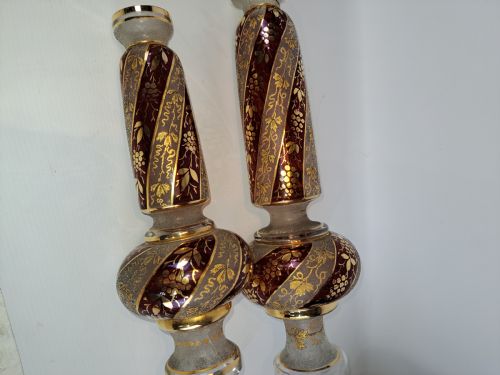


Bohemian Ruby Flash Glass
Bohemian ruby flash glass brings deep crimson colour and bright gilt to nineteenth-century interiors through vases, lustres and lighting components.
Bohemian Ruby Flash Glass
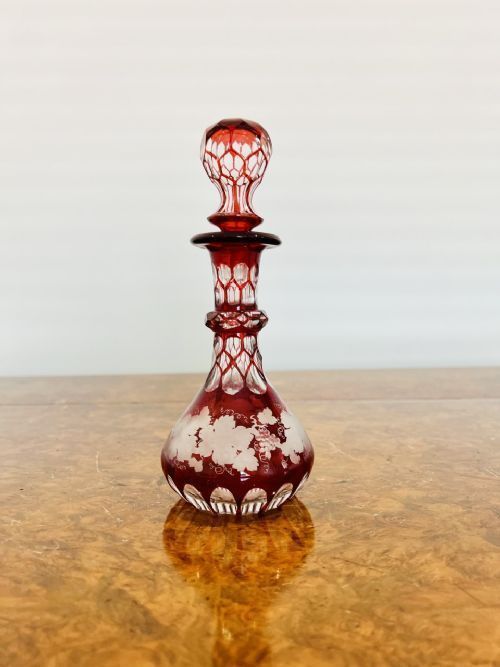
When you search for bohemian ruby flash glass, you are looking at decorative and functional objects formed from clear glass coated in a thin layer of deep red glass before being cut, etched or gilded. The examples you are most likely to meet on this page date from the nineteenth century, including Victorian pieces from the eighteen-eighties alongside earlier eighteenth-century items.
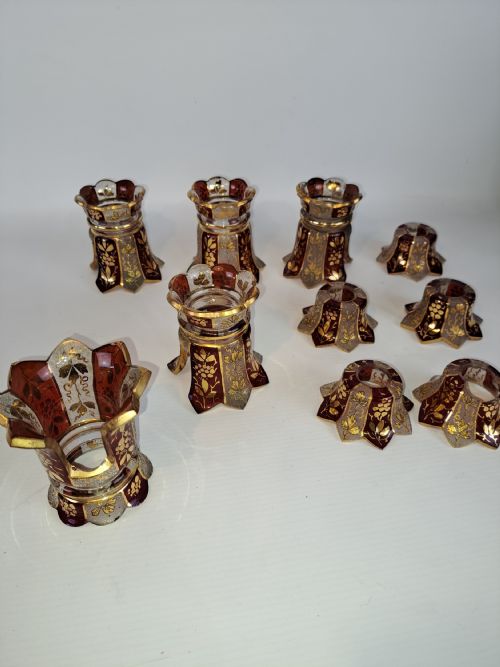
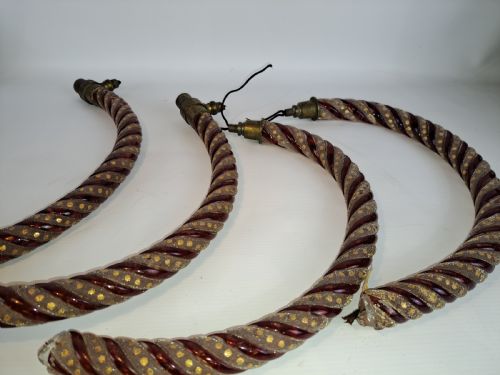
The selection ranges from tableware such as tumblers, beakers, decanters and vases to architectural and lighting elements including chandelier parts, bowls, arms, stems, capitals, finials and hanging bells. Lustres featuring prism drops appear alongside scent bottles and display bowls, showing the wide application of this distinctive red surface treatment across domestic and decorative objects.
How they were made
The makers produced bohemian ruby flash glass by fusing a thin skin of red glass over a colourless or white glass body whilst molten, a method known as flashing or overlay. This dual-layer construction allowed artisans to cut, engrave or etch through the outer ruby stratum to reveal the contrasting clear or white glass beneath.
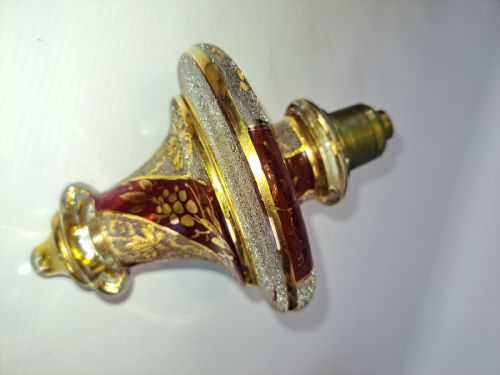
Decoration relied heavily on surface embellishment, with gold leaf and enamel applied by hand to highlight the cut patterns and faceted panels. Metal components in brass also appear alongside the glass elements, particularly in lighting parts and hanging bells.
What varies in quality
Quality in these pieces rests primarily on the crispness of the wheel-cut facets and the precision of the engraving through the ruby layer into the clear glass underneath. Finer examples show sharp, clean edges to the cut panels and deeply defined motifs rather than soft, shallow surface scratching.
The application of gold leaf and enamel further separates standard production from finer work, with superior items displaying neatly detailed gilding that has survived intact. The weight of the glass body and the clarity of the underlying crystal also contribute to the overall standard of a piece.
The Bohemian Ruby Flash Glass Glossary
- Flash glass
- Glass formed by coating a colourless or white glass body with a thin layer of coloured glass while hot. This technique allowed craftsmen to cut through the outer skin to create contrasting patterns.
- Lustre
- A decorative vase-like object fitted with a rim of hanging glass pendants or prisms. They were designed to catch and reflect candlelight in nineteenth-century drawing rooms.
- Overlay
- A process where one or more distinct layers of coloured glass are applied thickly over a base body. This differs from flashing by allowing deeper carving and more pronounced relief work.
- Phinial
- An ornamental termination piece used on furniture, clocks or lighting fixtures. In glassware, they often finished the top of a chandelier or decorative assembly.
- Chandelier components
- Individual parts such as bowls, arms, stems and capitals produced to build or repair hanging light fixtures. These elements often match in colour and cut-glass decoration.
Bohemian Ruby Flash Glass: Frequently Asked Questions
What is ruby flash glass?
Ruby flash glass is clear or white glass covered with a very thin layer of deep red glass. Makers then cut through this red skin to expose the clear glass underneath.
This method created striking contrast without requiring the entire object to be made of expensive solid ruby glass.
How do I date these pieces?
Dating relies on the style of the cutting, the shape of the object and recorded periods like the nineteenth century or Victorian era. Vases, decanters and lustres from this tradition often show specific Victorian or Bohemian design traits.
Comparing the manufacturing technique and decorative motifs helps place an item within its proper era.
How were lustres used?
Lustres served as decorative mantelpiece ornaments during the nineteenth century. The hanging glass prisms caught and refracted ambient light from candles or lamps.
Though they could hold small floral arrangements, their primary purpose was visual display.
How should I clean them?
Cleaning requires warm water and mild soap applied gently by hand. Harsh abrasives must be avoided to protect the delicate gold leaf and enamel detailing on the surface.
Careful drying with a soft cloth prevents water spots on the cut glass.