


Antique Glass Condiment Cellars
These antique glass condiment cellars bring colour and form to the dining table, pairing precious metals with richly tinted vessels.
Antique Glass Condiment Cellars
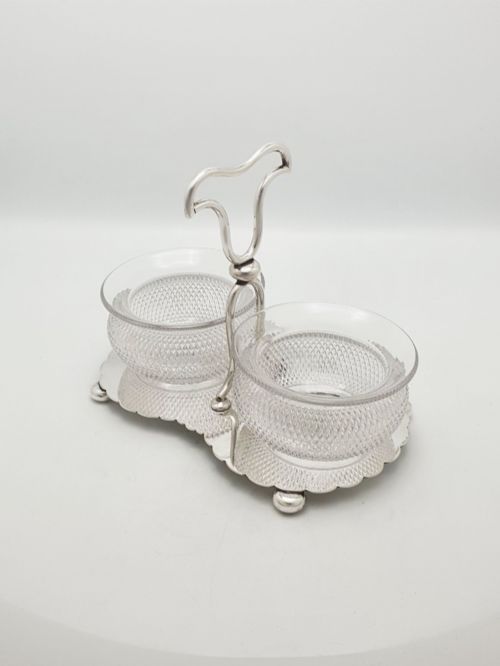
These pieces comprise small vessels and stands designed to hold salt, mustard, and pepper for formal dining tables, spanning periods from the Georgian era through to the mid-twentieth century. The selection ranges from single open salts to multi-bottle cruet sets housed in silver plated or sterling silver frames.
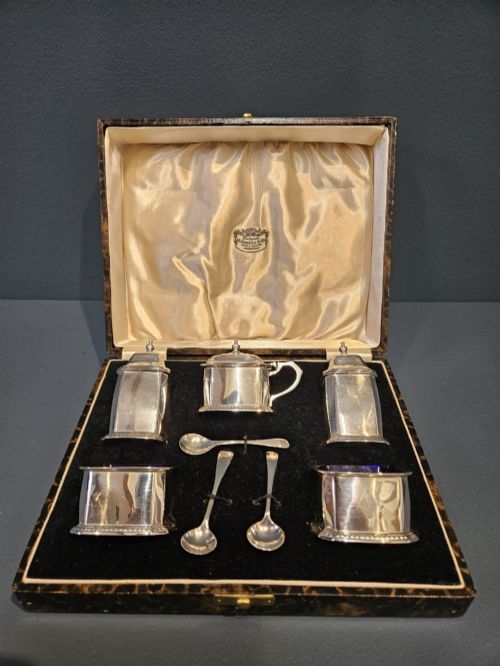
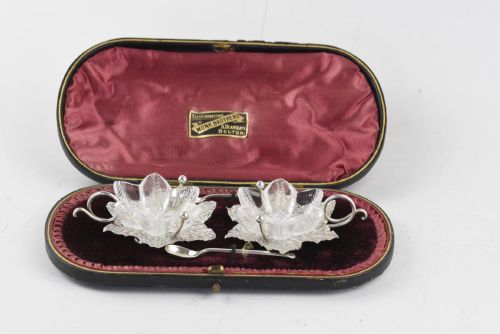
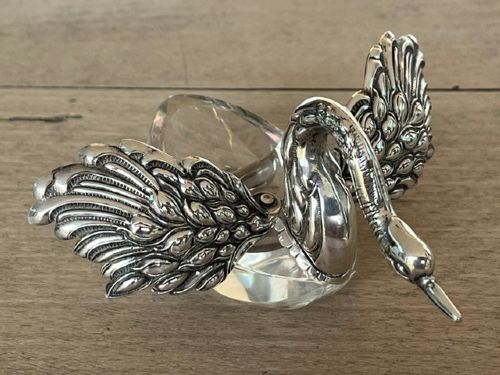
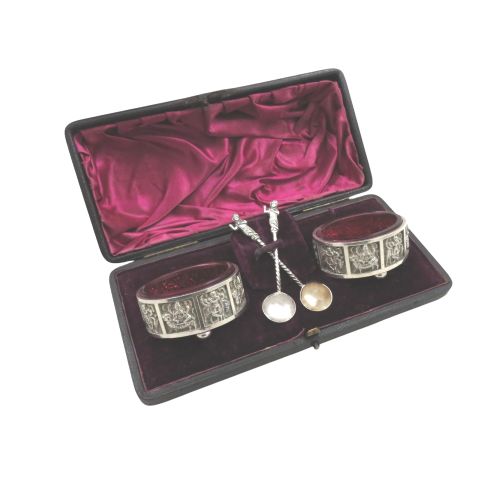
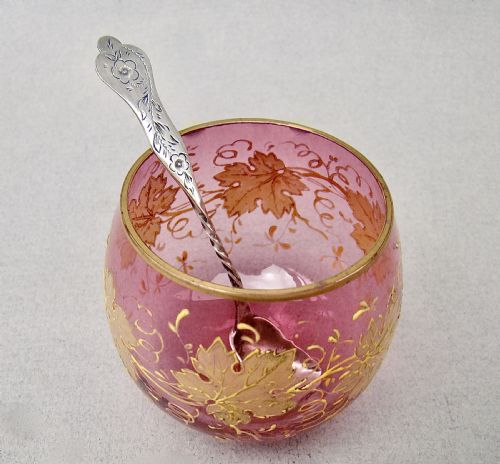
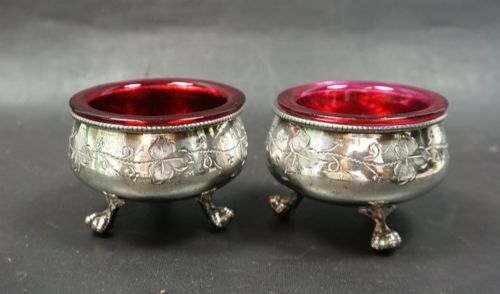
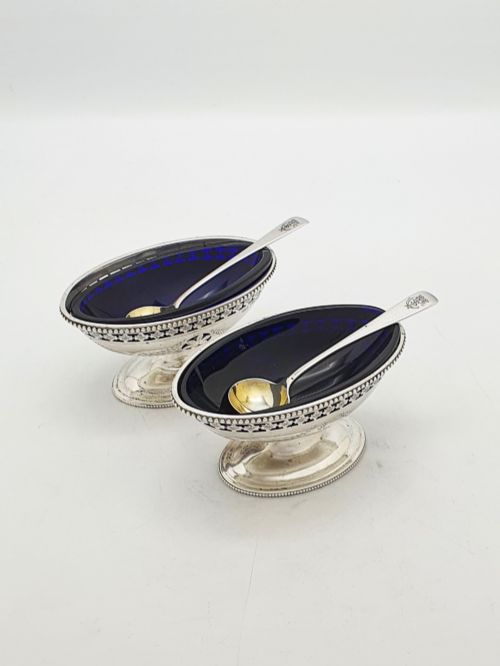
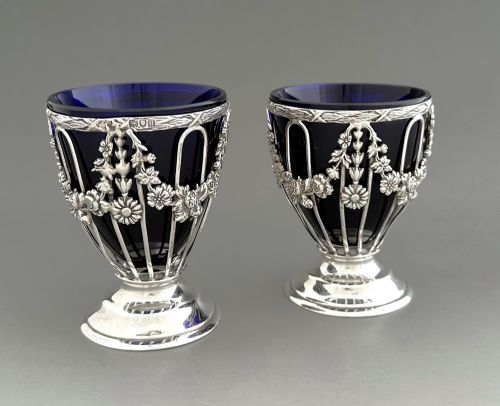
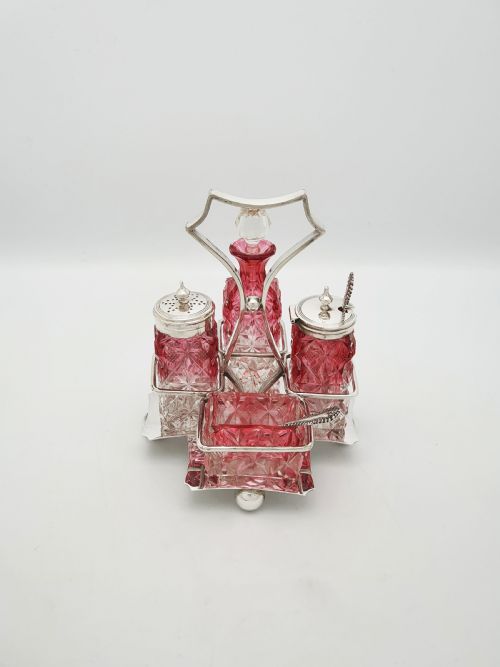
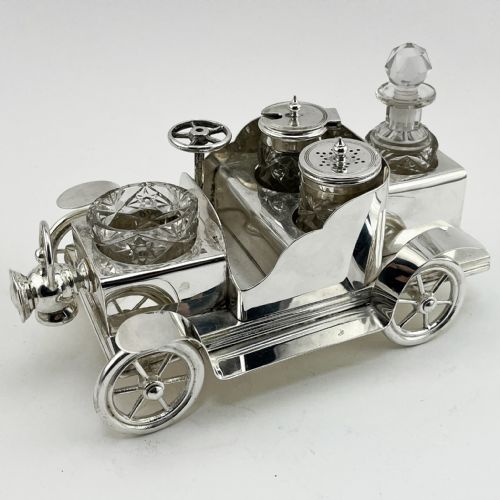
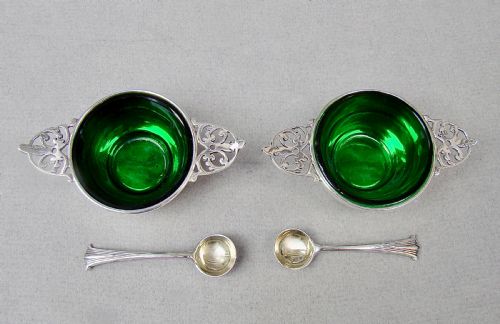
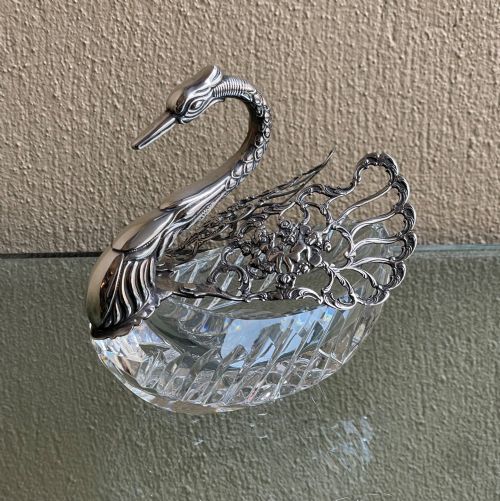
Buyers frequently encounter Edwardian and Victorian examples featuring removable glass liners in cobalt blue or cranberry hues, often accompanied by matched spoons. Novelty designs such as swans, cars, and animal figures also appear alongside traditional boat-shaped and tub forms.
How they were made
Manufacturers combined hand-blown or mould-blown glass with metalwork frames cast in sterling silver or silver plate. Liners utilised rich mineral colourings such as cobalt and cranberry, shaped through cutting, flashing, or wirework mounting.
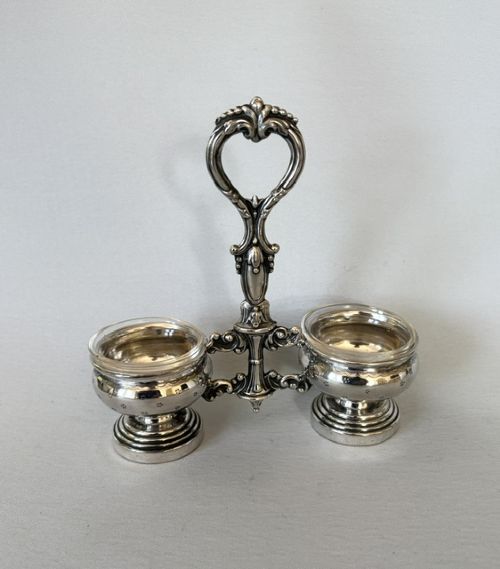
Metal components involved techniques like piercing, chasing, and enamelling, whilst fitted stands integrated handle structures and bottle rings to secure the delicate glass containers during use.
Materials documented across the current inventory include cobalt glass, cranberry glass, velvet, and crystal alongside traditional silver components.
What varies in quality
Distinction across the range lies in the weight of the metal mount and the crispness of the glass cutting or moulding. Superior examples exhibit fully intact coloured glass liners that fit their silver or plated frames precisely without wobble.
Cased sets with original matching spoons and intact hallmarks command greater interest than assembled groups. Novelty pieces demonstrate finer detail in casting and engraving, distinguishing mass-produced items from workshop pieces.
Goldsmith & Silversmith's·William Neale·Josiah Williams & Co·William Hutton & Sons
The Antique Glass Condiment Cellars Glossary
- Cruet set
- A matched collection of bottles or jars for holding condiments, held together in a metal stand or frame. These often include provisions for oil, vinegar, salt, and mustard.
- Open salt
- A small master or individual bowl used for loose salt before the invention of the shaker. They rely on a spoon or pinch rather than holes to dispense the contents.
- Liners
- Removable glass inserts fitted inside metal salt cellars or mustard pots to protect the silver from corrosive contents. They appear in deep cobalt and cranberry colours.
- Silver plate
- A base metal, typically copper or white metal, coated with a thin layer of silver. Many Victorian and Edwardian condiment frames utilise this method for durability.
Antique Glass Condiment Cellars: Frequently Asked Questions
How do I clean antique glass liners?
Wash glass liners gently in warm soapy water using a soft cloth, avoiding abrasive pads that scratch the surface.
Keep silver frames separate during cleaning to prevent moisture damage to any fitted velvet or soldered joints.
Were these cellars used for salt?
Open cellars held dry salt before free-flowing salt was invented, requiring diners to use small spoons or their fingers.
Covered pots in the same sets typically held prepared mustard or pepper alongside the open salt dishes.
How do I spot a replacement liner?
Replacement liners often sit loosely within the metal mount or differ slightly in hue and glass thickness from the original frame.
Examine the rim fit and base wear to determine whether the glass vessel belongs to the silver stand.
Can I use them on the dining table today?
These pieces function well for serving condiments at modern dinner parties, provided you wash them by hand after use.
Avoid leaving acidic substances like vinegar or mustard sitting in the metal mounts for extended periods.