


Antique Glass Chandelier Light
An antique glass chandelier light brings luminous weight and refractive sparkle to a room, drawing the eye upward with period metalwork and hand-cut crystal.
Antique Glass Chandelier Light
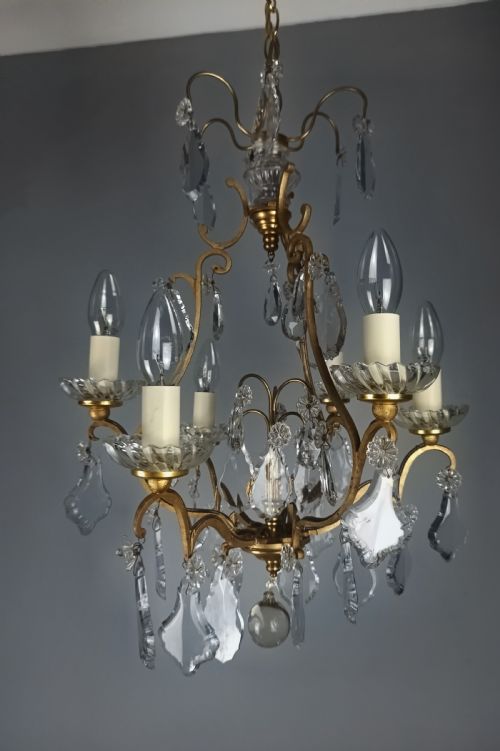
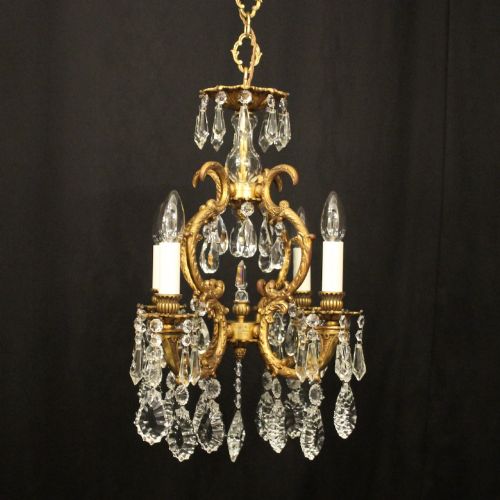
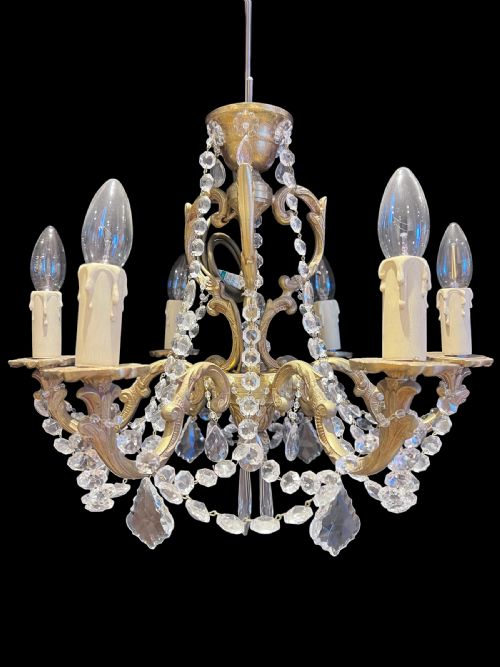
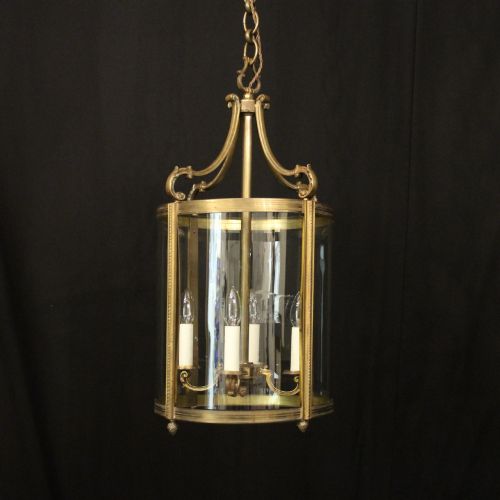
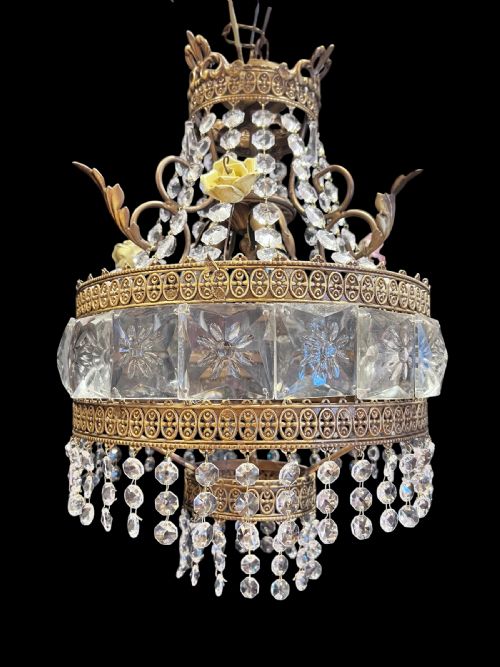
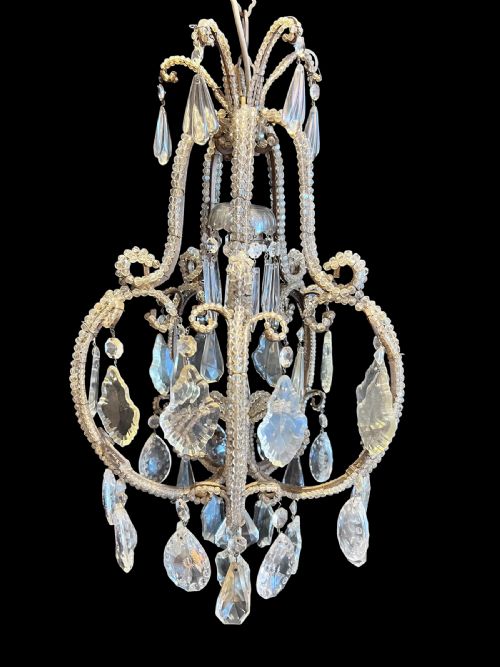
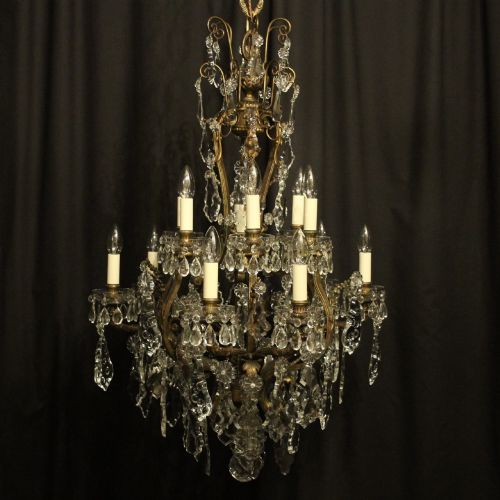
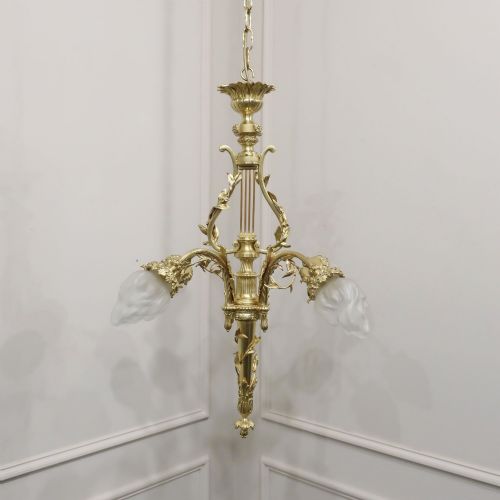
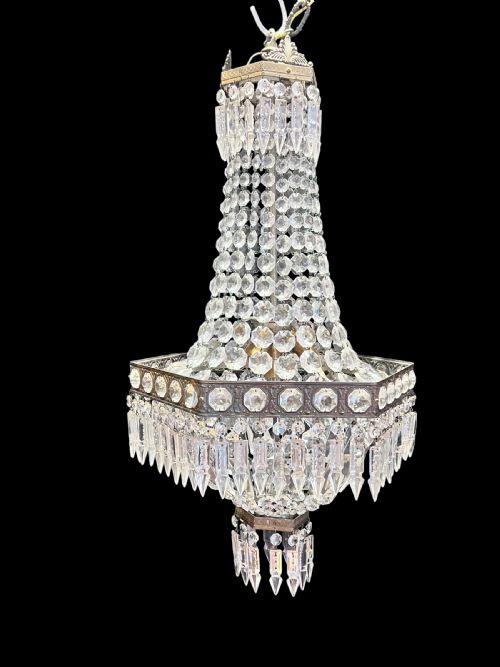
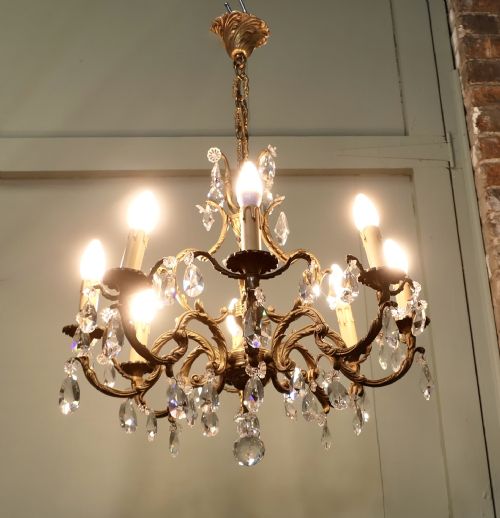
An antique glass chandelier light encompasses a range of overhead fixtures designed to illuminate interiors through suspended glass, crystal, and metal structures. Buyers searching for an antique glass chandelier light frequently encounter French and Italian forms dating from the nineteenth and early twentieth centuries, spanning styles from French Empire and Rococo to Art Deco and Arts and Crafts. These fixtures appear as multi-armed candelabra frames, basket chandeliers, tent and waterfall designs, and enclosed hall lanterns.
The material composition of these pieces relies on combinations of cast brass, gilded bronze, spelter, and wrought iron supporting glass drops, beads, and panes. Examples range from modest single-light pendants and small spike chandeliers to grand multi-tiered fixtures carrying dozens of lights. Originating largely from domestic and civic settings across Britain and continental Europe, they survive as functional focal points for high-ceilinged spaces.
How they were made
Makers constructed these fixtures using cast and spun metals such as brass, bronze, and gilt metal to form the structural skeleton, branching arms, and suspension bands. These metal frames were joined mechanically or cast as single components, then plated, gilded, or left in their natural brass finish depending on the stylistic demands of the period.
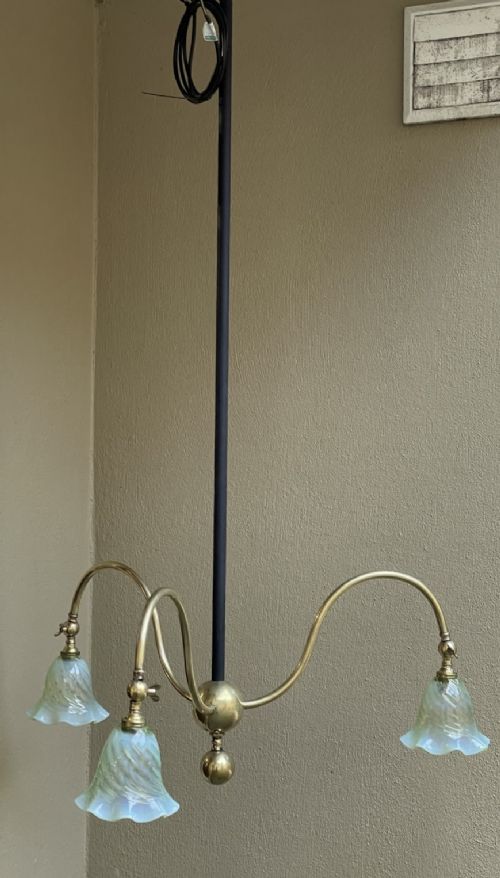
Glass elements were integrated through hand-cutting, moulding, and bead-stringing, utilising crystal, cut glass, opalescent glass, or bevelled panes held together by wire pins or metal bezels. Specialised forms like slip shades and pierced lanterns required precision moulding or intricate hand-piercing of sheet brass before assembly.
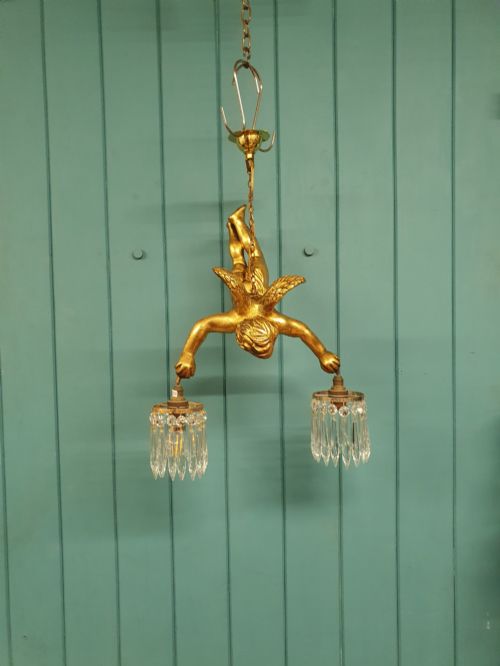
A flying cherub occasionally holds the weight of the room above, keeping watch over twentieth-century crystal spikes.
What varies in quality
The caliber of an antique glass chandelier light rests upon the crispness of the metal casting and the optical purity of the glass components. Superior examples display finely chased or gilded bronze mounts and heavy, hand-cut crystal prisms that refract light cleanly without internal bubbles or cloudiness.
Assembly methods and structural integration also distinguish fine work from simpler production, seen in the density of pin-wired crystal lustres, the thickness of the brass framing, and the stylistic coherence of secondary decorative elements like porcelain flowers or cast cherubs.
Émile-Jacques Ruhlmann
The Antique Glass Chandelier Light Glossary
- Tent and waterfall
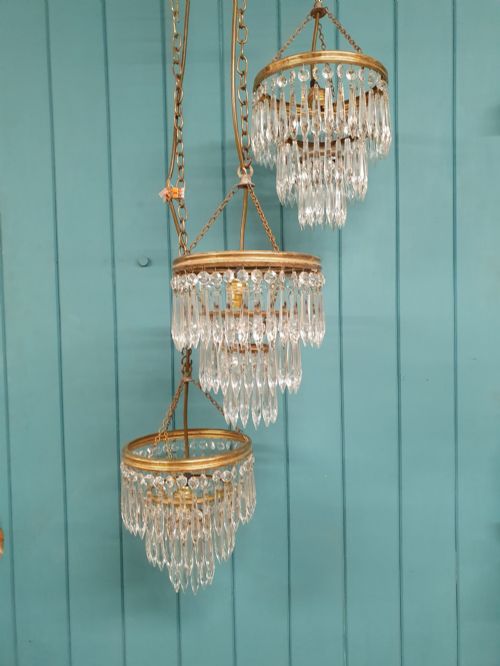
- A lighting configuration where strings of crystal beads form an upper tent shape above a lower cascading tier of drops. This style maximises glass surface area to catch and multiply illumination.
- Plafonnier
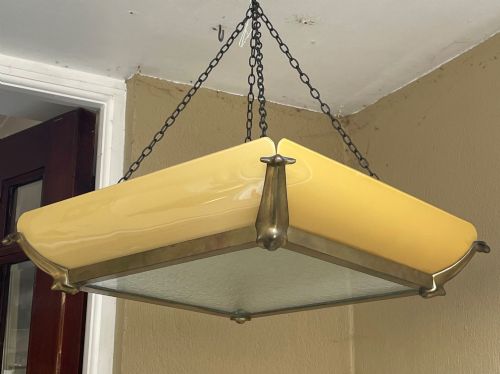
- A ceiling-mounted lighting fixture set flush or very close to the ceiling surface, often utilising a single large glass bowl or shade. These suit rooms with lower ceiling heights where a hanging drop fixture is impractical.
- Spike chandelier
- A central vertical metal rod or spike surrounded by radiating arms and draped with crystal swags and icicle drops. They are typically compact fixtures common in early twentieth-century domestic interiors.
- Hall lantern
- An enclosed hanging light designed for entranceways and corridors, featuring glass panels secured within a brass, bronze, or metal framework. They protect the internal burners or bulbs from drafts.
- Slip shade
- A type of moulded art glass shade that slips directly into a metal frame or basket, popular during the Art Deco era. These shades diffuse direct light evenly across the room.
Antique Glass Chandelier Light: Frequently Asked Questions
How do I hang a heavy antique chandelier?
Suspension requires fixing the weight directly into the ceiling joists using a rated structural hook or steel bracket rather than relying on plasterboard. Professional installation is essential to bear the combined weight of cast metal and glass.
Electrical wiring must be routed safely through the central channel or chain links, ensuring old internal cables are replaced with modern insulated flex that meets current safety standards.
How do I clean an antique glass chandelier?
Cleaning involves dismantling detachable crystal drops and washing them individually in lukewarm water with a mild detergent, followed by drying with a lint-free cloth. Metal frames should be dusted gently without using harsh chemical polishes that might strip historical gilding or patina.
Leaving the fixture suspended while cleaning requires working methodically from the top tier downward to prevent twisting or straining the delicate brass arms and wire fixings.
Can these fixtures be used with modern bulbs?
Modern low-wattage LED candle bulbs fit standard sockets while generating significantly less heat than traditional incandescent or gas fittings. This protects fragile historical glass and antique silk wiring from thermal degradation.
Selecting warm white colour temperatures helps replicate the soft, flickering quality of period gas or early electric illumination without altering the authentic atmosphere of the room.
How do I identify the period of a chandelier?
Dating relies on observing stylistic markers such as the geometric lines of Art Deco slip shades, the heavy cast brass of Victorian gasoliers, or the delicate neoclassical swags of Edwardian and earlier French designs. Manufacturing techniques, screw threads, and wiring channels also offer clues to the decade of manufacture.
Comparing the metal finish, such as fire-gilt bronze versus twentieth-century electroplating, helps distinguish nineteenth-century examples from later revival pieces.