


Antique Glass Buffet
An antique glass buffet brings heavy timber framework and reflective panels together, offering serious presence in a dining room or hall.
Antique Glass Buffet
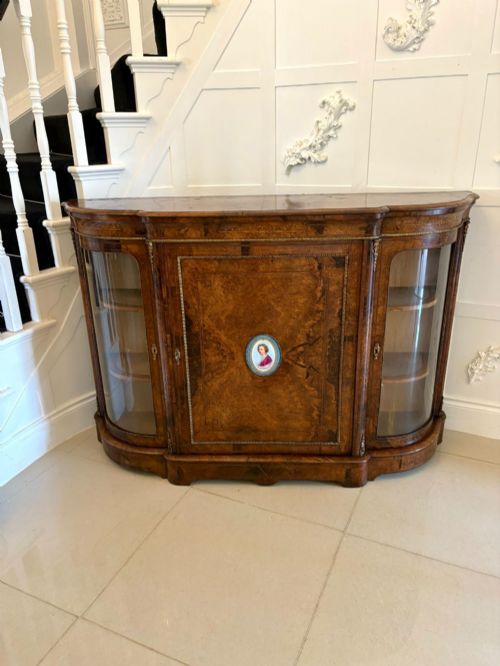
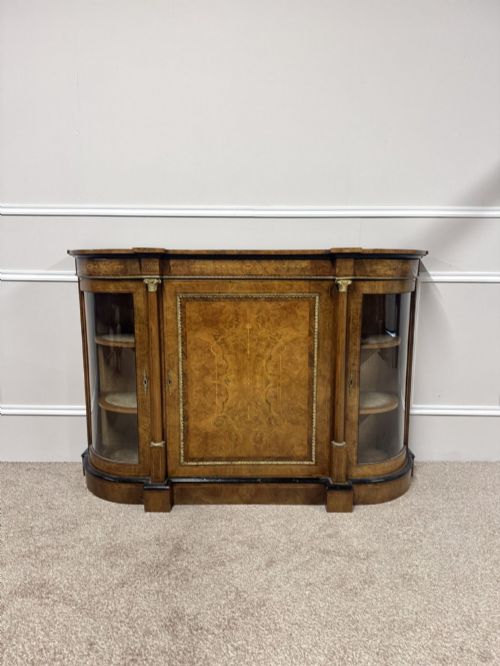
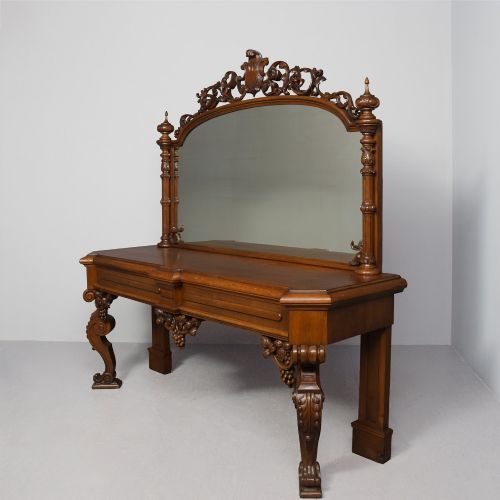
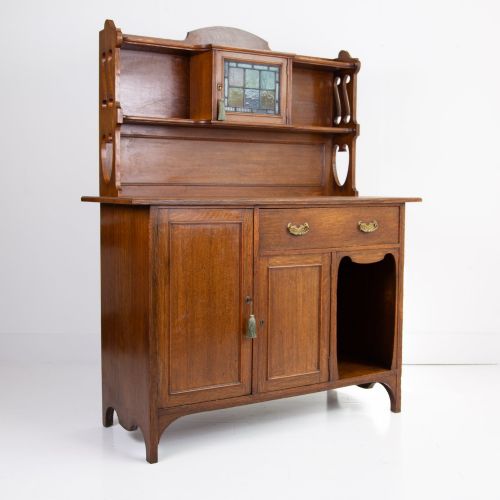
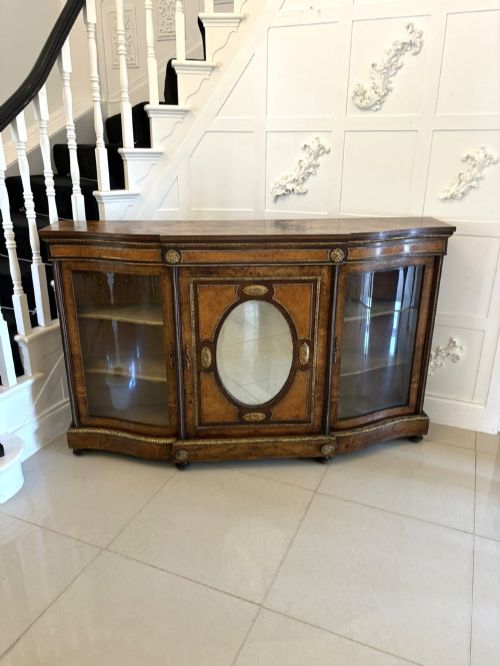
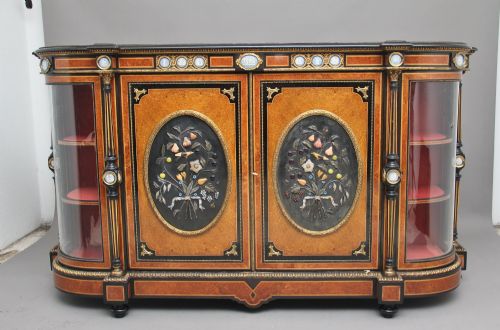
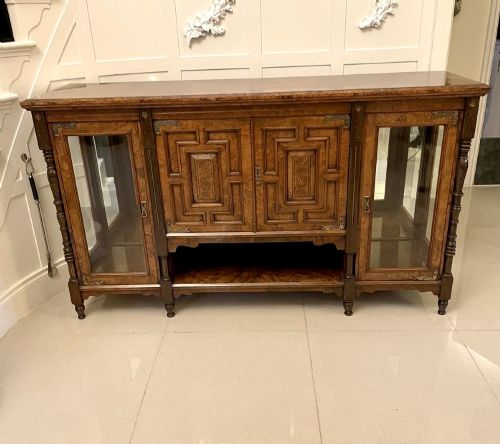
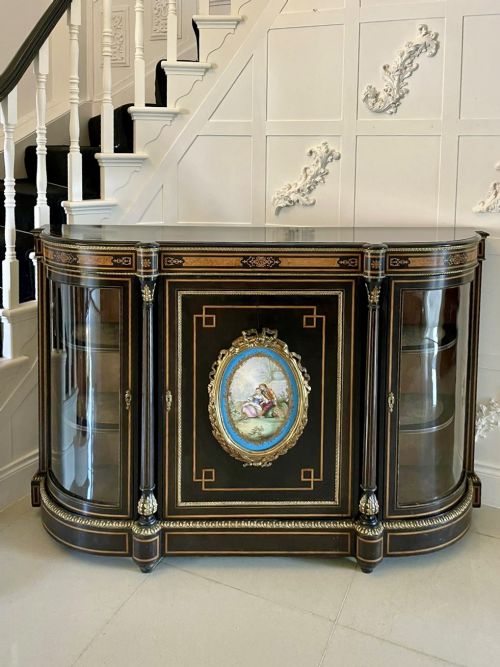
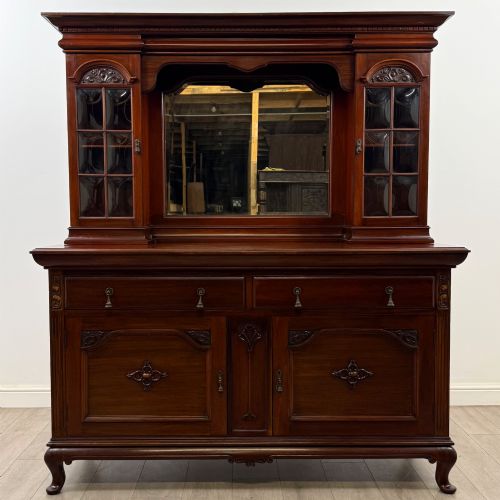
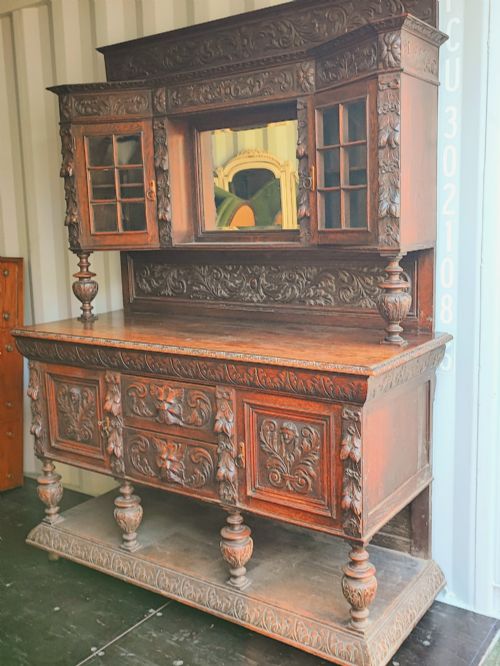
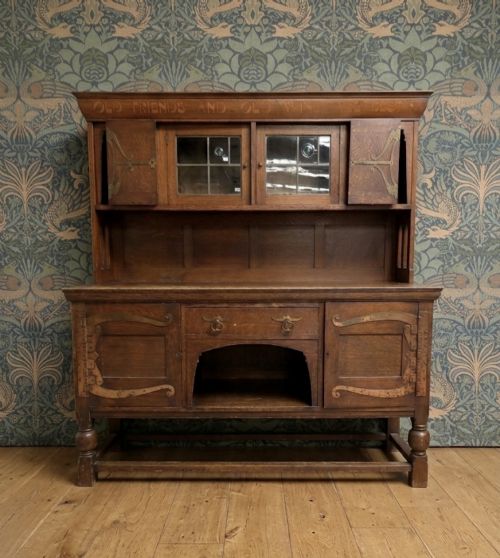
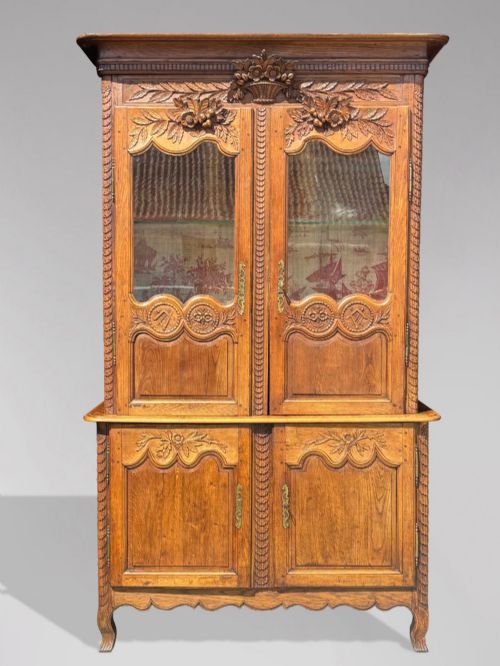
When buyers search for an antique glass buffet, they typically encounter large storage furniture constructed during the Victorian, Edwardian, and eighteenth-century periods. These pieces often manifest as credenzas, sideboards, display cabinets, and serving tables that incorporate glazed doors or mirrored backs.
The materials recorded in these pieces include burr walnut, oak, mahogany, kingwood, and amboyna, frequently accented with ormolu mounts, brass hardware, and boxwood inlay. Cabinets with glass panes or mirrored panels dominate the selection, designed historically to display prized china and silver while reflecting light into the room.
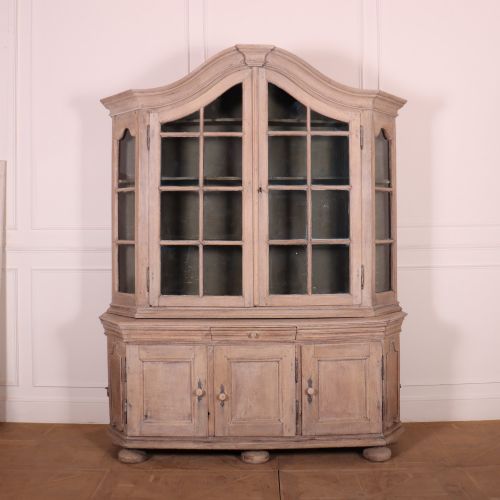
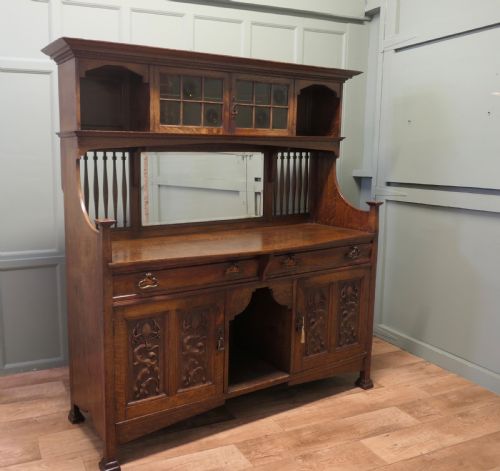
Origin points span English workshops, French ateliers, and Dutch provincial makers, with Victorian walnut credenzas and Arts and Crafts oak cabinets forming the most common configurations on this page.
Materials and construction methods
Makers built these cabinets using dense native and exotic timbers like oak and burr walnut as the primary structural chassis, often applying veneers and marquetry patterns across large flat surfaces. Brass and ormolu mounts were secured to corners, doors, and plinths to provide structural reinforcement alongside decorative contrast.
Glass panels were hand-cut and fitted into timber frames or leaded lattices, while specialised furniture makers utilised ebonising and french polishing to finish the exterior woods. Carved details on friezes and panels were executed by hand using gouges and chisels on solid oak, mahogany, or walnut.
Antique Glass Buffet Retail Price Guide 2026
Typical asking prices for glass buffet among the pieces listed under this phrase on Sellingantiques today, from the lower quarter to the upper quarter. They describe what is for sale here now, not the wider market.
Several dining cabinets preserve hidden interior shelf spaces once designated strictly for locking away expensive silver service.
Distinctions in manufacture and finish
Quality rests in the selection of timber veneers and the precision of the marquetry inlay, where superior examples display book-matched burr walnut without shrinkage cracks or replaced sections. The integration of decorative elements like Sevres porcelain plaques, cast ormolu mounts, and original bevelled mirror glass elevates certain pieces significantly above plain utility furniture.
Joinery execution dictates longevity, with top-tier workshops employing dovetailed drawer linings, substantial brass hardware, and tightly fitted glazed doors that hang square within their rebated frames. The presence of documented cabinet-maker signatures or stamps confirms a higher standard of workshop supervision and material selection.
Elkington and Co·Shapland and Petter·Heal and Son·Gillow·Liberty and Co·Edwards and Roberts
The Antique Glass Buffet Glossary
- Credenza
- A low cabinet or sideboard, frequently fitted with glass doors and central shelving, designed for display and storage in nineteenth-century reception rooms.
- Ormolu
- Gilded bronze used for decorative mounts, feet, and key escutcheons on fine cabinet furniture.
- Marquetry
- Decorative patterns formed by laying down contrasting veneers of wood onto a structural carcase.
- Buffet deux corps
- A traditional two-stage cupboard originating in France, featuring an upper display section set upon a deeper lower base.
Antique Glass Buffet: Frequently Asked Questions
What is an antique glass buffet?
An antique glass buffet is a large storage furniture piece, such as a credenza or cabinet, featuring glazed doors or mirrored elements to display tableware.
These items date predominantly from the Victorian and Edwardian eras, combining timber frames with transparent or reflective panels.
How do I date an oak sideboard?
Dating an oak sideboard involves examining the construction techniques, hardware style, and timber preparation methods visible across the piece.
Earlier eighteenth-century items often show hand-planed surfaces and pegged mortise joints, whereas Arts and Crafts examples from around nineteen-ten display simplified forms with hammered copper or brass handles.
Where should I place a credenza?
A credenza suits dining rooms, hallways, or living spaces where its length provides a substantial surface for lamps and decorative objects.
Positioning the piece against a solid wall allows the timber grain and glass or mirror panels to function as a focal point within the room.
How do I clean burr walnut veneer?
Burr walnut veneer requires careful maintenance using a soft, dry cloth to remove dust without abrasive polishes or excessive moisture.
Applying microcrystalline wax periodically helps nourish the polished wood surface while preserving the delicate grain patterns beneath.