



Porcelain Mounted Credenza
A porcelain mounted credenza brings nineteenth-century drawing rooms alive through rich burr walnut, ebonised wood, and painted ceramic plaques.
Porcelain Mounted Credenza
A porcelain mounted credenza is a substantial nineteenth-century cabinet designed for display and storage in formal reception rooms. The pieces gathered here span the Victorian era alongside French Revival and Louis styles, originating from British workshops and French cabinet makers alike.
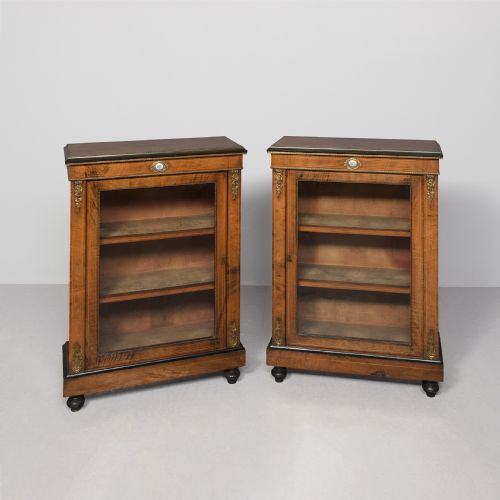
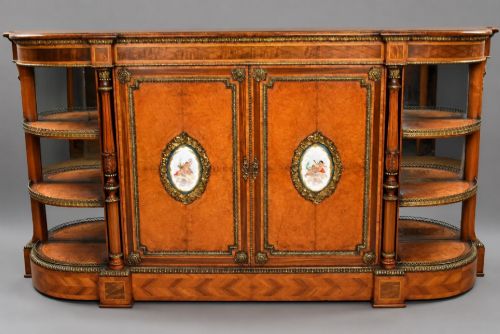
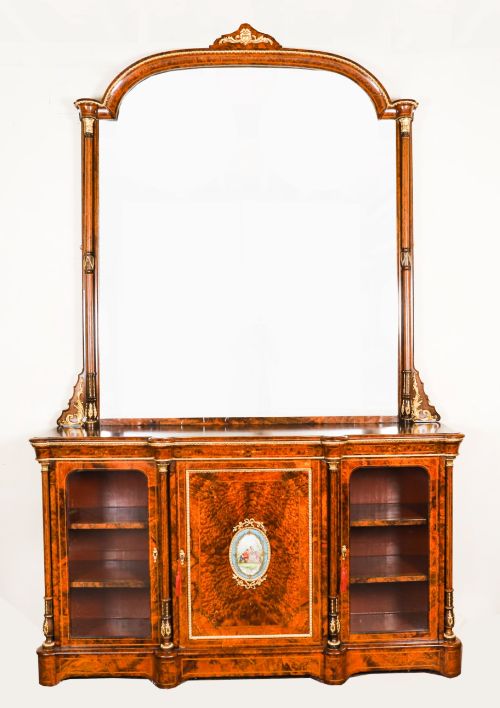
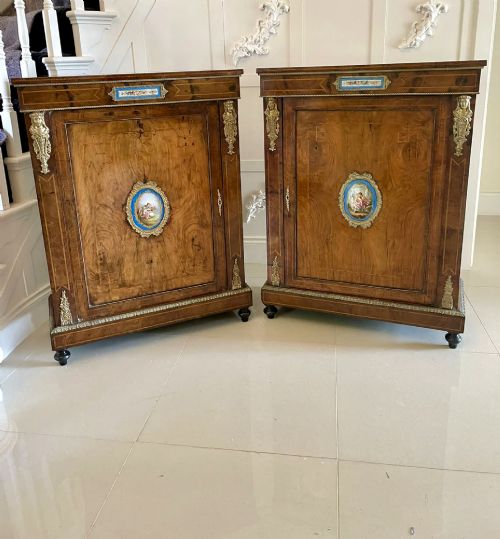
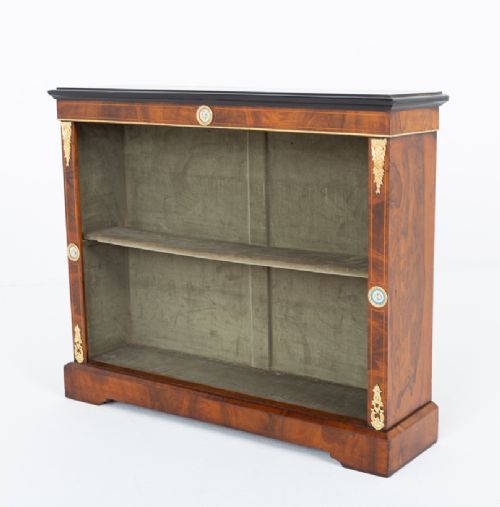
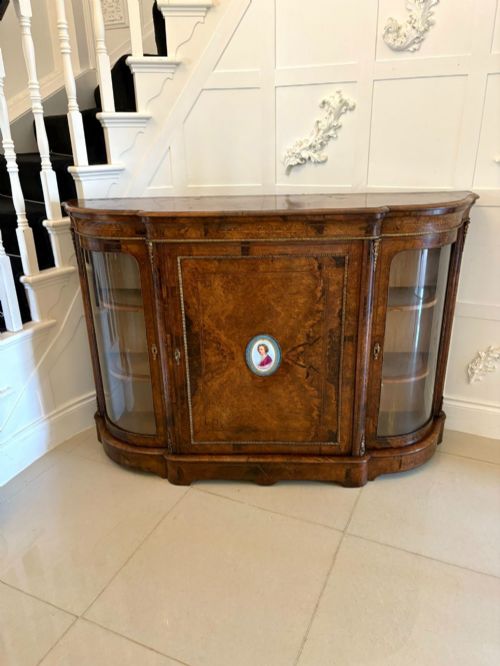
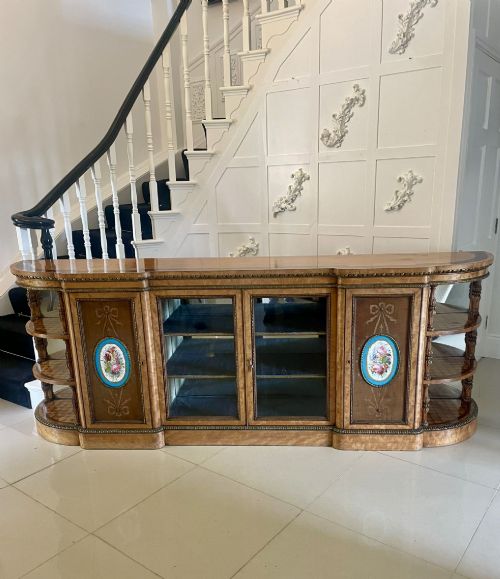
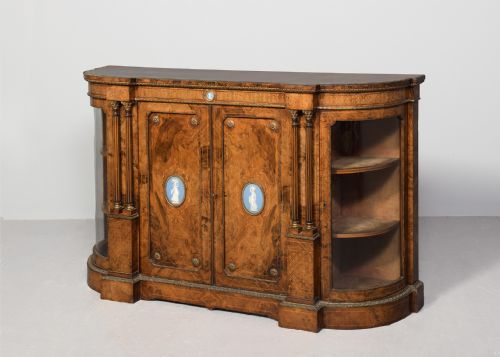
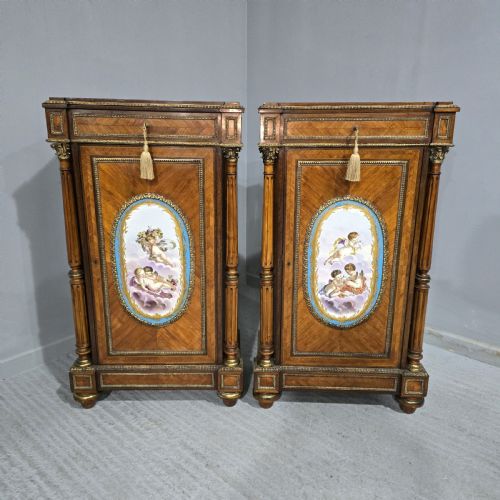
The most common version met on this page is the Victorian burr walnut credenza, often built with central glazed doors flanked by curved glass side compartments. Alternatively, buyers encounter ebonised wood cabinets and narrower pier cabinets, reflecting the varied footprints of nineteenth-century interiors.
Materials and Technique
Cabinet makers built these pieces using carcasing timbers like walnut, ebonised wood, and kingwood, frequently veneered in burr walnut or amboyna to create striking grain patterns. Marquetry inlay and fine stringing decorate the timber surfaces, framing the central panels.
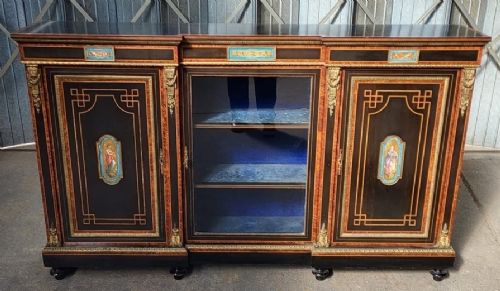
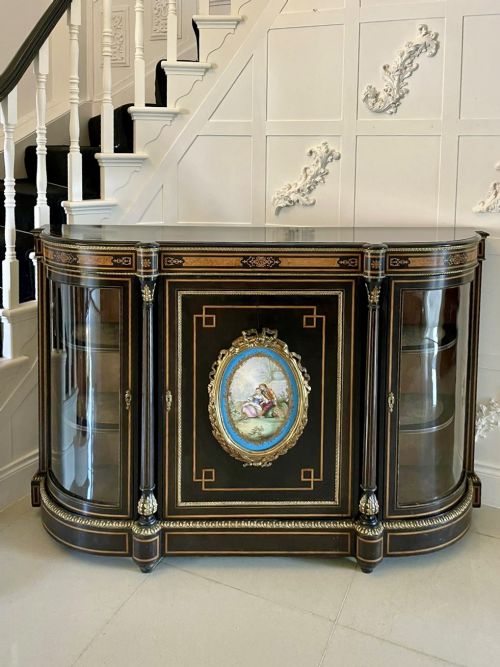
Cast ormolu mounts and gilt-metal frames secure ceramic plaques, particularly Sevres style porcelain painted with figures or landscapes. Marble tops appear on several French examples, adding a heavy stone counterpoint to the glazed and mounted woodwork.
Porcelain Mounted Credenza Retail Price Guide 2026
Typical asking prices for porcelain mounted credenza among the pieces listed under this phrase on Sellingantiques today, from the lower quarter to the upper quarter. They describe what is for sale here now, not the wider market.
Listings feature nineteenth-century furniture spanning the Victorian period alongside Napoleon III and Louis XV and XVI revivals.
Judging the Range
Quality rests on the depth of the cabinet work and the fidelity of the mounts, moving from standard commercial production to exhibition standard pieces. Finer examples display meticulous marquetry, heavy fire-gilt ormolu, and hand-painted porcelain plaques rather than transfer-printed substitutes.
The integration of the ceramic panels within the timber framework reveals the maker's hand. Superior pieces align the grain, glass, and metalwork harmoniously, whereas simpler versions rely on heavier framing and less intricate veneer selection.
Lamb of Manchester
The Porcelain Mounted Credenza Glossary
- Credenza
- A low cabinet or sideboard used for display, originating from Renaissance Italy and adapted by nineteenth-century cabinet makers. These pieces often feature glazed central doors and curved side cabinets.
- Ormolu
- Gilt bronze or brass mounts cast and chased to embellish furniture. Makers used these metallic elements to frame porcelain plaques and accent corners.
- Burr walnut
- Timber taken from the wart or burl of a walnut tree, yielding swirling patterns prized for veneering. It forms the primary surface figure on many Victorian cabinets.
- Pier cabinet
- A narrow cabinet designed to stand against the wall space between windows. They share the porcelain and ormolu decoration of larger credenzas.
- Sevres style
- Porcelain painted in the manner of the famous French royal factory, depicting floral reserves or romantic scenes. These plaques serve as focal points on cabinet doors.
Porcelain Mounted Credenza: Frequently Asked Questions
What rooms suit a porcelain mounted credenza?
These cabinets work well in large reception rooms or entrance halls where their length and glazed display areas make a strong visual statement. They provide surface space for lamps or decorative objects while housing collections behind glass.
Because they sit relatively low to the ground, they do not overpower wall art hung above them. Placing them away from direct sunlight protects both the polished wood veneers and the hand-painted porcelain plaques.
How do English and French credenzas differ?
English nineteenth-century pieces typically employ burr walnut with inlaid marquetry and subtle gilt-metal mounts. They lean toward architectural symmetry and warm timber tones.
French cabinets frequently use ebonised wood or kingwood paired with heavy ormolu mounts and marble tops. They draw directly on Louis XV and Louis XVI design revivals.
How should I care for the wood and porcelain?
Maintaining the finish requires dusting with a soft, dry cloth and avoiding silicone-based polishes that build up over time. Keeping the room at a stable humidity prevents the timber veneers from lifting.
The porcelain plaques need only gentle cleaning with a dry microfibre cloth, taking care not to catch bristles on the ormolu mounts surrounding them.
Are these cabinets meant for storage?
While nineteenth-century households used them to store dining silver and glassware, modern owners generally use the interior shelves to display collections of ceramics or books. The glazed doors keep dust away from delicate items.
Unglazed sections or solid wooden doors offer concealed storage for items you prefer out of sight.