
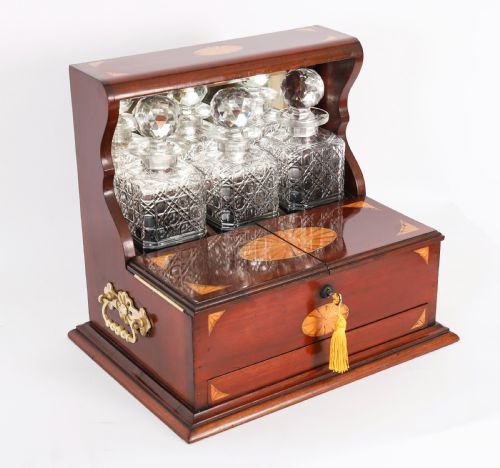


Antique Glass Bottle Chest
These antique glass bottle chests combine fine cabinetry with fitted interiors designed to protect delicate glassware and medical phials.
Antique Glass Bottle Chest
An antique glass bottle chest brings together fitted wooden cases and original glass vessels, ranging from apothecary travel boxes to drinks tantaluses. These items appear across Georgian, Regency, Victorian, and Edwardian periods.
The primary forms on this page include mahogany apothecary boxes containing original glass bottles, oak and burr walnut tantaluses housing cut glass decanters, and scent caskets lined with velvet.
Buyers seeking these pieces typically find utilitarian travel cases from the early nineteenth century alongside more decorative Victorian and Edwardian drinks cabinets made for the home.
Materials and construction methods
Cabinet makers utilised dense hardwoods such as mahogany, oak, and burr walnut, often enhancing surfaces with satinwood inlay, marquetry stringing, or brass mountings and campaign handles.
Interiors were precisely engineered with custom wooden dividers, velvet linings, and secret drawers to secure glass bottles, decanters, and phials safely during transport or daily use.
Listings feature pieces spanning the Georgian, Victorian, Edwardian, and Regency periods, constructed from mahogany, oak, burr walnut, and brass.
Evaluating craftsmanship and completeness
The standard of a piece depends heavily on the survival of its original glass bottles and the precision of the internal wooden joinery that holds them.
Finer examples display superior timber selection, intricate inlay work, and robust brass hardware, whereas simpler iterations rely on plain timber construction designed strictly for utility.
The Antique Glass Bottle Chest Glossary
- Tantalus
- A locking drinks cabinet that holds decanters securely in place while displaying the cut glass bottles within.
- Apothecary Box
- A compact wooden chest fitted with numerous small glass bottles and drawers designed for medicines.
- Scent Casket
- A decorative small box lined with velvet to house delicate glass perfume bottles.
- Marquetry
- Decorative woodwork where pieces of veneer are fitted into a ground material to form patterns.
Antique Glass Bottle Chest: Frequently Asked Questions
How were apothecary chests used?
Doctors and households utilised apothecary chests to store, transport, and dispense liquid medicines safely. The fitted interior kept glass phials upright and protected.
Many examples include hidden compartments and small drawers for scales, powders, and mixing tools alongside the primary glass bottles.
What is a tantalus?
A tantalus is a locking drinks frame that displays cut glass decanters while preventing unauthorised access to the spirits inside. The locking mechanism secures the stoppers.
Popularised in the Victorian and Edwardian periods, these units were usually housed in oak, mahogany, or burr walnut frames.
How do I date these chests?
Dating relies on timber choices, brass hardware styles, and construction techniques typical of periods like Georgian, Regency, and Victorian. Mahogany dominates earlier pieces.
Later Victorian and Edwardian items often feature machine-sawn elements, varied wood veneers, and mechanical locking bars for decanters.
How should I care for the wood?
Maintain wooden surfaces by keeping them away from direct heat sources and sudden humidity changes. Regular dusting with a dry cloth preserves the finish.
Avoid heavy liquid polishes and treat interior velvet linings gently with a soft brush to remove dust without damaging the fabric.