


Victorian Pharmacy Chest
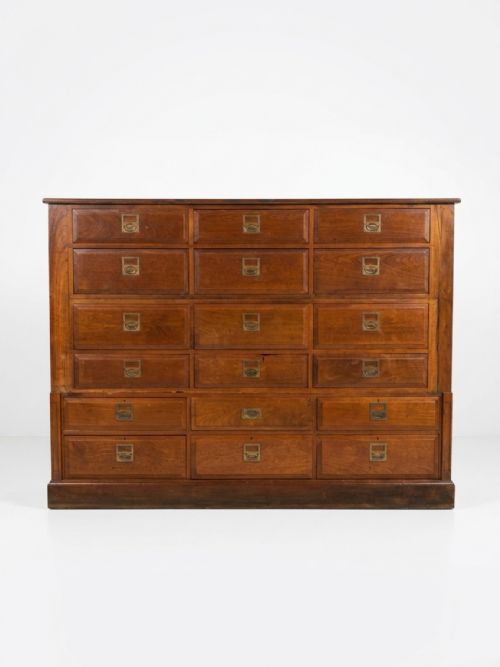
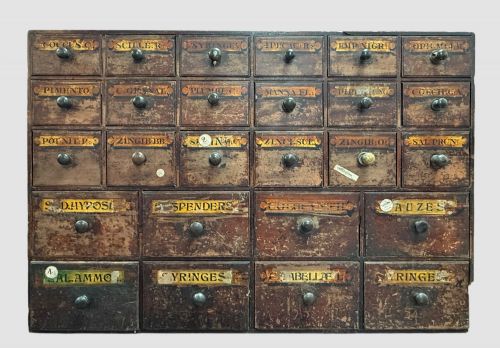
A victorian pharmacy chest brings tactile history into a room with rows of small drawers and fitted compartments designed for remedies.
Victorian Pharmacy Chest
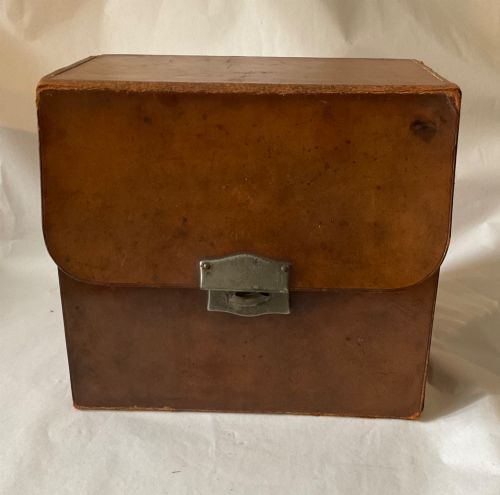
When you search for a victorian pharmacy chest, you encounter practical storage furniture built for chemists, apothecaries, and medical practitioners. These pieces range from compact travel boxes lined in velvet to large shop fittings and banks of drawers designed to hold medicinal ingredients.
The most common examples on this page are mahogany and pine chests of drawers, alongside smaller fitted apothecary boxes and cases. Their origins span the nineteenth century, including specific periods such as the eighteen-seventies and eighteen-eighties, reflecting commercial and domestic medical storage.
How they were made
Cabinet makers built these pieces primarily using solid timbers like mahogany, walnut, and pine, often finished with polished surfaces. Interiors frequently incorporated velvet or leather linings to cushion fragile glass bottles and instruments.
Hardware played a functional role, utilising brass for handles, campaign mounts, and hinges. Glass appeared in the original bottles and jars that accompanied fitted boxes and cabinets.
Materials across these listings include mahogany, walnut, pine, brass, glass, leather, and velvet.
What varies in quality
The distinction between standard utility furniture and superior pieces rests on the choice of timber and the complexity of the interior arrangement. Fine examples feature burr walnut or inlaid mahogany, alongside graduated drawer configurations and intact original glass collections.
Construction methods also separate utilitarian storage from finer cabinet work, evident in dovetail joints, brass campaign hardware, and specialised veterinary or dental fittings that survive with minimal alteration.
The Victorian Pharmacy Chest Glossary
- Apothecary box
- A portable wooden case fitted with internal compartments designed to hold medical bottles, scales, and ingredients. These boxes often feature brass carrying handles and secure locks.
- Bank of drawers
- A multi-drawer cabinetry unit designed for efficient commercial storage behind a shop counter. They provide numerous small compartments for sorting dry goods or medicines.
- Campaign box
- A portable chest or case constructed for travel, equipped with recessed brass handles and reinforced corners to withstand frequent movement. They were used by military personnel and travelling professionals.
- Graduated drawers
- A vertical stack of drawers that decrease in depth from bottom to top. This arrangement creates a balanced aesthetic and accommodates items of varying sizes.
Victorian Pharmacy Chest: Frequently Asked Questions
What is a pharmacy chest?
A pharmacy chest is a utilitarian cabinet or box designed to store medical supplies, powders, and bottles securely. They were used by chemists, doctors, and households during the nineteenth century.
These pieces feature multiple small drawers or fitted internal compartments to keep volatile substances and delicate glassware organised and protected.
How were apothecary boxes used?
Apothecary boxes served as portable pharmacies for practitioners travelling to patients or for domestic medical emergencies. They contained measured scales, mixing tiles, and labeled glass bottles.
Many smaller boxes were lined with velvet or leather to cushion the glass contents during transport by carriage or ship.
What woods were used?
Cabinet makers utilised dense hardwoods such as mahogany and walnut for high-end medical chests, sometimes incorporating burr veneers or decorative inlay. Pine served as a sturdy secondary wood for internal framing and utilitarian shop fittings.
Polished finishes highlighted the natural grain of the timber while providing a durable surface for daily handling in a shop or surgery.
Are original bottles included?
Some surviving apothecary boxes retain their original glass bottles and stoppers nestled within fitted wooden partitions. Other larger shop chests and banks of drawers survived primarily as cabinetry after their commercial contents were dispersed.
Listings specify whether a piece remains complete with its original glass and internal fittings or if it functions solely as a set of drawers.