
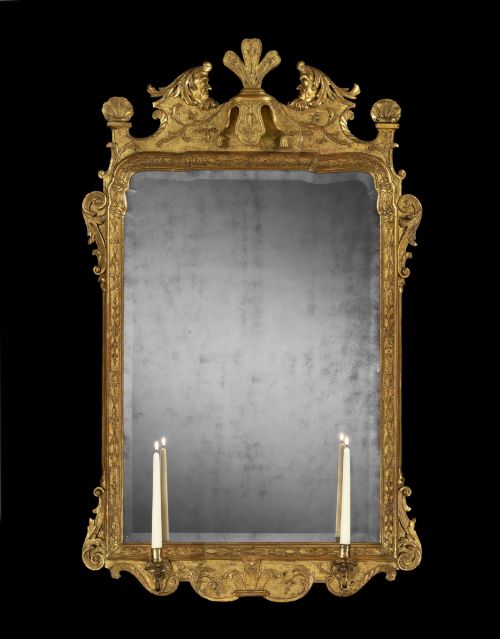
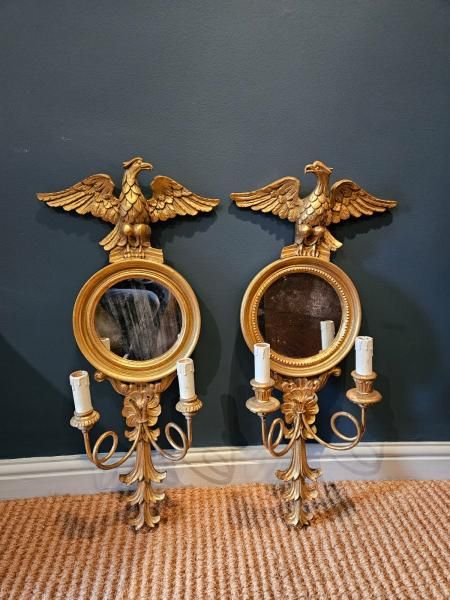
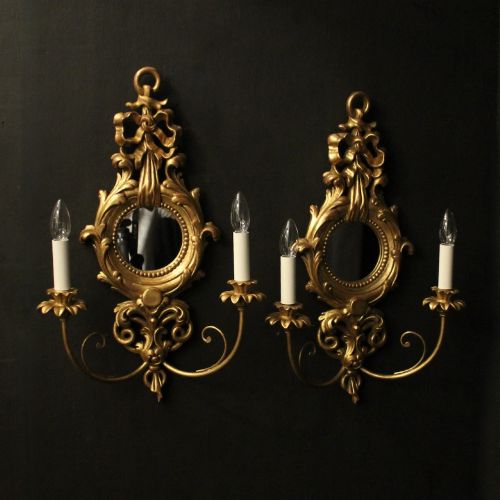
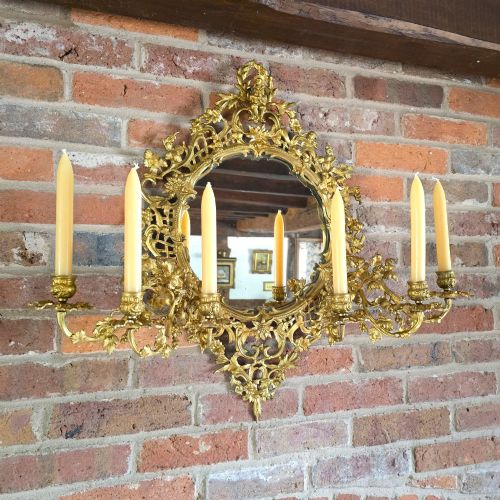
Antique Girandole Wall Sconces
Antique girandole wall sconces combine reflective glass with candle arms to illuminate rooms through historical design.
Antique Girandole Wall Sconces
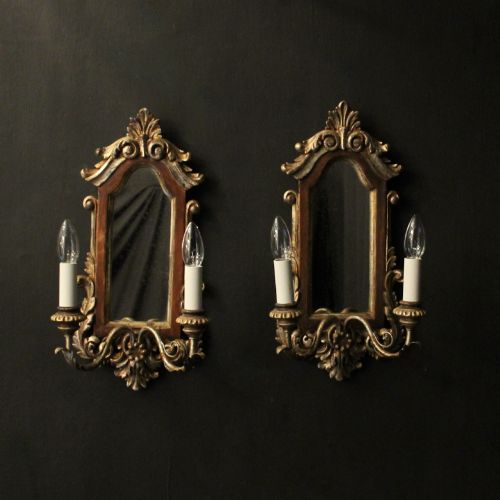
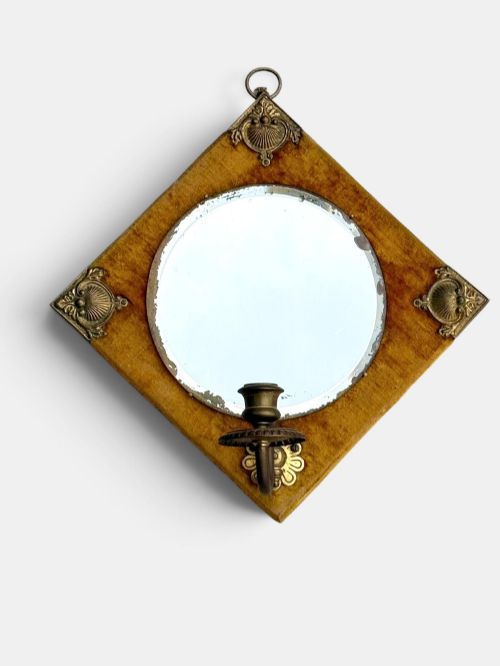
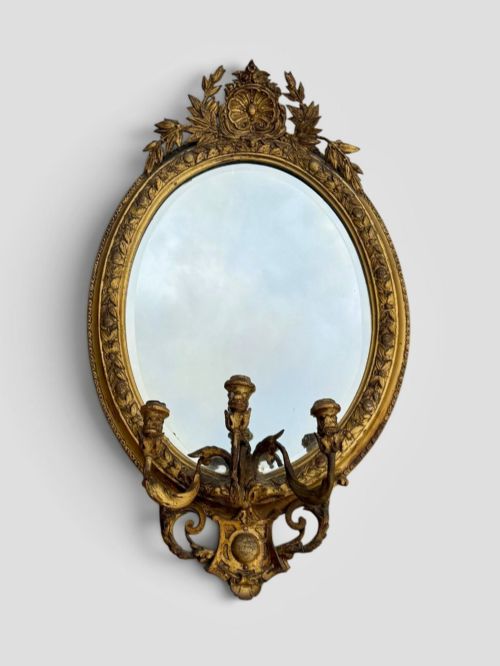
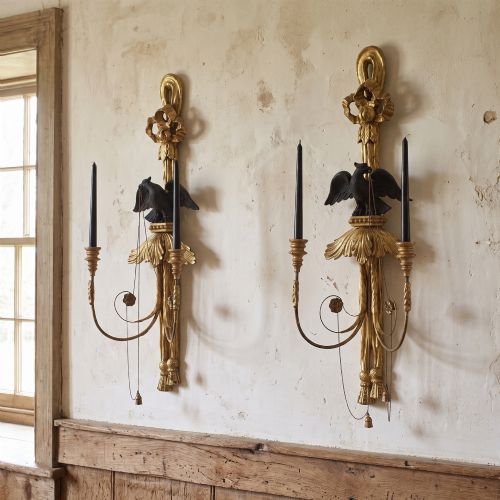
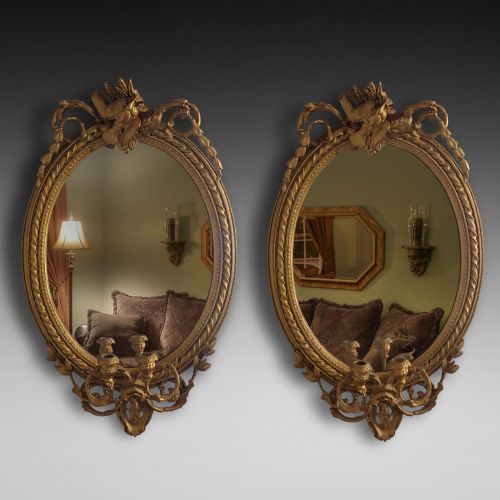
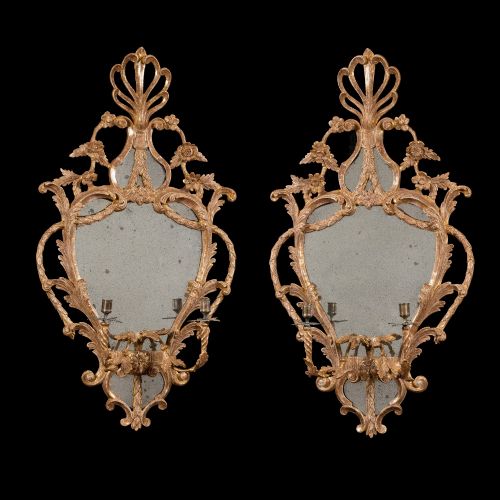
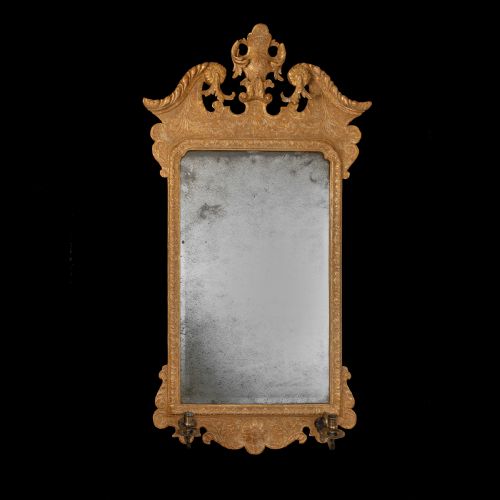
When you search for antique girandole wall sconces, you encounter wall-mounted lighting fixtures that integrate mirrors with candle branches. The forms span multiple eras, with Victorian and nineteenth-century interpretations appearing frequently alongside earlier Georgian and Regency designs. These objects function simultaneously as decorative mirrors and functional light sources for interiors.
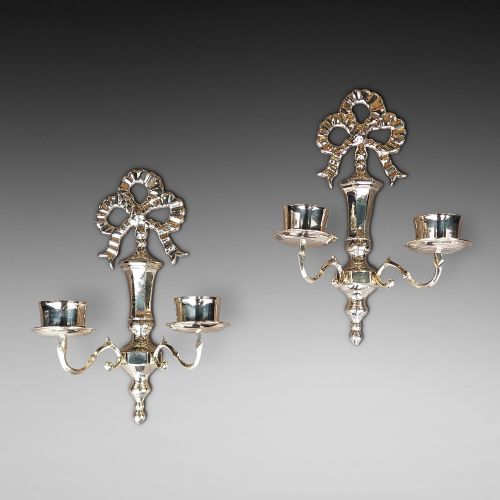
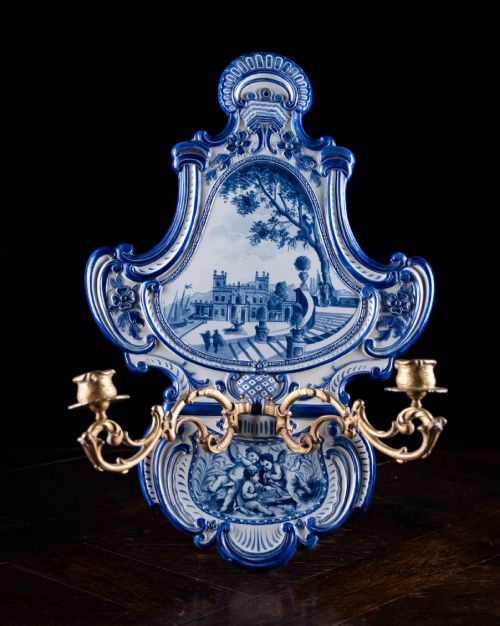
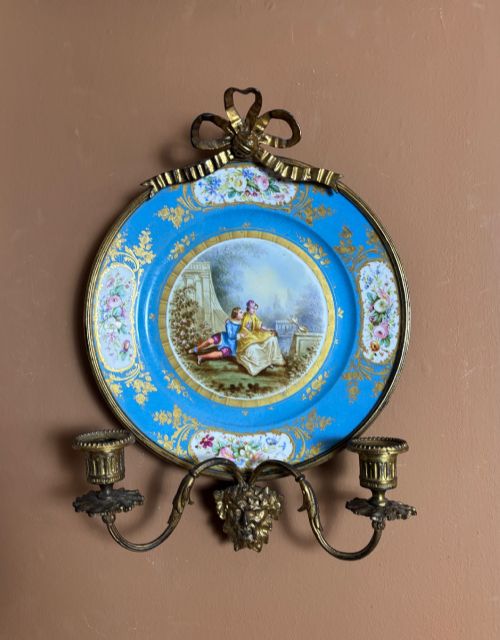
The inventory includes paired items alongside single wall fixtures, featuring materials such as giltwood, gesso, brass, and mirror glass. Stylistic influences range from Rococo Revival and Neoclassical to French Rococo and Arts and Crafts variations. Makers and workshops from different periods adapted these candle-bearing mirrors for residential spaces across Britain and Europe.
Materials and construction methods
Many pieces utilise carved wood, gesso, and applied gold leaf to create ornate frames around central mirror plates. Artisans shaped timber substrates before applying layers of gesso for fine relief decoration, subsequently gilding the surfaces with metallic leaf. Brass, bronze, and copper components form the structural candle arms and mounting brackets attached to the main body.
Glass production involved silvering convex or flat mirror plates to reflect interior candlelight effectively. Metal casting and chased ormolu techniques produced detailed branches and sconce pans designed to hold candles securely near the reflective glass surface.
Listings feature items spanning from the eighteenth century through the Edwardian era, incorporating materials like ebonised wood, porcelain, and mirror glass.
Assessing quality in antique girandole wall sconces
The crispness of the carved detail in the giltwood or gesso frame distinguishes finer examples from simpler production. Superior pieces exhibit deeply undercut foliage, scrollwork, or figurative elements executed by skilled hands rather than moulded substitutes.
The integrity of the original mercury or silvered mirror glass and the stability of the joined candle branches indicate higher craftsmanship. Quality is also evident in the harmonious proportion between the reflective plate and the projecting brass or bronze arms.
Cottier & Co.·Benjamin Goodison·Villeroy & Boch
The Antique Girandole Wall Sconces Glossary
- Girandole
- A branched wall-mounted candlestick often incorporating a mirror to multiply the reflected light. These fixtures typically feature one or more candle arms extending from the base of the frame.
- Giltwood
- Timber, commonly carved pine or gesso-coated wood, covered with a thin layer of gold leaf. This material provides the bright, reflective surfaces characteristic of many period frames.
- Gesso
- A mixture of gypsum or chalk and animal glue applied to wood frames to create a smooth surface for carving and gilding. It allows intricate relief ornamentation on wall mirrors and sconces.
- Convex mirror
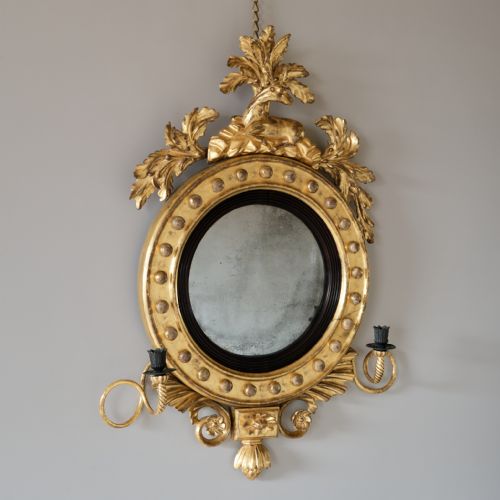
- A round mirror glass curved outward to provide a wide, distorted panoramic reflection of the room. Regency examples frequently pair this form with gilded frames and eagle crestings.
- Ormolu
- Gilded bronze or brass mounts applied to decorative objects and furniture. The technique involves treating metal with a gold amalgam to achieve a rich metallic finish.
Antique Girandole Wall Sconces: Frequently Asked Questions
What are antique girandole wall sconces?
These pieces are decorative wall lights that incorporate mirror plates to reflect and amplify candle illumination. They combine functional lighting hardware with ornate carved or moulded frames.
Craftsmen produced them in various regional styles, including French Rococo Revival, Regency, and Victorian designs, utilising materials like giltwood, brass, and porcelain.
How were girandoles used historically?
Historically, households positioned these fixtures on walls between windows or above mantelpieces to maximise ambient light from candles. The reflective glass helped brighten dimly lit rooms before the advent of electricity.
They served both as practical illumination devices and as status symbols demonstrating refined interior taste.
How do I hang a heavy antique sconce?
Hanging these items safely requires locating secure wall studs or using heavy-duty wall anchors appropriate for the weight of timber, gesso, and glass. The mounting bracket must support both the downward pull and the outward leverage of the candle arms.
Professional installation is often advisable for large giltwood or bronze pieces to ensure structural security.
How can I tell a Regency mirror from a Victorian one?
Regency girandoles frequently feature convex mirror plates, ebonised reeded inner bezels, and specific motifs like surmounted eagles or Neoclassical details. They date from the early nineteenth century and display restrained geometric or classical proportions.
Victorian pieces, particularly those from the revival periods, tend toward heavier ornamentation, asymmetrical Rococo scrolling, and more elaborate gesso work characteristic of later nineteenth-century manufacturing.