




Ornate Brass Wall Sconces
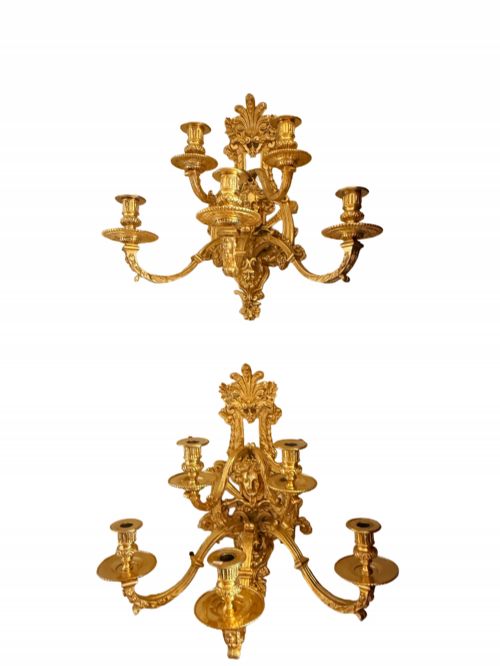
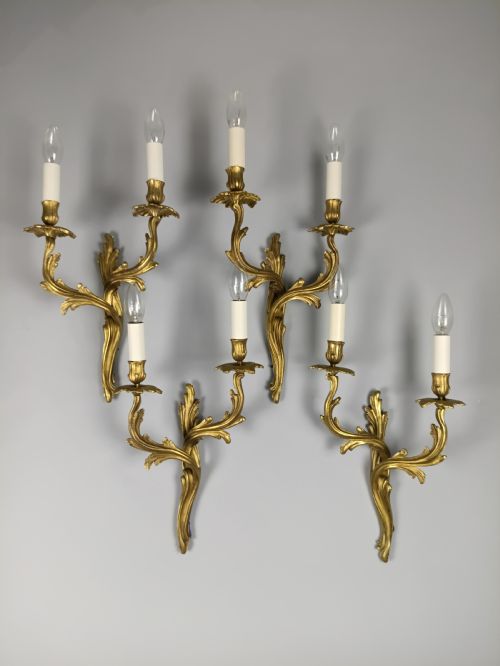
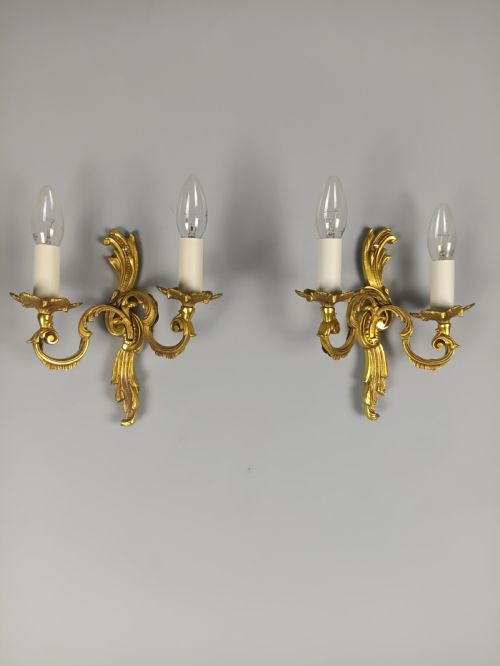
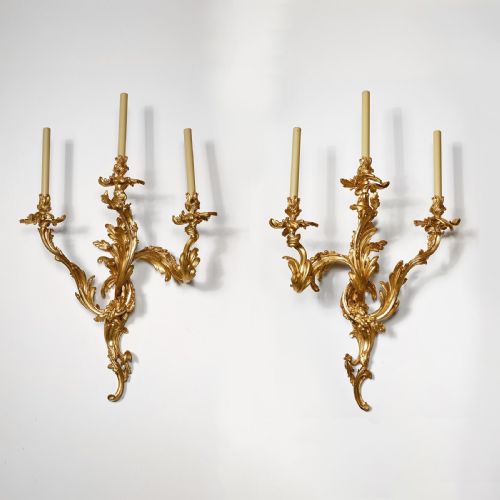
These ornate brass wall sconces bring warmth and decorative detail to a room, drawing the eye with their period forms and polished metal surfaces.
Ornate Brass Wall Sconces
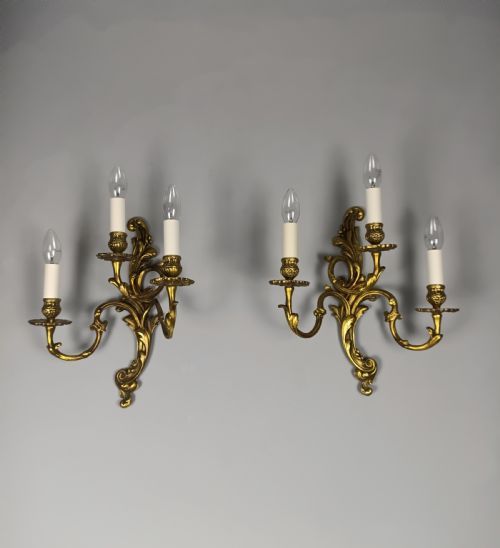
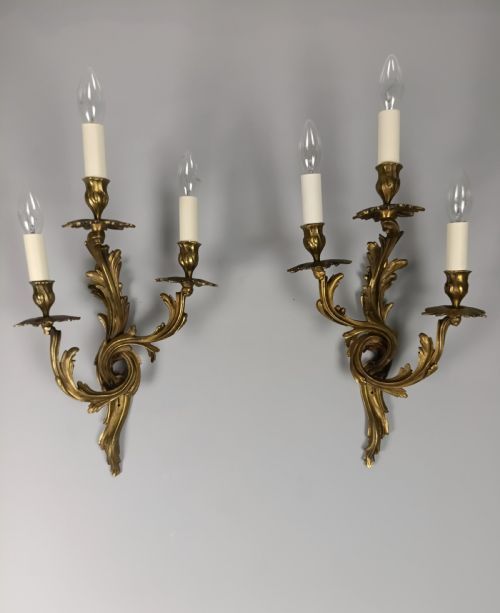
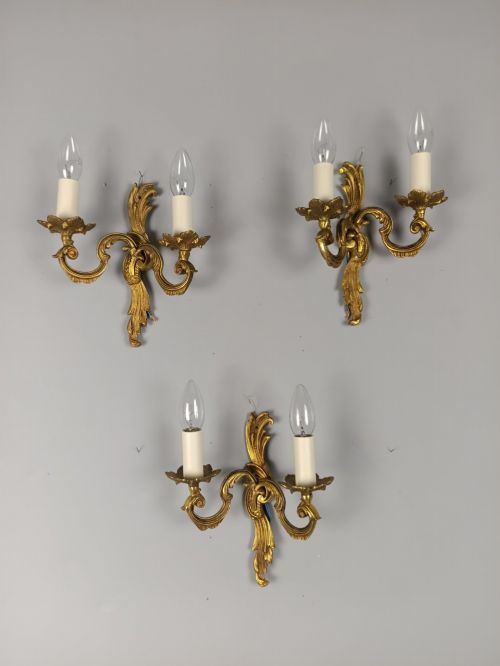
When you search for ornate brass wall sconces, you encounter lighting fixtures designed to mount directly onto interior walls, often taking the form of twin-arm or triple-arm candelabras. The examples found here date from the nineteenth century through the early twentieth century, with a strong representation of French output from around nineteen thirty.
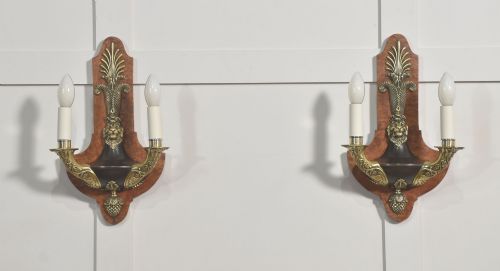
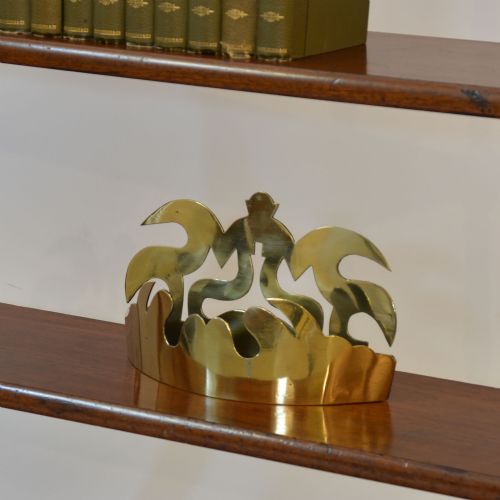
You will see styles drawing heavily on French Rococo, Louis XIV, and Empire traditions alongside Victorian British pieces. The forms range from simple twin-arm wall lights to large girandole mirrors and decorative wall pockets cast in metal.
How they were made
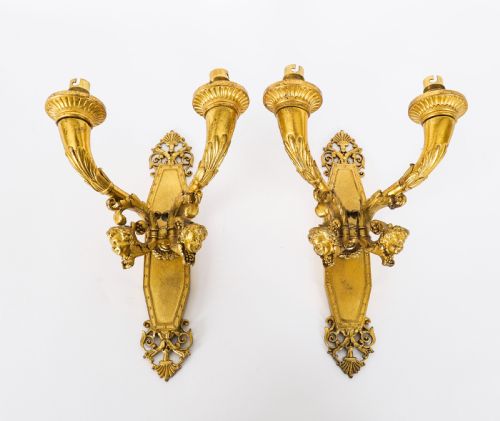
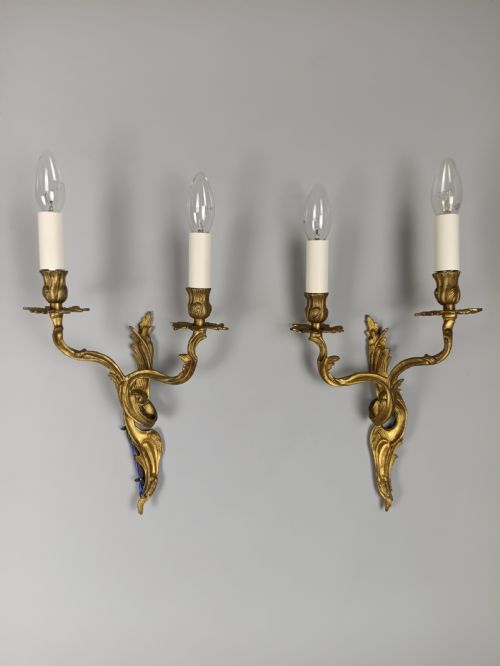
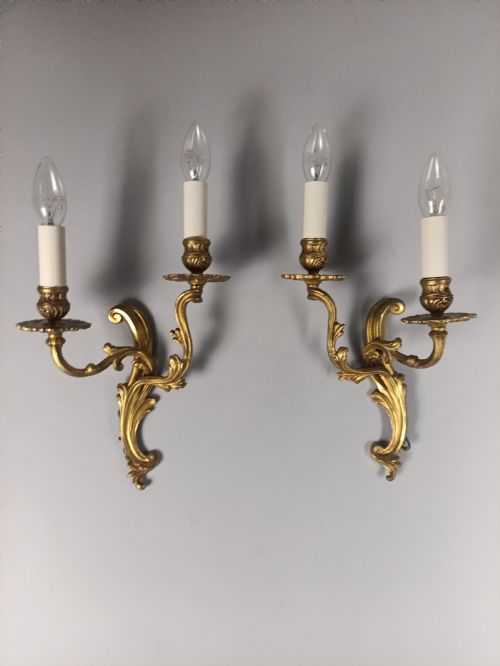
The primary construction relies on cast brass, bronze, and gilt metal, often finished with layers of gilding or ormolu to achieve a bright, reflective surface. Foundries shaped these metals through detailed casting techniques, capturing the sweeping scrollwork and asymmetrical curves typical of Rococo revival designs.
Many of these wall lights incorporate glass elements, such as crystal drops or mirrored backing plates that amplify the candlelight or early electric illumination. Metal components are joined mechanically or soldered, with arms branching out from central backplates designed to secure the fixture firmly to the wall.
Ornate Brass Wall Sconces Retail Price Guide 2026
Typical asking prices for ornate brass wall sconces among the pieces listed under this phrase on Sellingantiques today, from the lower quarter to the upper quarter. They describe what is for sale here now, not the wider market.
Some ornate brass wall sconces even incorporate cheeky cast cherubs peering out from beneath the candle arms.
What varies in quality
The distinction between standard production and finer pieces lies in the crispness of the metal casting and the depth of the chasing work. Superior examples display sharp relief in ornamental motifs like acanthus leaves and ribbons, whereas simpler items show softer, shallower detailing.
The quality of the surface finish also plays a major role, with genuine fire-gilt ormolu and heavy gilt bronze retaining a richer lustre than later painted or electroplated metal finishes. Heavier gauge metalwork ensures structural stability across multi-branch sconces.
The Ornate Brass Wall Sconces Glossary
- Ormolu
- A technique of applying finely ground high-carat gold to a bronze object. It creates a rich golden finish that resists tarnishing over decades.
- Girandole
- A decorative wall bracket bearing candles or lights, frequently paired with a mirror. The glass backing serves to reflect and multiply the available light in a room.
- Rococo Revival
- A nineteenth-century design movement inspired by eighteenth-century French styles. It is characterised by asymmetrical C-scrolls, shell motifs, and naturalistic floral elements.
- Appliqué
- A French term often used interchangeably with wall sconce. It refers to a decorative lighting fixture mounted flat against the vertical surface of a wall.
- Wall Pocket
- A decorative vessel fixed to a wall for holding items like dried flowers or letters. In metalwork, these often feature ornate cast crowns or floral scrollwork.
Ornate Brass Wall Sconces: Frequently Asked Questions
How do I install antique wall sconces?
Many surviving sconces arrive rewired and ready for installation by a qualified electrician, who will mount them securely to standard wall junction boxes.
Heavier multi-branch models require robust wall anchors to support the weight of the cast metal and any added glass or crystal elements.
Were these sconces originally wired for electricity?
Most pieces from the nineteenth and early twentieth centuries were originally designed for candles or gas before being converted for modern electrical use.
This conversion process typically involves running internal wiring through the hollow cast arms to hold small candle-tube lamp holders.
How do I clean gilded brass wall lights?
Dusting gently with a soft, dry brush or microfibre cloth is the safest way to maintain the surface without disturbing the delicate gilt layer.
Avoid abrasive metal polishes and chemical cleaners, as these can strip away the original gilding or ormolu finish entirely.
How can I tell French styles from Victorian ones?
French pieces frequently display lighter, more fluid Rococo curves and rich gilt bronze or ormolu surfaces reflecting courtly design revivals.
Victorian British wall lights tend to utilise heavier brass castings with more robust, symmetrical ornamentation suited to period domestic interiors.