
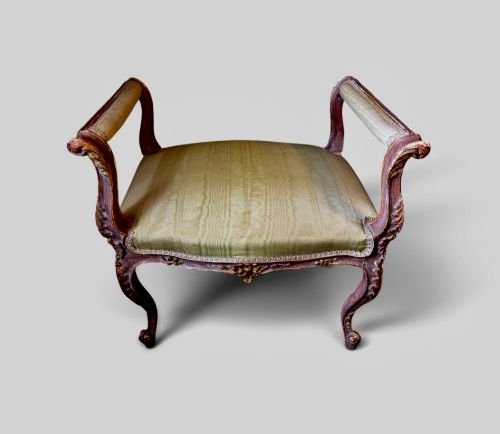
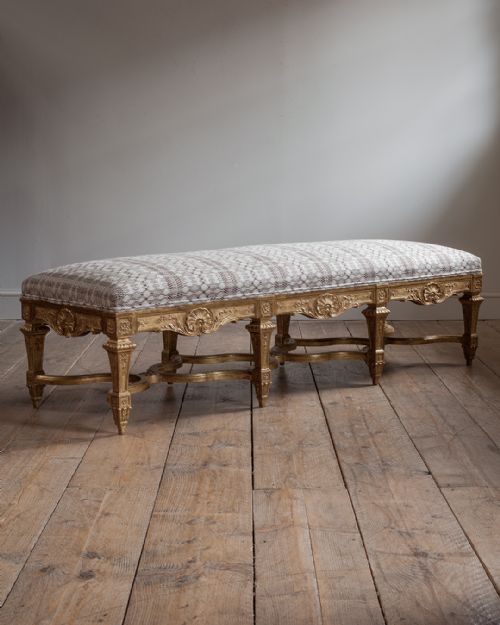
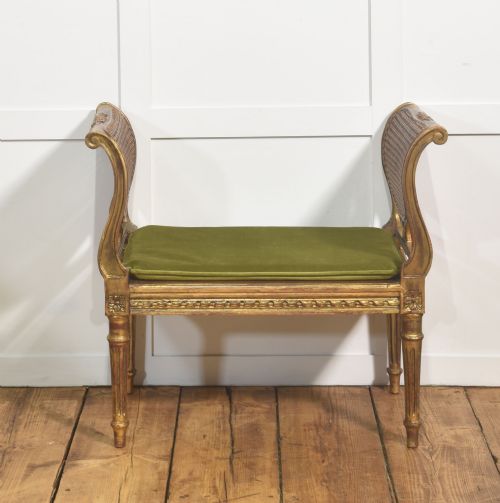
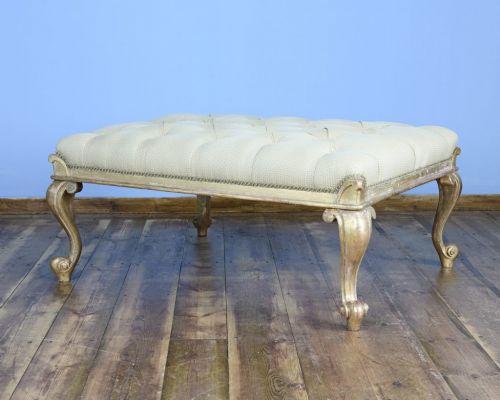



Antique Giltwood Stool
An antique giltwood stool brings warmth and carved detail into a room, offering a seat or footrest finished in gold leaf.
Antique Giltwood Stool
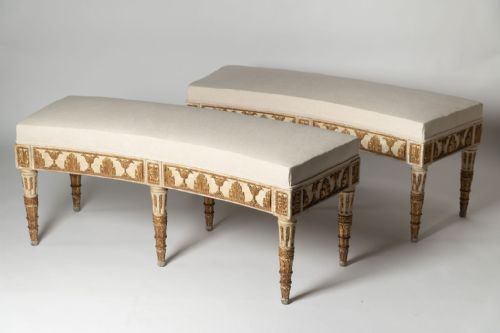
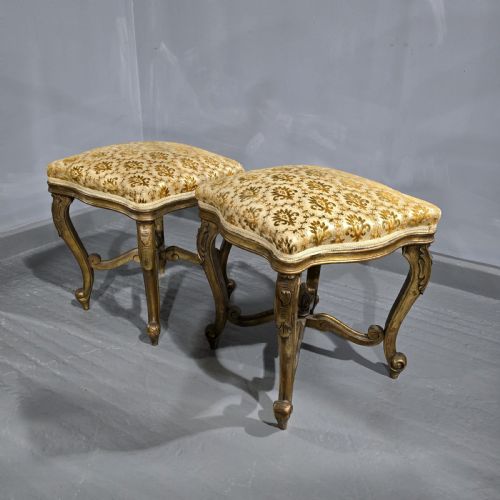
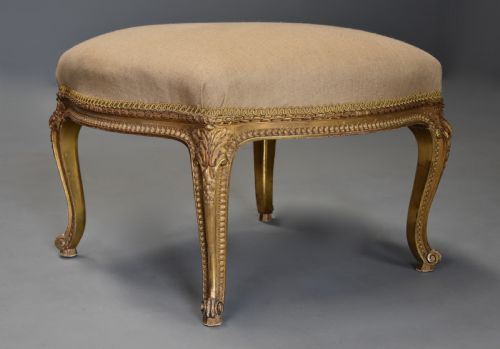
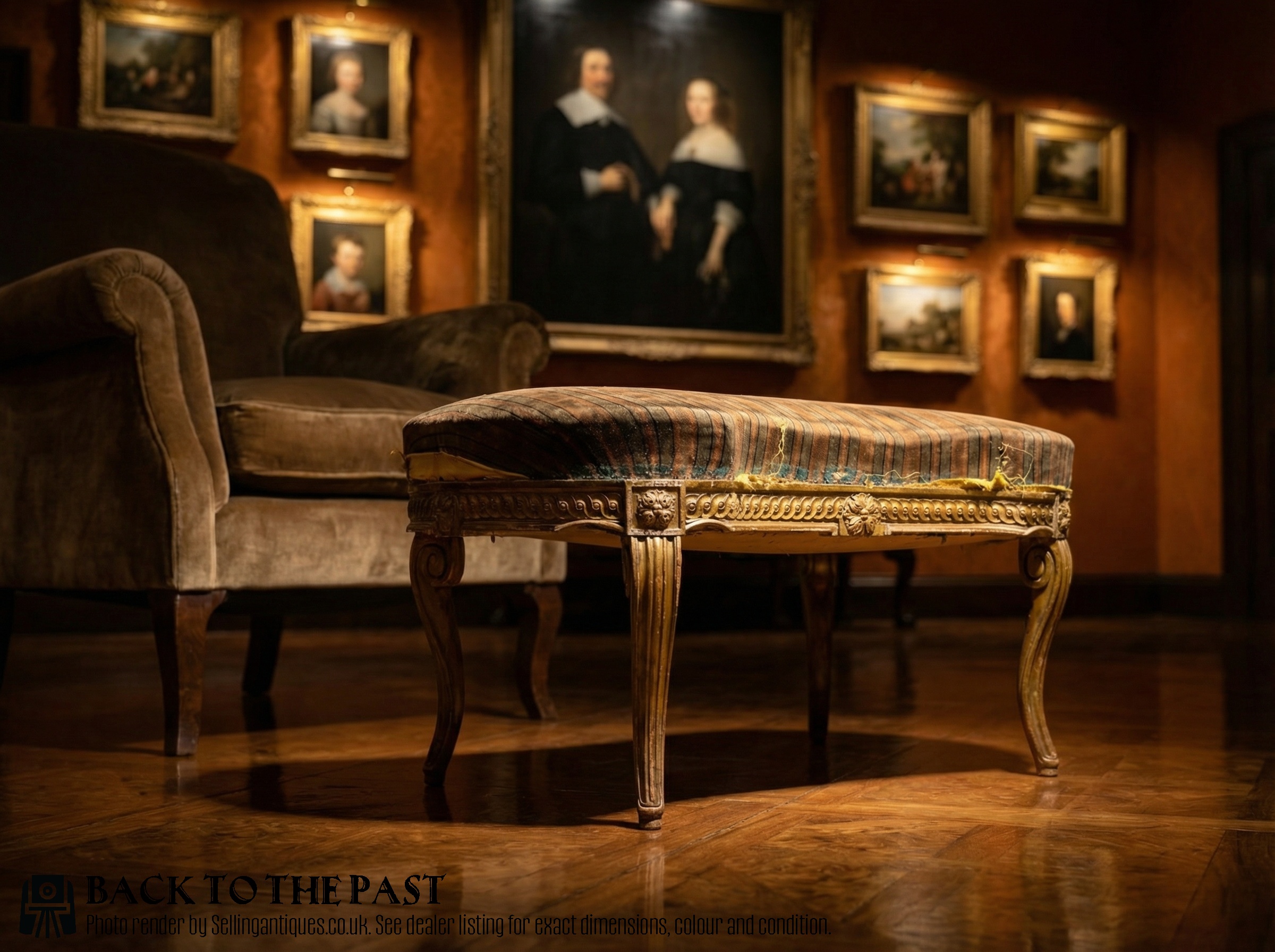
An antique giltwood stool encompasses footstools, window seats, duet stools, and larger centre pieces designed for formal rooms. These seats appear in French, Italian, and English styles, often following Louis XVI, Rococo Revival, or Neoclassical designs.
Buyers meet nineteenth-century examples most frequently on this page, alongside pieces from around nineteen hundred and the early twentieth century. Forms range from low footstools to grand scale window seats and adjustable piano stools.
The selection includes pairs of carved stools alongside single pieces, reflecting the diverse seating arrangements used in historic drawing rooms and parlours.
Timber, gesso, and gilding
Maker's workshops built these frames from timber and wood, applying layers of gesso to smooth the surface before adding gold leaf or gilt paint. Hand carving shapes the scrolling foliage and decorative moulding seen across the styles.
Upholstery completes the piece, utilising fabrics such as velvet, silk, and general textiles for the seat pads. Deep buttoning and cane work appear on specific window seats and footstools.
The inventory spans French, Italian, and English origins, covering styles from Empire to Rococo Revival.
Carving depth and finish
The depth and crispness of the hand carving separate standard pieces from finer examples, as sharp floral motifs and clean lines indicate skilled cabinet work. Maker stamps or attribution to known workshops add historical interest to specific items.
The preservation of the original gilt surface matters, noting how well the gold leaf adheres to the gesso and wood underneath. The quality of the underlying timber frame and the traditional upholstery materials also determine the standing of each piece.
Loidrault Freres Paris·Miles and Edwards·A M E Fournier
The Antique Giltwood Stool Glossary
- Giltwood
- Wood that has been decorated with gold leaf or gilt paint. This finish creates a bright metallic appearance on the carved frames.
- Gesso
- A plaster mix applied to wood surfaces to prepare them for gilding. It provides a smooth base for intricate carving.
- Curule stool
- An ancient Roman X-frame seat design revived in later periods. These cross-legged stools often feature gilt decoration.
- Window seat
- An elongated stool designed to sit beneath a window. These pieces often feature arms and upholstered tops.
- Parcel gilt
- A technique where only certain parts of the wooden object are highlighted with gold leaf. The remaining surface shows painted or natural wood.
Antique Giltwood Stool: Frequently Asked Questions
Where should I place a gilt stool?
These stools suit drawing rooms, bedrooms, or hallways as occasional seats or footrests beneath windows.
Their decorative frames allow them to stand alone as ornamental pieces when not in use for seating.
How do I identify a French style stool?
French styles display classical motifs like fluted legs, acanthus leaves, and symmetrical cartouches.
They often follow Louis XVI or Rococo Revival designs with carved giltwood frames.
What is a duet stool?
A duet stool provides a wider seat intended for two people to sit together.
These pieces frequently appear alongside piano seating or in large reception rooms.
Are these stools comfortable for daily use?
Many pieces feature padded tops with velvet or silk upholstery for sitting or resting feet.
Historic padding varies in firmness compared to modern seating.