


Antique Giltwood Chair Pair
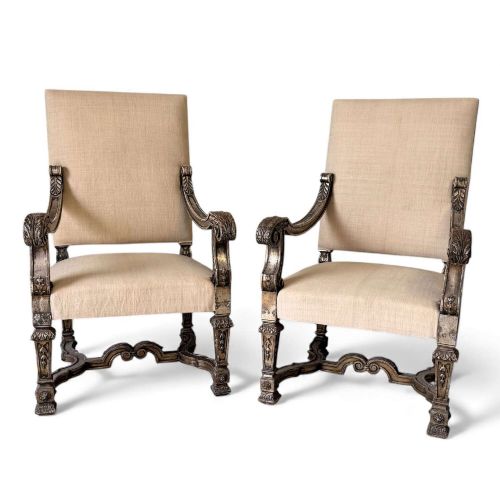
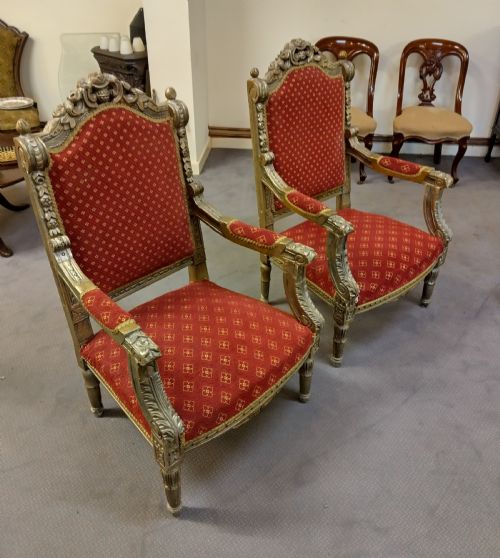
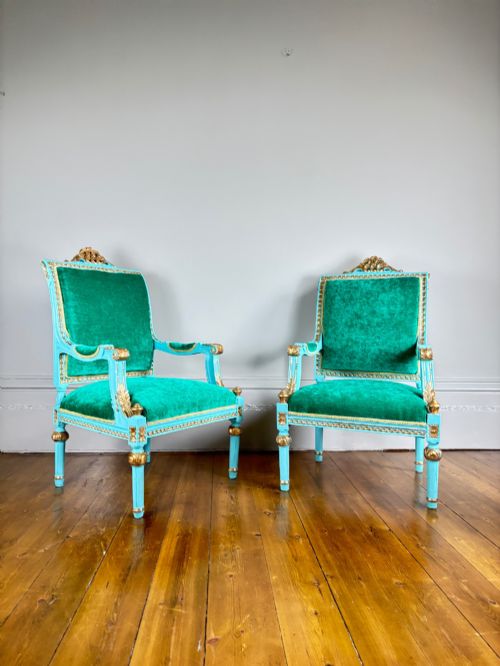
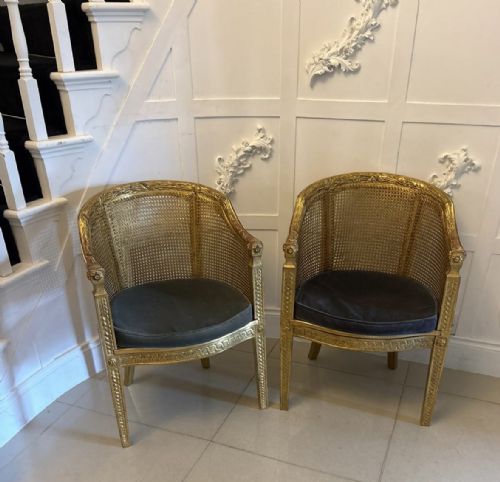
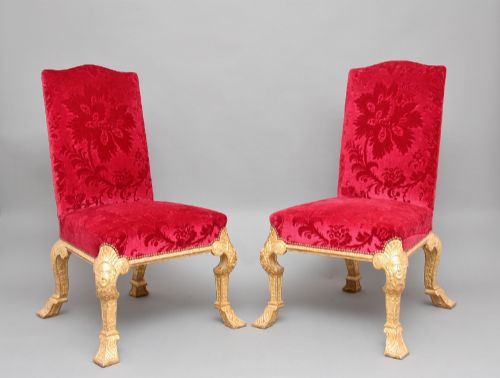
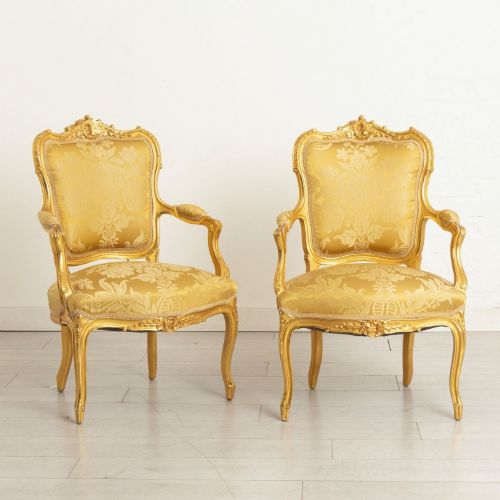
An antique giltwood chair pair brings brilliant nineteenth-century French and Italian carving into a room, offering matched seating with gilded surfaces.
Antique Giltwood Chair Pair
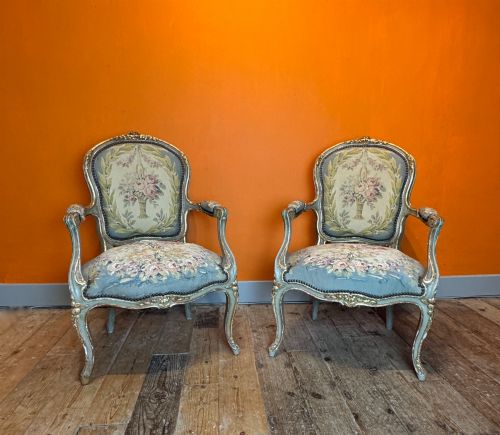
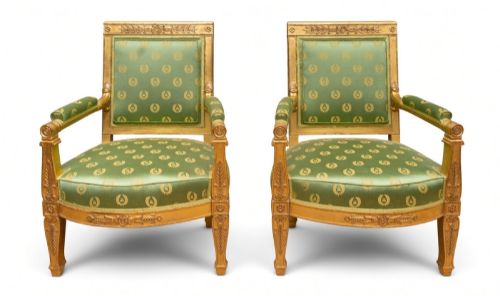
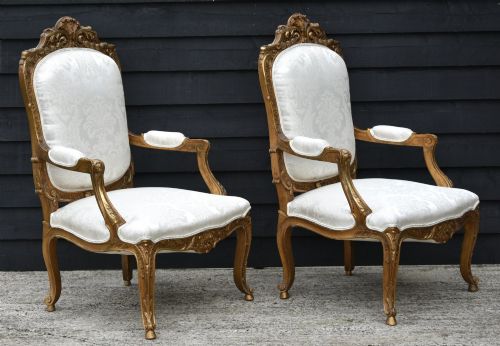
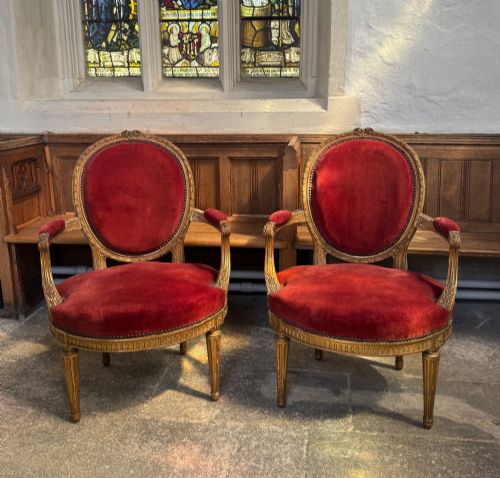
When you search for an antique giltwood chair pair, you encounter matched pairs of seating constructed primarily during the nineteenth and early twentieth centuries. These pieces span formal armchairs, salon chairs, and side chairs influenced by French and Italian design traditions.
The selections on this page lean heavily towards nineteenth-century French examples, particularly those referencing Louis XVI and Louis XV revivals. You will also find Italian Neoclassical pieces and occasional English Regency interpretations.
Most items function as decorative salon seating, boudoir chairs, or imposing throne armchairs rather than everyday dining furniture. Their matched nature makes them well-suited for framing a fireplace or placing symmetrically against a drawing room wall.
Materials and construction methods
Maker workshops relied on foundational timbers such as beech and general hardwoods, carved thoroughly before receiving their surface finish. The primary visual characteristic is the application of gold leaf or gilt finish over a prepared gesso layer on wood.
Upholstery methods varied from traditional horsehair stuffing secured with webbing to silk fabric, velvet, tapestry, and occasional cane work. Later restorations often feature newly applied silk or patterned textile coverings while retaining the antique timber frames.
Several pairs include silk fabrics featuring decorative parrot designs, adding an unexpected flash of exotic avian pattern to traditional French frames.
Factors influencing the grade of the work
The crispness and depth of the wood carving dictate the visual success of the piece, separating standard decorative production from deeply articulated sculptural frames. Finely detailed acanthus leaves, fluted legs, and scrolls reflect higher levels of craftsmanship in the workshop.
The integrity and application of the gilding surface also alter the character of the object, alongside the historical authenticity of the underlying timber frame and joinery. Pieces bearing documented maker attributions or surviving original tapestry upholstery command distinct attention.
Jacob-Desmalter·Holland & Sons
The Antique Giltwood Chair Pair Glossary
- Giltwood
- Timber that has been coated with gold leaf or a metallic gilt finish over a gesso base. This technique creates a luminous, reflective surface characteristic of formal European seating.
- Fauteuil
- An open-armed upholstered armchair originating in France, typically featuring exposed wooden framing around the back and arms. It provides lighter proportions than a closed-panel armchair.
- Bergere
- A closed-arm upholstered armchair with padded sides, often featuring exposed wooden rails and a loose seat cushion. These designs emphasise comfort alongside formal elegance.
- Rococo Revival
- A nineteenth-century design movement resurrecting the asymmetric curves, scrolling foliage, and shell motifs of the eighteenth-century French court. It appears frequently in salon chair frames.
- Gesso
- A plaster-like mixture applied to timber frames to provide a smooth, absorbent base for laying gold leaf. The quality of this preparatory layer affects the brilliance of the final gilt surface.
Antique Giltwood Chair Pair: Frequently Asked Questions
What is an antique giltwood chair pair used for?
These matched chairs served primarily as decorative salon seating, boudoir chairs, or formal reception pieces in nineteenth-century interiors. They were designed to impress visitors and create symmetry within formal drawing rooms.
Today, buyers place them in living spaces, hallways, or bedrooms where their gilded frames function as focal points rather than heavy everyday seating.
How do I tell Louis XVI style from Louis XV style?
Louis XV style chairs feature flowing, asymmetrical curves, cabriole legs, and organic rococo shell motifs. The lines are soft and undulating without rigid symmetry.
Louis XVI style introduces neoclassical restraint, characterised by straight fluted legs, rectangular or oval backs, and symmetrical geometric carvings inspired by antiquity.
Are these chairs comfortable to sit in?
Comfort varies depending on the specific form, ranging from upright open armchairs to deeply padded boudoir and bergere seats. Many nineteenth-century examples were built for formal posture rather than lounging.
Upholstery specifications also influence the seating experience, with modern re-upholstered versions often offering softer support than surviving historic stuffing.
How should I care for giltwood surfaces?
Giltwood requires gentle treatment to protect the delicate gold leaf and underlying gesso from abrasion and moisture. Dusting should be performed softly with a dry, lint-free cloth without chemical polishes.
Keeping the chairs away from direct sunlight and fluctuating humidity prevents the timber framework from shifting and preserves the metallic finish.