
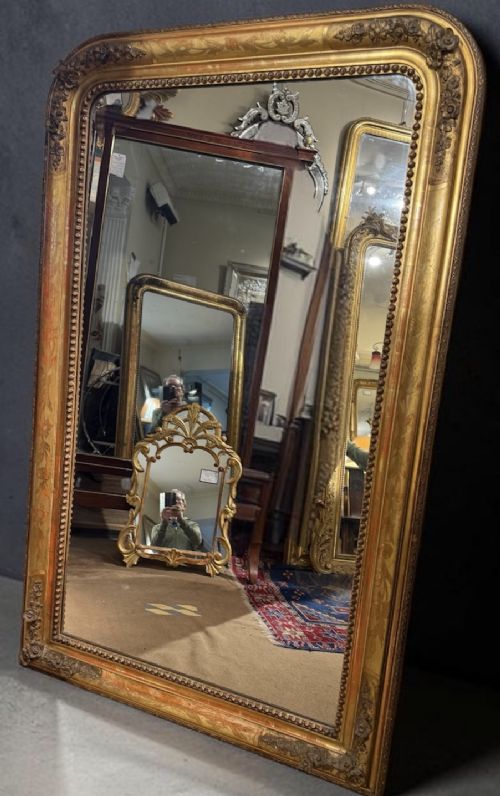
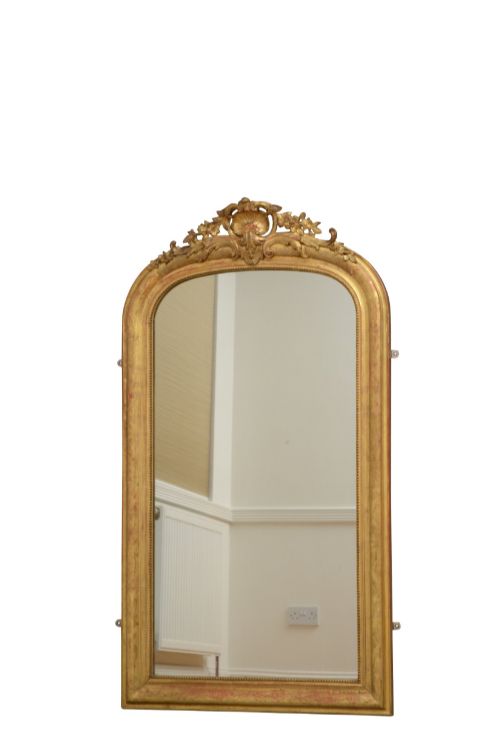
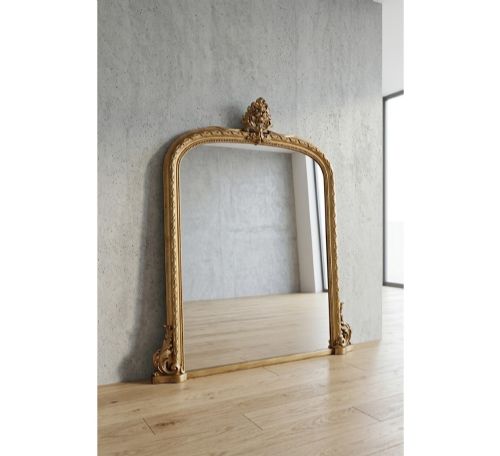
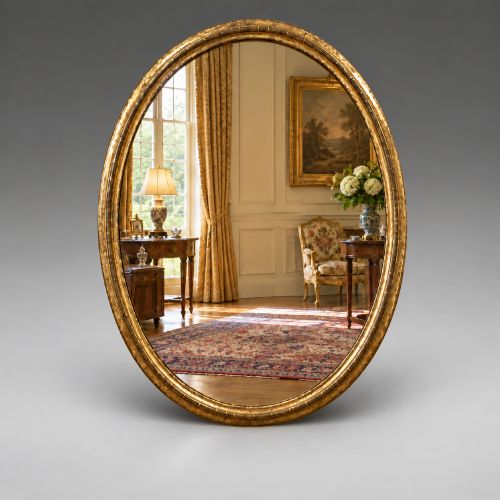
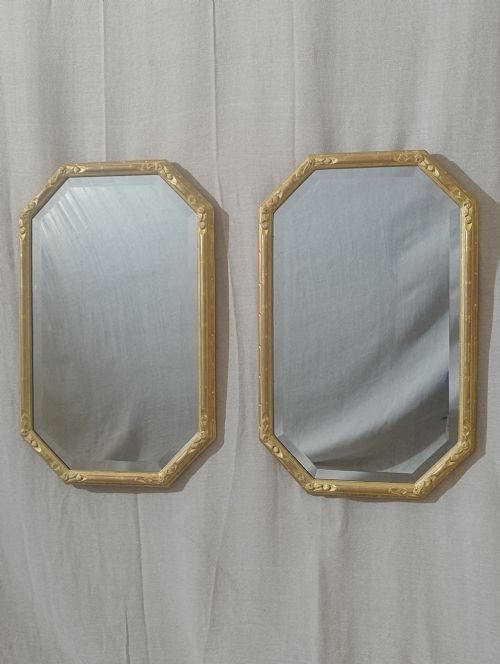
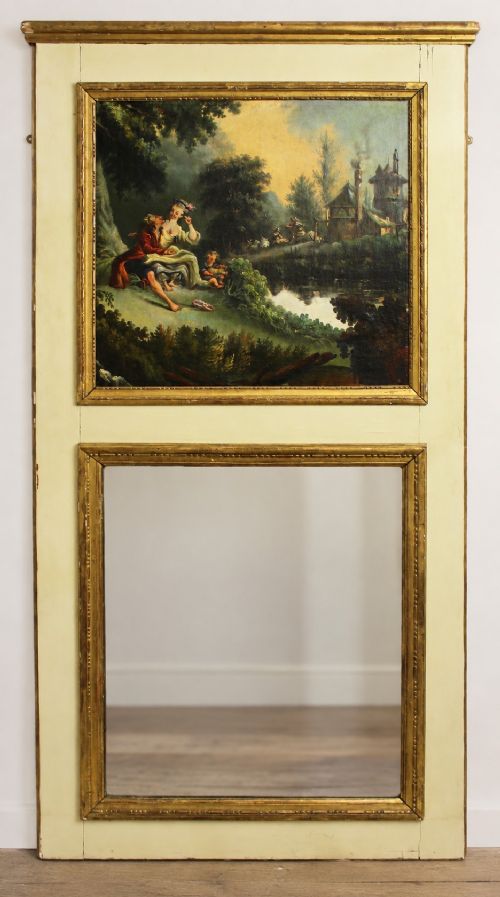
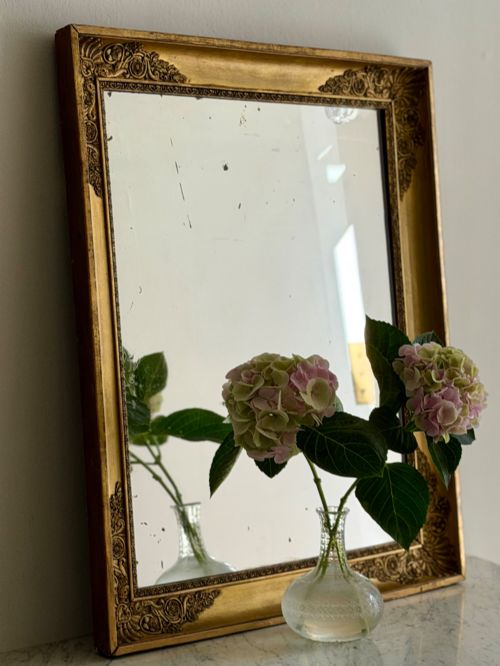
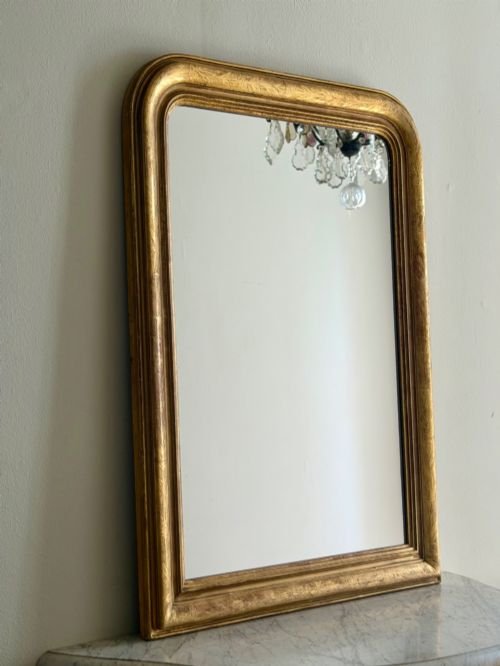
Antique Gilding Mirror
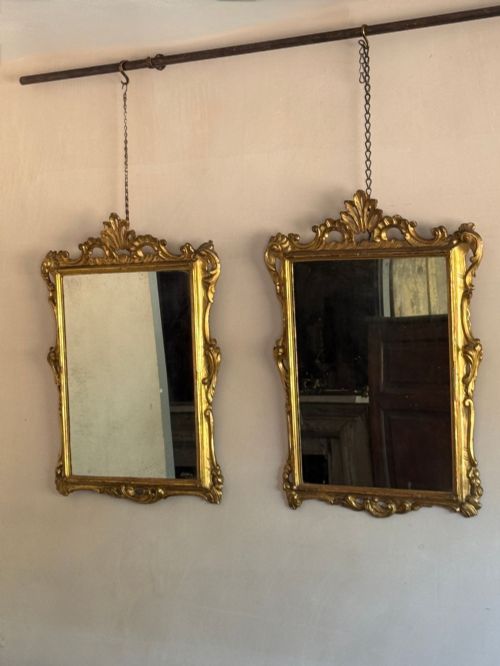
An antique gilding mirror brings reflective depth and metallic warmth to a room, drawing the eye with gilded frames of carved wood, gesso, and composition.
Antique Gilding Mirror
An antique gilding mirror functions primarily as a decorative wall or overmantel piece, designed to bounce light around a interior space while anchoring a room's decorative scheme. The pieces available here span from the 18th century through the Victorian era and into the early 20th century, representing both English and continental European traditions.
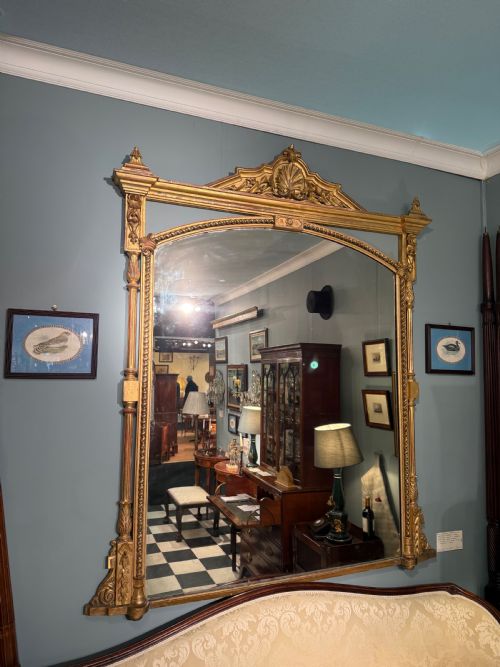
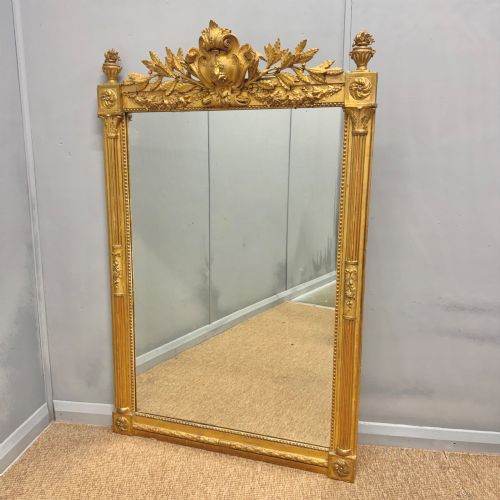
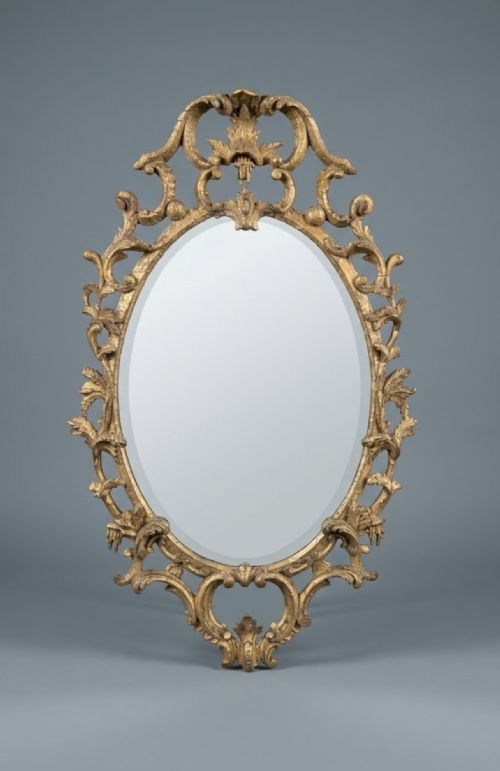
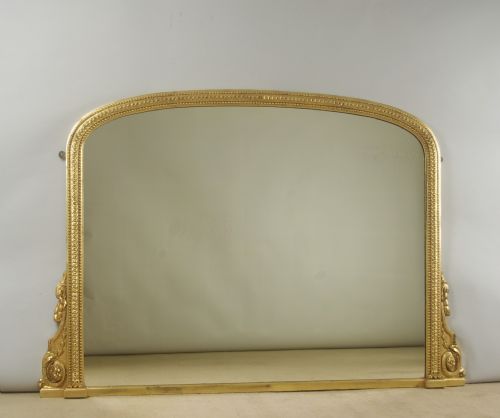
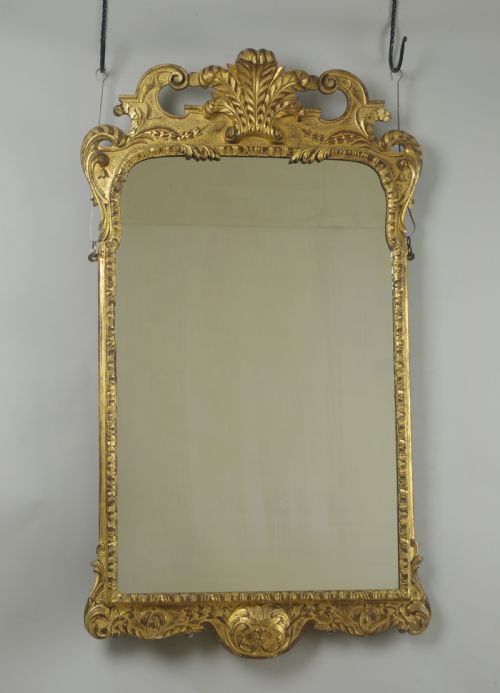
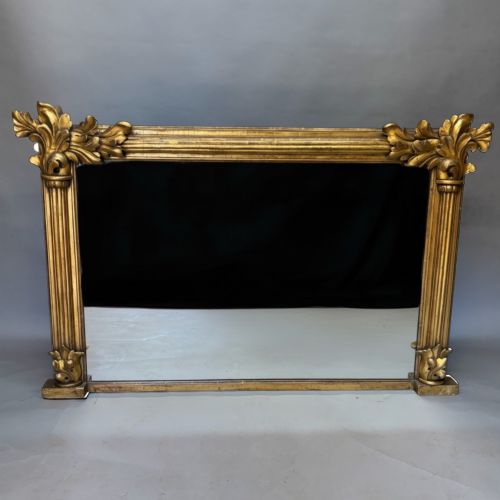
Buyers will most frequently encounter substantial overmantel mirrors and tall wall mirrors dating from the 19th century, often displaying styles such as Regency, Rococo Revival, or Florentine carving. These range from intimate oval frames to monumental architectural pieces intended to sit above fireplaces or console tables.
Beyond standard wall mirrors, the selection includes specialised forms such as convex mirrors surmounted by eagles, pier glasses, and twin-arm girandoles fitted with candle sconces. Each object type carries the distinct stylistic vocabulary of its period, from clean Georgian mahogany outlines to exuberant French Second Empire and French Chateau ornamentation.
How they were made
Traditional frames rely on a foundation of carved timber, frequently pine or hardwood, upon which layers of gesso are applied to build up intricate relief details like acanthus leaves and floral scrolls. Composition, a malleable mixture of whiting, resin, and glue, is often pressed into moulds and applied over the carved wood to create crisp, repeatable ornamental motifs.
The finishing process involves applying gold leaf or liquid gilding directly onto the prepared surface, sometimes over a coloured bole base that adds warmth to the metallic sheen as wear occurs over time. Glass plates, including antique mirror glass and bevelled mirror plates, are then secured into the finished frame, historically backed with wooden boards.
Listings span periods from the 18th century through the Victorian era, utilising materials like giltwood, gesso, and original mirror glass in styles including Regency and Florentine.
What varies in quality
Quality rests significantly on the depth and crispness of the hand-carved elements versus the repetitive uniformity of moulded composition ornaments. Finer examples display sharp undercut carving in the wood and gesso, whereas lesser pieces rely heavily on thick, brittle composition that tends to chip and obscure underlying detail.
The integrity of the gilding and the preservation of the original glass plate also dictate the standing of a piece within its period. Rich application of gold leaf over carefully prepared boles retains a luminous depth that flat modern metallic paints or degraded secondary layers simply cannot replicate.
The Antique Gilding Mirror Glossary
- Giltwood
- Wood that has been coated with gold leaf or a gold-colored finish. This technique provides a durable, reflective surface that defines traditional luxury furniture.
- Gesso
- A plaster-like mixture applied to wood frames to create a smooth surface for gilding or to build up low-relief ornamentation. It allows artisans to carve intricate details before applying gold leaf.
- Overmantel mirror
- A large mirror specifically designed to hang on the wall directly above a fireplace mantel. These pieces were often proportioned to match the architectural scale of the hearth below.
- Girandole
- A decorative wall mirror featuring attached candle sconces or arms. The candle holders reflect flickering light against the glass and gilded frame to brighten dark rooms.
- Pier glass
- A tall, narrow mirror designed to be hung on the pier, the solid wall space situated between two windows. They make efficient use of natural light in high-ceilinged historic interiors.
Antique Gilding Mirror: Frequently Asked Questions
Where should I hang an overmantel mirror?
An overmantel mirror traditionally sits centrally above a fireplace mantelpiece, anchored securely to the wall to support its substantial weight. It works best when its width mirrors or stays slightly narrower than the mantel shelf below.
Positioning the glass at this height allows the mirror to capture and reflect light from opposing windows, effectively brightening the entire living space.
How do I identify a Regency period mirror?
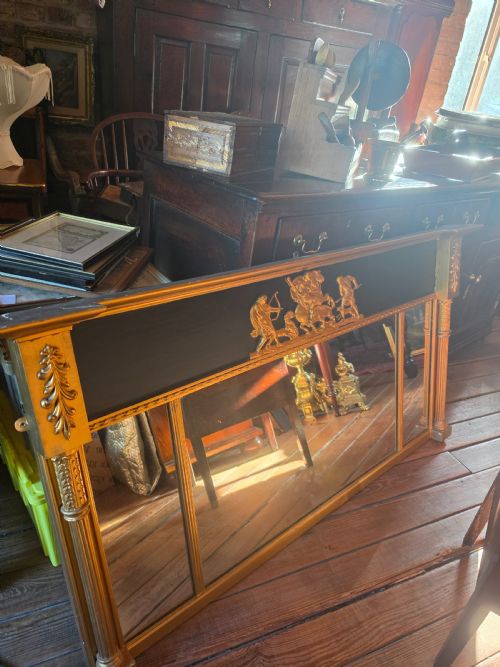
Regency mirrors typically date from the early 19th century and often incorporate classical architectural motifs such as reeded columns, ball-stud frames, and prominent crests. Convex circular mirrors with eagle finials and side candle arms are also classic hallmarks of this decorative era.
Look for refined proportions, classical restraint, and specific construction methods like early backboards and hand-beveled glass plates to confirm the period.
Can heavy antique mirrors be hung safely?
Hanging a heavy antique mirror safely requires locating solid wall studs or utilising heavy-duty wall anchors rated well above the weight of the frame and glass. Many large overmantel and pier mirrors were originally designed to rest part of their weight on a mantel or console table while being secured to the wall above.
Consulting a professional installer ensures that the hanging wire, D-rings, and wall fixings distribute the substantial load securely without straining the antique wooden frame.