


Antique Geometric Dresser
An antique geometric dresser brings together sturdy timber and meticulous applied moulding from the seventeenth century and its later revivals.
Antique Geometric Dresser
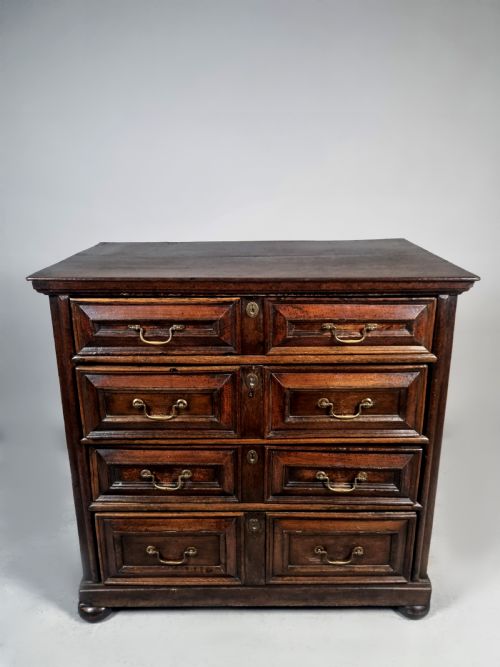
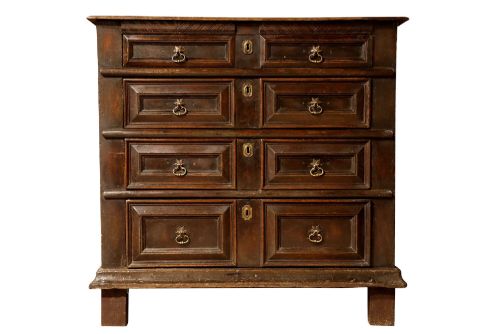
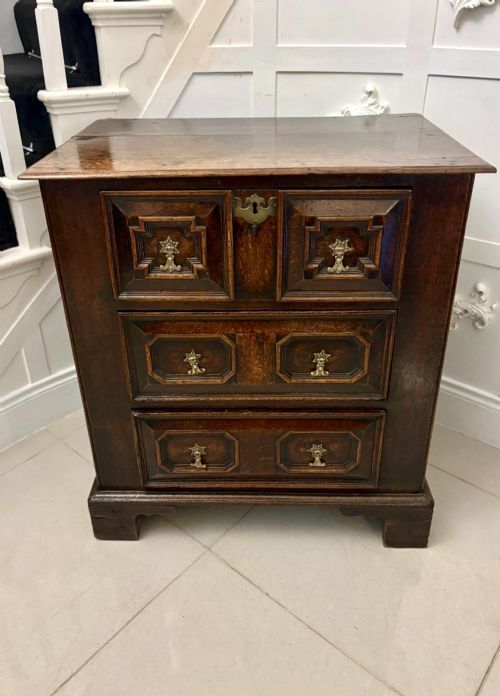
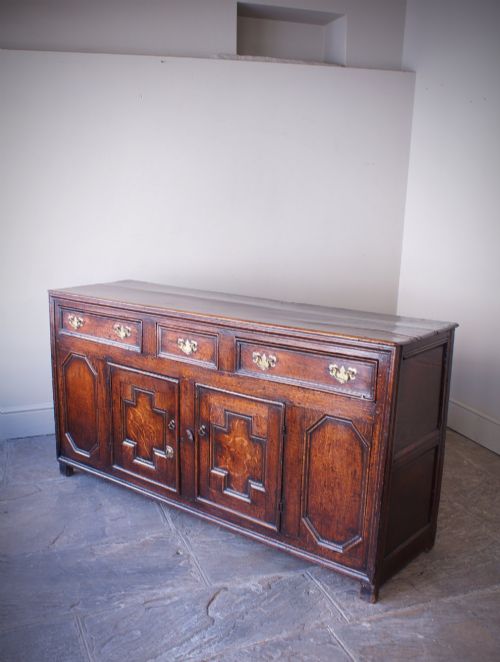
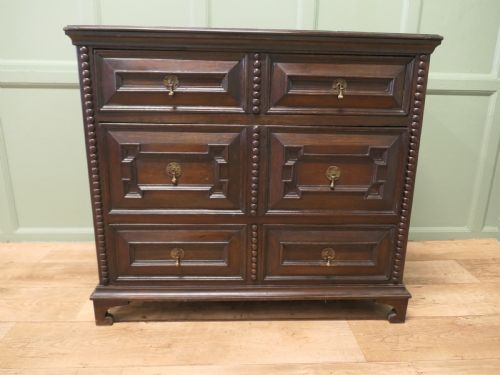
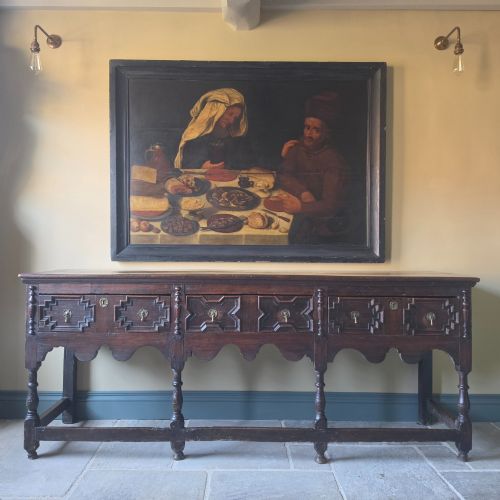
When you search for an antique geometric dresser, you encounter heavy oak and walnut storage furniture defined by panels and applied mouldings. These pieces primarily span the seventeenth century, alongside Georgian examples and later revivals from the Edwardian era and the nineteen-twenties.
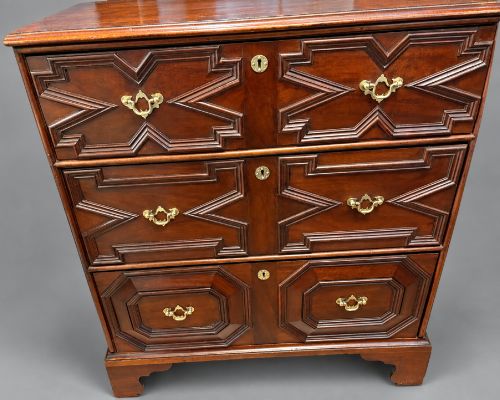
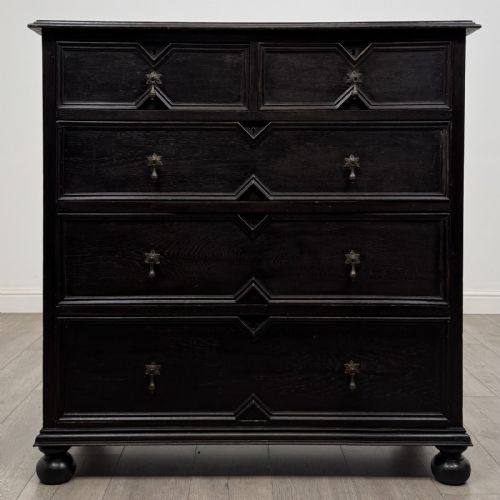
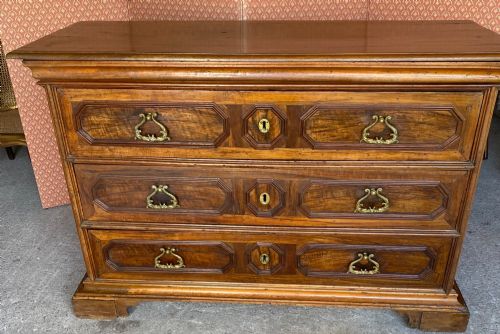
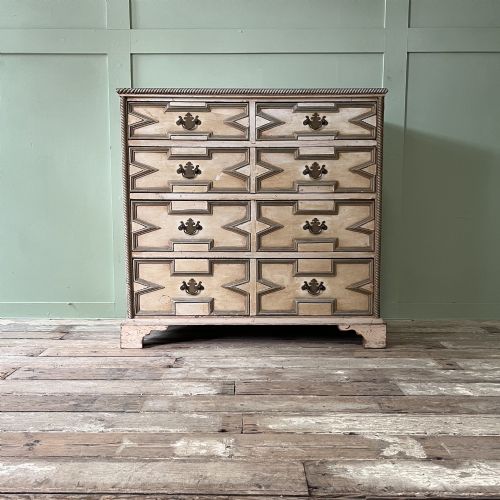
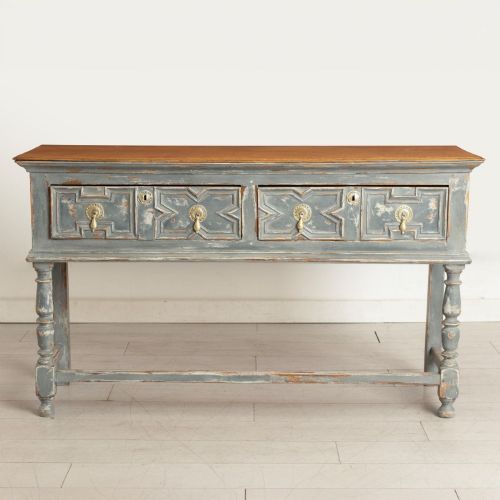
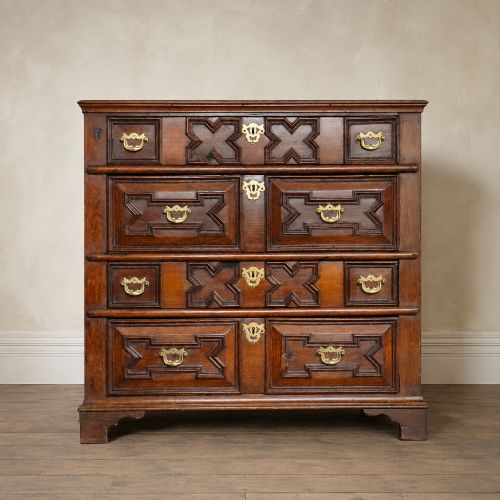
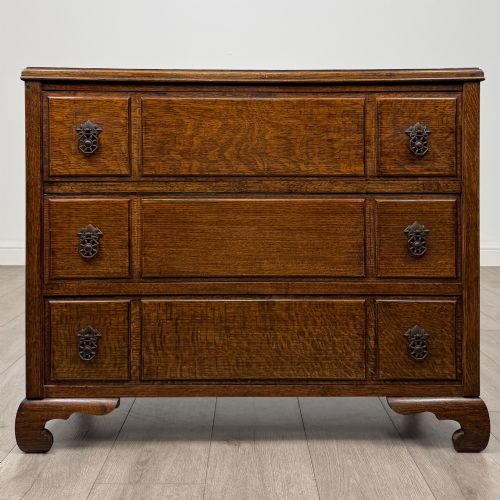
The form typically manifests as a low dresser base, a chest of drawers, or a sideboard with characteristic moulded geometric fronts. Seventeenth-century English and Charles II periods dominate the selection, often featuring deep drawer configurations constructed for utility.
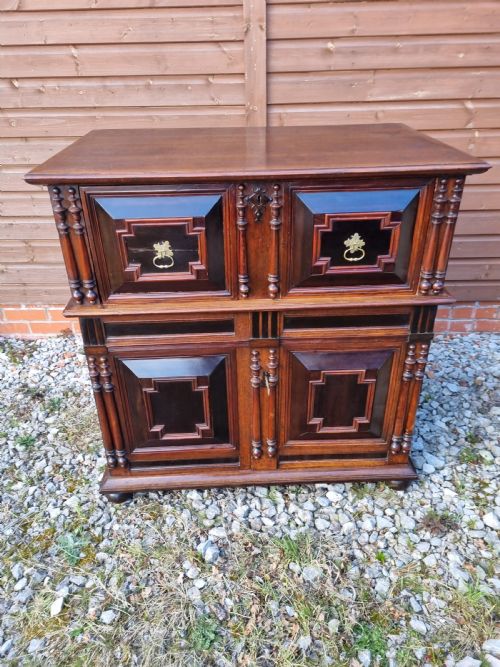
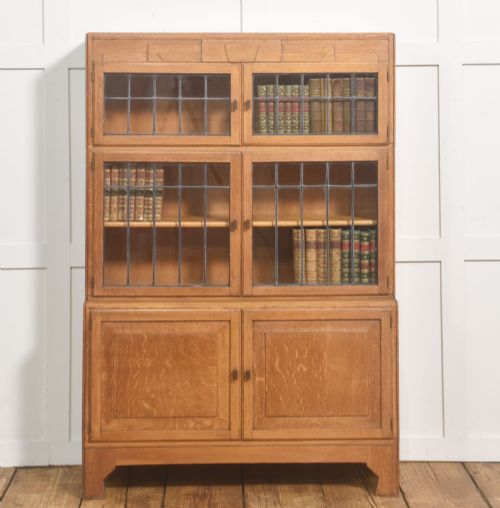
You will also find related forms like bookcases and cupboards sharing the same characteristic surface ornamentation. These items originate from English workshops as well as continental makers, utilising regional timbers to achieve distinct structural silhouettes.
How they were made
Carpenters constructed these pieces predominantly using solid oak and walnut, frequently combining the two timbers on drawer fronts to create contrasting tones. Iron hardware, brass drop handles, and lead accents provided functional strength and decorative contrast to the timber.
Applied geometric mouldings were individually shaped and pinned onto drawer faces and panels to form intricate octagonal and rectangular patterns. Surfaces were often finished with traditional paints, limed treatments, or left as polished wood to display the natural grain.
Antique Geometric Dresser Retail Price Guide 2026
Typical asking prices for geometric dresser among the pieces listed under this phrase on Sellingantiques today, from the lower quarter to the upper quarter. They describe what is for sale here now, not the wider market.
Several seventeenth-century chests conceal secret drawers designed to outwit household pilferers.
What varies in quality
The integrity of the applied geometric mouldings largely distinguishes finer examples from simpler provincial work. Precision in the mitred joints and the survival of original brass or iron hardware determine the piece's integrity.
The choice of timber grain, particularly the pairing of walnut with oak, indicates the ambition of the original workshop. Depth of colour and the condition of the underlying timber structure dictate how well the piece has aged.
Sir Clough Williams-Ellis·August Ungethüm·Heals of London
The Antique Geometric Dresser Glossary
- Geometric moulding
- Applied strips of timber shaped in repeating patterns such as octagons or rectangles on drawer fronts. This technique defined seventeenth-century case furniture.
- Dresser base
- A lower sideboard or cabinet surface without the upper plate racks traditionally associated with country dressers. These serve as sturdy sideboards or serving tables.
- Block front
- A cabinet front divided into three vertical sections, where the outer sections project forward and the centre recedes. This provides a pronounced sculptural profile.
- Raised gallery
- An elevated wooden rim attached to the top surface of a chest or sideboard. It prevents objects from sliding off the rear edge.
Antique Geometric Dresser: Frequently Asked Questions
How do I date an antique geometric dresser?
Examine the construction methods, timber choice, and the profile of the applied mouldings. Seventeenth-century examples typically display hand-riven oak with pegged joints and walnut veneering.
Later revivals from the Edwardian period or around nineteen hundred often reveal machine-sawn timber and standardised hardware fixings. Comparing the drawer linings and backboards helps confirm whether the piece belongs to the Charles II era or a later interpretation.
Where were these pieces originally placed?
These pieces functioned primarily as storage and display furniture within the principal rooms of large houses. Dresser bases and sideboards stood in dining spaces for serving food and storing linens.
Chest of drawers and cupboards were placed in bedchambers to hold clothing and valuables. Their robust construction suited daily domestic service across centuries of use.
Are walnut and oak combined on authentic pieces?
Makers frequently paired oak carcases with walnut drawer fronts during the seventeenth century to create subtle colour contrast. This combination highlights the geometric moulding patterns effectively.
When inspecting these items, check that the timber species align with period workshop practices. Continental and English makers both utilised mixed timbers for decorative emphasis.
How do I care for antique oak furniture?
Maintain a stable room temperature away from direct heat sources to prevent the solid timber from splitting. Apply traditional beeswax sparingly to nourish the oak and walnut surfaces.
Avoid synthetic polishes that build up residue over the applied geometric mouldings. Gentle dusting with a soft, dry cloth preserves the natural patina developed over hundreds of years.