

Antique Gateleg Drop Leaf
These antique gateleg drop leaf tables offer clever folding surfaces and sturdy timber frames designed to expand living spaces with ease.
Antique Gateleg Drop Leaf
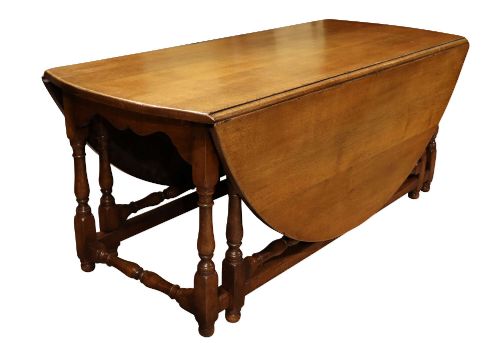
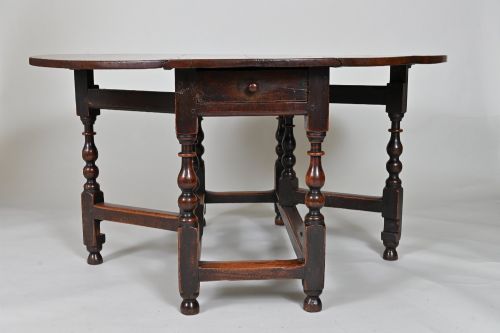
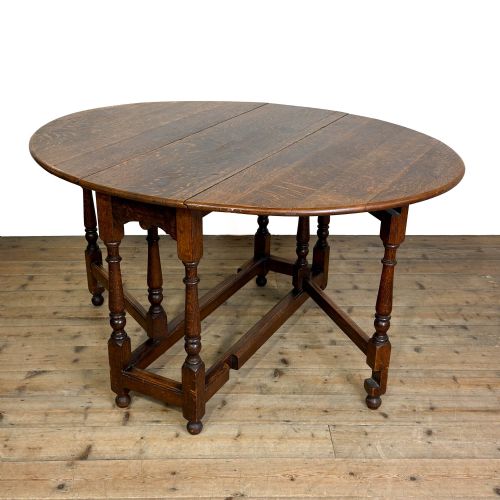
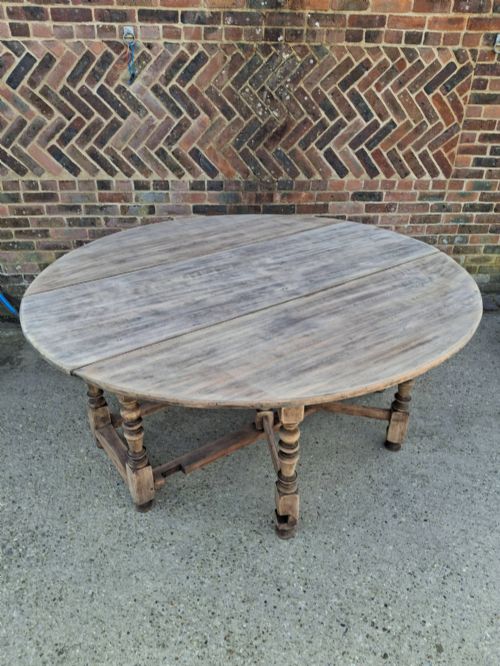
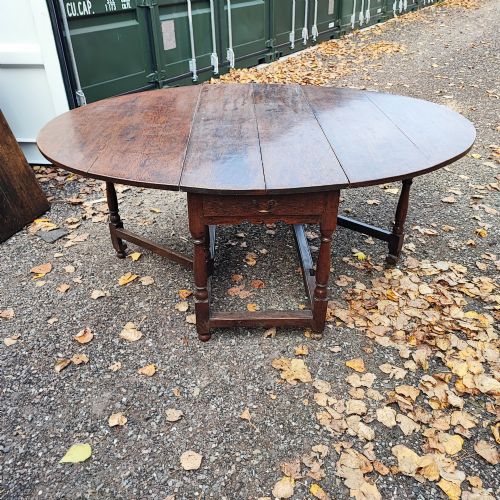
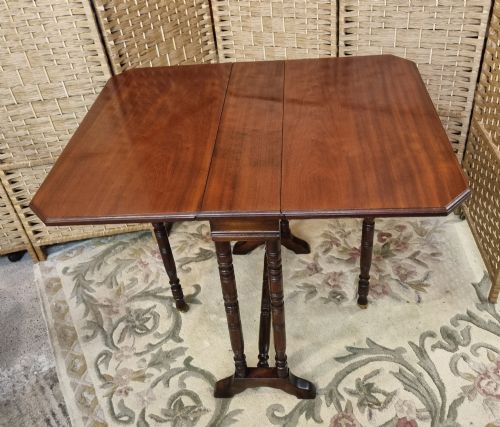
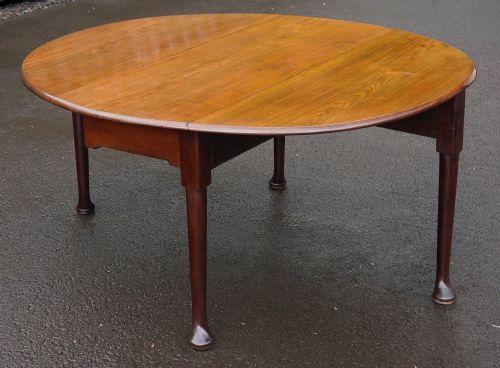
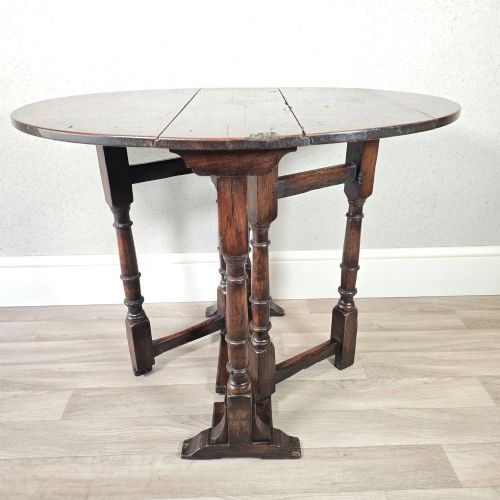
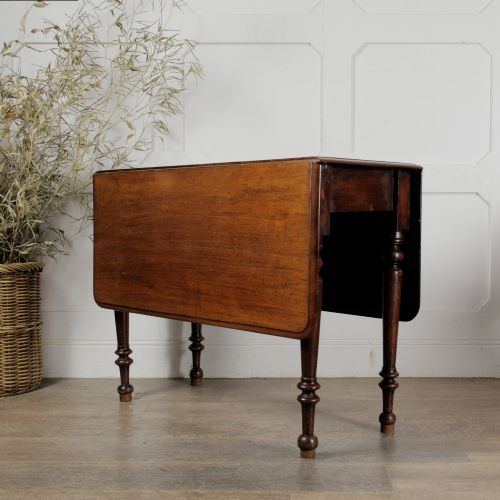
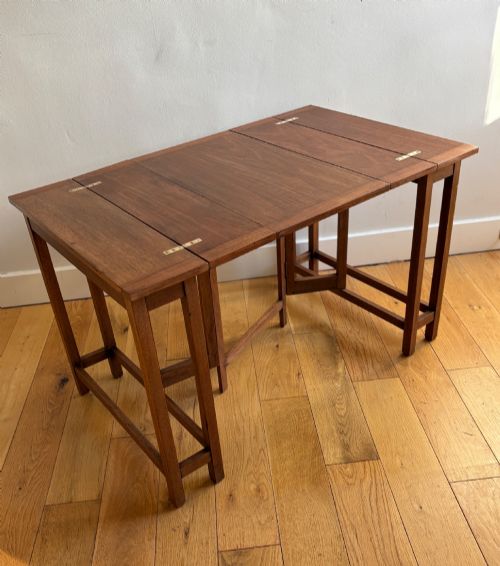
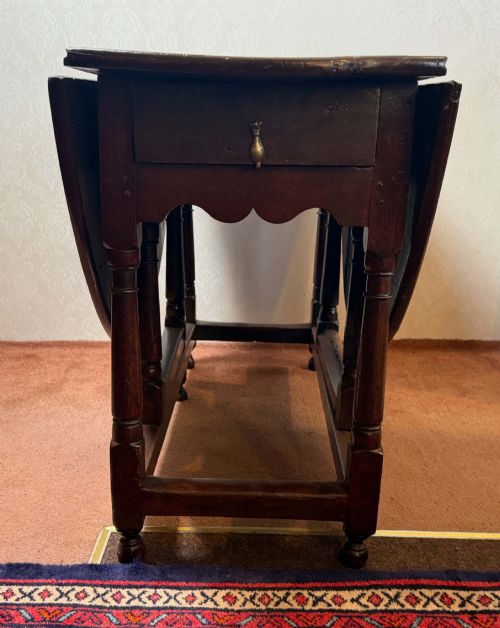
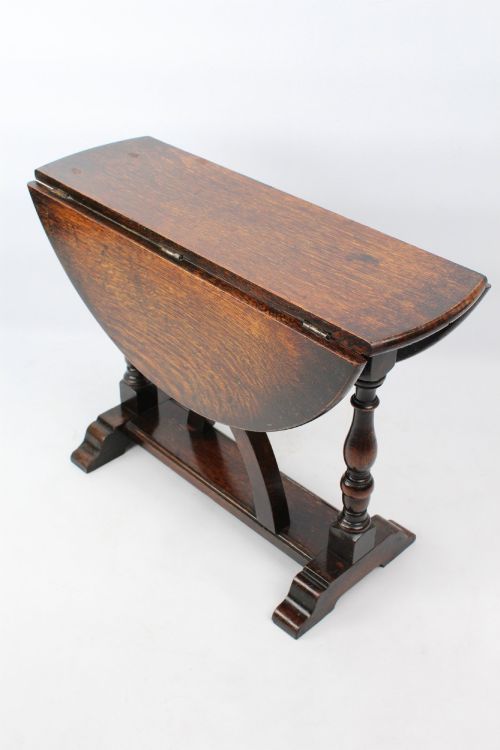
An antique gateleg drop leaf table combines a fixed central top with hinged flaps supported by swing-out legs. This clever configuration allows the furniture to expand for dining or fold down tightly against a wall when floor space is required.
The pieces appearing on this page span several centuries, including seventeenth-century examples, eighteenth-century Georgian designs, and later revivals from the Victorian and Edwardian periods. Oak and mahogany dominate the selection, appearing across dining tables, occasional tables, and compact tea tables.
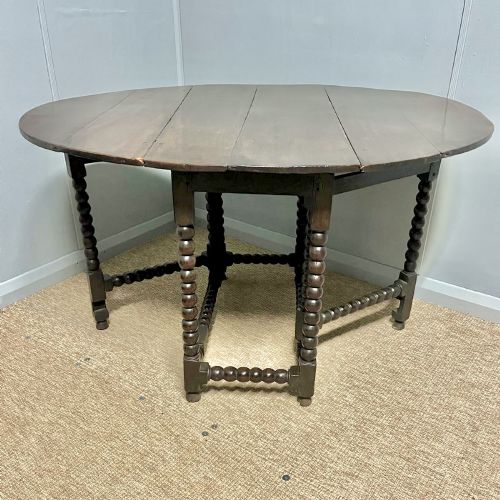
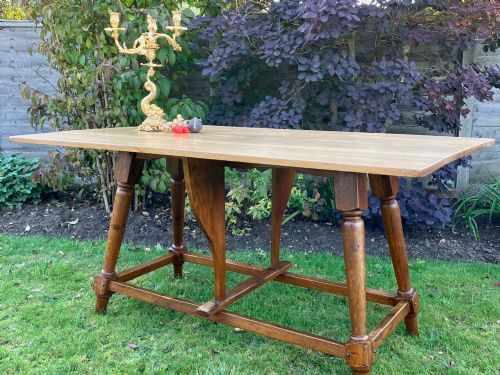
Buyers will encounter substantial six-leg dining tables alongside smaller proportional formats suited for side placement. Regional English country craftsmanship sits alongside formal Georgian interpretations featuring sophisticated timber figures.
Materials and Construction
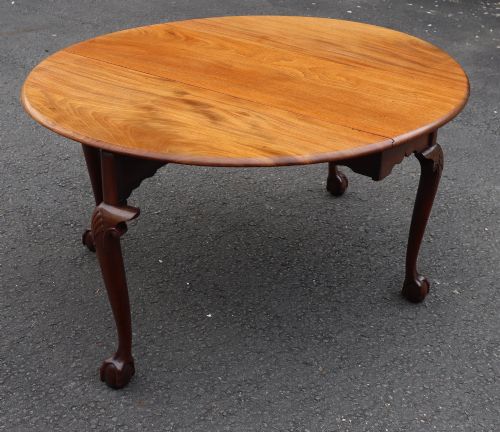
Joiners relied primarily on solid oak during the seventeenth and early eighteenth centuries, employing pegged mortise and tenon joints to secure the heavy framing. Later Georgian and Victorian makers turned increasingly to mahogany and walnut, utilising rich cabinet timbers for formal dining and tea tables.
Structural integrity depends on the swinging gatelegs, which must support the weight of the drop leaves without sagging at the hinges. Turning techniques such as barley twists, bobbin turning, and plain chamfering shaped the vertical supports across different eras.
Antique Gateleg Drop Leaf Retail Price Guide 2026
Typical asking prices for gateleg drop leaf among the pieces listed under this phrase on Sellingantiques today, from the lower quarter to the upper quarter. They describe what is for sale here now, not the wider market.
Some seventeenth-century gatelegs feature hidden compartments tucked beneath the central frame for storing small valuables.
Distinctions in Quality
The refinement of the timber selection dictates much of the visual appeal, separating ordinary utilitarian boards from finely figured walnut or richly patinated oak. Original surfaces with genuine warmth and depth command greater appreciation than stripped or overly modernised timber.
Mechanical precision in the folding mechanism and the stability of the gateleg action determine daily usability. Superior examples maintain tight joints and smooth pivoting movement across the hinges without relying on modern timber replacements.
The Antique Gateleg Drop Leaf Glossary
- Gateleg table
- A table with hinged leaves supported by one or more legs that swing outward like a gate. This design provides robust support for folding flaps.
- Drop leaf
- A hinged section of a table top that can be lowered when not in use. It allows the overall footprint of the furniture to change rapidly.
- Patina
- The surface sheen and colour developed by aged wood through handling, waxing, and exposure to light over centuries. A desirable finish shows depth rather than uniform flatness.
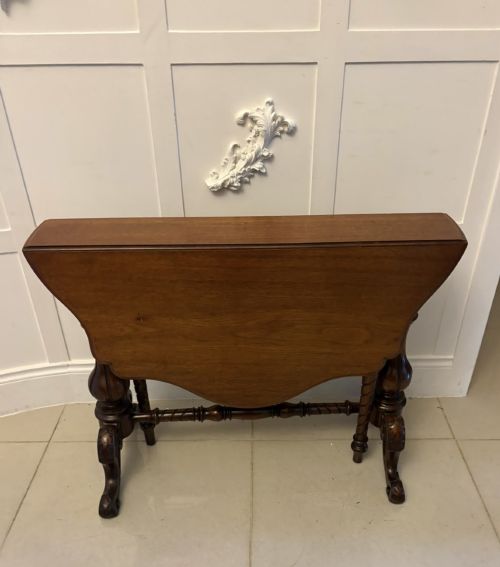
- Sutherland table
- A narrow drop-leaf table with exceptionally slender legs and leaves that fold down almost vertically. These were designed in the Victorian era to occupy minimal space.
- Barley twist
- A decorative turning style resembling a spiral rope, popular in seventeenth-century joinery and revived during the Edwardian period.
Antique Gateleg Drop Leaf: Frequently Asked Questions
How do I use a gateleg table daily?
Keep the leaves folded down against a wall to save floor space in smaller rooms. Swing the supporting legs outward and lift the flaps when you need an extended surface for dining or writing.
Ensure items placed near the edge of the drop leaf remain balanced over the structural rails. Regular waxing helps protect the moving joints and timber surfaces from everyday wear.
What periods do these tables represent?
The selection includes seventeenth-century oak pieces featuring robust turnings alongside eighteenth-century Georgian mahogany and walnut designs. Later Victorian, Edwardian, and 1920s revival items also appear frequently.
Each period utilises distinct timber choices and leg profiles, moving from heavy rustic oak frames toward lighter spider legs and polished mahogany.
How can I tell timber types apart?
Early pieces are predominantly oak with visible grain patterns and pegged joinery. Walnut and mahogany became more common during the Georgian period, offering smoother surfaces and rich brown tones.
Later Victorian and Edwardian reproductions often utilise similar hardwoods but display machine-cut precision and different finishing techniques compared to seventeenth-century originals.
Where should I place a drop leaf table?
These tables adapt well to hallways, living rooms, and dining spaces where floor area fluctuates. A narrow folded profile fits neatly behind a sofa or against an unused wall.
Fully opened, they function effectively as impromptu dining surfaces or study desks without dominating the room permanently.