

Antique Gallery Tray Table
An antique gallery tray table brings practical adaptability and period character to a room, functioning equally as a serving surface or an occasional stand.
Antique Gallery Tray Table
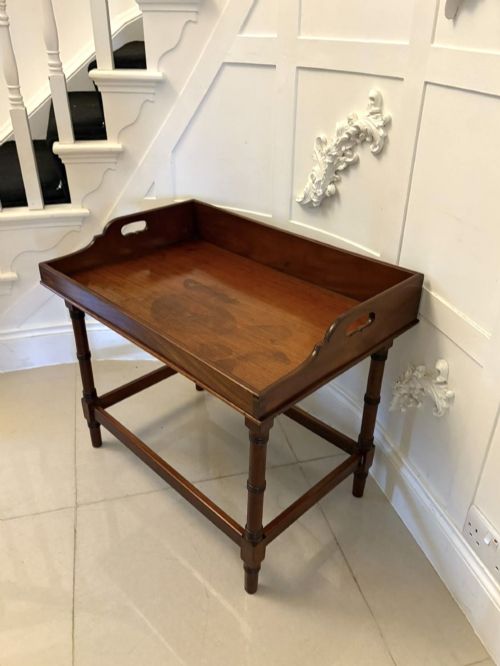
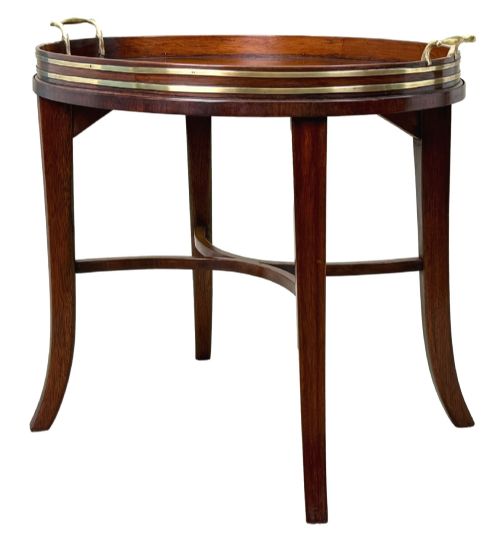
An antique gallery tray table combines a portable serving tray with a sturdy supporting stand, creating a versatile piece of furniture suited for domestic use. The form originates primarily in the eighteenth and nineteenth centuries, spanning periods from Georgian and Regency through to Edwardian and Victorian eras.
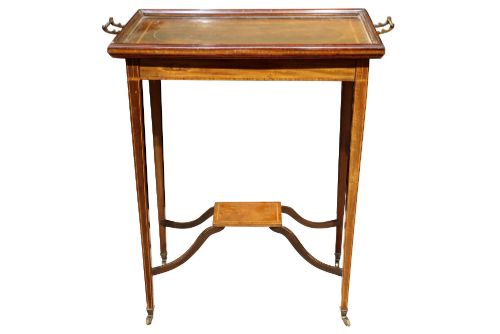
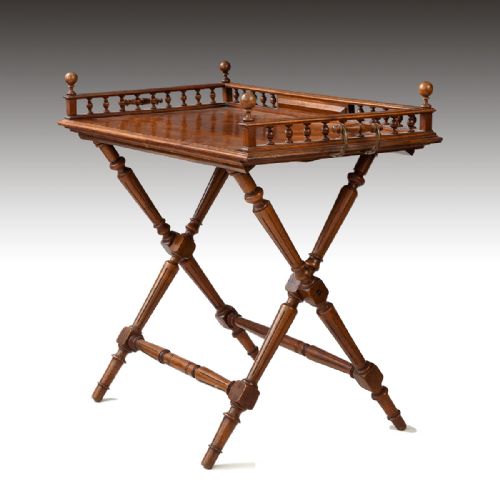
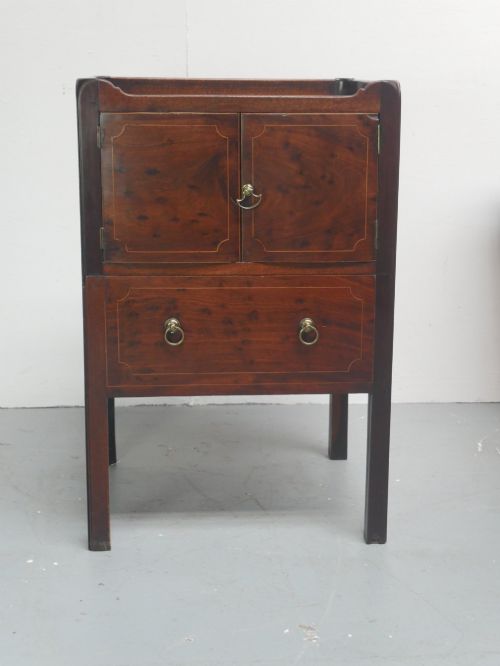
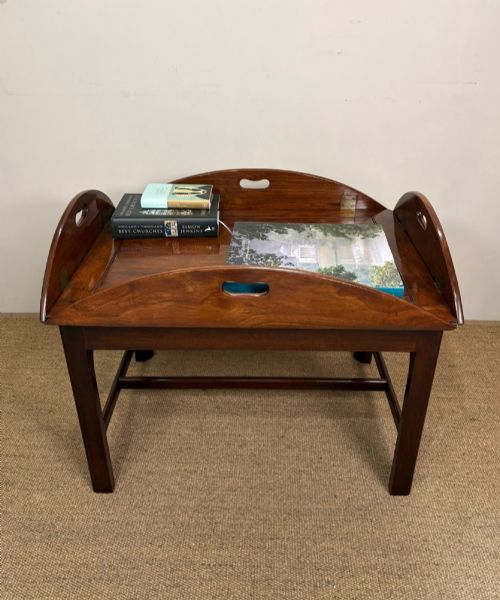
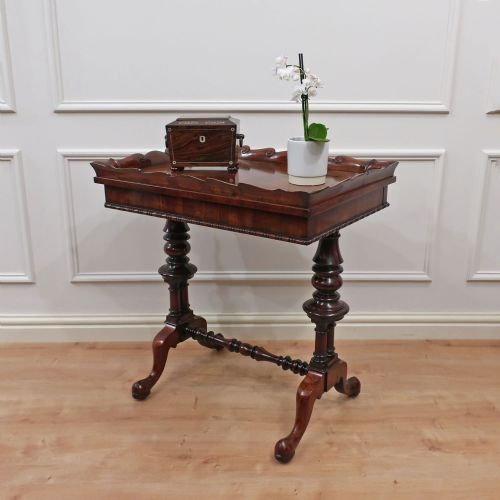
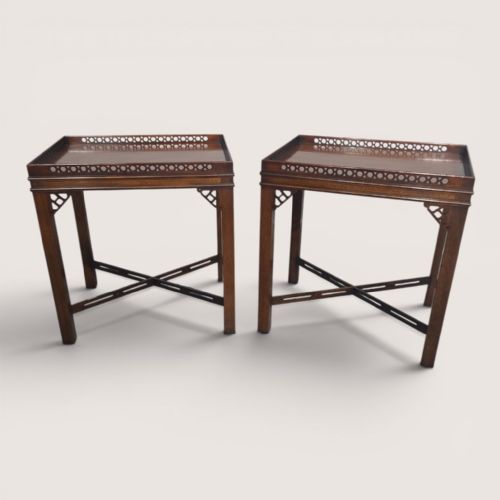
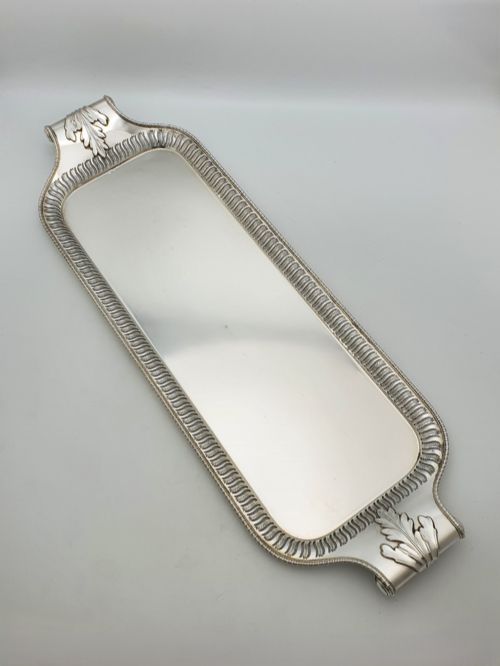
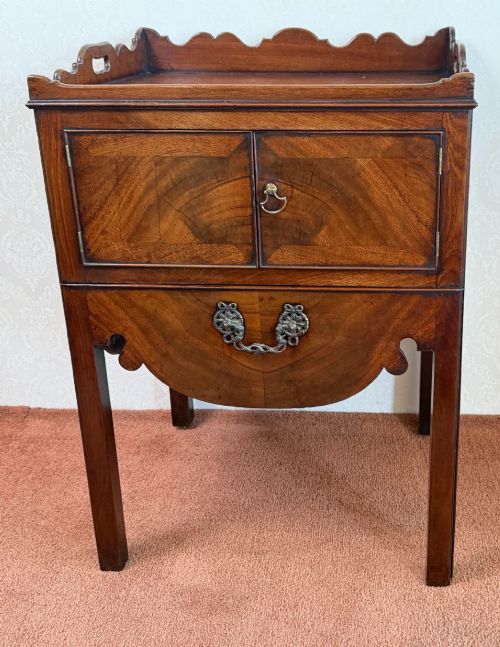
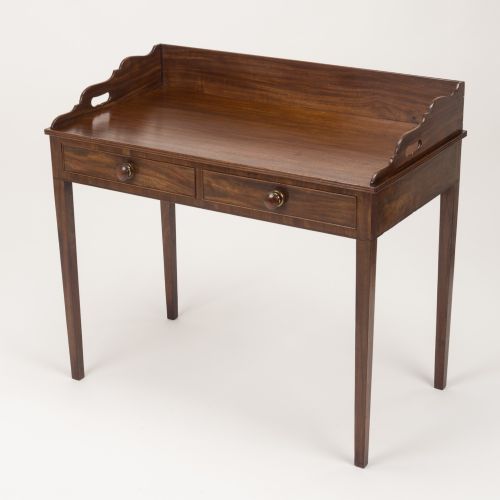
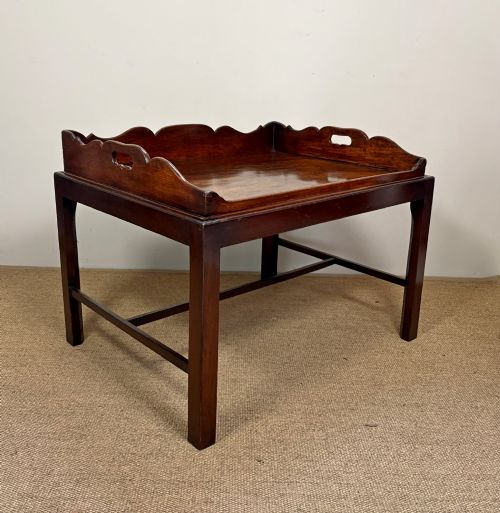
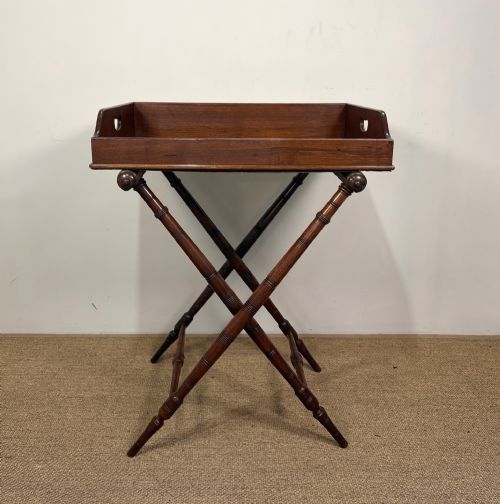
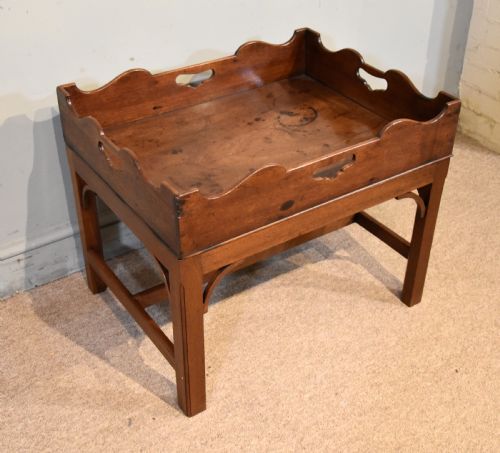
The pieces appearing on this page include removable butler trays on folding or fixed stands, alongside fixed tray-top occasional tables, lamp tables, and bedside cabinets. Mahogany is the predominant timber found across these listings, accompanied by walnut, oak, and rosewood.
Buyers frequently encounter George III and Victorian examples that exhibit raised edges designed to secure objects during transit or service. These items bridge the gap between utilitarian serving equipment and formal salon furniture.
How they were made
Cabinetmakers constructed these tables using dense hardwoods such as mahogany and walnut, frequently selecting figured veneers for visual depth on top surfaces. Joints were typically hand-cut using dovetail and mortise techniques to ensure durability under frequent lifting and movement.
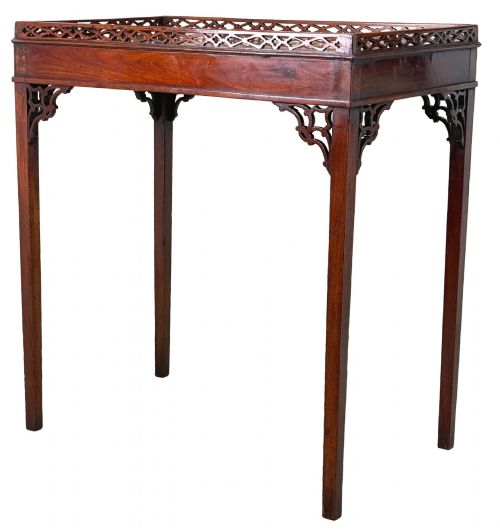
Details such as brass-bound decoration, pierced borders, and inlaid satinwood stringing demanded specialist metalworking and marquetry skills. Stands were engineered either as folding X-frames for easy storage or as rigid four-legged side tables with integrated gallery rims.
Some nineteenth-century trays double as clandestine drinks cabinets, hiding stemware beneath folding flaps designed to save drawing-room carpets from spills.
What varies in quality
Quality in these tables is determined by the crispness of the carpentry and the selection of timber grains, particularly on the primary tray surface. Superior examples display fine dovetailing, substantial brass carrying handles, and well-proportioned stands that complement the tray without appearing clumsy.
The integrity of the gallery rim - whether carved from the solid wood or applied separately - distinguishes finer workshop production from simpler utility pieces. Retaining the original matching stand adds considerable coherence to a set, whereas assembled marriages of trays and later bases alter the historic character.
Gillows
The Antique Gallery Tray Table Glossary
- Butler tray
- A portable wooden tray with hinged or fixed raised sides, designed to be lifted off its supporting stand for serving food or drink.
- Tray top
- A table surface featuring an elevated moulded or pierced gallery around the perimeter to prevent items from sliding off.
- Commode
- A multipurpose enclosed cabinet or cupboard, often incorporating a tray top or basin recess in eighteenth-century designs.
- Silver table
- A formal display table with an elevated gallery, historically used for setting out silver tea services in fashionable drawing rooms.
- Stringing
- A narrow inlay of contrasting wood, such as satinwood, used to outline panels and borders on tabletops and cabinet fronts.
Antique Gallery Tray Table: Frequently Asked Questions
What is an antique gallery tray table used for?
These pieces function as versatile low or occasional tables, providing a stable surface with raised edges that keep items secure. They suit living spaces as coffee or lamp tables where mobility and surface security are both useful.
Historically, the detachable trays allowed servants to carry provisions from kitchens to parlours before mounting the tray back onto its folding stand for display.
How do I identify a Georgian tray table?
Georgian examples are typically constructed from dense, patinated mahogany and feature hand-dovetailed gallery corners or solid carved rims. They often display classical proportions associated with eighteenth-century cabinetmaking traditions.
Later revival pieces from the Edwardian period mimic these forms but generally exhibit lighter internal construction and different secondary timbers beneath the surface.
Are the trays removable from the stands?
Many traditional butler trays lift completely off their folding or rigid X-stands to allow easy transport. Other variations on this page feature fixed tray tops built directly onto the table frame.
Checking the underside of the tray usually reveals whether it was designed to be portable or permanently secured to the legs.
What woods were used for these tables?
Mahogany is by far the most common timber found across these listings, valued for its strength and rich dark colour. Walnut, burr walnut, rosewood, and oak also appear frequently in specific Victorian and Georgian iterations.
Inlays in contrasting woods like satinwood were occasionally added to enhance the visual appeal of the central tray surface.