



Antique Fruit Shears
Antique fruit shears are specialist implements designed for the table, pairing steel or silver blades with ornate handles to serve grapes and soft fruits.
Antique Fruit Shears
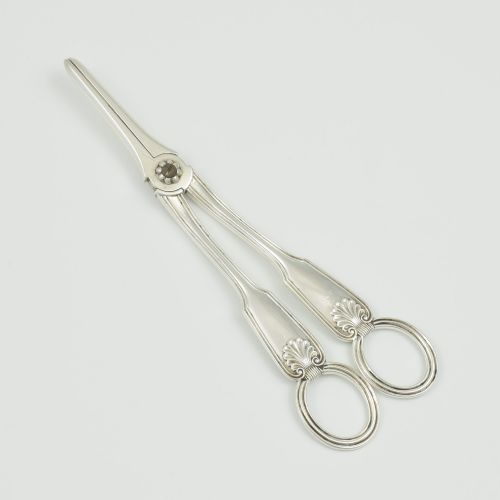
When you search for antique fruit shears, you are looking at specialist implements designed primarily as grape scissors and serving cutlery for the dining table. These items appear across various periods including the Victorian and Edwardian eras, spanning the nineteenth and twentieth centuries.
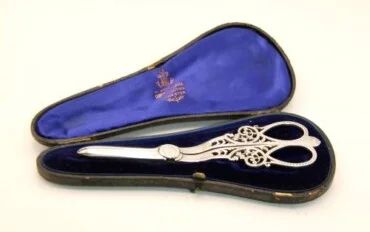
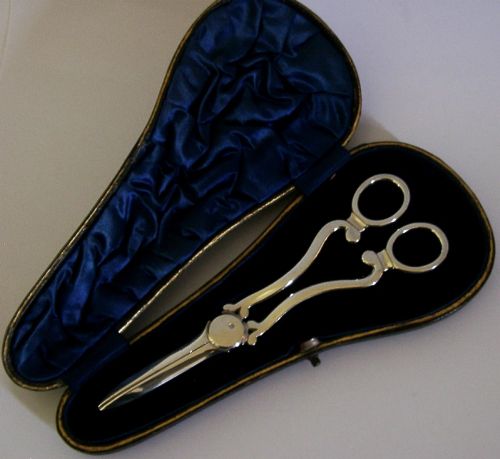
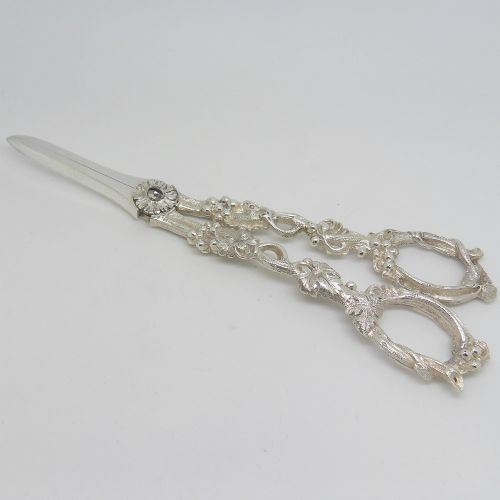
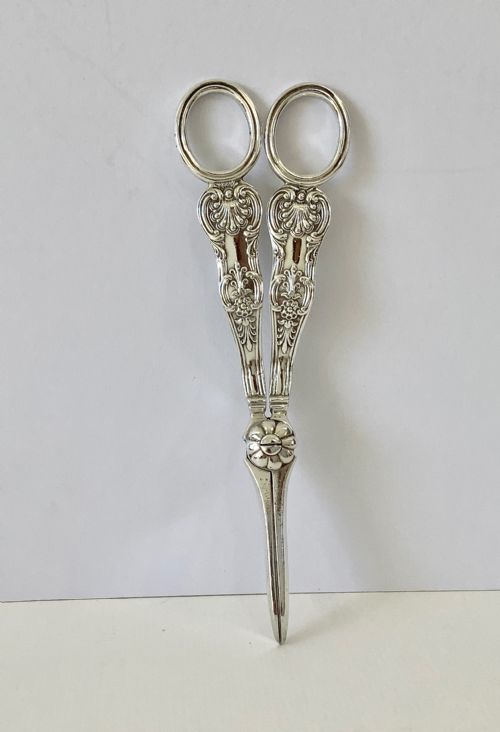
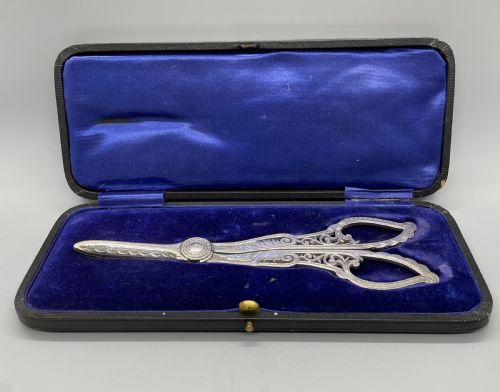
The versions you are most likely to meet on this page are fashioned from sterling silver or silver plate, frequently taking the form of grape scissors decorated with vine motifs. Many examples survive complete with fitted cases lined in materials such as velvet, silk, satin, or leatherette.
Makers and silversmiths utilised distinct historical styles, ranging from Early Victorian and William IV to Gothic Revival and Victorian Revival. Certain pieces are paired with fruit and nut serving sets or presented as part of larger cutlery collections.
How they were made
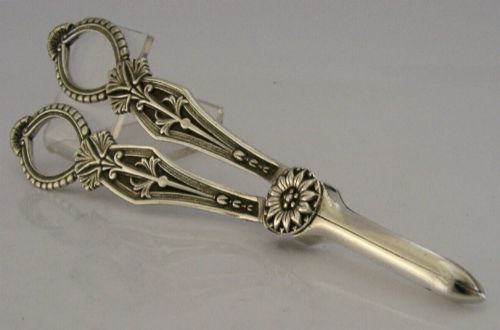
Silversmiths employed sterling silver and silver plate as the principal metals, shaping the handles through casting, chasing, and ornate engraving. Many pieces feature cast vine decoration along the stems and bows to mirror the natural subject of their use.
Blades and handles were occasionally enhanced with silver gilt, adding a contrasting finish to the polished metal work. Fitted presentation cases were constructed using rigid carcasses covered in leather, leatherette, or cloth, then lined internally with velvet, satin, or silk.
What varies in quality
The distinction between tiers rests upon the weight of the metal and the depth of the hand-chased or engraved decoration on the handles. Heavier gauges of sterling silver and cast dimensional work elevate an object above standard plated production.
Design complexity also marks out the finer examples, particularly where silversmiths applied naturalistic vine motifs with crisp, detailed articulation. The presence of a matching fitted case lined in silk or velvet further separates standard service items from presentation pieces.
Goldsmiths & Silversmiths Co·Gibson & Langman·Charles Reily & George Storer·Paul Storr·Chawner & Co·C.J. Vander
The Antique Fruit Shears Glossary
- Sterling Silver
- A standard alloy consisting of ninety-two point five percent silver by mass, utilised for quality dining implements. This material forms the durable foundation for the majority of formal nineteenth-century table pieces.
- Silver Plate
- A base metal coated with a thin layer of silver through electroplating or older techniques. This method offered a practical alternative to solid sterling for household serving cutlery.
- Silver Gilt
- Silver that has been coated with a thin layer of gold on its surface, producing a warm yellow sheen. This technique was frequently applied to the interior bowls and cutting edges of grape scissors.
- Gothic Revival
- An architectural and decorative style drawing inspiration from medieval forms, prevalent during the nineteenth century. Pieces in this aesthetic incorporate ecclesiastical motifs and heavy, structured ornamentation.
- Hallmark
- An official stamp applied by an assay office to guarantee the fineness of precious metal work. These marks identify the standard, the origin town, and the specific year of production.
Antique Fruit Shears: Frequently Asked Questions
What are antique fruit shears used for?
These implements were created specifically for severing clusters of grapes and portioning soft fruits at the dining table. They allowed diners to serve fruit cleanly without handling the produce directly.
Over time, many of these pieces transitioned from active dining service into decorative display items and collected examples of nineteenth and twentieth-century silver smithing.
How do I clean antique silver fruit shears?
Maintenance requires gentle washing in warm, soapy water followed by immediate drying with a soft cloth to protect the metal surface. Avoid harsh abrasive dips that strip away historical patination and fine engraved detail.
When stored, keeping the shears inside their original fitted cases lined with silk, velvet, or satin helps prevent tarnishing from airborne pollutants.
How do I identify Victorian grape scissors?
Victorian examples often feature distinct stylistic markers such as naturalistic cast grape vine decoration along the handles. Examining the piece for official assay office hallmarks will usually confirm the exact year and place of production.
Many of these nineteenth-century instruments survive alongside their original fitted presentation boxes covered in leather or leatherette.
What is the difference between silver and silver plate?
Sterling silver consists of solid precious metal throughout the entire piece, marked by specific assay stamps indicating its metal standard. Silver plate involves a base metal core covered by an outer layer of silver.
Solid silver pieces typically carry heavier weight and greater durability, whereas plated items provided an accessible option for period households.