
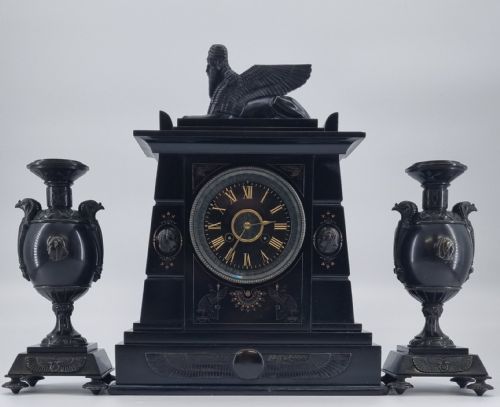


Antique French Urn Clock
An antique french urn clock brings neoclassical symmetry and precise nineteenth-century movement into a room, combining painted porcelain or marble with gleaming ormolu.
Antique French Urn Clock
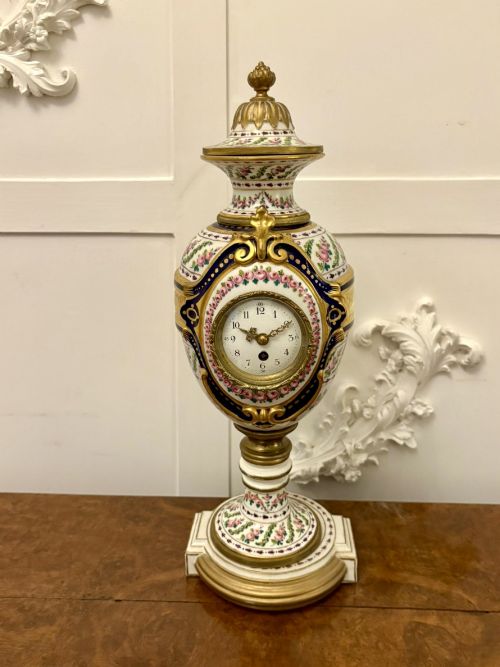
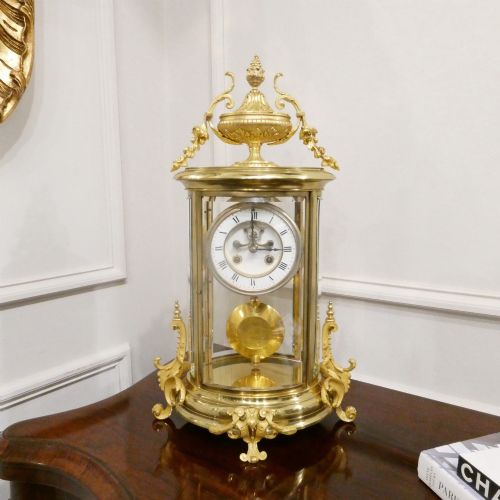
An antique french urn clock takes the classic neoclassical shape of a classical vase or urn and houses a functional clock movement within its body. These pieces frequently appear alongside matching side garnitures to form a balanced three-piece set for a mantelpiece.
Most examples date from the nineteenth century, spanning periods from the late eighteenth century through the Victorian era and into the early twentieth century. Common stylistic influences include Louis XVI revival, French Empire, and Egyptian Revival designs.
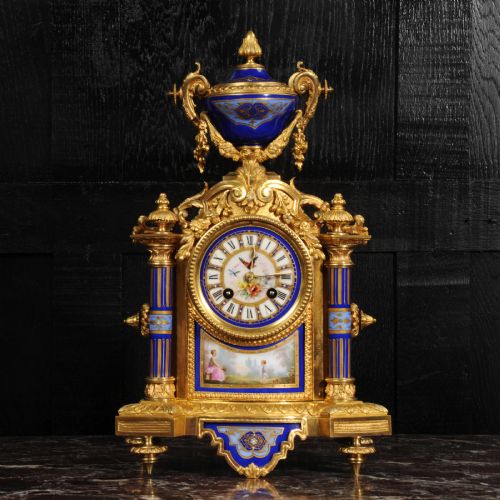
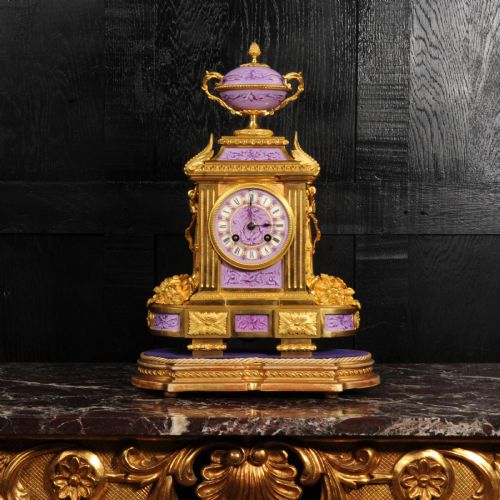
The body of the urn typically serves as the primary housing for the dial, mounted on a matching plinth of marble, slate, or bronze. Makers often incorporated hand-painted porcelain panels depicting pastoral scenes or floral motifs directly onto the central urn shape.
Materials and Construction
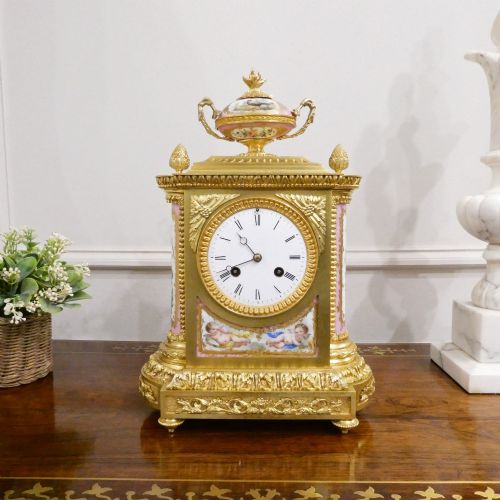
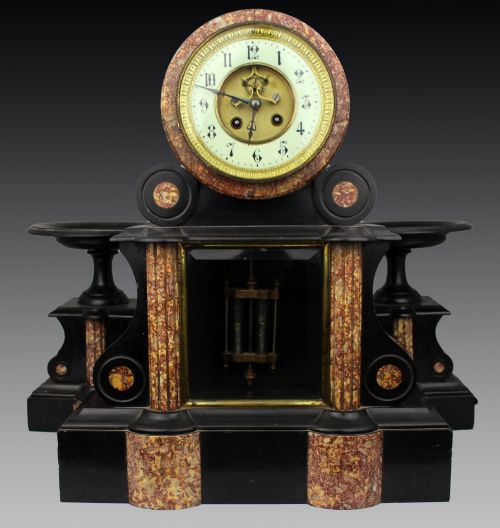
Foundry workers cast cases in ormolu, gilt bronze, and brass, often combining multiple metals to create textural contrast on the same piece. Black slate, white marble, and sienna marble provide weighty architectural foundations for the metalwork.
Porcelain components frequently originate from prominent factories like Sèvres or KPM Berlin, decorated with enamel paint and applied gilding. Glass domes sometimes protect delicate garniture pieces from dust and damage.
Clockmakers utilised brass movements, many featuring eight-day striking mechanisms produced by established Parisian firms. Enamel dials with delicate numerals complete the face, secured beneath a hinged glass bezel.
Markers of Quality
Superior pieces display crisp, deeply chased casting work in the bronze and ormolu mounts, where fine details remain sharp rather than smoothed over by repeated polishing. The weight and selection of the underlying marble or slate foundation also signal a higher grade of manufacture.
Painted porcelain panels on top-tier examples feature meticulous hand-brushing and sophisticated colour palettes rather than simple transfer prints. The reputation of the movement maker, such as Japy Frères or Samuel Marti, elevates the desirability of the piece.
Completeness defines the finest surviving sets, particularly when the central urn clock retains its original matching side garnitures and protective glass domes. The integration of movement signatures and matching serial numbers across the set confirms its original factory assembly.
Japy Freres·Jean-Baptiste Delettrez·Samuel Marti·Achille Brocot·Louis Goret·Sacre·Pons de Paul·A.D Mougin·Vincenti of Paris
The Antique French Urn Clock Glossary
- Garniture
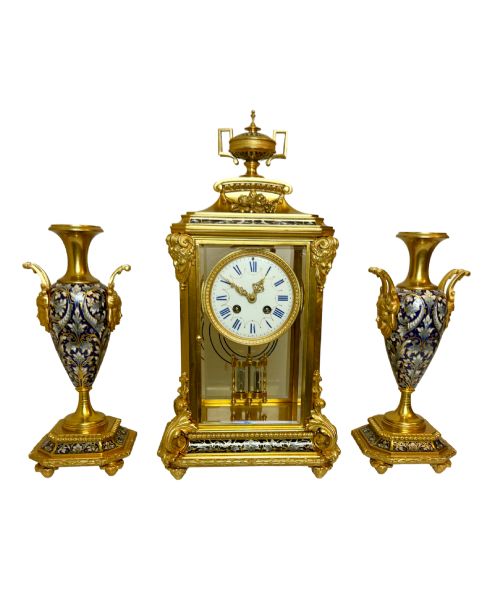
- A set of matching decorative ornaments, typically comprising a central clock flanked by two matching vases or candelabra. These sets were designed to create visual balance on a fireplace mantel or sideboard.
- Ormolu
- Gilding technique involving the application of finely ground, high-carat gold to a bronze base. This finish provides a warm, durable metallic lustre characteristic of fine French decorative arts.
- Portico clock
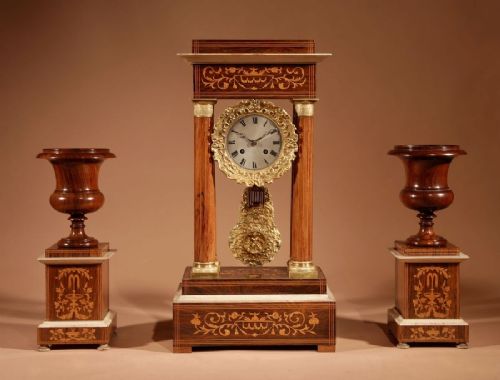
- A distinct architectural clock style featuring a dial suspended between four or more columns. Examples often incorporate a swinging pendulum visible through the central opening.
- Champlevé
- Enamelling technique where troughs are dug into a metal surface and filled with vitreous enamel before firing. This method creates rich coloured patterns flush with the surrounding metal mount.
- Bezel
- The metal ring that holds the glass cover protecting the clock dial. It usually hinges open to allow hand-setting and access to the escapement.
Antique French Urn Clock: Frequently Asked Questions
How do garniture sets work?
Garniture sets consist of a central clock accompanied by two matching side pieces, such as decorative urns or candelabra. The matching pieces repeat the materials, motifs, and proportions of the main clock to create visual symmetry.
Placed on a mantelpiece or sideboard, the side pieces echo the design language of the central clock. This tripartite arrangement was a hallmark of formal interior decoration in nineteenth-century drawing rooms.
How do I wind the clock?
Winding requires a matching winding key inserted into the small arbours visible on the enamel dial face. Turning the key clockwise tensions the mainspring inside the brass movement.
Care must be taken not to overwind the mechanism, stopping as soon as resistance is felt. Many nineteenth-century movements require winding once a week to maintain accurate timekeeping.
Where were these clocks placed?
These clocks were designed specifically for prominent display on mantelpieces above fireplaces in formal reception rooms. The heavy marble and bronze bases provided stable footing on stone or wooden mantel ledges.
They also occupied central positions on pier tables between windows, often paired with matching wall mirrors. Their striking mechanisms ensured the household could track the hours audibly across the room.
How do I identify the period?
Dating relies on stylistic clues, case materials, and maker signatures stamped on the brass clock movements. Neoclassical and Louis XVI styles generally point towards the earlier nineteenth century, while heavier slate and eclectic revivals suggest the Victorian era.
Movement maker marks often include exhibition medals or registration dates stamped into the backplate. These foundry stamps provide a reliable bracket for when the clock was assembled.