
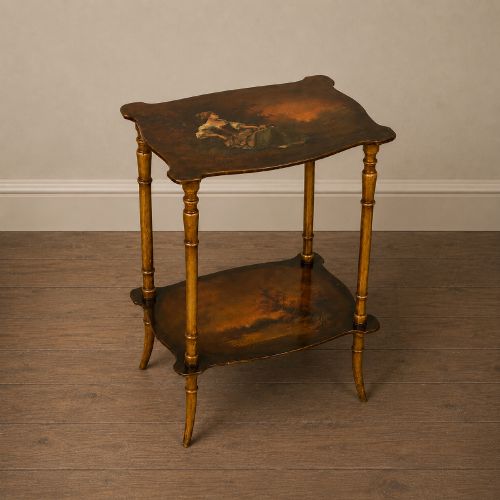
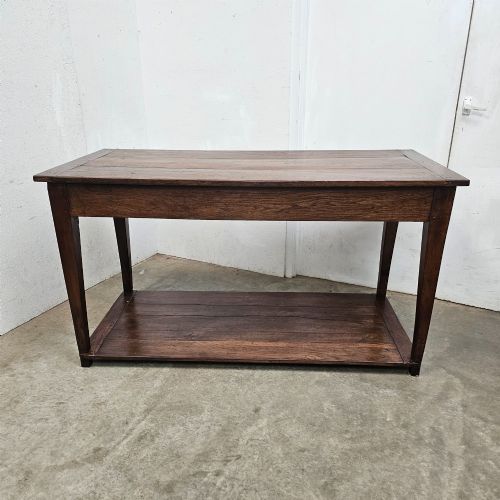
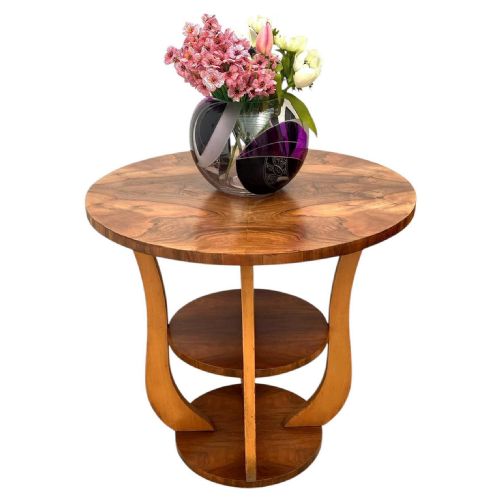
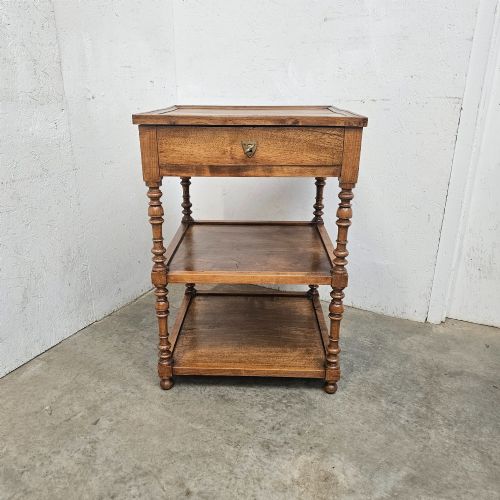

Antique French Tier Table
An antique french tier table brings practical multilevel surface space and Continental elegance to a room.
What an antique french tier table is
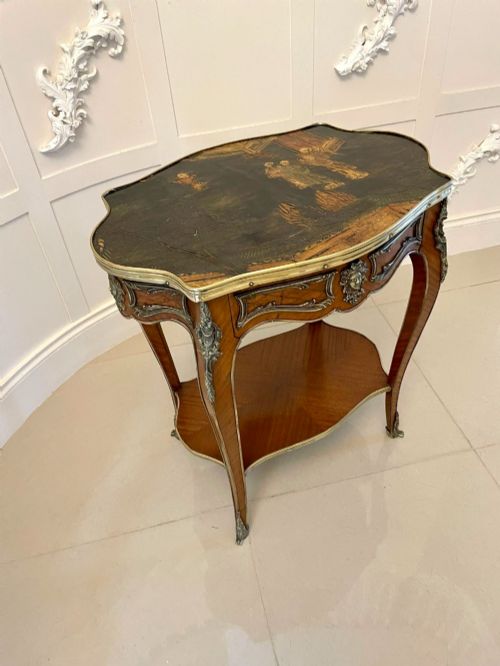
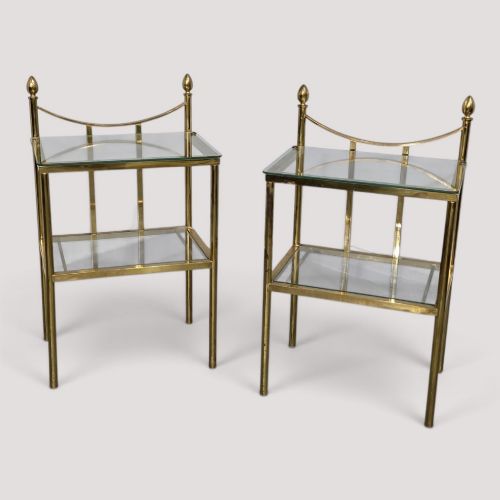
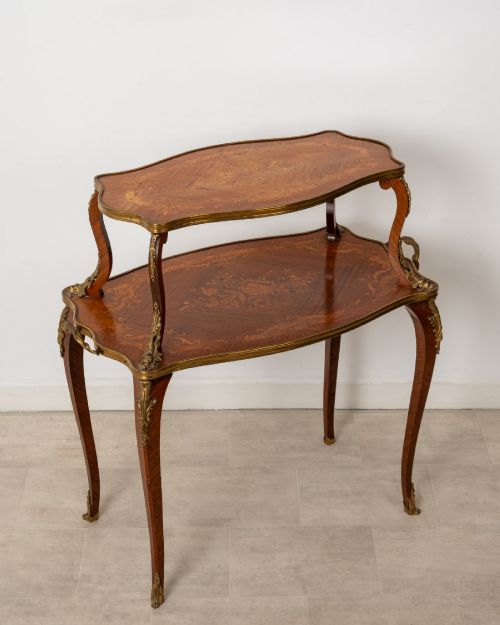
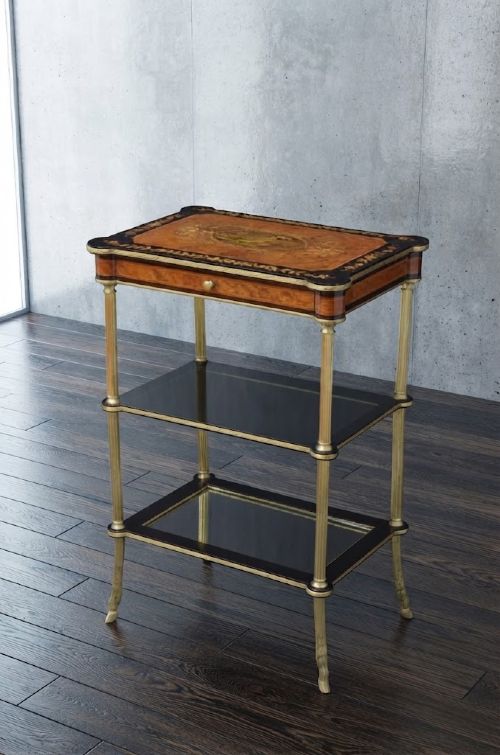
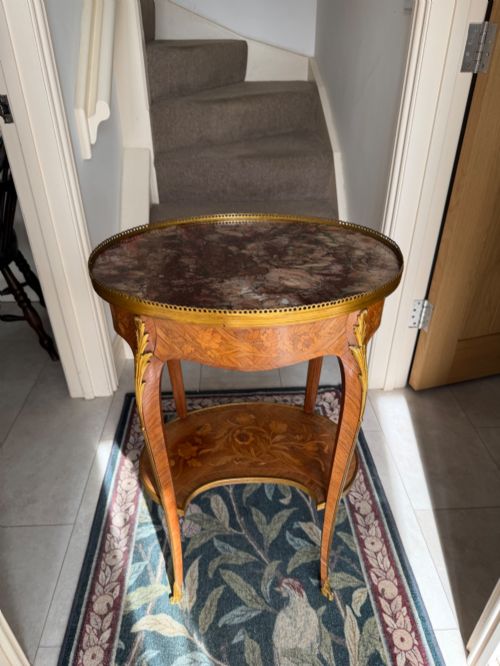
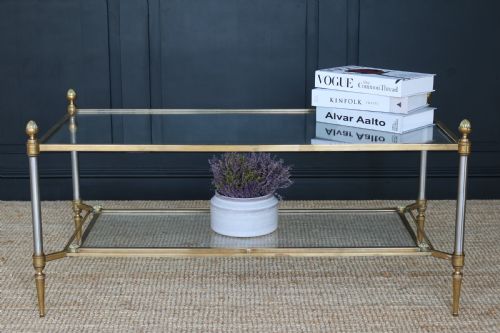
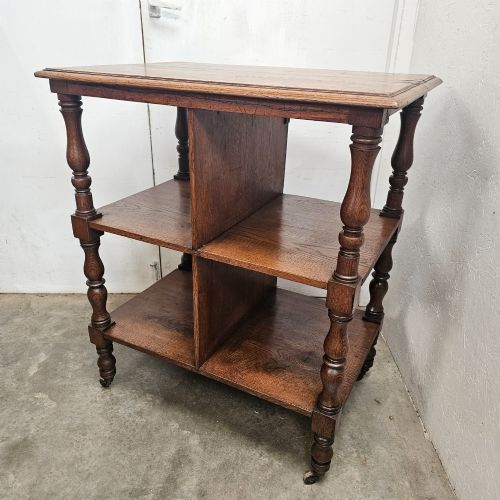
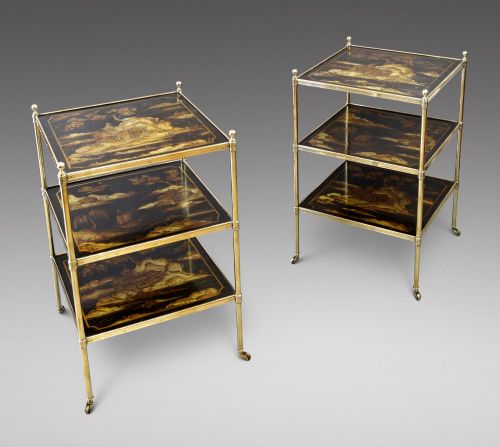
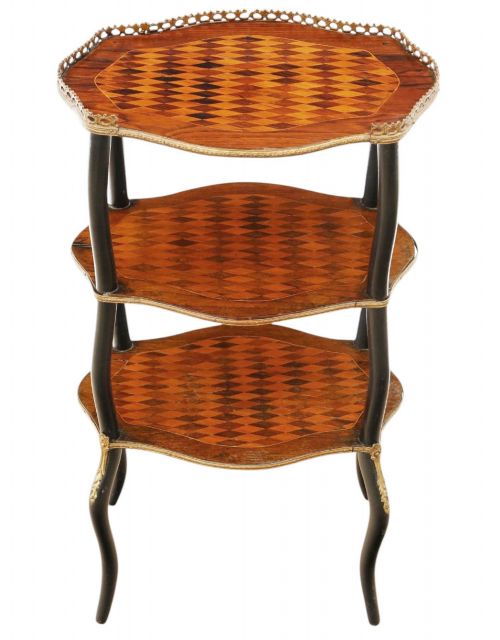
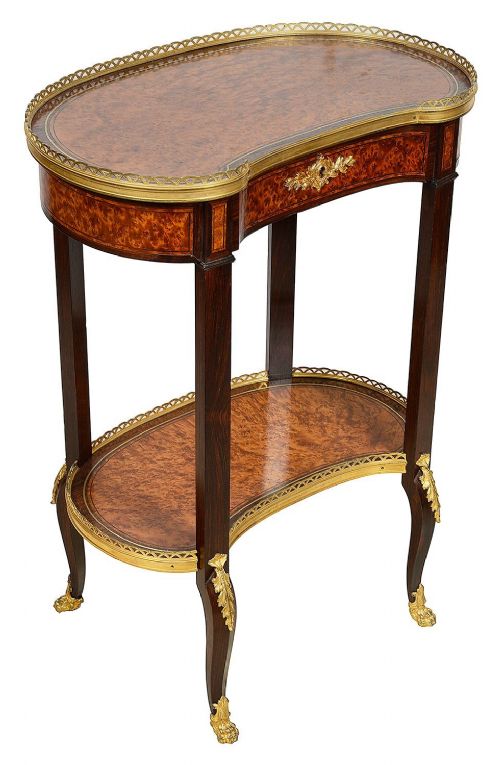
An antique french tier table offers stacked platforms designed for display and convenience in drawing rooms and boudoirs. These pieces typically present two or three circular, square, or kidney-shaped levels connected by uprights or slender legs.
The versions met most frequently on this page combine wood veneer surfaces with polished metal mounts and occasionally inset marble slabs. They span several decades of the nineteenth and early twentieth centuries, drawing on revived Louis styles.
Forms range from freestanding centre tables and side tables to dedicated étagères and occasional tables. Each design prioritises decorative presence alongside the utility of multiple tiers.
How they were made
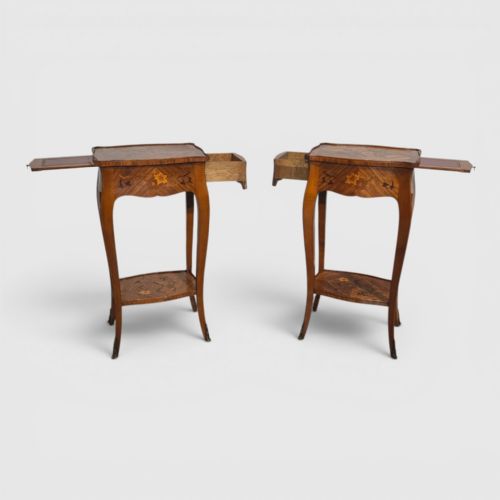
Cabinetmakers built these multi-level surfaces using hardwood frames overlaid with figured veneers such as kingwood, walnut, mahogany, and birch. Marquetry inlay added floral or geometric patterns across the shelves, requiring precise cutting and fitting of contrasting timbers.
Gilded bronze ormolu mounts were cast and chased to edge the shelves, cap the feet, and accent the legs. White or coloured marble slabs were inset into tops to provide durable, heat-resistant surfaces.
Retail Price Guide 2026
Typical UK retail prices for french tier table, calculated from the Sellingantiques database of over a million retail prices indexed since 2003. This retail price guide relies exclusively on Sellingantiques data; no external sources or auction records are used, so the figures do not describe the wider market.
Materials recorded across the archive include mahogany, walnut, kingwood, birch, marble, and cast ormolu.
What varies in quality
The distinction between standard production and the finest work lies in the crispness of the cast ormolu mounts and the complexity of the wood marquetry. Superior examples exhibit hand-chased metalwork with sharp detail, whereas simpler pieces rely on basic brass trims.
Construction methods also separate the grades, seen in the choice of solid hardwoods beneath veneers and the stability of the tiered joints. Finer tables maintain balanced proportions across all levels without sagging or looseness in the uprights.
Francois Linke
The Antique French Tier Table Glossary
- Étagère
- A set of open shelves or tiers designed for displaying small objects and ornaments. This form became particularly popular in nineteenth-century French interiors.
- Ormolu
- Gilded bronze mounted onto furniture as decorative enrichment. The process involves applying a gold amalgam to cast copper alloy before heating.
- Kingwood
- A dense, richly figured tropical timber prized for cabinetmaking. It displays striking dark violet and brown contrasting grain patterns.
- Marquetry
- The art of applying small pieces of veneer to a structure to form decorative patterns and pictures. Craftsmen selected different wood tones to create tonal depth.
Frequently Asked Questions
What is a tier table used for?
Tier tables provided versatile surface space for holding lamps, books, and decorative objects in nineteenth-century sitting rooms.
The multiple levels allowed owners to display small porcelain figures or silver items without cluttering the main surface.
How do I identify a French tier table?
French examples are typically identified by their use of ormolu mounts, serpentine edges, and marquetry inlays. Cabinetmakers of this origin favoured exotic timbers like kingwood and plum pudding mahogany.
The inclusion of inset marble tops and slender cabriole or tapered legs further points toward Continental design traditions.
How many tiers do these tables have?
Most of the examples recorded here feature either two or three distinct display levels. The upper tiers are supported by slender columns or brass uprights.
This tiered construction maximises vertical display space while maintaining a relatively small floor footprint.
Where should I place a tier table?
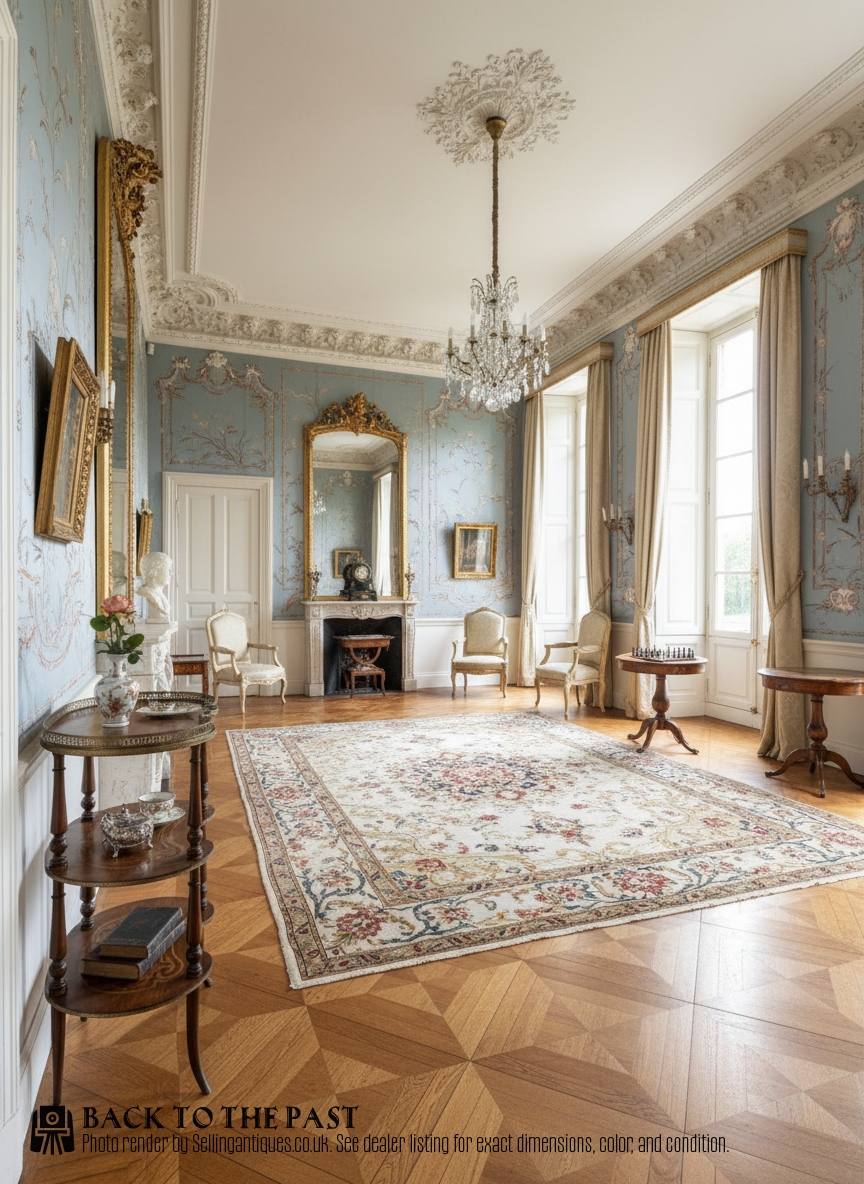
These tables work well as freestanding centre pieces or positioned beside seating in a drawing room. Their decorated surfaces and finished backs allow them to be viewed from all angles.
Avoid placing them in areas of direct sunlight or high moisture to protect the polished wood veneers and ormolu mounts.